The Business of Social Games and Casino

Data, decisions and leadership in games and casino

Topic Areas

Get my book on LTV

The definitive book on customer lifetime value, Understanding the Predictable, is available in print and Kindle on Amazon. It explains how much each customer is worth to your business and how to use that to optimize marketing and user acquisition. More information

Lloyd Melnick

This is my personal blog. Views expressed here are mine alone and do not represent any organization I may be associated with.

I am Chief Growth and Strategy Officer at VGW. I previously led Chumba Casino as General Manager, and held senior roles at the Stars Group, Zynga and Disney. I have more than 30 years of experience in gaming.

Follow via email

Join 783 other subscribers

The real takeaway from Hasbro’s acquisition of Backflip

The announcement yesterday that Hasbro acquired 70 percent of Backflip Studios for $112 million is great (and well deserved) for the Backflip team but potentially disastrous for many mid-level social game companies. Backflip has a history of successful—and profitable—games, highlighted by DragonVale, one of the most successful games in iOS history. The game launched in 2011 and still in the top 15 in the top-grossing charts.
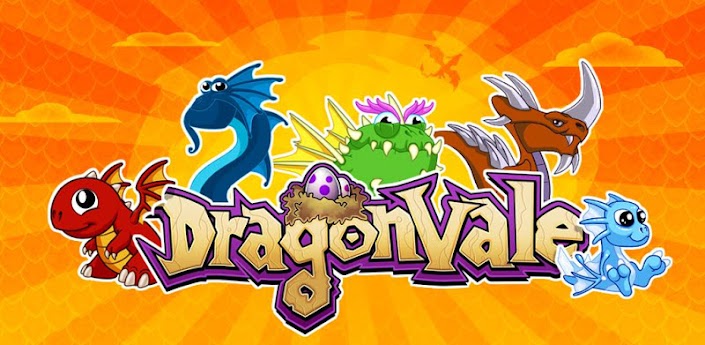
DragonVale image from GooglePlay store

The valuation bodes poorly for other social mobile game companies. Given the $112 million purchase price for 70 percent, the Backflip team accepted a valuation of $160 million. There are many, many, less successful mobile game developers who have taken significant amounts of venture capital at valuation two to six times the valuation Hasbro paid for Backflip. How could a company that does not have a franchise as strong as DragonVale argue it is worth more than $160 million?

For many of these developers—companies like Pocket Gems, TinyCo, Storm8, Crowdstar and Kabam—may not be able to raise additional capital and their investors will not be open to a sale. When investors are considering an investment in a game company, they will compare the transaction to the most recent major deals in the space. In this case, it would be difficult to argue any of these companies are more valuable than Backflip, yet their valuation from previous investment rounds is probably higher and those investors are likely to block any investment at a valuation relative to the Backflip transaction.

It will also make it very difficult for any company that raised a significant round at a very high valuation (e.g., $300 million to $1 billion) to have an exit. A potential acquirer is unlikely to pay a significantly higher multiple than what Hasbro paid for Backflip (by multiple, how much times revenue or profit Hasbro paid to reach the $160 million number). Yet an investor is unlikely to approve a deal at a valuation lower than at which they invested and thus take a loss on their investment. Unless the investment was small and the developer kept control (and most of the mid-major game developers did take large sums), there will not be any exit opportunities.

The Backflip team was smart in that they created really fun games that quickly became profitable and thus had to take little outside money. For them, this is a great deal and well deserved. For other less successful but more highly valued developers, it is ominous.

Comments

13 responses to “The real takeaway from Hasbro’s acquisition of Backflip”

  1. NickN Avatar
    NickN

    I completely agree! I thought it was an odd transaction on two fronts.

    1) The valuation seemed low given the success of the company. I have no insight as to their revenue, but the ranking of Dragonvale would indicate that it’s decent. Before things got so frothy with valuations, a good rough metric for a software company was ~5x revenues, which would imply that they were making $32MM/yr. And of course they own their IP (not just work for hire) and doubtless have other titles in the works, all of which would increase the value.

    2) I cannot understand why they would sell 70%. For all intents and purposes, Hasbro now owns them, but didn’t pay for 30% of the company. There is no other acquirer that will scoop up the remaining 30%, so they’ve given up control and taken a pay day (good for them!) but left 30% of the money on the table. If things go well from here, Hasbro has no real incentive to buy the rest and they have no ability to sell it.

    Exits can be hard to come by and this was probably a decent exit for the team, so I congratulate them on reaching that goal. But I do wonder who was advising them during the transaction and what else was going on…

    Like

    1. Lloyd Melnick Avatar

      A couple of thoughts. I wouldn’t necessarily say the value was low, the market may have shifted. As the old saying goes, something is only worth what someone will pay for it. On your second point, it seems that they kept 30 percent of the company in lieu of an earnout. If they do a great job with Hasbro’s support, that value should appreciate. They may even have something in place for Hasbro to acquire the other 30 percent based on performance. Also, whenever the unit pays a dividend to the mother ship, it will now pay 30% to the Backflip owners. I have not seen this structure used on a deal this size before but earnouts are an art form and I can see it potentially being better than a traditional earnout structure.

      Like

      1. NickN Avatar
        NickN

        Good points. I should confess that am generally very skeptical about Hasbro which colors my opinion.

        At the end of the day, the Backflip guys got to an exit, which is a non-trivial thing to achieve. I hope they all get to enjoy their outcome immensely!

        Like

  2. Eros Resmini Avatar

    Great post Lloyd! IMO the days of big dollar acquisitions in mobile gaming are long gone. So, while I agree with you that things are ominous for some of the strong mid size players in the space, Backflip’s sale/valuation is hardly the cause. The big acquirers in the gaming space had lost their appetite long ago (EA, Zynga, DeNA, GREE, etc) so the inflation on acquisitions and subsequent high valuations was lost due to lack of competition on M&A deals. I think that’s been the case for the past 6-12 months at least. I suspect only non-gaming companies are interested in making moves these days and even those numbers of able-bodies companies are small. Many of the these non-gaming are risk averse in terms of entering a competitive space like mobile/games. Hasbro is one of the few that have been actively building up a mobile presence of late so the move makes sense for them. I’m fairly certain the mid-size guys are well aware of this shift and playing the cards appropriately…

    Like

    1. Lloyd Melnick Avatar

      YOu are completely right, Backflip is not the cause, it’s more the evidence. The cause happened a long time ago when supply and demand shifted, as you point out.

      Like

  3. Rick Marazzani Avatar

    Great insights Double L. What does this say about EA’s deal with Hasbro? The logistics of mobile and casual game distro have shifted away from large distributors. Does this mean that Hasbro is soon going direct to Apple and Android with internal dev of their properties?

    Like

  4. Larry Shapiro Avatar
    Larry Shapiro

    OMGPOP/Draw Something write down killed the market.

    Like

    1. Lloyd Melnick Avatar

      I would say it was the final straw, after several bad deals.

      Like

  5. NickN Avatar
    NickN

    I think it’s waaaay to early to call the death of big exits in mobile gaming. I think it’s the death of bogus big exits and a resetting of how to calculate valuations. Don’t forget that the revenue from mobile gaming is all on smartphones and 5 out of 6 people in the world don’t have smartphones yet. The potential for revenue and growth in mobile gaming is beyond staggering. Who will be the Supercell of India? Or the GungHo of China? Never mind what could happen in Africa.

    But back to valuation and exits.

    When a software company exits, you have a product in play that (presumably) has some kind of shelf life. For example, a product from an enterprise software company may take 10+ years to become irrelevant, even if it’s not on the cutting edge anymore. Lotus Notes is a prime example. There are still lot’s of Lotus Notes users out there…

    But in video games, there are almost no examples of a single product that gets away from the cutting edge and survives as a serious revenue generator. Warcraft is probably the closest example I can think of. And that means that when you value a game company, you cannot assume the ongoing revenue stability that you would expect with a pure software play. If you can’t assume future revenues, that should dramatically reset the valuation.

    Some of the game exits we’ve seen appear to have been priced using internet software company valuations. That is crazy. It’s crazy most of the time when applied to Internet companies (although the “preposterous” YouTube purchase turned out okay, as did Microsoft’s “insane” valuation of Facebook). But it is terminally crazy when applied to companies with very short shelf-life products… And that I expect to see change.

    Like

  6. Turning your customers into your venture capital « The Business of Social Media Avatar

    […] have and to do it successfully you need to realize it is not just about getting money in the bank. My post last week about Hasbro’s acquisition of Backflip Studios highlighted how smart cash management enabled the Backflip management team to capitalize on the […]

    Like

  7. […] commentators interpreted the Backflip sale as a public devaluation of mid-sized gaming companies. Following on the heels of the recent debate […]

    Like

  8. My favorite posts of 2013 « The Business of Social Media Avatar

    […] The real takeaway from Hasbro’s acquisition of Backflip More important than the analysis of the deal, I touched on the implications for other game companies. […]

    Like

  9. […] commentators interpreted the Backflip sale as a public devaluation of mid-sized gaming companies. Following on the heels of the recent debate […]

    Like

Leave a Reply