There is a lot of buzz now about hypercasual games, and, for once, I agree with the buzz. There is a new big thing in gaming every year – a new console, technology, mechanic, etc. – that people expect to change the industry, investment flocks to it and a few years later it becomes an afterthought and a lot of people have to send out their resumes. I am usually skeptical of these fads, if you look at my posts there is not one about VR, blockchain, 3D, etc., but hypercasual is the exception
Hypercasual, is not a fad because it taps into what is one of the strongest drivers of building a successful product, simplicity. I have written repeatedly about how people gravitate to easy products that minimize cognitive load, and often use the example of Uber’s success to show that simple and straightforward can generate tens of billions of dollars of value. Hypercasual games tap into that formula for success.
A recent article, 100 Million Downloads: How Hypercasual Mobile Games Are Rewriting the Game Design Rulebook by Tom Kinniburgh, does a great job of both quantifying the success of the genre and pointing out key rules to building hypercasual games.
What is hypercasual
The first step to analyzing the hypercasual market is defining what is hypercasual. If you do not define it, you cannot build towards it. As Kinniburgh writes, “the term ‘hypercasual’ has become a collective way to reference games of this nature. Such titles typically have a single mechanic and a single goal, yet reaching a high score can be fiendishly difficult.” Effectively the core game loop is very straightforward, do one thing, get rewarded (so you can try again) and keep repeating to get a higher score.
The state of the hypercasual market
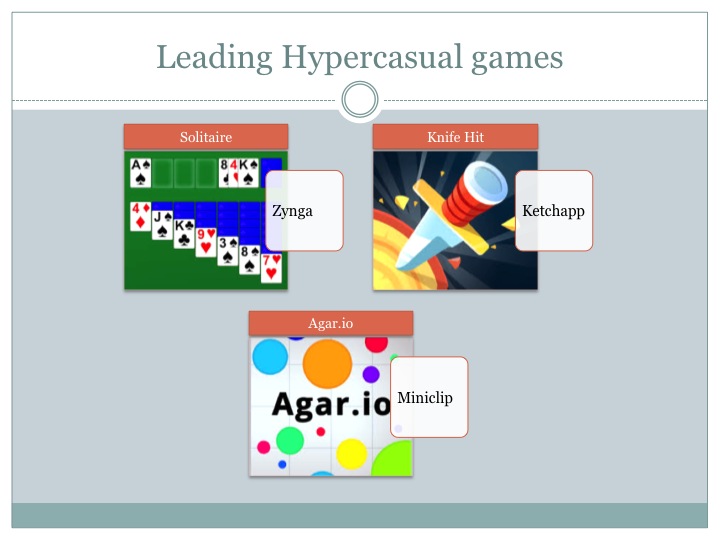
Hypercasual is not the next big thing that developers and investors are flocking to but an already established space in the game ecosystem with hundreds of millions of players. There are already tens, if not hundreds, of hypercasual games with over 100 million downloads. To put that number in perspective, 100 million downloads is more downloads than if everyone in Germany or France or the UK installed the app. These games include Agar.io, Finger Driver, Balls Race, Dunk and most of the other games at the top of the various app stores’ charts. The acquisition of Harpin, a one-person studio that built a solitaire game, for over $42 million also validates the hypercasual market, as companies usually do some due diligence before investing millions of dollars.
How to build a hypercasual game
The core game mechanic is even more important in the hypercasual space. As mentioned above, hypercasual games have a single mechanic that the player keeps repeating to get a superior score. Thus, the single mechanic needs to be fun, easy and compelling or else the player will not want to continue.
This core mechanic must also be easy for the player to understand quickly and provide for ever improving scores. Kinniburgh writes, “Great hypercasual are easy to grasp, but rely on players having a perfect run to succeed, and they measure that perfection with a score.”
By being easy to understand quickly, players recognize that playing more leads to better scores. If it is difficult to comprehend how to play, the score and activity would not be linked in the player’s mind so they would not be driven to keep playing. Also, if continued play did not yield higher scores, then the key incentive to more gameplay would not exist.
This simplicity exists throughout the game. Unlike other game genres, you do not introduce more features (complexity) as the game progresses. According to Kinniburgh, “great games in this genre rely on mechanics that provide everything the player needs to play from the start of the game, either with a single life on offer – such as Flappy Bird – or with multiple lives, like Ballz. In each case, however, the game ends when said lives count reaches zero.”
While the gameplay mechanic needs to stay consistent, the game must also scale so players do not get bored. If they can master the game, then the score is capped. Instead, you need to introduce variety by making higher levels more difficult (less time, bigger opponents, etc) or making the level more complex (a puzzle game with more area blocked). According to Kinniburgh, there are three ways to scale hypercasual games:
- Changing the underlying environment
- Changing the speed
- Adding a PvP element
When designing, use one or a combination of these elements to keep the player engaged.
How do you make money
I, and most others, would not care about hypercasual if there was not a way to translate the popularity of these games into revenue. The most obvious answer is in-game advertising. Throughout the game space, advertising is becoming an increasingly important revenue stream. Players in games already see rewarded video as a benefit; adding watch to earn almost always increases your retention metrics. Machine learning now allows for more targeted advertising, creating a better user experience (you see ads you are actually interested in) and a better value for advertisers (you only pay to show ads to people who are really potential customers). These two forces are further driving ad revenues for game companies.
Hypercasual taps into this trend because of the sheer number of players you attract. With hundreds of millions of players, algorithms have more data on who to target with what, providing better advertiser and user experiences. And, with each player generating some revenue, hundreds of millions of players directly translates to more revenue.
In addition to direct advertising revenue, you can improve company revenue by using hypercasual as an acquisition channel. While the Harpin acquisition may be ROI positive based on advertising revenue, my guess is that the revenue it generates by driving players to Zynga Poker and other games with strong lifetime values actually is more valuable than the direct revenue from Harpin’s games. Using hypercasual as a portfolio play rather than a standalone opportunity further builds value.
Future opportunities for hypercasual
With many trends, by the time you read about it, it is too late to capitalize, but in the case of hypercasual there are still many opportunities. First, the underlying principle of a single, simple mechanic will always lead to a good user experience. My philosophy is simpler is better, and hypercasual is defined by simplicity.
Also, for those in the casino space, hypercasual has barely raised its head. While Harpin and several other hypercasual companies have built great businesses around solitaire or solitaire like apps, that is largely the extent of its penetration of the most exciting gaming vertical (social casino). There are no hypercasual games that target slot players, which represents about 80 percent of the social casino market. Same for table games (roulette, baccarat, etc), which seem to lend themselves perfectly to hypercasual.
The opportunity also is not limited to free to play casino, but the real money space can learn from it. The success of lottery products not only shows willingness to gamble on hypercasual experiences but a strong and continuing desire to do so. Also, the high customer acquisition costs in real money suggests the value of hypercasual as an acquisition tool would dwarf the benefits free to play companies get from these games.
Key takeaways
- Hundreds of millions of people play hypercasual games; apps that have a single game mechanic where players keep returning to get a higher score.
- Hypercasual games are a great opportunity in the free to play social casino market, as there is still no hypercasual games that target slots players, the biggest segment of that space
- Hypercasual is also an untapped opportunity in real money gaming, as lotteries show players willingness to gamble on a hypercasual experience and they provide a way to offset the very high customer acquisition costs.
 Kahneman’s book about human behavior and decision making has influenced me more than any other work. It has helped me understand what drives others and mistakes I commonly made. The book will help you make better decision, understand your customers better, be a superior leader and create more compelling products.
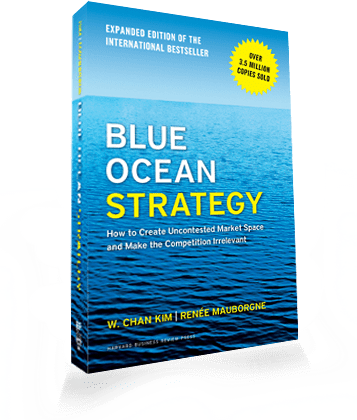
 Blue Ocean Strategy drives how I develop strategy everywhere I have had the opportunity. It starts by showing the superior results in creating a new market space rather than competing directly in an existing space and this leads to a framework for building long term competitive advantage.
 Predictably Irrational is my favorite book on the list, reading Dan Ariely is comparable to reading a Michael Lewis or even Tom Clancy book, a true page turner. Ariely’s work is in the same space as Kahneman, behavioral economics, or why people make the decisions that they do. In effect, people are not rational (which undercuts traditional economics) but their irrationality is not haphazard, it is predictable. Like Kahneman’s work, reading Predictably Irrational will improve your decision making, leadership and ability to interact with your customers.
 Hooked is the best book I have read about how to create truly compelling product. It provides a framework for building something that customers will engage with regularly, thus having a high lifetime value.
 This book highlighted the value of personalization before it was cool. It anticipated the trend of customers expecting an experience tailored to them before everyone gave it lip service and still provides compelling evidence on the value of personalization.
 For those of you who are not familiar with Nate Silver, he is probably the best known US statistician because of his success predicting election results (though he did miss on Trump) and high profile sports analytics sight. The Signal and the Noise is fantastic at explaining in a very easy to understand way how analytics work, why they sometimes do not, and how you can apply them.
 The Ultimate Question is effectively an explanation of NPS (Net Promoter Score) and framework on how to apply it. I find NPS the most useful KPI after LTV (and a key driver of it) and this book helps you understand how to apply it correctly as it is often the most misused KPI.
 Hansen’s book made it into my top-10 largely because collaboration is so often misused to justify more meetings and design by committee, which destroys value. Hansen, instead, shows you how to collaborate to create increased efficiency and better results.
 Contagious is in the top-10 because it is the only work I have ever read that really shows you how to make a product or marketing viral. Given the value of virality in LTV, this book provides core knowledge that will help your marketing, CRM and product decisions.
 The tenth spot in this list was actually the hardest to fill, as I had to drop many other great books. Moneyball, however, changed the way I looked at the video game and digital entertainment ecosystems. It highlighted similar opportunities as Billy Beane saw in building a baseball club. And, like with Dan Ariely’s books, it was a lot of fun to read.