Skip to content

The Business of Social Games and Casino

How to succeed in the mobile game space by Lloyd Melnick

Tag: attention span

Thinking, Fast and Slow, Part 3: The Invisible Gorilla

I have written several times about the work of Kahneman and Tversky, highlighted in the book Thinking, Fast and Slow, and how helpful it is in understanding decision-making and consumer behavior. One of the most enlightening experiments done Kahneman and Tversky, the Invisible Gorilla experiment, shows the difference between tasks that require mental focus and those we can do in the background.

Invisible gorilla

The Invisible Gorilla experiment

In this experiment, people were asked to watch a video of two teams playing basketball, one with white shirts versus one with black shirts (click to see Invisible Gorilla experiment). The viewers of the film need to count the number of passes made by members of the white team and ignoring the players wearing black.

This task is difficult and absorbing, forcing participants to focus on the task. Halfway through the video, a gorilla appears, crossing the court, thumps its chest and then continues to move across and off the screen.

The gorilla is in view for nine seconds. Fifty percent, half, of the people viewing the video do not notice anything unusual when asked later (that is, they do not notice the gorilla). It is the counting task, and especially the instruction to ignore the black team, that causes the blindness.

While entertaining, there are several important insights from this experiment

  • One important insight is that nobody would miss the gorilla if they were not doing the task. When you are focusing on a mentally challenging task, which can be counting passes or doing math or shooting aliens, you do not notice other actions nor can you focus on them.
  • A second insight is we do not realize the limitations we face when focused on one task. People are sure they did not miss the gorilla. As Kahneman writes, “we are bind to our blindness.”

System 1 and System 2

The Invisible Gorilla also serves as a framework to understand the two systems people use to think. System 1 operates automatically and quickly, with liitle or no effort and no sense of voluntary control. An example of System 1 thinking would be taking a shower (for an adult), where you do not even think about what you are doing.

System 2 thinking is deliberate, effortful and orderly, slow thinking. System 2 allocates attention to the effortful mental activities that demand I, including complex computations. The operations of System 2 are often associated with subjective experience of agency, choice, and concentration. The highly diverse operations of System 2 have one feature in common: they require attention and are disrupted when attention is drawn away .

The automatic operation of System 1 generates surprisingly complex patterns of ideas, but only the slower System 2 can construct thoughts in an orderly series of steps.

Implications

Understanding System 1 and System 2 has several implications. First, if you are involved in an activity requiring System 2 thought, do not try to do a second activity requiring System 2 thought. While walking and chewing bubble gum are both System 1 for most people and can be done simultaneously, negotiating a big deal while typing an email are both System 2 and should not be done at the same time.

Second, do not create products that require multiple System 2 actions concurrently. While System 2 is great for getting a player immersed in a game, asking them to do two concurrently will create a poor experience. A third implication is when onboarding someone to your product, only expose them to one System 2 activity at a time.

Example from our world, Urbano’s Failed App

I like to use examples from the game space to illustrate how understanding Kahneman and Tversky’s work can impact your business. In this example, Urbano runs product design for a fast growing app company at the intersection of digital and television. He has built a great sports product that allows players to play a very fun game while watching any sporting activity on television. Unfortunately, Urbano’s company is running out of funds and the next release needs to be a hit or else they will not survive. Although the product has tested well, Urbano is nervous because of the financial situation and decides to add more to the product, to make the app based on what happens the past three minutes during the televised match. They launch the app and although players initially start playing, they never come back and the product fails.

Another company buys the rights to the product and conducts a focus test. They find out users forgot what happened on television because they were focusing on the app and then could not complete the game. They take out the part requiring attention to the televised match and the product is a huge success. The difference was that the latter did not require multiple System 2 thinking simultaneously, it left television watching as a System 1 activity.

Key Takeaways

  1. In a famous experiment, people watching a basketball game who had to count passes one team made missed the appearance of a gorilla on the video. The experiment showed when you are focusing on something, you do not notice what else is happening.
  2. We are blind to things in the background. We are blind to our blindness. In the Invisible Gorilla experiment, not only did people not see the gorilla, they refused to believe that they missed a gorilla.
  3. There are two types of mental activities, System 1 that are automatic and reflexive, and System 2, that requires deliberate, effortful and orderly thinking.
Share this:

  • Click to share on Facebook (Opens in new window) Facebook
  • Click to share on LinkedIn (Opens in new window) LinkedIn
Like Loading...
Unknown's avatarAuthor Lloyd MelnickPosted on May 31, 2017May 29, 2017Categories General Social Games Business, General Tech Business, thinking fast and slowTags Amos Tversky, attention span, Daniel Kahneman, decision making, Invisible gorilla, Product design, thinking fast and slow1 Comment on Thinking, Fast and Slow, Part 3: The Invisible Gorilla

Do people really have a short attention span

A few months ago I posted about the cadence of releasing new content, citing Netflix as an example, and it got me to start questioning a related commonly held belief, that consumers attention spans are shrinking. It goes without question that people today have shorter attention spans than previous generations, look at YouTube videos versus television shows. Common sense says game players or tv watchers now want a faster, more intense short experience. Whenever I hear “commonly held, “goes without question,” or “common sense” I get very skeptical, as it often means we are assuming something without evidence to prove it.

Television actually shows an increased attention span

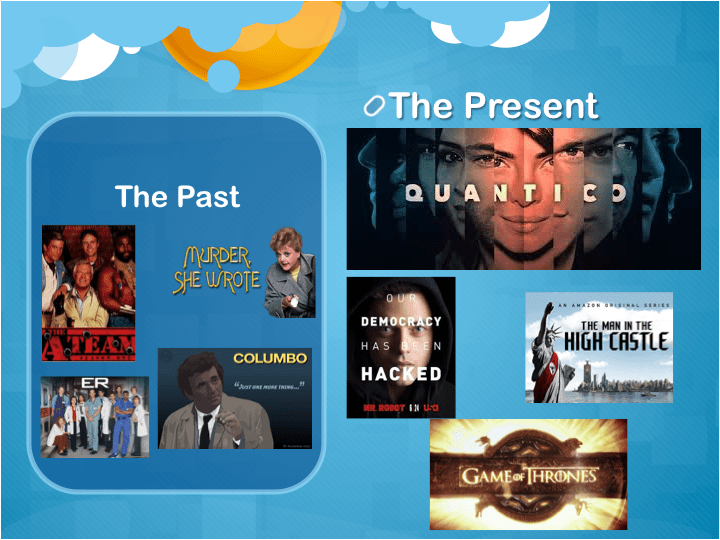
The launch of 24: Legacy helped crystalize my suspicion against the case of shorter attention spans. When the original 24 series launched in 2001, it was a tremendous success largely because it went from a model where an episode on network television was primarily self-contained to a story arc that spanned an entire season.

Fast forward to 2017 and most of the dramas on television involve a story arc that lasts a season (or more). From Game of Thrones to Luke Cage to Man in the High Castle to Mr. Robot, each episode leads to the next and the story arc is not complete until the end of the season. Even popular network television shows like Quantico and The Flash have story arcs that pull you from one episode to the next.

A season of a TV series now is closer to a mini-series in the 1970s and 1980s (Roots, V, Holocaust). Rather than watch a single episode and be done with it, people are eager to watch 10-13 episodes (about 10 hours of programming), demanding more, not less, attention of viewers.

slide1

Games also have captured our attention for longer

Some would argue the rise of mobile, casual games shows that the game industry is experiencing shorter attention spans, as players are looking for a short (5-15 minute experience), but wait, maybe games are experiencing the same phenomenon as television. In the early 2000s people would wait anxiously and buy an Unreal or Halo or Final Fantasy, play it for days or weeks (often without sleeping or at least showering) and then go on the next big game. Now you may actually shower but instead of playing for days or weeks, you are actually playing the same game for years. The top grossing games in the iOS US iPad AppStore include Minecraft (launched 2009), Game of War (2013), DoubleDown (2010), and Candy Crush (2012), ranging in age from 4 to 7 years. These games shown that rather than lasting minutes, game players’ attention span last years.

What this means

Rather than just being an interesting discussion point, the attention span issue has significant implication for game producers as well as other entertainment companies. When you are designing your product, rather than just focusing on short and intense play sessions, understand how you will keep players engaged for years. Rather than trying to stick a metagame on top of your product, you need to build it for long-term engagement from the ground. Only then will you satisfy the demand for a sustained entertainment experience. And most importantly, never use conventional wisdom or common sense to plan your product or strategy.

Key takeaways

  • While it is commonly accepted that consumers’ attention span has decreased, the opposite is actually true.
  • Rather than just watching one television episode or play a game for a few days/weeks, viewers now will watch a full season to grasp the metastory and play the same game for years.
  • To satisfy the new consumer, you need to create entertainment products that can last for years, not minutes.

Share this:

  • Click to share on Facebook (Opens in new window) Facebook
  • Click to share on LinkedIn (Opens in new window) LinkedIn
Like Loading...
Unknown's avatarAuthor Lloyd MelnickPosted on March 1, 2017February 19, 2017Categories General Social Games Business, General Tech BusinessTags attention span, content, content roadmap, meta-storyLeave a comment on Do people really have a short attention span

Get my book on LTV

The definitive book on customer lifetime value, Understanding the Predictable, is now available in both print and Kindle formats on Amazon.

Understanding the Predictable delves into the world of Customer Lifetime Value (LTV), a metric that shows how much each customer is worth to your business. By understanding this metric, you can predict how changes to your product will impact the value of each customer. You will also learn how to apply this simple yet powerful method of predictive analytics to optimize your marketing and user acquisition.

For more information, click here

Follow The Business of Social Games and Casino on WordPress.com

Enter your email address to follow this blog and receive notifications of new posts by email.

Join 791 other subscribers

Most Recent Posts

  • Join me at PDMA Inspire for my talk on new product prioritization
  • Why keep studying?
  • The next three years of this blog
  • Interview with the CEO of Murka on the biggest growth opportunity in gaming, Barak David

Lloyd Melnick

This is Lloyd Melnick’s personal blog.  All views and opinions expressed on this website are mine alone and do not represent those of people, institutions or organizations that I may or may not be associated with in professional or personal capacity.

I am a serial builder of businesses (senior leadership on three exits worth over $700 million), successful in big (Disney, Stars Group/PokerStars, Zynga) and small companies (Merscom, Spooky Cool Labs) with over 20 years experience in the gaming and casino space.  Currently, I am the GM of VGW’s Chumba Casino and on the Board of Directors of Murka Games and Luckbox.

Topic Areas

  • Analytics (114)
  • Bayes' Theorem (8)
  • behavioral economics (8)
  • blue ocean strategy (14)
  • Crowdfunding (4)
  • DBA (2)
  • General Social Games Business (459)
  • General Tech Business (195)
  • Growth (88)
  • International Issues with Social Games (50)
  • Lloyd's favorite posts (101)
  • LTV (54)
  • Machine Learning (10)
  • Metaverse (1)
  • Mobile Platforms (37)
  • Prioritization (1)
  • Social Casino (52)
  • Social Games Marketing (105)
  • thinking fast and slow (5)
  • Uncategorized (33)

Social

  • View CasualGame’s profile on Facebook
  • View @lloydmelnick’s profile on Twitter
  • View lloydmelnick’s profile on LinkedIn

RSS

RSS Feed RSS - Posts

RSS Feed RSS - Comments

Categories

  • Analytics (114)
  • Bayes' Theorem (8)
  • behavioral economics (8)
  • blue ocean strategy (14)
  • Crowdfunding (4)
  • DBA (2)
  • General Social Games Business (459)
  • General Tech Business (195)
  • Growth (88)
  • International Issues with Social Games (50)
  • Lloyd's favorite posts (101)
  • LTV (54)
  • Machine Learning (10)
  • Metaverse (1)
  • Mobile Platforms (37)
  • Prioritization (1)
  • Social Casino (52)
  • Social Games Marketing (105)
  • thinking fast and slow (5)
  • Uncategorized (33)

Archives

  • September 2023
  • December 2021
  • July 2021
  • March 2021
  • February 2021
  • January 2021
  • December 2020
  • November 2020
  • October 2020
  • September 2020
  • August 2020
  • July 2020
  • June 2020
  • May 2020
  • April 2020
  • March 2020
  • February 2020
  • January 2020
  • November 2019
  • October 2019
  • September 2019
  • June 2019
  • May 2019
  • April 2019
  • March 2019
  • February 2019
  • January 2019
  • December 2018
  • June 2018
  • May 2018
  • April 2018
  • March 2018
  • February 2018
  • January 2018
  • December 2017
  • June 2017
  • May 2017
  • April 2017
  • March 2017
  • February 2017
  • January 2017
  • December 2016
  • November 2016
  • October 2016
  • September 2016
  • June 2016
  • May 2016
  • April 2016
  • March 2016
  • February 2016
  • January 2016
  • December 2015
  • November 2015
  • October 2015
  • September 2015
  • July 2015
  • June 2015
  • May 2015
  • April 2015
  • March 2015
  • February 2015
  • January 2015
  • December 2014
  • November 2014
  • October 2014
  • September 2014
  • August 2014
  • July 2014
  • June 2014
  • May 2014
  • April 2014
  • March 2014
  • February 2014
  • January 2014
  • December 2013
  • November 2013
  • October 2013
  • September 2013
  • August 2013
  • July 2013
  • June 2013
  • May 2013
  • April 2013
  • March 2013
  • February 2013
  • January 2013
  • December 2012
  • November 2012
  • October 2012
  • September 2012
  • August 2012
  • July 2012
  • June 2012
  • May 2012
  • April 2012
  • March 2012
  • February 2012
  • January 2012
  • December 2011
  • November 2011
  • October 2011
  • September 2011
  • August 2011
  • July 2011
  • June 2011
  • May 2011
  • December 2010
December 2025
S M T W T F S
 123456
78910111213
14151617181920
21222324252627
28293031  
« Sep    

by Lloyd Melnick

All posts by Lloyd Melnick unless specified otherwise
Google+

Enter your email address to subscribe to this blog and receive notifications of new posts by email.

Join 791 other subscribers
Follow Lloyd Melnick on Quora

RSS HBR Blog

  • How One Manufacturer Achieved Net Zero at Zero Cost
  • What Can U.S. Employers Do About Rising Healthcare Costs?
  • When You Have to Execute a Strategy You Disagree With
  • 4 Ways to Build Durable Relationships with Your Most Important Customers
  • What Jargon Says About Your Company Culture
  • Research: When Used Correctly, LLMs Can Unlock More Creative Ideas
  • Your New Role Requires Strategic Thinking…But You’re Stuck in the Weeds
  • For Circular Economy Innovation, Look to the Global South
  • Why Great Leaders Focus on the Details
  • Corporate Disclosure in the Age of AI

RSS Techcrunch

  • An error has occurred; the feed is probably down. Try again later.

RSS MIT Sloan Management Review Blog

  • AI Coding Tools: The Productivity Trap Most Companies Miss
  • How Procter & Gamble Uses AI to Unlock New Insights From Data
  • Rewire Organizational Knowledge With GenAI
  • Hungry for Learning: Wendy’s Will Croushorn
  • Beat Burnout: 10 Essential MIT SMR Reads
  • How Leaders Stay True to Themselves and Their Stakeholders
  • Our Guide to the Winter 2026 Issue
  • Broadening Future Perspectives at the Bank of England
  • A Faster Way to Build Future Scenarios
  • Assess What Is Certain in a Sea of Unknowns
The Business of Social Games and Casino Website Powered by WordPress.com.
  • Subscribe Subscribed
    • The Business of Social Games and Casino
    • Join 726 other subscribers
    • Already have a WordPress.com account? Log in now.
    • The Business of Social Games and Casino
    • Subscribe Subscribed
    • Sign up
    • Log in
    • Report this content
    • View site in Reader
    • Manage subscriptions
    • Collapse this bar
 

Loading Comments...
 

    %d