
Skip to content

The Business of Social Games and Casino

How to succeed in the mobile game space by Lloyd Melnick

Tag: hiring

Up-skillOR vs Up-skillEE

Up-skillOR vs Up-skillEE

There are several critical business decisions that are driven, often subconsciously, by arrogance; one of the most critical is around recruiting and hiring. I often write about Blue Ocean strategy but despite its proven higher ROI, companies still regularly pursue a Red Ocean approach driven by overconfidence that they are simply smarter than their competitors (your competitors also think they are smarter). Recruiting is another area where overconfidence and arrogance can not only lead to sub-optimal decisions but also inhibit growth.

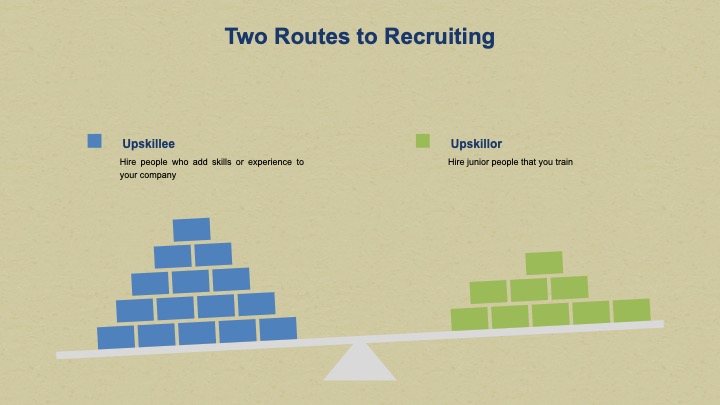
The mistake is rooted in the belief that they can train someone to fill an open position so the person would out-perform a candidate with experience. Thinking you will do a better job of training the person than a previous employer is an example of arrogance, unless you have a proven and reputation as being the best of the best, it is unlikely you can actually train someone to be the best of the best. More importantly, you neglect a tremendous opportunity for your company.
Slide1

Up-skilling your company is more important

One of the biggest opportunities when recruiting is improving your company’s skillset. One of the very best people who ever worked for me, who has now gone on to achieve much bigger and better things, taught me never to hire someone who did not bring a new skill or attribute to the team. When he interviewed candidates, he not only ensured they had the skills for the target position, he would reject anyone (and it did make recruiting challenging often) who did not add something to the team. If we had a bunch of great producers, he would hire another producer who was not only fantastic at production management but might have design skills our team lacked. If he was hiring a designer, rather than take another strong artist, he would wait for an artist who was not only talented but may have come from a different industry that had a unique take on UI.

What his approach showed me (and the results were incredible) was that the real value in hiring is not filling a need but up-skilling everyone on your existing team and making them better. You can look at it mathematically:

  • Candidate A is brilliant. You can train her to be a great performer. She will deliver 100% value * X (where X is output) after you train him, thus the ultimate value to the company is X.
  • Candidate B is very good and but also brings a new skill (i.e. live operations management). She will be very good at her job (maybe a little weaker but I am not advocating accepting weaker candidates), so 90% * X. Other people on your team will also learn live ops management from her, making them all 10% better. Even if that is only 5 people, that adds 5 * X *.1; .5X. The total value to the company of this hire is 1.4X (so 0.5 better), not even considering the training costs avoided with candidate A.

Although this example is an over-simplification, it shows the leverage in hiring an experienced candidate and bringing their skills to your organization rather than focusing on developing a great employee from scratch.

You may not be ready to train to be the best

Unless you are truly the best in the world at something, you will not be able to train someone to be the best. At most, you will train them to be as good as you. If you are a Designer, you might believe you can train a designer who is coming straight out of university to be great. The reality is hiring a Designer who worked at Apple and was trained by Jony Ive is likely to yield a better designer than you could ever develop.

In effect, you are capping the new hire at the skillset of the person or people who will train them. Very few people are the best in the world, so assuming your company can do a better job training someone than anyone else could train them reflects arrogance rather than farsightedness.

You are missing a critical indicator of performance

Another problem with hiring with the intent to teach the candidate the job is your missing during the recruitment process the best indicator of how they will perform. While “past performance does not guarantee future success,” as anyone who has ever read an advertisement for a mutual fund knows, it is a damn good indicator with job candidates. As I previously wrote, interviews, personality tests, reference checks, etc., create an illusion of validity when evaluating candidates and are highly inaccurate. Conversely, work samples and experience are most predictive of success in a role. If you are hiring someone who has never had a similar role, with the plan to train them, you increase greatly the chance of a bad hire.

Experience is not an excuse for mediocrity

One important consideration when hiring someone is that experience should not be an excuse for accepting mediocrity. While there are benefits to bringing on someone with experience, it does negate the need to hire a great candidate. Someone with a mediocre track record probably has a low ceiling; they will be perpetually mediocre and not help your organization significantly.

You should also not equate a big name company on someone’s resume with great experience. There are both good and bad people at big (and even great) companies, it is actually often easier for these people to hide their weaknesses at a big company (their great colleagues can compensate for their weaknesses). You need to assess whether they did a great job at the position you are hiring for, not whether their company had great results.

Internship programs are great

This post should not be seen as a black and white blueprint for hiring, as there are many great opportunities to hire people with little or no experience, particularly creating an internship program. There are certain positions where experience is not needed or helpful. There are junior positions where it is quite easy to train people (though you still miss the opportunity to bring in people with different skills or experiences).

Finally, and most importantly, bringing in younger interns generates cognitive diversity. They will probably bring a fresh way of thinking to your team, challenge some conventional wisdom and potentially make everyone better.

Recruiting moving forward

The next time you are recruiting, particularly if it is for a somewhat senior position, look beyond the position and see how you can best help your organization. Realize you cannot train the person to be better than you. Understand the opportunity to bring new skills to your team. Hire the best, but make sure you know what best looks like for you.

Key takeaways

  1. Recruiting candidates with the expectation you will train (upskill) them to do the target job well shows an arrogance that you think you can train them better than anyone else has.
  2. Upskilling people ensures your team does not go to the next level, you set your current skillset as the ceiling.
  3. You also miss the opportunity to bring new skills and experiences to your team, where the new hire can make everyone else more valuable.

Share this:

  • Click to share on Facebook (Opens in new window) Facebook
  • Click to share on LinkedIn (Opens in new window) LinkedIn
Like Loading...
Unknown's avatarAuthor Lloyd MelnickPosted on November 24, 2020April 24, 2021Categories General Social Games Business, General Tech BusinessTags hiring, recruiting, Up-skill1 Comment on Up-skillOR vs Up-skillEE

Look closely at track record, with the emphasis on closely

You often hear how important it is to look at a person or company’s history before hiring, investing, etc., and although it is crucial, it is also crucial to do more than look superficially. Conversely, just looking superficially can cause significant damage and lead you into a bad decision.

track

Using track record when hiring

Probably the most important factor when considering a candidate is what they have previously done in their career. While a weak candidate can shine for a day of interviews and a great candidate may not be good in an interview environment, what a person has done previously in their career is a strong indicator of what they can do for you.

The challenge is how to analyze a person’s track record. If you look on LinkedIn, 90 percent of people are all in the top 10 percent. In some cases (though I have found it rare among candidates for senior positions), people lie about their prior roles and achievements. This issue is easy to uncover; you just need to ensure you do your due diligence on background and reference checks. The one caveat is not to rely on the references that you are given, as almost anyone can find three or four people (often friends) that will say good things about them. You need to dig deeper, for key positions and achievements figure out who they reported to or worked with, then reach out directly to those people (I usually use LinkedIn) to get the real story.

The other key element of checking candidates’ track records is understanding their true roles on the major achievements they tout. Continue reading “Look closely at track record, with the emphasis on closely”

Share this:

  • Click to share on Facebook (Opens in new window) Facebook
  • Click to share on LinkedIn (Opens in new window) LinkedIn
Like Loading...
Unknown's avatarAuthor Lloyd MelnickPosted on October 16, 2014October 21, 2014Categories General Social Games Business, General Tech BusinessTags hiring, investment, recruiting, track record, VCLeave a comment on Look closely at track record, with the emphasis on closely

How to find talented employees

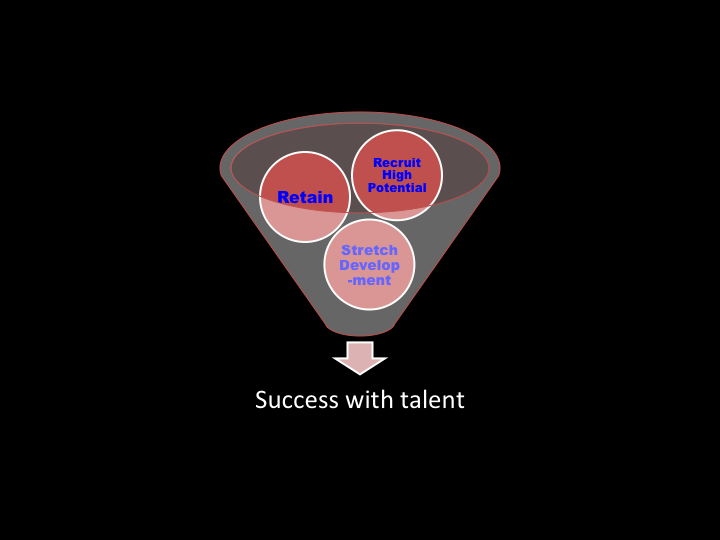
Finding strong members for your team is one of the most important skills needed to succeed and a recent Harvard Business Review article, “21st Century Talent Spotting” by Claudio Fernandez-Araoz, provides some strong insights on how to optimize your talent search. With skills and competencies now the key to finding employees, rather than past experience, you must become skilled at judging potential. This situation is exacerbated by the rapidly changing nature of the tech and game spaces, what worked yesterday are not necessarily the skills you need today.
Slide1
In the last millennium, workers were selected for physical attributes which readily translated into higher success at physical labor, from building a canal to fighting a war. Business then evolved to judge candidates on intelligence, experience and past performance. Much work was standardized, so if you were looking for an engineer or an accountant or a CEO, you would find somebody who has already succeeded in such a role and there was a high likelihood they would replicate this success. Then hiring evolved to the competency model, which stipulated that managers (and other workers) be evaluated on specific characteristics and skills that would help predict outstanding performance in the roles for which they were being hired. Hiring managers would decompose jobs into competencies and look for candidates with the best combination of these skills. Continue reading “How to find talented employees”

Share this:

  • Click to share on Facebook (Opens in new window) Facebook
  • Click to share on LinkedIn (Opens in new window) LinkedIn
Like Loading...
Unknown's avatarAuthor Lloyd MelnickPosted on August 27, 2014October 14, 2014Categories General Social Games BusinessTags Claudio Fernandez-Araoz, development, hiring, HR, Potential, recruiting, retention, stretch development, talent1 Comment on How to find talented employees

Bayes’ Theorem Part 6: Making the best hiring choices

I have written several blog posts on how Bayes’ Rule can help you make better business decisions and application of this theorem. One of the areas where Bayes’ Rule is most often neglected is in hiring decisions. Often, rational and data driven individuals and organizations abandon the rules of optimal decision-making and rely on intuition.

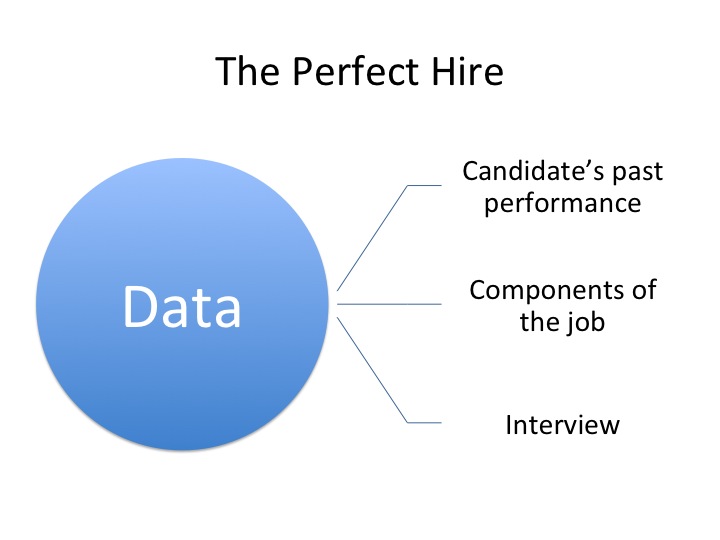
At its core, Bayes’ Rule shows how you can optimize the chance of a correct decision by looking at previous data points that encompass the decision you are trying to make. In the case of hiring, this analysis would be more effective by looking at the metrics and data that shows who succeeds, looking at what makes someone successful in the position you are hiring for and reducing the impact of data that does not lead to good hiring decisions.

What most companies end up doing is using data as a filter but then hiring based on intuition. If you really want to make good decisions, you need to understand your intuition is only one (weak) data point and base the decision on Bayes’ Theorem, using past data to make the optimal decision.
Slide1

What has worked for others

First, look at the position you are hiring for and identify the most successful people (at other companies or at your’s) in the field and “reverse engineer” their background. What experience(s) did they have before they were hired? What is their educational background (school, degree, extra curricular activities, etc.)? Using Bayes’ Rule, if you are hiring for a Director of Social Media and find that 90 percent of the top performing Directors of Social Media went to Texas A&M, then the chances of making a good hire from Texas Tech is already at less than 10 percent. Continue reading “Bayes’ Theorem Part 6: Making the best hiring choices”

Share this:

  • Click to share on Facebook (Opens in new window) Facebook
  • Click to share on LinkedIn (Opens in new window) LinkedIn
Like Loading...
Unknown's avatarAuthor Lloyd MelnickPosted on May 1, 2014May 29, 2014Categories Bayes' Theorem, General Social Games BusinessTags Bayes' Rule, Bayes' Theorem, hiring, recruitingLeave a comment on Bayes’ Theorem Part 6: Making the best hiring choices

Get my book on LTV

The definitive book on customer lifetime value, Understanding the Predictable, is now available in both print and Kindle formats on Amazon.

Understanding the Predictable delves into the world of Customer Lifetime Value (LTV), a metric that shows how much each customer is worth to your business. By understanding this metric, you can predict how changes to your product will impact the value of each customer. You will also learn how to apply this simple yet powerful method of predictive analytics to optimize your marketing and user acquisition.

For more information, click here

Follow The Business of Social Games and Casino on WordPress.com

Enter your email address to follow this blog and receive notifications of new posts by email.

Join 791 other subscribers

Most Recent Posts

  • Join me at PDMA Inspire for my talk on new product prioritization
  • Why keep studying?
  • The next three years of this blog
  • Interview with the CEO of Murka on the biggest growth opportunity in gaming, Barak David

Lloyd Melnick

This is Lloyd Melnick’s personal blog.  All views and opinions expressed on this website are mine alone and do not represent those of people, institutions or organizations that I may or may not be associated with in professional or personal capacity.

I am a serial builder of businesses (senior leadership on three exits worth over $700 million), successful in big (Disney, Stars Group/PokerStars, Zynga) and small companies (Merscom, Spooky Cool Labs) with over 20 years experience in the gaming and casino space.  Currently, I am the GM of VGW’s Chumba Casino and on the Board of Directors of Murka Games and Luckbox.

Topic Areas

  • Analytics (114)
  • Bayes' Theorem (8)
  • behavioral economics (8)
  • blue ocean strategy (14)
  • Crowdfunding (4)
  • DBA (2)
  • General Social Games Business (459)
  • General Tech Business (195)
  • Growth (88)
  • International Issues with Social Games (50)
  • Lloyd's favorite posts (101)
  • LTV (54)
  • Machine Learning (10)
  • Metaverse (1)
  • Mobile Platforms (37)
  • Prioritization (1)
  • Social Casino (52)
  • Social Games Marketing (105)
  • thinking fast and slow (5)
  • Uncategorized (33)

Social

  • View CasualGame’s profile on Facebook
  • View @lloydmelnick’s profile on Twitter
  • View lloydmelnick’s profile on LinkedIn

RSS

RSS Feed RSS - Posts

RSS Feed RSS - Comments

Categories

  • Analytics (114)
  • Bayes' Theorem (8)
  • behavioral economics (8)
  • blue ocean strategy (14)
  • Crowdfunding (4)
  • DBA (2)
  • General Social Games Business (459)
  • General Tech Business (195)
  • Growth (88)
  • International Issues with Social Games (50)
  • Lloyd's favorite posts (101)
  • LTV (54)
  • Machine Learning (10)
  • Metaverse (1)
  • Mobile Platforms (37)
  • Prioritization (1)
  • Social Casino (52)
  • Social Games Marketing (105)
  • thinking fast and slow (5)
  • Uncategorized (33)

Archives

  • September 2023
  • December 2021
  • July 2021
  • March 2021
  • February 2021
  • January 2021
  • December 2020
  • November 2020
  • October 2020
  • September 2020
  • August 2020
  • July 2020
  • June 2020
  • May 2020
  • April 2020
  • March 2020
  • February 2020
  • January 2020
  • November 2019
  • October 2019
  • September 2019
  • June 2019
  • May 2019
  • April 2019
  • March 2019
  • February 2019
  • January 2019
  • December 2018
  • June 2018
  • May 2018
  • April 2018
  • March 2018
  • February 2018
  • January 2018
  • December 2017
  • June 2017
  • May 2017
  • April 2017
  • March 2017
  • February 2017
  • January 2017
  • December 2016
  • November 2016
  • October 2016
  • September 2016
  • June 2016
  • May 2016
  • April 2016
  • March 2016
  • February 2016
  • January 2016
  • December 2015
  • November 2015
  • October 2015
  • September 2015
  • July 2015
  • June 2015
  • May 2015
  • April 2015
  • March 2015
  • February 2015
  • January 2015
  • December 2014
  • November 2014
  • October 2014
  • September 2014
  • August 2014
  • July 2014
  • June 2014
  • May 2014
  • April 2014
  • March 2014
  • February 2014
  • January 2014
  • December 2013
  • November 2013
  • October 2013
  • September 2013
  • August 2013
  • July 2013
  • June 2013
  • May 2013
  • April 2013
  • March 2013
  • February 2013
  • January 2013
  • December 2012
  • November 2012
  • October 2012
  • September 2012
  • August 2012
  • July 2012
  • June 2012
  • May 2012
  • April 2012
  • March 2012
  • February 2012
  • January 2012
  • December 2011
  • November 2011
  • October 2011
  • September 2011
  • August 2011
  • July 2011
  • June 2011
  • May 2011
  • December 2010
December 2025
S M T W T F S
 123456
78910111213
14151617181920
21222324252627
28293031  
« Sep    

by Lloyd Melnick

All posts by Lloyd Melnick unless specified otherwise
Google+

Enter your email address to subscribe to this blog and receive notifications of new posts by email.

Join 791 other subscribers
Follow Lloyd Melnick on Quora

RSS HBR Blog

  • How One Manufacturer Achieved Net Zero at Zero Cost
  • What Can U.S. Employers Do About Rising Healthcare Costs?
  • When You Have to Execute a Strategy You Disagree With
  • 4 Ways to Build Durable Relationships with Your Most Important Customers
  • What Jargon Says About Your Company Culture
  • Research: When Used Correctly, LLMs Can Unlock More Creative Ideas
  • Your New Role Requires Strategic Thinking…But You’re Stuck in the Weeds
  • For Circular Economy Innovation, Look to the Global South
  • Why Great Leaders Focus on the Details
  • Corporate Disclosure in the Age of AI

RSS Techcrunch

  • An error has occurred; the feed is probably down. Try again later.

RSS MIT Sloan Management Review Blog

  • AI Coding Tools: The Productivity Trap Most Companies Miss
  • How Procter & Gamble Uses AI to Unlock New Insights From Data
  • Rewire Organizational Knowledge With GenAI
  • Hungry for Learning: Wendy’s Will Croushorn
  • Beat Burnout: 10 Essential MIT SMR Reads
  • How Leaders Stay True to Themselves and Their Stakeholders
  • Our Guide to the Winter 2026 Issue
  • Broadening Future Perspectives at the Bank of England
  • A Faster Way to Build Future Scenarios
  • Assess What Is Certain in a Sea of Unknowns
The Business of Social Games and Casino Website Powered by WordPress.com.
  • Subscribe Subscribed
    • The Business of Social Games and Casino
    • Join 726 other subscribers
    • Already have a WordPress.com account? Log in now.
    • The Business of Social Games and Casino
    • Subscribe Subscribed
    • Sign up
    • Log in
    • Report this content
    • View site in Reader
    • Manage subscriptions
    • Collapse this bar
 

Loading Comments...
 

    %d