Skip to content

The Business of Social Games and Casino

How to succeed in the mobile game space by Lloyd Melnick

Tag: politics

What really drives politics in your company

Key takeaways

  • Information is the strongest driver of corporate politics. Having information conveys power and people will trade power or favors for information.
  • In a political environment, not only is time wasted on politics, good people leave because they feel they have lost the political battle and decisions are not always taken on merit.
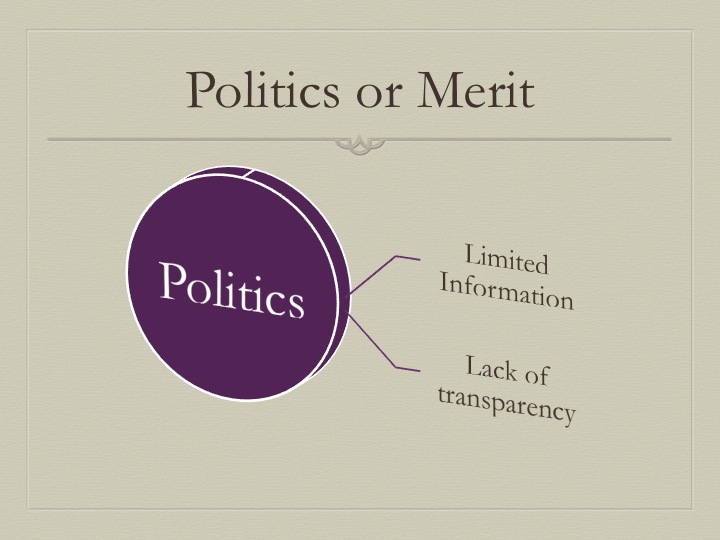
  • The best solution to fight politics is transparency. The more widely disseminated information is within a company, the less incentive there will be for corporate politics.

Most business leaders talk about and thrive to build a meritocracy where there are no politics, yet politics often dominate companies large and small. In fact, I have never seen a company in favor of a political environment. I have worked in tiny start-ups and some of the largest companies in the world, however, and politics are often a problem. Unfortunately, even one company that I co-founded in retrospect had a much bigger issue with politics than I realized at the time. In a political environment, not only is time wasted on politics, good people leave because they feel they have lost the political battle and decisions are not always taken on merit.

slide1

Information is power

What I understand now is that the biggest driver of company politics is information. The more a company restricts the flow of information about strategy, performance, the movement/promotion of people, etc., the greater the level of corporate politics.

Lack of transparency breeds information is power syndrome. There are several reasons why information leads to politics:

  1. Information becomes a commodity, and with any commodity is has a value. People naturally want to know what is happening at their company, whether it means if they are opening a new office or promoting a new SVP. With anything people want, they will pay for it. Rather than paying with money, in a corporate setting they will pay with support or other information. Effectively, they will buy the information with other information or with favors that may or may not be in the overall corporate interests.
  2. Those with information have more power. Since people are willing to provide value for information, those with the information are able to generate support for their goals. This provides the holders of information to form coalitions that further their interests.
  3. Information creates prestige. Since information is a conduit to power, it also becomes a symbol of prestige. To know something that others do not know implies you are more powerful than those who are “ignorant.”
  4. Watching virtually any election in the world, it is clear people will do almost anything to protect their power. If the corporate environment has created an atmosphere where information is power, then people will protect their privilege to hold information. They will advocate for tighter information streams, though always with them having access to the information. They will also aggressively criticize those who share information (again, outside of themselves) because any information sharing devalues what they hold. They will also often look for justification (labor law, securities regulation, etc) to limit information flows.

Transparency trumps politics

It is not rocket science to conclude the best solution to fight politics is transparency. The more widely disseminated information is within a company, the less incentive there will be for corporate politics. Thus, you need to look closely at any information you are not sharing broadly and determine if there is a good reason not to share (rather than looking for a good reason to share). If someone claims regulatory or legal reasons, push back, especially if other companies share similar information. If you change the environment, information will not drive power, merit will.

Share this:

  • Click to share on Facebook (Opens in new window) Facebook
  • Click to share on LinkedIn (Opens in new window) LinkedIn
Like Loading...
Unknown's avatarAuthor Lloyd MelnickPosted on November 16, 2016November 5, 2016Categories General Social Games Business, General Tech BusinessTags politics, TeamworkLeave a comment on What really drives politics in your company

Dealing with emotions and politics during a change initiative

Change is the cornerstone of building a successful a business, but while many people look at the strategic reasons to pivot equally important for triumph is managing the politics and emotions involved. Left unattended, skepticism, fear, and panic can wreak havoc on any pivot. These emotions create resistance, distraction and burnout when you are trying to make a strategic or tactical change. A recent article in the MIT Sloan Management Review by Ellen Auster and Trish Ruebottom highlights a five-step process to address these issues.

Change

Continue reading “Dealing with emotions and politics during a change initiative”

Share this:

  • Click to share on Facebook (Opens in new window) Facebook
  • Click to share on LinkedIn (Opens in new window) LinkedIn
Like Loading...
Unknown's avatarAuthor Lloyd MelnickPosted on July 11, 2013July 18, 2013Categories General Social Games BusinessTags Change, emotions, politicsLeave a comment on Dealing with emotions and politics during a change initiative

Get my book on LTV

The definitive book on customer lifetime value, Understanding the Predictable, is now available in both print and Kindle formats on Amazon.

Understanding the Predictable delves into the world of Customer Lifetime Value (LTV), a metric that shows how much each customer is worth to your business. By understanding this metric, you can predict how changes to your product will impact the value of each customer. You will also learn how to apply this simple yet powerful method of predictive analytics to optimize your marketing and user acquisition.

For more information, click here

Follow The Business of Social Games and Casino on WordPress.com

Enter your email address to follow this blog and receive notifications of new posts by email.

Join 791 other subscribers

Most Recent Posts

  • Join me at PDMA Inspire for my talk on new product prioritization
  • Why keep studying?
  • The next three years of this blog
  • Interview with the CEO of Murka on the biggest growth opportunity in gaming, Barak David

Lloyd Melnick

This is Lloyd Melnick’s personal blog.  All views and opinions expressed on this website are mine alone and do not represent those of people, institutions or organizations that I may or may not be associated with in professional or personal capacity.

I am a serial builder of businesses (senior leadership on three exits worth over $700 million), successful in big (Disney, Stars Group/PokerStars, Zynga) and small companies (Merscom, Spooky Cool Labs) with over 20 years experience in the gaming and casino space.  Currently, I am the GM of VGW’s Chumba Casino and on the Board of Directors of Murka Games and Luckbox.

Topic Areas

  • Analytics (114)
  • Bayes' Theorem (8)
  • behavioral economics (8)
  • blue ocean strategy (14)
  • Crowdfunding (4)
  • DBA (2)
  • General Social Games Business (459)
  • General Tech Business (195)
  • Growth (88)
  • International Issues with Social Games (50)
  • Lloyd's favorite posts (101)
  • LTV (54)
  • Machine Learning (10)
  • Metaverse (1)
  • Mobile Platforms (37)
  • Prioritization (1)
  • Social Casino (52)
  • Social Games Marketing (105)
  • thinking fast and slow (5)
  • Uncategorized (33)

Social

  • View CasualGame’s profile on Facebook
  • View @lloydmelnick’s profile on Twitter
  • View lloydmelnick’s profile on LinkedIn

RSS

RSS Feed RSS - Posts

RSS Feed RSS - Comments

Categories

  • Analytics (114)
  • Bayes' Theorem (8)
  • behavioral economics (8)
  • blue ocean strategy (14)
  • Crowdfunding (4)
  • DBA (2)
  • General Social Games Business (459)
  • General Tech Business (195)
  • Growth (88)
  • International Issues with Social Games (50)
  • Lloyd's favorite posts (101)
  • LTV (54)
  • Machine Learning (10)
  • Metaverse (1)
  • Mobile Platforms (37)
  • Prioritization (1)
  • Social Casino (52)
  • Social Games Marketing (105)
  • thinking fast and slow (5)
  • Uncategorized (33)

Archives

  • September 2023
  • December 2021
  • July 2021
  • March 2021
  • February 2021
  • January 2021
  • December 2020
  • November 2020
  • October 2020
  • September 2020
  • August 2020
  • July 2020
  • June 2020
  • May 2020
  • April 2020
  • March 2020
  • February 2020
  • January 2020
  • November 2019
  • October 2019
  • September 2019
  • June 2019
  • May 2019
  • April 2019
  • March 2019
  • February 2019
  • January 2019
  • December 2018
  • June 2018
  • May 2018
  • April 2018
  • March 2018
  • February 2018
  • January 2018
  • December 2017
  • June 2017
  • May 2017
  • April 2017
  • March 2017
  • February 2017
  • January 2017
  • December 2016
  • November 2016
  • October 2016
  • September 2016
  • June 2016
  • May 2016
  • April 2016
  • March 2016
  • February 2016
  • January 2016
  • December 2015
  • November 2015
  • October 2015
  • September 2015
  • July 2015
  • June 2015
  • May 2015
  • April 2015
  • March 2015
  • February 2015
  • January 2015
  • December 2014
  • November 2014
  • October 2014
  • September 2014
  • August 2014
  • July 2014
  • June 2014
  • May 2014
  • April 2014
  • March 2014
  • February 2014
  • January 2014
  • December 2013
  • November 2013
  • October 2013
  • September 2013
  • August 2013
  • July 2013
  • June 2013
  • May 2013
  • April 2013
  • March 2013
  • February 2013
  • January 2013
  • December 2012
  • November 2012
  • October 2012
  • September 2012
  • August 2012
  • July 2012
  • June 2012
  • May 2012
  • April 2012
  • March 2012
  • February 2012
  • January 2012
  • December 2011
  • November 2011
  • October 2011
  • September 2011
  • August 2011
  • July 2011
  • June 2011
  • May 2011
  • December 2010
December 2025
S M T W T F S
 123456
78910111213
14151617181920
21222324252627
28293031  
« Sep    

by Lloyd Melnick

All posts by Lloyd Melnick unless specified otherwise
Google+

Enter your email address to subscribe to this blog and receive notifications of new posts by email.

Join 791 other subscribers
Follow Lloyd Melnick on Quora

RSS HBR Blog

  • How One Manufacturer Achieved Net Zero at Zero Cost
  • What Can U.S. Employers Do About Rising Healthcare Costs?
  • When You Have to Execute a Strategy You Disagree With
  • 4 Ways to Build Durable Relationships with Your Most Important Customers
  • What Jargon Says About Your Company Culture
  • Research: When Used Correctly, LLMs Can Unlock More Creative Ideas
  • Your New Role Requires Strategic Thinking…But You’re Stuck in the Weeds
  • For Circular Economy Innovation, Look to the Global South
  • Why Great Leaders Focus on the Details
  • Corporate Disclosure in the Age of AI

RSS Techcrunch

  • An error has occurred; the feed is probably down. Try again later.

RSS MIT Sloan Management Review Blog

  • AI Coding Tools: The Productivity Trap Most Companies Miss
  • How Procter & Gamble Uses AI to Unlock New Insights From Data
  • Rewire Organizational Knowledge With GenAI
  • Hungry for Learning: Wendy’s Will Croushorn
  • Beat Burnout: 10 Essential MIT SMR Reads
  • How Leaders Stay True to Themselves and Their Stakeholders
  • Our Guide to the Winter 2026 Issue
  • Broadening Future Perspectives at the Bank of England
  • A Faster Way to Build Future Scenarios
  • Assess What Is Certain in a Sea of Unknowns
The Business of Social Games and Casino Website Powered by WordPress.com.
  • Subscribe Subscribed
    • The Business of Social Games and Casino
    • Join 726 other subscribers
    • Already have a WordPress.com account? Log in now.
    • The Business of Social Games and Casino
    • Subscribe Subscribed
    • Sign up
    • Log in
    • Report this content
    • View site in Reader
    • Manage subscriptions
    • Collapse this bar
 

Loading Comments...
 

    %d