Skip to content

The Business of Social Games and Casino

How to succeed in the mobile game space by Lloyd Melnick

Tag: Psychology

How to change bad habits, the neuroscience way

How to change bad habits, the neuroscience way

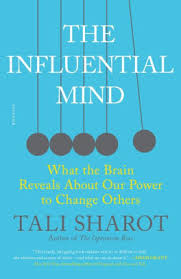
I have written repeatedly that people do not often behave rationally, and Tali Sharot’s book, An Influential Mind,helps show that much of this irrationality is hardwired into our brains. Sharot writes how our brains are “hard-wired”, which makes it challenging to break bad habits. Instead, by understanding how we our brain works, we can adjust both our own bad habits and help others.
influential mind

We are all hedonists

Not much of a surprise but people are wired to strive for pleasure. The corollary, and more important takeaway, is that this principle cannot be unlearned. It is a waste of time and resources to try to get people (or yourself) not to pursue pleasure. Instead, it is best to channel this pursuit in yourself and in others.

When motivating your employees or potential customers, it is much stronger if you do it by offering them “pleasure.” When offered a reward, the brain kicks into gear, and people experience quick and alert responses. If the potential result is something bad, the brain turns sluggish, and their responses suffer. Thus, the carrot is better than the stick in driving optimal behavior.

Control is important

Having control of one’s life is a very instinctual desire, it provides happiness. People are happier when they are in control. Sharot points out the same situation exists in the office. If you want happier employees, make sure they have input in making decisions that touch their daily work.
Studies have shown people are happier, and even live longer, if they have to participate and work for something rather than be served. Elderly people did better at a care home where they had to prepare their own meals. In the work environment, it is often superior to have the team that needs to create a product or develop software involved in crafting the product specifications, rather than just handing them the final spec and asking them to build it.

Humans are not flexible

One negative way of thinking that Sharot attacks is how once someone has made up their mind, they tend to ignore contrary information and forge ahead regardless. I have experience (all too frequently) how a colleague is sure they have the right strategy or process, does not listen to others, and then fails. This happens even when everyone else sees the negative outcome. It may have been launching a new product that will have no demand or analysing data incorrectly and making decisions based on that analysis, then when the product is launched or project is done, it turns out to be an abject failure. Upon retrospection, the question is asked how did this mistake happen.

Research has found this inflexible decision-making is programmed into the brain. In an experiment, brain activity of participants was measured during the decision-making process and brain activity dropped significantly upon receiving bad information (that is, information that was contradictory to their original decision). This shows that when people commit to a decision, there is a natural defense mechanism that helps them avoid learning it is a bad decision.

To combat this defense mechanism, Sharot shows it is better to focus on presenting new factual information rather than arguing against the preconception. If you are trying to convince somebody their mobile game project will fail, do not attack the concept or the demo but present new information. Talk about new games on the market or new options. Do not try to discredit the belief, as people become resistant and defensive, often getting stronger in original idea. Instead, provide different, positive information.

Moods are contagious

The moods of others around you helps determine your mood. Based on MRI scans during political speeches, researchers learned that listeners often feel connected to the rest of the audience. This learning shows why people at a rally often react the same at particular points of a speech. Other research showed that negative posts on FB lead to more negative posts, while the inverse is also true. Good and bad moods are contagious, people’s brains synchronize. Their brains are connected, so moods are contagious.

There are several implications of contagious moods:

  • In a workplace, it is critical to maintain the mood and morale of your team. If several people on the team (or company) turn negative, it is likely to infect the entire organization.
  • Negative social media sentiment about a product could not only turn a few people against it but create a negative overall perception.
  • On a personal level, one or two family members can put the entire family in a good or bad mood, especially if they bring experiences from work or school home with them.

Entertainment trumps information

Related to the pursuit of pleasure, people pay more attention to entertainment than they do important information. Politics provide a great validation of this concept, Trump has tens of million Twitter followers because his tweets are entertaining. More people view a video of Congresswoman Alexandria Ocasio-Cortez dancing on a roof than discussing healthcare.

Another great example is the safety warnings on airplanes. It is probably more important to know what to do if there is an emergency landing than if you can reach the next level on Clash, but which one do most people focus on?

The lesson when building a product or game is that most tutorials will fail, instead people need to learn while being entertained. It also impacts how you communicate, an email or pop up listing benefits or features is not as effective as a fun GIF.

There is also a workplace impact of preferring entertainment to information. Sharot discusses that it might be easier to resolve a workplace conflict with a fun, novel solution rather than a lecture on the right way to do things.

Understanding the brain helps motivate yourself and others

The better you understand how the brain is structured and people’s motivation, the better you can interact with your family, colleagues and customers. Some of the most robust methods encompass remembering that everyone is motivated by pleasure seeking and reward and that people like to feel in control.

Key takeaways

  1. Our brains are “hard-wired”, which makes it challenging to break bad habits. By understanding how we our brain works, we can adjust both our own habits while helping others be more productive.
  2. People’s brains are designed to seek pleasure. Related to the pursuit of pleasure, people pay more attention to entertainment than they do important information.
  3. Having control of one’s life is a very instinctual desire, it provides happiness.

Share this:

  • Click to share on Facebook (Opens in new window) Facebook
  • Click to share on LinkedIn (Opens in new window) LinkedIn
Like Loading...
Unknown's avatarAuthor Lloyd MelnickPosted on May 28, 2019March 14, 2019Categories General Social Games Business, General Tech BusinessTags An Influential Mind, Consumer behavior, neuromarketing, PsychologyLeave a comment on How to change bad habits, the neuroscience way

Psychology that can improve your metrics

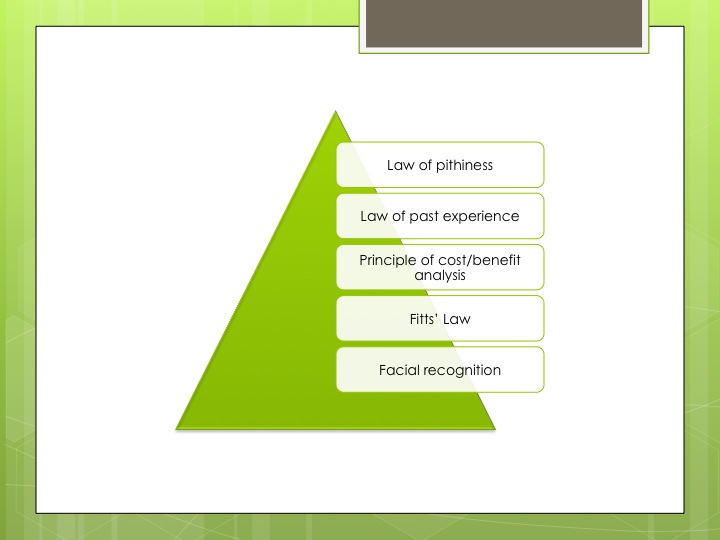
There was an interesting post recently on the Kissmetrics blog, “5 Psychological Principles of High Converting Websites,” that had some very interesting insights not just for website conversion but for overall product performance. Although I do not agree with all of these principles, understanding how your users think or play is crucial to success.

Slide1

Law of pithiness

The article starts with the law of pithiness, in which people tend to order their experiences in a symmetrical, simple manner. They prefer things that are clear and orderly, and are afraid of complex, complicated ideas or designs. The law of pithiness leads to a design principle that I think is critical: The simpler your product or game, the greater its chances for success. If it is a game, every second of training or tutorial reduces the chance it succeeds. If it is a product, the easier it is to use and the simpler it makes the users life, the more powerful it will be. Uber is successful because it takes about 15 seconds to hail a taxi, set the destination and pay. Social casinos games are habitually in the top grossing because you download the game, click on a slot machine, and you are playing. The more complex or difficult the process, the less likely for success.

Law of past experience

This principle suggests people interpret current experiences by their past experiences. If you try to change the way they need to do things, they are likely to not understand or rebel. For example, in your shopping cart or buy page, you may have a clever attractive icon for people to buy, but they are more likely to make a purchase if you have a button that says buy now because they remember that is how they make a purchase. Also, if you have an existing product with a large user base, you may improve the product but lose many of your existing users because they are used to using the product in a traditional way. For many years, in the land-based slot machine business, even when the slots went digital and only needed the push of a digital button, they had to include a mechanical arm because that is how people felt they should play a slot machine. Continue reading “Psychology that can improve your metrics”

Like Loading...
Unknown's avatarAuthor Lloyd MelnickPosted on October 28, 2014November 4, 2014Categories General Social Games Business, General Tech Business, GrowthTags cost/benefit, Facial recognition, Fitts Law, Kissmetrics, past experience, Pithiness, Psychology2 Comments on Psychology that can improve your metrics

Get my book on LTV

The definitive book on customer lifetime value, Understanding the Predictable, is now available in both print and Kindle formats on Amazon.

Understanding the Predictable delves into the world of Customer Lifetime Value (LTV), a metric that shows how much each customer is worth to your business. By understanding this metric, you can predict how changes to your product will impact the value of each customer. You will also learn how to apply this simple yet powerful method of predictive analytics to optimize your marketing and user acquisition.

For more information, click here

Follow The Business of Social Games and Casino on WordPress.com

Enter your email address to follow this blog and receive notifications of new posts by email.

Join 791 other subscribers

Most Recent Posts

  • Join me at PDMA Inspire for my talk on new product prioritization
  • Why keep studying?
  • The next three years of this blog
  • Interview with the CEO of Murka on the biggest growth opportunity in gaming, Barak David

Lloyd Melnick

This is Lloyd Melnick’s personal blog.  All views and opinions expressed on this website are mine alone and do not represent those of people, institutions or organizations that I may or may not be associated with in professional or personal capacity.

I am a serial builder of businesses (senior leadership on three exits worth over $700 million), successful in big (Disney, Stars Group/PokerStars, Zynga) and small companies (Merscom, Spooky Cool Labs) with over 20 years experience in the gaming and casino space.  Currently, I am the GM of VGW’s Chumba Casino and on the Board of Directors of Murka Games and Luckbox.

Topic Areas

  • Analytics (114)
  • Bayes' Theorem (8)
  • behavioral economics (8)
  • blue ocean strategy (14)
  • Crowdfunding (4)
  • DBA (2)
  • General Social Games Business (459)
  • General Tech Business (195)
  • Growth (88)
  • International Issues with Social Games (50)
  • Lloyd's favorite posts (101)
  • LTV (54)
  • Machine Learning (10)
  • Metaverse (1)
  • Mobile Platforms (37)
  • Prioritization (1)
  • Social Casino (52)
  • Social Games Marketing (105)
  • thinking fast and slow (5)
  • Uncategorized (33)

Social

  • View CasualGame’s profile on Facebook
  • View @lloydmelnick’s profile on Twitter
  • View lloydmelnick’s profile on LinkedIn

RSS

RSS Feed RSS - Posts

RSS Feed RSS - Comments

Categories

  • Analytics (114)
  • Bayes' Theorem (8)
  • behavioral economics (8)
  • blue ocean strategy (14)
  • Crowdfunding (4)
  • DBA (2)
  • General Social Games Business (459)
  • General Tech Business (195)
  • Growth (88)
  • International Issues with Social Games (50)
  • Lloyd's favorite posts (101)
  • LTV (54)
  • Machine Learning (10)
  • Metaverse (1)
  • Mobile Platforms (37)
  • Prioritization (1)
  • Social Casino (52)
  • Social Games Marketing (105)
  • thinking fast and slow (5)
  • Uncategorized (33)

Archives

  • September 2023
  • December 2021
  • July 2021
  • March 2021
  • February 2021
  • January 2021
  • December 2020
  • November 2020
  • October 2020
  • September 2020
  • August 2020
  • July 2020
  • June 2020
  • May 2020
  • April 2020
  • March 2020
  • February 2020
  • January 2020
  • November 2019
  • October 2019
  • September 2019
  • June 2019
  • May 2019
  • April 2019
  • March 2019
  • February 2019
  • January 2019
  • December 2018
  • June 2018
  • May 2018
  • April 2018
  • March 2018
  • February 2018
  • January 2018
  • December 2017
  • June 2017
  • May 2017
  • April 2017
  • March 2017
  • February 2017
  • January 2017
  • December 2016
  • November 2016
  • October 2016
  • September 2016
  • June 2016
  • May 2016
  • April 2016
  • March 2016
  • February 2016
  • January 2016
  • December 2015
  • November 2015
  • October 2015
  • September 2015
  • July 2015
  • June 2015
  • May 2015
  • April 2015
  • March 2015
  • February 2015
  • January 2015
  • December 2014
  • November 2014
  • October 2014
  • September 2014
  • August 2014
  • July 2014
  • June 2014
  • May 2014
  • April 2014
  • March 2014
  • February 2014
  • January 2014
  • December 2013
  • November 2013
  • October 2013
  • September 2013
  • August 2013
  • July 2013
  • June 2013
  • May 2013
  • April 2013
  • March 2013
  • February 2013
  • January 2013
  • December 2012
  • November 2012
  • October 2012
  • September 2012
  • August 2012
  • July 2012
  • June 2012
  • May 2012
  • April 2012
  • March 2012
  • February 2012
  • January 2012
  • December 2011
  • November 2011
  • October 2011
  • September 2011
  • August 2011
  • July 2011
  • June 2011
  • May 2011
  • December 2010
December 2025
S M T W T F S
 123456
78910111213
14151617181920
21222324252627
28293031  
« Sep    

by Lloyd Melnick

All posts by Lloyd Melnick unless specified otherwise
Google+

Enter your email address to subscribe to this blog and receive notifications of new posts by email.

Join 791 other subscribers
Follow Lloyd Melnick on Quora

RSS HBR Blog

  • How One Manufacturer Achieved Net Zero at Zero Cost
  • What Can U.S. Employers Do About Rising Healthcare Costs?
  • When You Have to Execute a Strategy You Disagree With
  • 4 Ways to Build Durable Relationships with Your Most Important Customers
  • What Jargon Says About Your Company Culture
  • Research: When Used Correctly, LLMs Can Unlock More Creative Ideas
  • Your New Role Requires Strategic Thinking…But You’re Stuck in the Weeds
  • For Circular Economy Innovation, Look to the Global South
  • Why Great Leaders Focus on the Details
  • Corporate Disclosure in the Age of AI

RSS Techcrunch

  • An error has occurred; the feed is probably down. Try again later.

RSS MIT Sloan Management Review Blog

  • AI Coding Tools: The Productivity Trap Most Companies Miss
  • How Procter & Gamble Uses AI to Unlock New Insights From Data
  • Rewire Organizational Knowledge With GenAI
  • Hungry for Learning: Wendy’s Will Croushorn
  • Beat Burnout: 10 Essential MIT SMR Reads
  • How Leaders Stay True to Themselves and Their Stakeholders
  • Our Guide to the Winter 2026 Issue
  • Broadening Future Perspectives at the Bank of England
  • A Faster Way to Build Future Scenarios
  • Assess What Is Certain in a Sea of Unknowns
The Business of Social Games and Casino Website Powered by WordPress.com.
  • Subscribe Subscribed
    • The Business of Social Games and Casino
    • Join 726 other subscribers
    • Already have a WordPress.com account? Log in now.
    • The Business of Social Games and Casino
    • Subscribe Subscribed
    • Sign up
    • Log in
    • Report this content
    • View site in Reader
    • Manage subscriptions
    • Collapse this bar
 

Loading Comments...
 

    %d