Skip to content

The Business of Social Games and Casino

How to succeed in the mobile game space by Lloyd Melnick

Month: May 2019

How to change bad habits, the neuroscience way

How to change bad habits, the neuroscience way

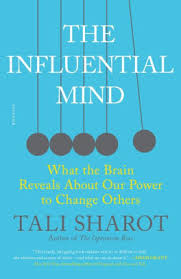
I have written repeatedly that people do not often behave rationally, and Tali Sharot’s book, An Influential Mind,helps show that much of this irrationality is hardwired into our brains. Sharot writes how our brains are “hard-wired”, which makes it challenging to break bad habits. Instead, by understanding how we our brain works, we can adjust both our own bad habits and help others.
influential mind

We are all hedonists

Not much of a surprise but people are wired to strive for pleasure. The corollary, and more important takeaway, is that this principle cannot be unlearned. It is a waste of time and resources to try to get people (or yourself) not to pursue pleasure. Instead, it is best to channel this pursuit in yourself and in others.

When motivating your employees or potential customers, it is much stronger if you do it by offering them “pleasure.” When offered a reward, the brain kicks into gear, and people experience quick and alert responses. If the potential result is something bad, the brain turns sluggish, and their responses suffer. Thus, the carrot is better than the stick in driving optimal behavior.

Control is important

Having control of one’s life is a very instinctual desire, it provides happiness. People are happier when they are in control. Sharot points out the same situation exists in the office. If you want happier employees, make sure they have input in making decisions that touch their daily work.

Studies have shown people are happier, and even live longer, if they have to participate and work for something rather than be served. Elderly people did better at a care home where they had to prepare their own meals. In the work environment, it is often superior to have the team that needs to create a product or develop software involved in crafting the product specifications, rather than just handing them the final spec and asking them to build it.

Humans are not flexible

One negative way of thinking that Sharot attacks is how once someone has made up their mind, they tend to ignore contrary information and forge ahead regardless. I have experience (all too frequently) how a colleague is sure they have the right strategy or process, does not listen to others, and then fails. This happens even when everyone else sees the negative outcome. It may have been launching a new product that will have no demand or analysing data incorrectly and making decisions based on that analysis, then when the product is launched or project is done, it turns out to be an abject failure. Upon retrospection, the question is asked how did this mistake happen.

Research has found this inflexible decision-making is programmed into the brain. In an experiment, brain activity of participants was measured during the decision-making process and brain activity dropped significantly upon receiving bad information (that is, information that was contradictory to their original decision). This shows that when people commit to a decision, there is a natural defense mechanism that helps them avoid learning it is a bad decision.

To combat this defense mechanism, Sharot shows it is better to focus on presenting new factual information rather than arguing against the preconception. If you are trying to convince somebody their mobile game project will fail, do not attack the concept or the demo but present new information. Talk about new games on the market or new options. Do not try to discredit the belief, as people become resistant and defensive, often getting stronger in original idea. Instead, provide different, positive information.

Moods are contagious

The moods of others around you helps determine your mood. Based on MRI scans during political speeches, researchers learned that listeners often feel connected to the rest of the audience. This learning shows why people at a rally often react the same at particular points of a speech. Other research showed that negative posts on FB lead to more negative posts, while the inverse is also true. Good and bad moods are contagious, people’s brains synchronize. Their brains are connected, so moods are contagious.

There are several implications of contagious moods:

  • In a workplace, it is critical to maintain the mood and morale of your team. If several people on the team (or company) turn negative, it is likely to infect the entire organization.
  • Negative social media sentiment about a product could not only turn a few people against it but create a negative overall perception.
  • On a personal level, one or two family members can put the entire family in a good or bad mood, especially if they bring experiences from work or school home with them.

Entertainment trumps information

Related to the pursuit of pleasure, people pay more attention to entertainment than they do important information. Politics provide a great validation of this concept, Trump has tens of million Twitter followers because his tweets are entertaining. More people view a video of Congresswoman Alexandria Ocasio-Cortez dancing on a roof than discussing healthcare.

Another great example is the safety warnings on airplanes. It is probably more important to know what to do if there is an emergency landing than if you can reach the next level on Clash, but which one do most people focus on?

The lesson when building a product or game is that most tutorials will fail, instead people need to learn while being entertained. It also impacts how you communicate, an email or pop up listing benefits or features is not as effective as a fun GIF.

There is also a workplace impact of preferring entertainment to information. Sharot discusses that it might be easier to resolve a workplace conflict with a fun, novel solution rather than a lecture on the right way to do things.

Understanding the brain helps motivate yourself and others

The better you understand how the brain is structured and people’s motivation, the better you can interact with your family, colleagues and customers. Some of the most robust methods encompass remembering that everyone is motivated by pleasure seeking and reward and that people like to feel in control.

Key takeaways

  1. Our brains are “hard-wired”, which makes it challenging to break bad habits. By understanding how we our brain works, we can adjust both our own habits while helping others be more productive.
  2. People’s brains are designed to seek pleasure. Related to the pursuit of pleasure, people pay more attention to entertainment than they do important information.
  3. Having control of one’s life is a very instinctual desire, it provides happiness.
Share this:

  • Click to share on Facebook (Opens in new window) Facebook
  • Click to share on LinkedIn (Opens in new window) LinkedIn
Like Loading...
Unknown's avatarAuthor Lloyd MelnickPosted on May 28, 2019March 14, 2019Categories General Social Games Business, General Tech BusinessTags An Influential Mind, Consumer behavior, neuromarketing, PsychologyLeave a comment on How to change bad habits, the neuroscience way

Why Real Money Skill Based Gaming is Doomed

Why Real Money Skill Based Gaming is Doomed

With computers now beating the best players in poker and eSports, the raison d’être for gambling on skill based games is gone. Earlier this year, Google’s DeepMind Artificial Intelligence (AI) defeated two pro-gamers at StarCraft II. While the AI’s victory did not garner much attention, people are getting used to AI beating humans, it has profound implications for part of the real money gaming ecosystem. Coupled with Libratus beating professional poker players in No-Limit Texas Hold’em and previous AI victories in Go, Chess and other games, it is clear computers already can beat humans in most skill based games and will almost certainly conquer the rest of gaming in the near future.

deepmind_logo

I will leave the implications of powerful AI on society to the Elon Musk’s and Neil deGrasse Tyson’s, but it is important not to underestimate the impact on the electronic gambling industry. This type of AI will, faster than expected, make gambling on skill based games irrelevant.

Everything takes longer than expected but than happens at a more massive scale

In many ways, people have been lulled into a false sense of security because AI has not had a significant impact on gambling, yet. Bill Gates, however, once pointed out that transformational technologies normally take longer than expected to become widespread but once they do have a far greater impact than anticipated. Personal computers followed this pattern, they were a fringe product for years and people started to dismiss them as a fad. Then almost instantaneously they found their way into all parts of life (thank you Windows) and even your grandmother was using one to check her investments. Similar phenomenon occurred with cell phones, drones, streaming video, etc.

AI is following the same pattern, particularly in skill based games (chess, poker, go, StarCraft, etc.). It is going from fringe applications and projects that take years to quick iteration and AI that is superior to humans across many game variants. As the underlying algorithms get stronger, human players will no longer hold an advantage in any skill-based game. More importantly, the tech will go from computers only owned by huge research groups to devices or apps that normal individuals can get cheaply, just as the tech once needed to send a man to the moon is not as powreful as that in a common smartphone.

Doesn’t have to be best

It will not even take the time needed for optimal AI algorithms to become ubiquitous to impact skill based gaming, average AI can beat most players. While beating the top players in StarCraft or Go generates headlines, most people do not play at the level as the top players. Thus, even a sub-optimal algorithm can beat the majority of players. Once people realize they are unlikely to win because there are good algorithms everywhere, they will have no incentive to bet (very few people outside of Browns fans bet on sure losses). If everyone can get a device or program that let’s them play a skill-based game near optimally (but not perfectly), it will still mean that 90+ percent of people will lose regularly. Even those under the delusion they are in the top 10 percent will give up after repeated negative reinforcement.

Impact will be far reaching

As with other technologies, people often do not realize how broad the impact of AI will be. Initially, people will not want to wager on any Player vs. Player skill based game, because AI could augment the opponent. This problem will then extend to betting on any skill-based game, if the human cannot beat AI it is pointless to predict who will win.

The only exception will be at live events, from a Chess Tournament to a Live eSports Tournament. As long as the event can be controlled to limit or prevent AI (which I do not believe will always be possible), people could still wager on these live events. However, as more events move online (Twitch), this will be a small opportunity.

Social casino is not immune

The knee jerk reaction is that AI will negatively impact real money gaming but have a positive effect on social (free to play) casino, the reality is social casino will bear the same negative consequences. Players in social casino are also competing against other players and when AI makes it impossible to win regularly, the appeal of Player vs. Player social casino games will also decline. Recently Zynga saw a significant negative impact from bots in Zynga Poker, one of the largest poker games in the world. The impact on social games like Zynga Poker will get worse as AI becomes more prevalent.

You cannot stop the inevitable

Companies have learned repeatedly, often the hard way, that you cannot stop progress but seem to think they can. Taxi companies fought pitched battles against Uber in courts and with protests but the successful ones adapted their business to compete. Travel agents complained to the government and providers but only the ones who reimagined their businesses survived. While some companies have slowed change, they never stop it and leave themselves in a poor position to compete.

Where the real opportunity exists

While AI will negatively impact the existing gambling space, these types of challenges always create opportunity. Gambling is simply another form of entertainment so the trick is for companies relying on skill based gambling to pivot and provide another entertaining option for their customers.

  • Maybe turn poker or backgammon into a fixed odds challenge against a computer.
  • Pivot the business model to a subscription model so that there is no benefit to winning (and thus no benefit to using AI), especially viable for free-to-play.
  • Use the great advances in virtual sports to replace traditional sports betting by offering people 24/7 events to bet on.
  • Have people gamble on computer vs. computer sporting events (i.e. an EA Fifa World Cup).
  • Create gambling that is based on individual skills (the quality of a drawing, the ability to solve math equations, etc.), player versus themselves.
  • Take traditional casino games and adapt them for the mindset of skill-based players.

The point is you need to be creative and find a new way to entertain your customers.

Key takeaways

  1. With computers now beating the best players in poker and eSports, there is no reason for gambling in skill based games to exist.
  2. The proliferation of AI in skilled base games will take longer than predicted but when it happens will be much broader than anticipated and companies won’t be able to prevent it.
  3. Instead, successful gambling companies will understand they are providing entertainment and find new ways to delight their customers.

Share this:

  • Click to share on Facebook (Opens in new window) Facebook
  • Click to share on LinkedIn (Opens in new window) LinkedIn
Like Loading...
Unknown's avatarAuthor Lloyd MelnickPosted on May 21, 2019May 14, 2019Categories General Social Games Business, General Tech Business, Social CasinoTags AI, artificial intelligence, Chess, DeepMind, Go, Machine learning, poker, real money online gamblingLeave a comment on Why Real Money Skill Based Gaming is Doomed

How to overcome survivorship bias

How to overcome survivorship bias

A few months ago I shared a story and post on Facebook about survivorship bias and was amazed how often it was liked and shared. It also highlights the risk of survivorship bias in the gaming and gambling space. The image and blurb told the story how the navy analyzed aircraft that had been damaged and based future armament decisions on where they had received battle damage, thus they were going to increase the armor on the wingtips, central body and elevators. These were the areas that showed the most bullet holes.

Facebook plane story

One statistician, Abraham Wald, the founder of statistical sequential analysis, however fortuitously stopped this misguided effort. According to Wikipedia, “ Wald made the assumption that damage must be more uniformly distributed and that the aircraft that did return or show up in the samples were hit in the less vulnerable parts. Wald noted that the study only considered the aircraft that had survived their missions—the bombers that had been shot down were not present for the damage assessment. The holes in the returning aircraft, then, represented areas where a bomber could take damage and still return home safely. Wald proposed that the Navy instead reinforce the areas where the returning aircraft were unscathed, since those were the areas that, if hit, would cause the plane to be lost.”

Survivorship bias is universal

Survivorship bias occurs everywhere. If you are a poker player, you may have a hand of three of clubs, eight of clubs, eight of diamonds, queen of hearts and ace of spades. The odds of that particular configuration are about three million to one, but as economist Gary Smith writes in Standard Deviations, “after I look at the cards, the probability of having these five cards is 1, not 1 in 3 million.”

Another example would be professional basketball. If you look at the best professional basketball players, a high percentage never went to university for more than one year. From this information, you (or your teen son) may infer the best path to the NBA is going to university for one year or less. The reality is that there are millions (if not billions) of people who went to university for less than a year and never played in the NBA (or even the G League). The LeBron Jameses and DeAndre Aytons are likely in the NBA despite playing less than a year in college due to their great skill, not because they did not go to university for more than a year.

As an investor, survivorship bias is the tendency to view the fund performance of existing funds in the market as a representative comprehensive sample. Survivorship bias can result in the overestimation of historical performance and general attributes of a fund.

In the business world, you may go to a Crossfit gym that is packed with the owner making a great living. You decide to leave your day job and replicate his success. What you did not see is the hundreds of Crossfit gyms that are not profitable and have closed.

The problem exists in gaming

You often see survivorship bias in the gaming and gambling space. People will look at a successful product and select a couple of features or mechanics they believe have driven the success. They then try to replicate it and fail miserably, only to then wonder why the strategy did not work for them. What they fail to analyze is the many failed games (for every success there are at least 8-10 failures) because they do not even know they exist. The failed games may have had more of the feature you are replicating. Getting a star like Kim Kardashian is a great idea if you only look at Kim Kardashian: Hollywood, but if you look at the hundreds of other IPs that have failed your course of action might be very different.

Survivorship bias can also lend its ugly head when building a VIP program. You talk to your VIPs and analyze their behavior, thus building a program that reinforces what they like about the game. What you neglect, however, is that other non-existent features might have created even more VIPs.

In the gambling space, you may look at a new blackjack variant that is doing great and build a strategy around creating new variants of classic games. What you did not see is all the games based on new variants that have failed.

Avoiding survivorship bias

Looking simply at successes, or even failures, leads to bad decision making. When looking at examples in your industry or other industries, you need to seek out both the successes and failures. With the failures, you need to make sure they are the failures (not the airplanes that returned shot up but the ones that were destroyed). You also should not use others successes or failures as a short cut to robust strategy decisions. You need to analyze the market, understand your strengths-weaknesses-opportunities-threats (SWOT) and do a blue ocean analysis. Only then will you build a strategy that optimizes your likelihood for success.

Key takeaways

  • In WW2, by analyzing surviving aircraft the US navy almost made a critical mistake in adding armor to future airplanes. The planes that returned were actually survivors, while it was the planes that were destroyed that showed where on the plane was the greatest need for new armor. This phenomenon is called survivorship bias.
  • This bias extends into the gaming and gambling space, as companies analyze what has worked in successful games but do not know if it also failed (perhaps to a greater degree) in products that no longer exist.
  • Rather than just looking at survivors or winners to drive your strategy, you should do a full SWOT and Blue Ocean analysis, that is the strongest long-term recipe to optimize your odds of success.

Share this:

  • Click to share on Facebook (Opens in new window) Facebook
  • Click to share on LinkedIn (Opens in new window) LinkedIn
Like Loading...
Unknown's avatarAuthor Lloyd MelnickPosted on May 14, 2019March 4, 2019Categories Analytics, General Social Games Business, General Tech Business, Social CasinoTags analytics, bias, survivor bias, Survivorship bias2 Comments on How to overcome survivorship bias

The Making of a Product Management Case Study

The Making of a Product Management Case Study

Monzo, a fintech start up approaching Unicorn status, is a Product Management case study in the making. While it is easy to pick successful businesses and look backwards, self-selecting the examples you want to make the case of what you should do, Monzo is the opposite. They are still in the start-up phase and by monitoring their progress you can see how these practices work in the real world. By looking and monitoring Monzo, you can also learn how to differentiate successfully your offering, regardless of the industry.

Truly customer centric

What differentiates Monzo from other tech start-ups is that although they are clearly data driven they are even more customer driven. I became a fan of Monzo’s strategy by starting as a customer and seeing that they were truly customer-centric. Living on the Isle of Man, it is often a challenge working with financial institutions, as we are not part of the UK or EU. While setting up a debit card with one of Monzo’s competitors, Revolut, was an exercise in frustration, Monzo clearly had its team focused on creating a good user experience. Rather than a multi-day response to chats from a CS rep based in a low-cost location (the Revolut model), Monvo offered near real time support as I was trying to navigate setting up from the Isle of Man. This customer focus secured me as a loyal customer – and advocate – at a time when I was looking for a long-term fin partner. Monzo is now my card of choice even though there offering is feature-wise like Revolut. Given the importance of engagement and retention on LTV, this was a wise investment on Monzo’s part.

Product strategy based on making customers life easier

From a product development and management point of view, Monzo is somewhat unique in that it focuses on eliminating friction from customers’ daily life rather than adding a list of features. Monzo sent to its customers a blog post from its CEO about its plans for 2019 and what struck me was that most of the new features they will test were aimed at reducing or eliminating (in Blue Ocean parlance) rather than adding:

  • Automatically compare utility options, such as energy providers, so the customer does not have to go to price comparison sites
  • A way to get a mortgage or refinance with less paperwork
  • Centralizing a customer’s loyalty schemes and reward programs
  • Offering different types of insurance without complex terms and conditions
  • Help building and tracking a customer’s credit score, as most customers do not know how their credit scores are calculated (and the credit agencies are not transparent)

What is particularly thought-provoking with these features that they are considering is not that they are innovative but that they make the customers’ life easier. They are not trying to be the coolest start-up; I did not see the words AI, crypto or VR anywhere in their roadmap. Instead, Monzo is focused on eliminating hurdles their customers face in their daily lives.

Great FTUE and simple UIUX

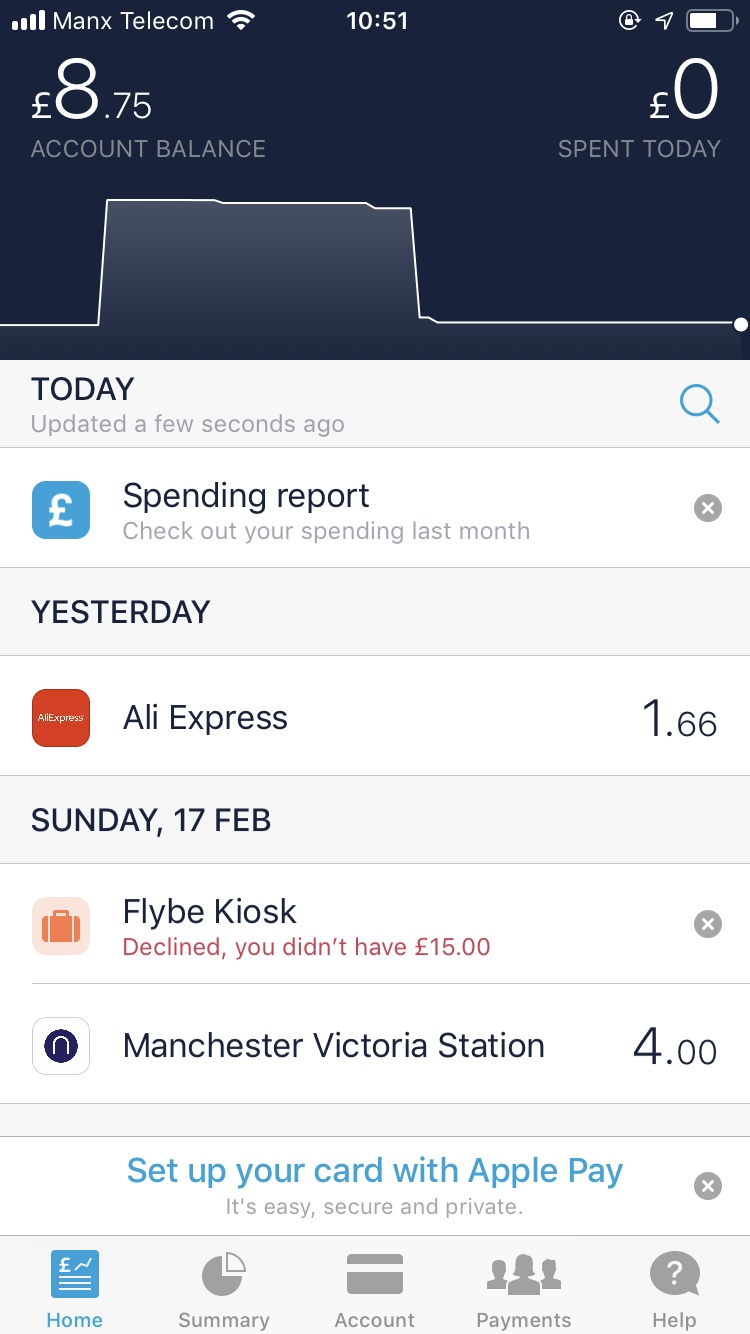
Another area where Monzo excels is its first-time user experience (FTUE) and user interface and experience (UIUX). When I first signed up for Monzo, I found its FTUE unique in that they turned a potentially negative experience into a positive and viral moment. When I first applied for Monzo’s debit card, they apparently were experiencing rapid growth and there was a delay in completing the KYC (know your customer) process and delivering physical debit cards. Rather than ask you to endure the delays, thus immediately decreasing your satisfaction, Monzo placed me in a queue with specific information on how many customers were ahead of me and when I would receive my card. They then allowed me to jump ahead by recommending Monzo to friends (which I did), and immediately updating how many people were still ahead of me in the queue. Even before becoming a customer, they turned me into an advocate. They then created a positive feeling by giving me control and visibility into the process.

Beyond the initial experience, Monzo has a very straightforward user interface, it is very easy to navigate and learn how to use the features. You never need a tutorial or help, the product is designed to allow you to determine quickly how to conduct transactions.
Monzo Image-1.jpg

Monzo reminds me of Uber, where upon opening the app anyone can figure out how to request a ride. Creating a simple UI, however, is more difficult than creating a complex AI. Any designer can build a UI with 100 options, nested in menu after menu. Reducing those options requires a deep understanding of the customer journey and where the customer is getting value as well as hard decisions on what to include and what to delete.

The UI is also consistent with the product approach described above on making the customers’ life easier rather than just providing them with more options. If the product team simply added feature upon feature, then even the best UI designer would be unable to keep the app’s user interface clean. With alignment between the product and design team, Monzo can focus entirely on removing complications from its customers’ lives.

Lessons

The strategy that Monzo is pursuing provides many useful practices for companies in other parts of the tech space, gaming, gambling, etc. Rather than trying to differentiate yourself from competitors by adding fancy bells and whistles, look at ways you can make your product easier and simpler than competitors (again, more difficult than just adding a new game to your offering). Also, ensure that everything is aligned to your strategy with your customer. If you are trying to provide a fast, clean experience, then not only should the product team develop consistent features, but your support team should focus on creating a complimentary experience and your design team should ensure the app reflects this focus.

Key takeaways

  1. Monzo, a UK based FinTech start-up, is a future case study in product management best practices. By looking and following Monzo, businesses in other industries can learn how to differentiate their offering.
  2. Key to Monzo is a product strategy focused on making its customers lives easier rather than adding glitzy features.
  3. Monzo is successful by aligning its entire business on making a customer’s experience simple, from product features to the first time user experience to the overall user interface through customer support.

Share this:

  • Click to share on Facebook (Opens in new window) Facebook
  • Click to share on LinkedIn (Opens in new window) LinkedIn
Like Loading...
Unknown's avatarAuthor Lloyd MelnickPosted on May 7, 2019May 7, 2019Categories General Social Games Business, General Tech BusinessTags FTUE, Monzo, product management, simplicity, uiux1 Comment on The Making of a Product Management Case Study

Get my book on LTV

The definitive book on customer lifetime value, Understanding the Predictable, is now available in both print and Kindle formats on Amazon.

Understanding the Predictable delves into the world of Customer Lifetime Value (LTV), a metric that shows how much each customer is worth to your business. By understanding this metric, you can predict how changes to your product will impact the value of each customer. You will also learn how to apply this simple yet powerful method of predictive analytics to optimize your marketing and user acquisition.

For more information, click here

Follow The Business of Social Games and Casino on WordPress.com

Enter your email address to follow this blog and receive notifications of new posts by email.

Join 791 other subscribers

Most Recent Posts

  • Join me at PDMA Inspire for my talk on new product prioritization
  • Why keep studying?
  • The next three years of this blog
  • Interview with the CEO of Murka on the biggest growth opportunity in gaming, Barak David

Lloyd Melnick

This is Lloyd Melnick’s personal blog.  All views and opinions expressed on this website are mine alone and do not represent those of people, institutions or organizations that I may or may not be associated with in professional or personal capacity.

I am a serial builder of businesses (senior leadership on three exits worth over $700 million), successful in big (Disney, Stars Group/PokerStars, Zynga) and small companies (Merscom, Spooky Cool Labs) with over 20 years experience in the gaming and casino space.  Currently, I am the GM of VGW’s Chumba Casino and on the Board of Directors of Murka Games and Luckbox.

Topic Areas

  • Analytics (114)
  • Bayes' Theorem (8)
  • behavioral economics (8)
  • blue ocean strategy (14)
  • Crowdfunding (4)
  • DBA (2)
  • General Social Games Business (459)
  • General Tech Business (195)
  • Growth (88)
  • International Issues with Social Games (50)
  • Lloyd's favorite posts (101)
  • LTV (54)
  • Machine Learning (10)
  • Metaverse (1)
  • Mobile Platforms (37)
  • Prioritization (1)
  • Social Casino (52)
  • Social Games Marketing (105)
  • thinking fast and slow (5)
  • Uncategorized (33)

Social

  • View CasualGame’s profile on Facebook
  • View @lloydmelnick’s profile on Twitter
  • View lloydmelnick’s profile on LinkedIn

RSS

RSS Feed RSS - Posts

RSS Feed RSS - Comments

Categories

  • Analytics (114)
  • Bayes' Theorem (8)
  • behavioral economics (8)
  • blue ocean strategy (14)
  • Crowdfunding (4)
  • DBA (2)
  • General Social Games Business (459)
  • General Tech Business (195)
  • Growth (88)
  • International Issues with Social Games (50)
  • Lloyd's favorite posts (101)
  • LTV (54)
  • Machine Learning (10)
  • Metaverse (1)
  • Mobile Platforms (37)
  • Prioritization (1)
  • Social Casino (52)
  • Social Games Marketing (105)
  • thinking fast and slow (5)
  • Uncategorized (33)

Archives

  • September 2023
  • December 2021
  • July 2021
  • March 2021
  • February 2021
  • January 2021
  • December 2020
  • November 2020
  • October 2020
  • September 2020
  • August 2020
  • July 2020
  • June 2020
  • May 2020
  • April 2020
  • March 2020
  • February 2020
  • January 2020
  • November 2019
  • October 2019
  • September 2019
  • June 2019
  • May 2019
  • April 2019
  • March 2019
  • February 2019
  • January 2019
  • December 2018
  • June 2018
  • May 2018
  • April 2018
  • March 2018
  • February 2018
  • January 2018
  • December 2017
  • June 2017
  • May 2017
  • April 2017
  • March 2017
  • February 2017
  • January 2017
  • December 2016
  • November 2016
  • October 2016
  • September 2016
  • June 2016
  • May 2016
  • April 2016
  • March 2016
  • February 2016
  • January 2016
  • December 2015
  • November 2015
  • October 2015
  • September 2015
  • July 2015
  • June 2015
  • May 2015
  • April 2015
  • March 2015
  • February 2015
  • January 2015
  • December 2014
  • November 2014
  • October 2014
  • September 2014
  • August 2014
  • July 2014
  • June 2014
  • May 2014
  • April 2014
  • March 2014
  • February 2014
  • January 2014
  • December 2013
  • November 2013
  • October 2013
  • September 2013
  • August 2013
  • July 2013
  • June 2013
  • May 2013
  • April 2013
  • March 2013
  • February 2013
  • January 2013
  • December 2012
  • November 2012
  • October 2012
  • September 2012
  • August 2012
  • July 2012
  • June 2012
  • May 2012
  • April 2012
  • March 2012
  • February 2012
  • January 2012
  • December 2011
  • November 2011
  • October 2011
  • September 2011
  • August 2011
  • July 2011
  • June 2011
  • May 2011
  • December 2010
May 2019
S M T W T F S
 1234
567891011
12131415161718
19202122232425
262728293031  
« Apr   Jun »

by Lloyd Melnick

All posts by Lloyd Melnick unless specified otherwise
Google+

Enter your email address to subscribe to this blog and receive notifications of new posts by email.

Join 791 other subscribers
Follow Lloyd Melnick on Quora

RSS HBR Blog

  • New Research on Copycat Products, Your Pitch-Day Dress Code, When Hand Gestures Help Persuasion, and More
  • Leaders, Bring Your Best Self into the New Year
  • What Actually Works to Change Someone’s Mind
  • Our Favorite Management Tips of 2025
  • How to Manage—and Motivate—Gen Z
  • The Most-Watched HBR Videos of 2025
  • The HBR Charts that Help Explain 2025
  • The Most Popular HBR Podcast Episodes of 2025
  • How the Best Leaders Develop and Spend “Innovation Capital”
  • The 10 Most Popular HBR Articles of 2025

RSS Techcrunch

  • An error has occurred; the feed is probably down. Try again later.

RSS MIT Sloan Management Review Blog

  • Calm: The Underrated Capability Every Leader Needs Now
  • The Top Five MIT SMR Videos of 2025
  • Three Steps Toward Fairer Talent Management
  • From Crisis to Coopetition: What Leaders Can Learn From Anesthesiologists
  • AI Coding Tools: The Productivity Trap Most Companies Miss
  • How Procter & Gamble Uses AI to Unlock New Insights From Data
  • Rewire Organizational Knowledge With GenAI
  • Hungry for Learning: Wendy’s Will Croushorn
  • Beat Burnout: 10 Essential MIT SMR Reads
  • How Leaders Stay True to Themselves and Their Stakeholders
The Business of Social Games and Casino Website Powered by WordPress.com.
  • Subscribe Subscribed
    • The Business of Social Games and Casino
    • Join 726 other subscribers
    • Already have a WordPress.com account? Log in now.
    • The Business of Social Games and Casino
    • Subscribe Subscribed
    • Sign up
    • Log in
    • Report this content
    • View site in Reader
    • Manage subscriptions
    • Collapse this bar
 

Loading Comments...
 

    %d