
I came across a great blog post on The Difference Between Amateurs and Professionals and I found it a perfect proxy for highlighting what separates effective and great executives from everyone else.
It is impossible to overstate the value of a great executive, as each of their decisions is amplified over the entire company. I have seen leaders destroy companies, and in so doing cost many people their jobs and health, and have seen others grow companies to unexpected heights, not only creating billions in value but also jobs and other opportunities. Below are the key differences between amateur and professional athletes that also can be applied in the business world.
Amateurs focus on being right. Professionals focus on getting the best outcome.
The best business leaders are focused on delivering great outcomes (successful new products, profits that exceed expectations, gaining market share, etc.) and do not care if they hit these outcomes because of a “brilliant” strategy they came up with or a process that was built without their input. They are focused on results, not sound bites that sound impressive.
Amateurs think good outcomes are the result of their brilliance. Professionals understand when good outcomes are the result of luck.
Related to the above point, successful executives understand that luck plays a role in success (and failure). It comes down to Heisenberg’s Uncertainty Principle, the universe is uncertain and there is a range of likely outcomes. Given that there are multiple outcomes from any action, luck plays a (big) role into whether the outcome is good or bad no matter the choice (over time, though, you will have a big impact on the set of outcomes if you regularly pursue the ones most likely to yield a positive result). Conversely, sometimes you will make bad decisions and have a great outcome, a top executive will understand they got lucky and not feel they are brilliant.
Amateurs show up to practice to have fun. Professionals realize that what happens in practice happens in games.
This is one of the lessons I have learned from sports that is critical to business success. It is also called practice how you want to play. People will often take shortcuts when they feel it will not be in the final product, when they are preparing marketing collateral, when they are rehearsing conversations with VIPs, etc., but by not focusing at this stage the final product is often not polished. They may not spend much time preparing for a meeting, presentation or sales call. By practicing how you want to play, you and your team are always prepared to deliver an optimal performance.
Amateurs focus on tearing other people down. Professionals focus on making everyone better.
Only insecure business people feel they have to belittle their colleagues and employees. They tear people down in an effort to elevate themselves; they think they will look better in comparison if their colleagues look bad. Conversely, great executives are focused on making everyone around them better and realize they cannot perform well if their colleagues do not.
Amateurs blame others. Professionals accept responsibility.
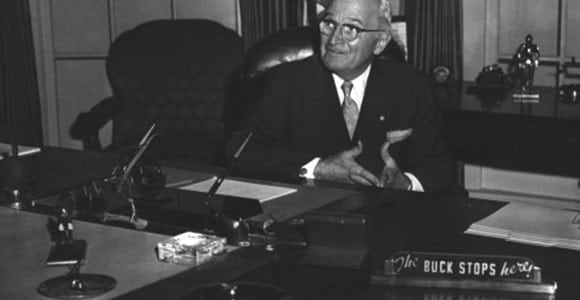
The best executives follow Truman’s doctrine that “The Buck Stops Here.” Even if an executive was not directly responsible for a failure, the successful ones take on that responsibility and determine ways to avoid it in the future. Allocating blame does not get your business closer to its goal; what does is accepting blame and coming up with next steps does. Top executives also never blame their team, they own any mistake their team makes because they failed to put the processes, training or direction in place to avoid the mistake.
Amateurs give up at the first sign of trouble and assume they’re failures. Professionals see failure as part of the path to growth and mastery.
Rather than avoid failure, successful executives pursue it. Not that they want any initiative to fail, but embracing failure ensures they are pushing the limits to grow and improve their business. If you never fail, you are never trying anything new.
Amateurs focus on identifying their weaknesses and improving them. Professionals focus on their strengths and on finding people who are strong where they are weak.
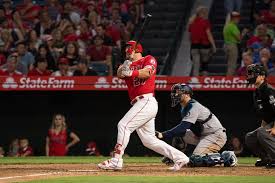
This is a lesson I have stressed with both my children and teams. If you focus on eliminating your weaknesses and trying to do everything at a passable level, you are not doing anything special. Mike Trout does not spend two hours a day working on pitching, instead he takes hours and hours of batting practice even though he is the best hitter in baseball. You are not bringing anything unique that will elevate your company to greatness. Instead, looking at where you excel and double down on it, use your super-powers to elevate your company above the competition. Then bring in others to compensate for your weak points, it is a show of strength to compensate for weaknesses by adding complimentary pieces to your team.
Amateurs think the probability of them having the best idea is high. Professionals know the probability of that is low.
The most effective executives do not try to be the smartest person in the room. While to amateurs it may feel that the strategy of highlighting their intelligence is important for success, the opposite is true. Top executives focus on trying not to be the smartest person in the room and harness the power of tens or hundreds of colleagues, getting better input, more creative ideas and improved team performance.
Amateurs think in absolutes. Professionals think in probabilities.
As discussed above, the universe is uncertain and there is a range of likely outcomes. Rather than trying to get every decision right, what great executives do is maximize their expected value (the sum of all possible values each multiplied by the probability of its occurrence) by playing the odds. While great leaders will have some wins and losses, over time by focusing on the best expected outcome (not one they are sure will happen) their company will outperform competitors.
Amateurs stop when they achieve something. Professionals understand that the initial achievement is just the beginning.
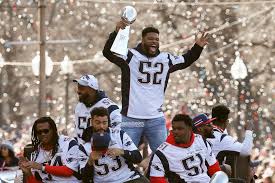
I am not a big fan of celebrations because you should always strive for more. Business is not finite, you do not win and go home. Instead you want to continue growing. Even in sports, I remember reading how the Patriots coach watched film the night he won the Super Bowl to prepare for the next season.
Amateurs have a goal. Professionals have a process.
The New England Patriots are a perfect example of this principle. What it comes down to is building a good process to ensure continued growth and success, whether the goal is hitting revenue targets or winning football matches. If you have a system that can weather external shocks you will achieve this goal rather than spending your team in a bar rationalizing why you failed and your competitors succeeded.
Amateurs focus on the short term. Professionals focus on the long term.
Being a great business executive is not about having a blow out quarter or a good product launch, it is about showing sustained success. Like in chess, do not focus on the next move or the next five moves but the overall strategy that will help you consistently outperform (or avoid) the competition.
Putting it all together
A great business leader does not only follow these practices themselves, but pushes everyone around them to also embrace these concepts. Bill Belichick is not one of the greatest of all time simply because he followed these concepts but because he forced his coached and players to live by these beliefs.
Key takeaways
- There are many similarities between what separates a professional athlete from an amateur and what separates a great business executive from everyone else.
- The best executives focus on getting the best outcome, not being right.
- The best executives accept responsibility and do not blame others.
 The Business of Social Games and Casino