Skip to content

The Business of Social Games and Casino

How to succeed in the mobile game space by Lloyd Melnick

Category: General Social Games Business

Keeping current and staying valuable

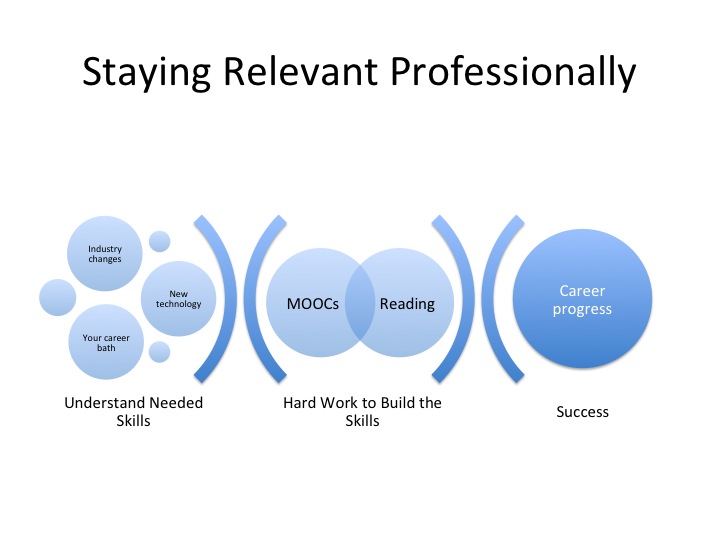
Disney Interactive’s news last week that it was reducing its team by about 700 employees, many of whom were originally Playdom employees, drives home the message of how important it to is to technology professionals to stay current and active. With the pace of change in technology and gaming, people who were very-sought-after out of college five years ago may find their skill sets are considered dated and that they have few comparable career opportunities. This situation highlights why it is crucial for anyone in the tech or gaming space to focus continually on upgrading their skill sets so they can compete with the next batch of graduates.Slide1
Smart is not enough

There are many very intelligent people in our space and you are deluding yourself if you think you will always have great opportunities because you are brilliant. Employers and start-ups looking to build their core management team have many options and once they discard the mediocre, they usually still have many options. Thus, it comes down to how closely your skill set fits with their needs.

The problem many run into is that a great skill when you started your career—or even a few years ago—may not match what the best companies are looking for. In 2005, you may have earned an MBA in Marketing from Harvard Business School or Northwestern’s Kellogg School and became a marketing super star in the game industry. In 2014, however, few exciting companies are hiring marketing rock stars but they are grabbing growth experts. Although you may feel it is a matter of semantics, the differences between growth and marketing (e.g., focus on performance and analytics, integration with design) are crucial to the companies that are hiring. Thus, you will find your great marketing resume is less valuable to the next WhatsApp than a Stanford dropout who knows native advertising.

Continue reading “Keeping current and staying valuable”

Share this:

  • Click to share on Facebook (Opens in new window) Facebook
  • Click to share on LinkedIn (Opens in new window) LinkedIn
Like Loading...
Unknown's avatarAuthor Lloyd MelnickPosted on March 11, 2014March 25, 2014Categories General Social Games Business, Lloyd's favorite postsTags Career, MOOC, Relevant5 Comments on Keeping current and staying valuable

Bayes’ Theorem Part 4: Making the right decisions in corporate development

I previously wrote about how Bayes’ Rule is the foundation of good decision making and last month posted about how it could be applied to your green light process, today I will address another application of Bayes’ Rule: Applying it to corporate development (mergers and acquisitions). As discussed in my first two posts about Bayes’ Theorem, it shows how to use past data to optimize your decision making process. There are three areas of corporate development in which Bayes’ Rule can help optimize your strategy: building a company for exit, selling to the right partner and acquiring companies that improve your value.

Creating a company for exit

Many founders start and build their business for eventual exit (e.g., sale or IPO) but if they fail to take into account Bayes’ Rule they are not optimizing their chances for a successful one. If your goal in launching a business (or pivoting your business) is to sell it, then you need to look at past data. The best indicator of whether you will be able to sell—and for how much—is other M&A (mergers and acquisitions) activity. You may have a great idea for a business, and it may be unique, but if it is in a space where there is no M&A activity you are not likely to sell eventually the company (however, that is not to say you should not start it, if your goal is something other than a sale).

To show how Bayes’ Rule applies, let’s consider two opportunities. One is a building a game company in a space where 60 percent of the companies are selling to larger companies. You have a decent idea and good team but it is not great; looking objectively you have a 50 percent chance of success. Conversely, you have a fantastic idea for a different type of game company. You are convinced that in that space you have a 90 percent chance of success. Buyers, however, are not showing much activity there and only one percent of companies in that space have an exit. Bayes’ Rule shows that if your goal is an exit, then you should launch the company where you have a 50 percent chance of success (you will have a 30 percent chance of selling your company versus less than 1 percent for starting the company that is much more likely to succeed).

My personal experience reaffirms this math. At Merscom, we were a very successful casual game publisher (downloadable games targeting women sold primarily on Big Fish and Real) . There, however, was not much M&A activity in the space. So we decided to abandon a profitable, highly successful business in 2009 to enter the social gaming space because there was an acquisition almost every week. A few months after our pivot, we were acquired by Playdom, and a few months after we were acquired, Playdom was acquired by Disney.

Continue reading “Bayes’ Theorem Part 4: Making the right decisions in corporate development”

Share this:

  • Click to share on Facebook (Opens in new window) Facebook
  • Click to share on LinkedIn (Opens in new window) LinkedIn
Like Loading...
Unknown's avatarAuthor Lloyd MelnickPosted on March 4, 2014March 25, 2014Categories Bayes' Theorem, General Social Games BusinessTags Acquisition, Bayes' Theorem, corp dev, corporate development, M&ALeave a comment on Bayes’ Theorem Part 4: Making the right decisions in corporate development

Anticipating customer discontent and pre-empting it, with an assist from machine learning

Very rarely does a US-based airline provide a case study on the best way to handle a customer service situation, but US Airways just surprised me. One of the most difficult situations that your social media team or customer service agents have to deal with is a planned change that your users will not like. It could be a price increase, it could be a cutback on available colors or sizes, for a game company it could be fewer free options in a free-to-play game. In all these situations, most companies normally brace for the backlash and hope to weather the storm with minimal damage.

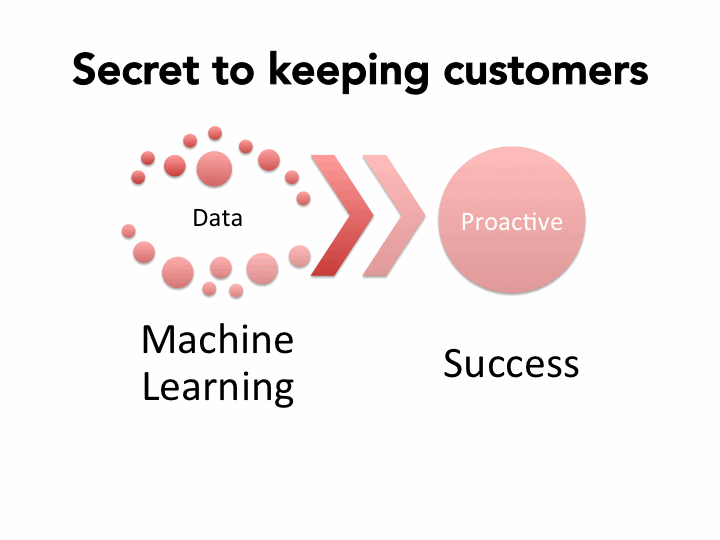
Be proactive and anticipate unhappy customers

Slide1Rather than being reactive, however, US Airways showed how you could be proactive in a potentially damaging situation. US Airways recently completed its acquisition of American Airlines, and as part of the integration they will be switching from their previous network of airline partners to American’s network. For fliers who travel frequently on US Airways’ previous partners, the merger was bad news and they were going to be upset that they could no longer earn miles on their favorite carriers. What most companies would do would be to “man up,” prepare for a wave of complaints from customers who were unhappy they were no longer earning miles on US Airways’ old partners and probably book an anticipated loss of revenue from loyal customers who wanted to continue earning miles on one of US Airways’ old partners. Continue reading “Anticipating customer discontent and pre-empting it, with an assist from machine learning”

Share this:

  • Click to share on Facebook (Opens in new window) Facebook
  • Click to share on LinkedIn (Opens in new window) LinkedIn
Like Loading...
Unknown's avatarAuthor Lloyd MelnickPosted on February 27, 2014March 25, 2014Categories General Social Games Business, Machine LearningTags customer service, Machine learning, social media, US AirwaysLeave a comment on Anticipating customer discontent and pre-empting it, with an assist from machine learning

Only 0.15 percent of mobile gamers account for 50 percent of all in-game revenue

Only 0.15 percent of mobile gamers account for 50 percent of all in-game revenue

This article clearly shows why you need to focus on your best customers or VIPs,. Development, product management and marketing need to all understand the need to attract and retain VIPs. I also appreciate the fact that the post does not suggest that your revenue should be a bell-shaped distribution; as I previously wrote, there is nothing wrong with a heavy-tail distribution.

Share this:

  • Click to share on Facebook (Opens in new window) Facebook
  • Click to share on LinkedIn (Opens in new window) LinkedIn
Like Loading...
Unknown's avatarAuthor Lloyd MelnickPosted on February 26, 2014March 5, 2014Categories General Social Games Business, Social Games MarketingTags Heavy tail, heavy tail distribution, monetizationLeave a comment on Only 0.15 percent of mobile gamers account for 50 percent of all in-game revenue

Why scale should not be a founder’s focus

I read a great blog post by Y Combinator Co-Founder Paul Graham that showed why start-ups need to focus on activities that do not scale. Graham debunks the theory held by many start-ups that if they build a great mousetrap, customers will flock to it and if customers do not, then the product must be a failure. He points out that startups succeed because the founders make them take off (with a few exceptions).

Get users

Graham starts by pointing out that the most frequent non-scalable activity founders do is recruiting users manually. New companies cannot wait for users to find their product, they need to go out and get users. This could be by going to friends and family. It could be by going to other companies that you network with. It could be by knocking on door after door.

There are two reasons founders resist going out and recruiting users individually. One is a combination of shyness and laziness. They’d rather sit at home writing code than go out and talk to a bunch of strangers and probably be rejected by most of them. But for a startup to succeed, at least one founder will have to spend a lot of time on sales and marketing. The other reason founders ignore this path is that the absolute numbers seem so small at first. 10 more users may not seem like a big deal for someone who has just watched The Social Network, but if it moves you from 100 to 110 users in a week, that is a 10 percent increase. Keep increasing 10 percent every week and then they will be making movies about you. Continue reading “Why scale should not be a founder’s focus”

Share this:

  • Click to share on Facebook (Opens in new window) Facebook
  • Click to share on LinkedIn (Opens in new window) LinkedIn
Like Loading...
Unknown's avatarAuthor Lloyd MelnickPosted on February 25, 2014March 5, 2014Categories General Social Games Business, GrowthTags focus, fragility, Scale, start-up2 Comments on Why scale should not be a founder’s focus

When Founders And Investors Split Over An Acquisition Offer

When Founders And Investors Split Over An Acquisition Offer

Great post for any Founder or member of the Exec team of a start-up on the reality of diverging investor/entrepreneur interests. Neither side is wrong, but it’s good to understand the underlying motivations.

Share this:

  • Click to share on Facebook (Opens in new window) Facebook
  • Click to share on LinkedIn (Opens in new window) LinkedIn
Like Loading...
Unknown's avatarAuthor Lloyd MelnickPosted on February 23, 2014March 5, 2014Categories General Social Games BusinessTags Acquisition, Founders, Investors, M&A, Tornio Geron, Venture CapitalLeave a comment on When Founders And Investors Split Over An Acquisition Offer

The key to growth: word of mouth

Last year I recommended Jonah Berger’s fantastic book Contagious: Why Things Catch On, which discusses how to generate word-of-mouth marketing for your product. It is a particularly valuable book for mobile game companies, where word of mouth is often credited with the success of a product (see Flappy Bird) but is a virtual black box, with most companies considering it a matter of luck. Rather than luck, Berger shows how you build a product or marketing campaign to generate word-of-mouth success.

Word of mouth is the primary factor behind 20 percent to 50 percent of all buying decisions, according to Berger, and probably an even stronger force in games. Berger shows that while traditional advertising is still useful, word of mouth from everyday consumers is at least ten times more effective. Continue reading “The key to growth: word of mouth”

Share this:

  • Click to share on Facebook (Opens in new window) Facebook
  • Click to share on LinkedIn (Opens in new window) LinkedIn
Like Loading...
Unknown's avatarAuthor Lloyd MelnickPosted on February 13, 2014March 15, 2015Categories General Social Games Business, Growth, Lloyd's favorite posts, Social Games MarketingTags Contagious, emotions, Growth, Jonah Berger, marketing, Practical Value, Public, Social Content, Stories, Triggers, Word of Mouth7 Comments on The key to growth: word of mouth

The heart of good forecasting: Be conservative

I recently read a paper, “The Golden Rule of Forecasting: Be Conservative” by Armstrong, Green and Graefe, that showed empirically the most important principles in making forecasts and predictions. Given the value of accurate forecasting (e.g., for building your business, making investments, choosing between product strategies), by understanding the golden rule you will help optimize your decision making.

Slide1

What is particularly compelling about this paper is that it is based on extensive research and empirical studies. So while many forecasting and decision-making guidelines are based on hypothesis or observation, The Golden Rule of Forecasting is based on data.

At the heart of the golden rule of forecasting is that you should be conservative; forecasters must seek all knowledge relevant to the problem and use methods that have been validated for the situation.

With “be conservative” as the overarching golden rule, the authors performed extensive research to develop a list of guidelines that help lead to good forecasts and identified practices that generate poor decisions. Continue reading “The heart of good forecasting: Be conservative”

Share this:

  • Click to share on Facebook (Opens in new window) Facebook
  • Click to share on LinkedIn (Opens in new window) LinkedIn
Like Loading...
Unknown's avatarAuthor Lloyd MelnickPosted on February 11, 2014February 13, 2014Categories Analytics, General Social Games BusinessTags bias, data, ForecastingLeave a comment on The heart of good forecasting: Be conservative

Bayes’ Theorem Part 3: Making the best green light decisions

The last couple of weeks, I wrote about how Bayes’ Rule is the strongest tool for making good business decisions. In this post, I will address one of the most important decision and how Bayes’ Rule can help, deciding what games or products to green light. In the game space, the green light decision is when a company decides whether or not to fund fully a project and put it into production. Some companies have a highly defined process, while others rely on intuition. The lessons of Moneyball already say who is going to win between those using a process and analytics and those using intuition, so I am going to focus this post on how to apply Bayes’ Theorem so you apply the right data. Although I am focusing the post on green lighting game projects, it can be applied to any new product.

Greenlight

One of the most common green light mistakes I have seen in the game industry is companies deciding on the merits of a game primarily based on how much fun the demo or prototype is. Related to this, they look at how the features of the demo/prototype compare with competitors and if it has enough competitive advantages they move forward. With the latter approach, you may feel you are looking at the opportunity very analytically but you are actually neglecting the most important data points.

Bayes’ Rule shows that often the best information for decision making is most likely the data from all previous game releases. As I wrote about last month, Bayes’ Theorem is a rigorous method for interpreting evidence in the context of previous experience or knowledge. Bayes’ Theorem transforms the probabilities that look useful (but are often not), into probabilities that are useful. It is important to note that it is not a matter of conjecture; by definition a theorem is a mathematical statement has been proven true. Denying Bayes’ Theorem is like denying the theory of relativity. Continue reading “Bayes’ Theorem Part 3: Making the best green light decisions”

Share this:

  • Click to share on Facebook (Opens in new window) Facebook
  • Click to share on LinkedIn (Opens in new window) LinkedIn
Like Loading...
Unknown's avatarAuthor Lloyd MelnickPosted on February 6, 2014February 13, 2014Categories Bayes' Theorem, General Social Games BusinessTags Bayes' Theorem, business model, genre, Green Light, mechanic, platform1 Comment on Bayes’ Theorem Part 3: Making the best green light decisions

Digital Platforms: The Center of The Future Economy

A recent article in the Economist, “Something to stand on,” shows how digital platforms are the heart of the new economy, and by extension the strongest opportunities for entrepreneurs and investors. Platforms provide the basis for people and companies to build businesses, services, features or just about anything. The core building blocks remain stable so that the other parts can evolve more rapidly by combining, recombining, and adding new ones.

Platforms are not a new concept; they exist in the non-digital world but started garnering attention as the software industry exploded in the 1980s. In the physical world, railways could be considered a platform as they allowed services such as mail order to develop. The power grid is another platform, as it facilitated the creation of multiple electrical household appliances. Shipping containers (those big crates on ships) were a platform that boosted global trade.

Platforms, however, started getting attention as an economic driver (and source of business success) with the rise of the software industry. Microsoft identified—much earlier than its competitors—that power and profit rests with those who control the operating system (in its case, Windows). It also saw that the key to creating a successful platform is building a thriving ecosystem around it to gain a network effect. The more programs that run on Windows, the more users will want it, and therefore the more attractive it will be to developers. Continue reading “Digital Platforms: The Center of The Future Economy”

Share this:

  • Click to share on Facebook (Opens in new window) Facebook
  • Click to share on LinkedIn (Opens in new window) LinkedIn
Like Loading...
Unknown's avatarAuthor Lloyd MelnickPosted on February 4, 2014February 6, 2014Categories General Social Games Business, Lloyd's favorite postsTags digital platforms, platformization, Platforms, stacks, startupsLeave a comment on Digital Platforms: The Center of The Future Economy

Posts pagination

Previous page Page 1 … Page 28 Page 29 Page 30 … Page 46 Next page

Get my book on LTV

The definitive book on customer lifetime value, Understanding the Predictable, is now available in both print and Kindle formats on Amazon.

Understanding the Predictable delves into the world of Customer Lifetime Value (LTV), a metric that shows how much each customer is worth to your business. By understanding this metric, you can predict how changes to your product will impact the value of each customer. You will also learn how to apply this simple yet powerful method of predictive analytics to optimize your marketing and user acquisition.

For more information, click here

Follow The Business of Social Games and Casino on WordPress.com

Enter your email address to follow this blog and receive notifications of new posts by email.

Join 791 other subscribers

Most Recent Posts

  • Join me at PDMA Inspire for my talk on new product prioritization
  • Why keep studying?
  • The next three years of this blog
  • Interview with the CEO of Murka on the biggest growth opportunity in gaming, Barak David

Lloyd Melnick

This is Lloyd Melnick’s personal blog.  All views and opinions expressed on this website are mine alone and do not represent those of people, institutions or organizations that I may or may not be associated with in professional or personal capacity.

I am a serial builder of businesses (senior leadership on three exits worth over $700 million), successful in big (Disney, Stars Group/PokerStars, Zynga) and small companies (Merscom, Spooky Cool Labs) with over 20 years experience in the gaming and casino space.  Currently, I am the GM of VGW’s Chumba Casino and on the Board of Directors of Murka Games and Luckbox.

Topic Areas

  • Analytics (114)
  • Bayes' Theorem (8)
  • behavioral economics (8)
  • blue ocean strategy (14)
  • Crowdfunding (4)
  • DBA (2)
  • General Social Games Business (459)
  • General Tech Business (195)
  • Growth (88)
  • International Issues with Social Games (50)
  • Lloyd's favorite posts (101)
  • LTV (54)
  • Machine Learning (10)
  • Metaverse (1)
  • Mobile Platforms (37)
  • Prioritization (1)
  • Social Casino (52)
  • Social Games Marketing (105)
  • thinking fast and slow (5)
  • Uncategorized (33)

Social

  • View CasualGame’s profile on Facebook
  • View @lloydmelnick’s profile on Twitter
  • View lloydmelnick’s profile on LinkedIn

RSS

RSS Feed RSS - Posts

RSS Feed RSS - Comments

Categories

  • Analytics (114)
  • Bayes' Theorem (8)
  • behavioral economics (8)
  • blue ocean strategy (14)
  • Crowdfunding (4)
  • DBA (2)
  • General Social Games Business (459)
  • General Tech Business (195)
  • Growth (88)
  • International Issues with Social Games (50)
  • Lloyd's favorite posts (101)
  • LTV (54)
  • Machine Learning (10)
  • Metaverse (1)
  • Mobile Platforms (37)
  • Prioritization (1)
  • Social Casino (52)
  • Social Games Marketing (105)
  • thinking fast and slow (5)
  • Uncategorized (33)

Archives

  • September 2023
  • December 2021
  • July 2021
  • March 2021
  • February 2021
  • January 2021
  • December 2020
  • November 2020
  • October 2020
  • September 2020
  • August 2020
  • July 2020
  • June 2020
  • May 2020
  • April 2020
  • March 2020
  • February 2020
  • January 2020
  • November 2019
  • October 2019
  • September 2019
  • June 2019
  • May 2019
  • April 2019
  • March 2019
  • February 2019
  • January 2019
  • December 2018
  • June 2018
  • May 2018
  • April 2018
  • March 2018
  • February 2018
  • January 2018
  • December 2017
  • June 2017
  • May 2017
  • April 2017
  • March 2017
  • February 2017
  • January 2017
  • December 2016
  • November 2016
  • October 2016
  • September 2016
  • June 2016
  • May 2016
  • April 2016
  • March 2016
  • February 2016
  • January 2016
  • December 2015
  • November 2015
  • October 2015
  • September 2015
  • July 2015
  • June 2015
  • May 2015
  • April 2015
  • March 2015
  • February 2015
  • January 2015
  • December 2014
  • November 2014
  • October 2014
  • September 2014
  • August 2014
  • July 2014
  • June 2014
  • May 2014
  • April 2014
  • March 2014
  • February 2014
  • January 2014
  • December 2013
  • November 2013
  • October 2013
  • September 2013
  • August 2013
  • July 2013
  • June 2013
  • May 2013
  • April 2013
  • March 2013
  • February 2013
  • January 2013
  • December 2012
  • November 2012
  • October 2012
  • September 2012
  • August 2012
  • July 2012
  • June 2012
  • May 2012
  • April 2012
  • March 2012
  • February 2012
  • January 2012
  • December 2011
  • November 2011
  • October 2011
  • September 2011
  • August 2011
  • July 2011
  • June 2011
  • May 2011
  • December 2010
January 2026
S M T W T F S
 123
45678910
11121314151617
18192021222324
25262728293031
« Sep    

by Lloyd Melnick

All posts by Lloyd Melnick unless specified otherwise
Google+

Enter your email address to subscribe to this blog and receive notifications of new posts by email.

Join 791 other subscribers
Follow Lloyd Melnick on Quora

RSS HBR Blog

  • New Research on Copycat Products, Your Pitch-Day Dress Code, When Hand Gestures Help Persuasion, and More
  • Leaders, Bring Your Best Self into the New Year
  • What Actually Works to Change Someone’s Mind
  • Our Favorite Management Tips of 2025
  • How to Manage—and Motivate—Gen Z
  • The Most-Watched HBR Videos of 2025
  • The HBR Charts that Help Explain 2025
  • The Most Popular HBR Podcast Episodes of 2025
  • How the Best Leaders Develop and Spend “Innovation Capital”
  • The 10 Most Popular HBR Articles of 2025

RSS Techcrunch

  • An error has occurred; the feed is probably down. Try again later.

RSS MIT Sloan Management Review Blog

  • Calm: The Underrated Capability Every Leader Needs Now
  • The Top Five MIT SMR Videos of 2025
  • Three Steps Toward Fairer Talent Management
  • From Crisis to Coopetition: What Leaders Can Learn From Anesthesiologists
  • AI Coding Tools: The Productivity Trap Most Companies Miss
  • How Procter & Gamble Uses AI to Unlock New Insights From Data
  • Rewire Organizational Knowledge With GenAI
  • Hungry for Learning: Wendy’s Will Croushorn
  • Beat Burnout: 10 Essential MIT SMR Reads
  • How Leaders Stay True to Themselves and Their Stakeholders
The Business of Social Games and Casino Website Powered by WordPress.com.
  • Subscribe Subscribed
    • The Business of Social Games and Casino
    • Join 726 other subscribers
    • Already have a WordPress.com account? Log in now.
    • The Business of Social Games and Casino
    • Subscribe Subscribed
    • Sign up
    • Log in
    • Report this content
    • View site in Reader
    • Manage subscriptions
    • Collapse this bar
 

Loading Comments...
 

    %d