
Skip to content

The Business of Social Games and Casino

How to succeed in the mobile game space by Lloyd Melnick

Tag: Playing to Win

It is about creating a monopoly, not winning

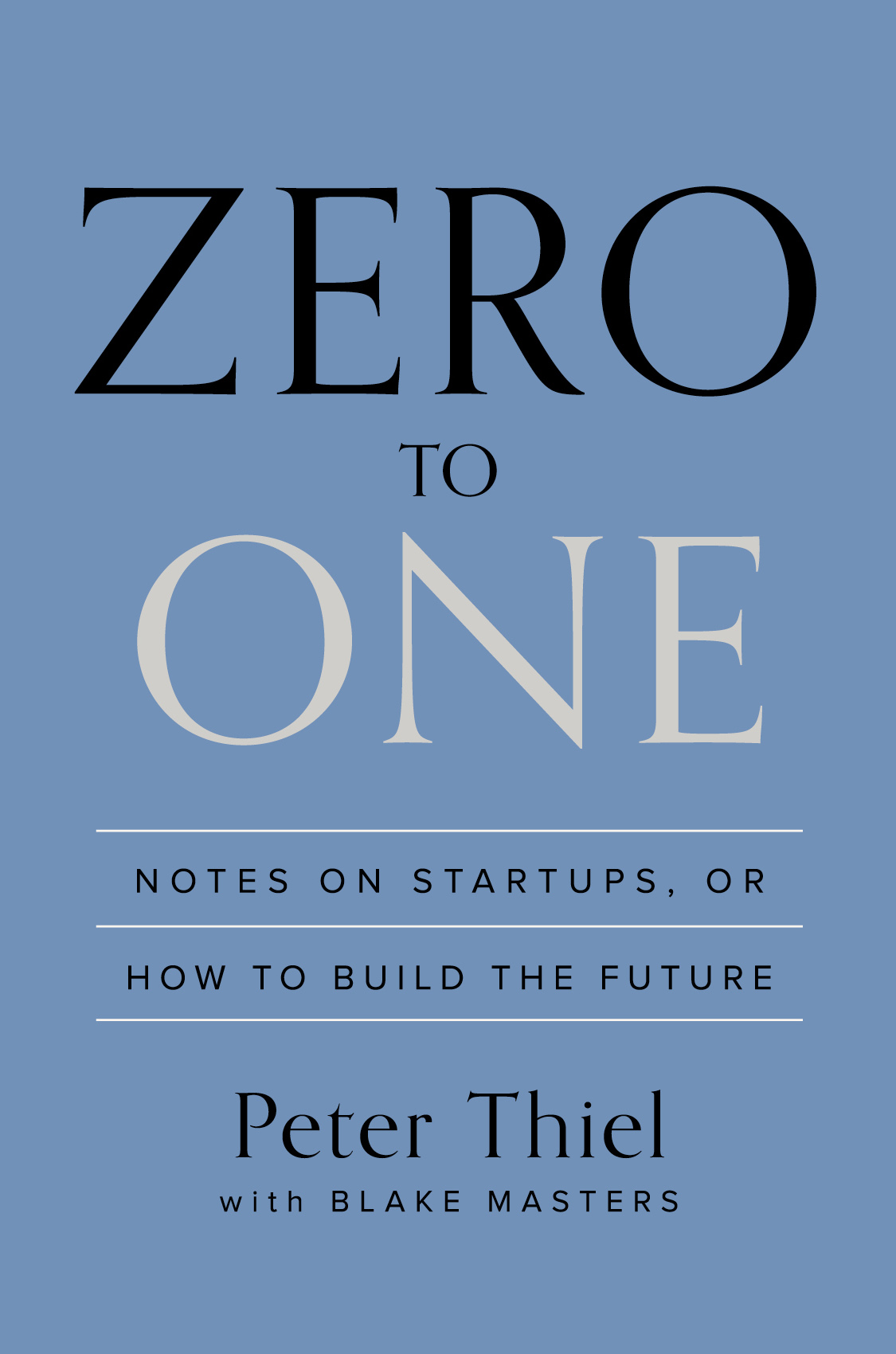
thiel_6_4_frontIn Peter Thiel’s hot book, Zero to One: Notes on Startups, or How to Build the Future, he makes many interesting observations (some I agree with, some I do not) but one in particular is particularly valuable. Thiel asserts that great companies are not great because they beat their competition, they are great because they do not have competition. Although he does not quote Blue Ocean Strategy, it is very consistent with their thesis and data that shows that companies that create new markets have much higher economic returns than those who come up with new strategies to defeat their competition.

Basic economics

Thiel’s point about the benefits of creating what he refers to as a monopoly, what I call a blue ocean opportunity, resonated with me as he use basic economics to prove the point. At its core, classical economics shows competition will drive out excess profits. That is why although Exxon makes a lot of money, they do not make a higher return on investment than another oil company. Whatever you are doing, somebody else will copy.

Thiel points out that, “Americans mythologize competition and credit it with saving us from socialist bread lines. Actually, capitalism and competition are opposites. Capitalism is premised on the accumulation of capital, but under perfect competition all profits get competed away. The lesson for entrepreneurs is clear: if you want to create and capture lasting value, don’t build an undifferentiated commodity business.“ Instead he advocates building a virtual monopoly, a company so good at what it does that no other firm can offer a close substitute. Continue reading “It is about creating a monopoly, not winning”

Like Loading...
Unknown's avatarAuthor Lloyd MelnickPosted on February 5, 2015April 24, 2021Categories General Social Games Business, General Tech Business, Growth, Lloyd's favorite postsTags blue ocean strategy, brand, competition, Excess Profits, Monopolies, Peter Thiel, Playing to Win, proprietary technology, Zero to One3 Comments on It is about creating a monopoly, not winning

How to create a winning strategy

Last month, I wrote about the telltale signs of a doomed strategy. Today I want to write about the foundation of creating a successful strategy that builds sustainable competitive advantage.
Playing to Win
As I’ve mentioned in previous posts, A.G. Lafley and Roger Martin do a great job in Playing to Win of showing the common factors that demonstrate a winning strategy. Continue reading “How to create a winning strategy”

Share this:

  • Click to share on Facebook (Opens in new window) Facebook
  • Click to share on LinkedIn (Opens in new window) LinkedIn
Like Loading...
Unknown's avatarAuthor Lloyd MelnickPosted on December 4, 2013December 11, 2013Categories General Social Games BusinessTags A.G. Lafley, Playing to Win, Roger Martin, StrategyLeave a comment on How to create a winning strategy

Is your strategy unsound?

While it is extremely difficult to create a great strategy that generates sustainable competitive advantage, it is not very hard to craft a flawed strategy. It is more difficult now than ever to build a great business. As A.G. Lafley and Roger Martin write in Playing to Win the new normal is volatile, uncertain, complex and ambiguous. Given this environment, having a sound strategy is critical. I plan on writing next month on the key elements of a sound strategy but more pressing is analyzing your existing strategy to see if it is flawed. In Playing to Win, the authors point out the six most common strategy traps.

  • The do-it-all strategy. Companies fall into this trap when they fail to make choices, instead they consider all initiatives as priorities. While this is sometimes a problem for struggling companies who feel they do not have the luxury to reject any initiatives, it is actually a greater problem for companies that have multiple great opportunities. It is harder to say no to a great opportunity than focus on the least of all evils. But if you do not focus, you are not likely to make the most of any of your opportunities and build sustainable competitive advantage. Lafley and Martin point out that strategy is always a choice, so you should not abdicate this decision.
  • The Don Quixote strategy. With this trap, you attack competitive “walled cities,” taking on your strongest competitors first. Given that your competitors are also smart and trying to build sustainable competitive advantage, your chances for success are minimized if you are focusing on fighting the strongest. Part of strategy is deciding who to compete against.
  • The Waterloo strategy. Much like the do-it-all strategy, this trap entails starting wars on multiple fronts with multiple competitors at the same time. No company can do everything well, and trying to compete on so many fronts will leave you weaker everywhere.
  • The something for everyone strategy. In this trap, you try to capture all consumer or channel or geographic or category segments simultaneously. The problem is, to create real value for your customers, you need to know them intimately and not worry about the others.
  • The dreams-that-never-come-true strategy. With this approach, you create high-level aspirations and mission statements that never get translated into concrete where to compete and how to compete choices, core capabilities or management systems. The authors point out that with this trap aspirations are not strategy.
  • The program-of-the-month strategy. This is another trap I have seen all too often. With this trap, a company chooses generic industry strategies, in which all competitors are chasing the same customers, geographies and segments the same way. It is a classic red ocean approach, and you have little chance of doing better than everyone else (despite how smart you think you are). The more your choices look like those of your competitor, the less likely you are to win. Continue reading “Is your strategy unsound?”

Share this:

  • Click to share on Facebook (Opens in new window) Facebook
  • Click to share on LinkedIn (Opens in new window) LinkedIn
Like Loading...
Unknown's avatarAuthor Lloyd MelnickPosted on November 13, 2013November 20, 2013Categories General Social Games BusinessTags A.G. Lafley and Roger Martin, Do-it-all strategy, don quixote strategy, Playing to Win, Strategy, waterloo strategy1 Comment on Is your strategy unsound?

Why acquisitions and new business initiatives often fail

I was recently reading Playing to Win by A.G. Lafley and Roger Martin and realized that acquisitions and new initiatives only work when they build on your company’s existing skills. This insight sheds light on why some many acquisitions or extensions in the game industry fail. In order to win (to use the authors’ language), or what I would describe as building sustainable competitive advantage, the book shows you need to build systems that support winning. If an acquisition or new initiative requires different systems, however, being part of a company that wins in its space a different way can doom your efforts. This insight is crucial when considering an acquisition (either as a buyer or seller) or pursuing a new business unit.

Playing to Win

You need competitive advantage

One of the themes of this blog, and my conversations with almost everyone, is that you need to have unique, sustainable competitive advantages if you are going to succeed. There are a lot of smart people, there are a lot of people who have raised investment, and if you think factors like these are going to make your company a success you probably need to start thinking about the next company you want to start because you will fail. Very rarely does a strategy of trying to be smarter than your competitor actually work. It is an arrogance that I have seen lead to the waste of millions of dollars of investment and years of sweat equity. Instead, great businesses are built by creating processes, technologies and other unique and non-replicable systems that make your product or services more valuable to customers (or cheaper) than your competitors. Continue reading “Why acquisitions and new business initiatives often fail”

Share this:

  • Click to share on Facebook (Opens in new window) Facebook
  • Click to share on LinkedIn (Opens in new window) LinkedIn
Like Loading...
Unknown's avatarAuthor Lloyd MelnickPosted on October 30, 2013November 15, 2013Categories General Social Games BusinessTags Acquisition, competitive advantage, Merscom, Playing to WinLeave a comment on Why acquisitions and new business initiatives often fail

Get my book on LTV

The definitive book on customer lifetime value, Understanding the Predictable, is now available in both print and Kindle formats on Amazon.

Understanding the Predictable delves into the world of Customer Lifetime Value (LTV), a metric that shows how much each customer is worth to your business. By understanding this metric, you can predict how changes to your product will impact the value of each customer. You will also learn how to apply this simple yet powerful method of predictive analytics to optimize your marketing and user acquisition.

For more information, click here

Follow The Business of Social Games and Casino on WordPress.com

Enter your email address to follow this blog and receive notifications of new posts by email.

Join 791 other subscribers

Most Recent Posts

  • Join me at PDMA Inspire for my talk on new product prioritization
  • Why keep studying?
  • The next three years of this blog
  • Interview with the CEO of Murka on the biggest growth opportunity in gaming, Barak David

Lloyd Melnick

This is Lloyd Melnick’s personal blog.  All views and opinions expressed on this website are mine alone and do not represent those of people, institutions or organizations that I may or may not be associated with in professional or personal capacity.

I am a serial builder of businesses (senior leadership on three exits worth over $700 million), successful in big (Disney, Stars Group/PokerStars, Zynga) and small companies (Merscom, Spooky Cool Labs) with over 20 years experience in the gaming and casino space.  Currently, I am the GM of VGW’s Chumba Casino and on the Board of Directors of Murka Games and Luckbox.

Topic Areas

  • Analytics (114)
  • Bayes' Theorem (8)
  • behavioral economics (8)
  • blue ocean strategy (14)
  • Crowdfunding (4)
  • DBA (2)
  • General Social Games Business (459)
  • General Tech Business (195)
  • Growth (88)
  • International Issues with Social Games (50)
  • Lloyd's favorite posts (101)
  • LTV (54)
  • Machine Learning (10)
  • Metaverse (1)
  • Mobile Platforms (37)
  • Prioritization (1)
  • Social Casino (52)
  • Social Games Marketing (105)
  • thinking fast and slow (5)
  • Uncategorized (33)

Social

  • View CasualGame’s profile on Facebook
  • View @lloydmelnick’s profile on Twitter
  • View lloydmelnick’s profile on LinkedIn

RSS

RSS Feed RSS - Posts

RSS Feed RSS - Comments

Categories

  • Analytics (114)
  • Bayes' Theorem (8)
  • behavioral economics (8)
  • blue ocean strategy (14)
  • Crowdfunding (4)
  • DBA (2)
  • General Social Games Business (459)
  • General Tech Business (195)
  • Growth (88)
  • International Issues with Social Games (50)
  • Lloyd's favorite posts (101)
  • LTV (54)
  • Machine Learning (10)
  • Metaverse (1)
  • Mobile Platforms (37)
  • Prioritization (1)
  • Social Casino (52)
  • Social Games Marketing (105)
  • thinking fast and slow (5)
  • Uncategorized (33)

Archives

  • September 2023
  • December 2021
  • July 2021
  • March 2021
  • February 2021
  • January 2021
  • December 2020
  • November 2020
  • October 2020
  • September 2020
  • August 2020
  • July 2020
  • June 2020
  • May 2020
  • April 2020
  • March 2020
  • February 2020
  • January 2020
  • November 2019
  • October 2019
  • September 2019
  • June 2019
  • May 2019
  • April 2019
  • March 2019
  • February 2019
  • January 2019
  • December 2018
  • June 2018
  • May 2018
  • April 2018
  • March 2018
  • February 2018
  • January 2018
  • December 2017
  • June 2017
  • May 2017
  • April 2017
  • March 2017
  • February 2017
  • January 2017
  • December 2016
  • November 2016
  • October 2016
  • September 2016
  • June 2016
  • May 2016
  • April 2016
  • March 2016
  • February 2016
  • January 2016
  • December 2015
  • November 2015
  • October 2015
  • September 2015
  • July 2015
  • June 2015
  • May 2015
  • April 2015
  • March 2015
  • February 2015
  • January 2015
  • December 2014
  • November 2014
  • October 2014
  • September 2014
  • August 2014
  • July 2014
  • June 2014
  • May 2014
  • April 2014
  • March 2014
  • February 2014
  • January 2014
  • December 2013
  • November 2013
  • October 2013
  • September 2013
  • August 2013
  • July 2013
  • June 2013
  • May 2013
  • April 2013
  • March 2013
  • February 2013
  • January 2013
  • December 2012
  • November 2012
  • October 2012
  • September 2012
  • August 2012
  • July 2012
  • June 2012
  • May 2012
  • April 2012
  • March 2012
  • February 2012
  • January 2012
  • December 2011
  • November 2011
  • October 2011
  • September 2011
  • August 2011
  • July 2011
  • June 2011
  • May 2011
  • December 2010
December 2025
S M T W T F S
 123456
78910111213
14151617181920
21222324252627
28293031  
« Sep    

by Lloyd Melnick

All posts by Lloyd Melnick unless specified otherwise
Google+

Enter your email address to subscribe to this blog and receive notifications of new posts by email.

Join 791 other subscribers
Follow Lloyd Melnick on Quora

RSS HBR Blog

  • How One Manufacturer Achieved Net Zero at Zero Cost
  • What Can U.S. Employers Do About Rising Healthcare Costs?
  • When You Have to Execute a Strategy You Disagree With
  • 4 Ways to Build Durable Relationships with Your Most Important Customers
  • What Jargon Says About Your Company Culture
  • Research: When Used Correctly, LLMs Can Unlock More Creative Ideas
  • Your New Role Requires Strategic Thinking…But You’re Stuck in the Weeds
  • For Circular Economy Innovation, Look to the Global South
  • Why Great Leaders Focus on the Details
  • Corporate Disclosure in the Age of AI

RSS Techcrunch

  • An error has occurred; the feed is probably down. Try again later.

RSS MIT Sloan Management Review Blog

  • AI Coding Tools: The Productivity Trap Most Companies Miss
  • How Procter & Gamble Uses AI to Unlock New Insights From Data
  • Rewire Organizational Knowledge With GenAI
  • Hungry for Learning: Wendy’s Will Croushorn
  • Beat Burnout: 10 Essential MIT SMR Reads
  • How Leaders Stay True to Themselves and Their Stakeholders
  • Our Guide to the Winter 2026 Issue
  • Broadening Future Perspectives at the Bank of England
  • A Faster Way to Build Future Scenarios
  • Assess What Is Certain in a Sea of Unknowns
The Business of Social Games and Casino Website Powered by WordPress.com.
  • Subscribe Subscribed
    • The Business of Social Games and Casino
    • Join 726 other subscribers
    • Already have a WordPress.com account? Log in now.
    • The Business of Social Games and Casino
    • Subscribe Subscribed
    • Sign up
    • Log in
    • Report this content
    • View site in Reader
    • Manage subscriptions
    • Collapse this bar
 

Loading Comments...
 

    %d