Skip to content

The Business of Social Games and Casino

How to succeed in the mobile game space by Lloyd Melnick

Tag: roi

How to upsell and cross sell more effectively

How to upsell and cross sell more effectively

Retailers derive significant value from upselling and cross-selling customers but mobile and social game companies are yet to master this opportunity. The cost of acquiring customers, particularly paying customers, is high so it is vital to get as much value as possible from these customers. It is also more cost effective, as Marketing Metrics stated it is 50 percent easier to sell to existing customers than new ones.
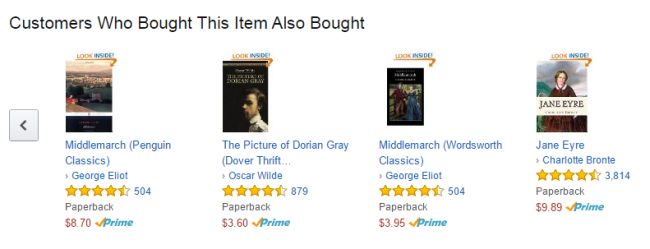
Amazon cross sell

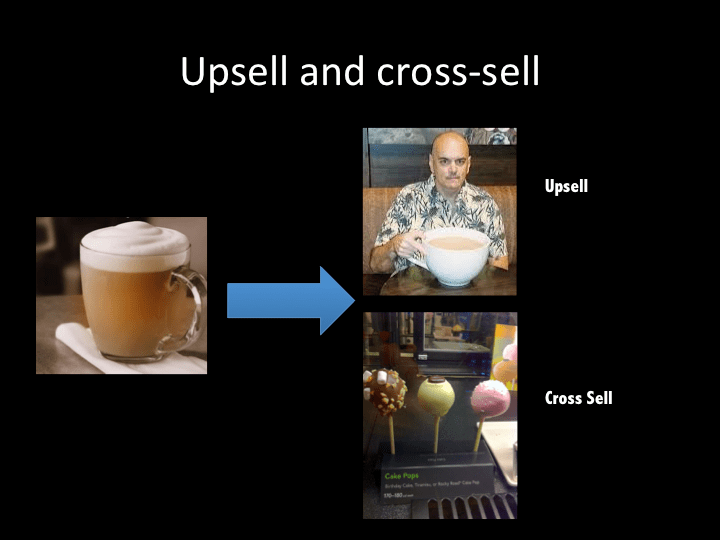
First, it is important to understand the difference between upselling and cross selling. Upselling is getting a customer to purchase more of an item they are already buying while cross selling is convincing them to purchase complimentary items.

Starbucks presents examples of both upselling and cross selling. If you are about to buy a Grande Latte and the cashier suggests a Venti Latte, they are upselling. If they then ask you if you want a Cake Pop with your Latte, they are cross selling.

Slide1

In the social gaming space, both are possible. If a player is about to buy 5,000 chips for $10, you can upsell by offering them another 1,000 chips for $1. You can cross sell by also suggesting they pay to unlock five exclusive slot machines to use their new chips in for another $10. You can also cross sell them into another game.

A recent post, 3 Slick Upsell & Cross-Sell Methods to Boost Revenue + Profit by Sam Hurley, , does a great job of explaining the three areas you can deploy upselling and cross-selling.

While browsing

When a customer is playing your game or wandering in a casino it is a perfect time to cross sell them with potential purchases. Their game or browsing activity is an opportunity to show them how they can have a better experience by monetizing. At this critical stage in their journey, they may not be aware of your other offerings, or plan to make a purchase. As Hurley writes, “while customers browse your digital properties, product or service bundles should be presented as super helpful add-ons.”

In social casino, one of the most impactful developments was integrating progressive jackpots with an upsell mechanic. Players can enjoy a slot (browse) and then be presented with an offer to bet higher and have a chance to win a huge progressive jackpot. Only with the higher bet, which requires monetization, can players enjoy the progressive jackpot. In real money casino, this is an even clearer upsell, as players need to play at a higher stake (spend more) to have the chance to win more.

One critical element to keep in mind when players are browsing/playing, is that the offer needs to be relevant. If somebody is playing slots, a promotion to sports bet is unlikely to be successful. Instead, try to get them to spend more on the slots and give them a sports betting offer during the purchase (see below).

On paywall

The second great opportunity to upsell and cross sell a player is when they are in the process of purchasing. First, you can upsell by offering them an add-on. This add-on can be additional chips or currency at a discounted price or a different virtual item in the game (the upsell).

This is also a great opportunity to cross sell. When someone is making a purchase, you can give them something of value in another one of your products (the cross sell). This can be free chips or tournament tickets in the other product, access to a special VIP area, sneak peak or exclusive content (which they would not want to lose).

For the purchase event upsell/cross-sell to be most effective, you should imbue a sense of urgency and scarcity. If it is an offer to purchase more, make it a limited time offer only available to X players. With cross sell, it is even more powerful. If you have a poker game and give someone a key that expires in 24 hours for an exclusive slot in your casino product, that is a powerful incentive for them to try your other game.

To optimize the efficiency of these purchase events activities, Hurley recommends several key elements:

  • Keep it tidy. Don’t clutter the deposit page and overwhelm customers (this could actually lose business, instead of gaining it).
  • Keep it simple. Tell customers exactly what they will get via upsells and cross-sells, concisely and considerately.
  • Keep it welcoming. You don’t want your customer to feel they are buying a used car. Hurley recommends “Customers also bought…” instead of “Add these to your cart, now!”
  • Keep it relevant. The better the alignment, the greater your conversion rate and order value.

After purchase

Once you have gotten a player to monetize, it is the optimal time to turn them into a repeat customer. According to Hurley, post-purchase upsell and cross sell has the highest conversion rate of any type of upsell. Look at the purchase as the beginning of a never ending funnel, the beginning of the Paying Customer Journey.

Once a customer has made a purchase, you can both present upsell and cross sell offers. Allow them to make an additional purchase for a limited time or give them loyalty points, where they earn even more by making another purchase. It is also a great time to present your other products, by buying chips in our slots product, why don’t you try our video poker experience.

There are four primary ways to present the post purchase cross or upsell opportunity:

  1. Once someone has made a purchase, set up a drip email marketing campaign tailored to that player. Make follow on offers based on how they used their initial purchase and the size of the purchase.
  2. Customer support (across all channels) is another chance to upsell and cross-sell your customers, but ensure your CS reps have access to the purchase information and do not turn into cheap salespeople (their primary objective is to keep your customers happy).
  3. Push notifications, simple mobile message saying your recent purchase entitles you to a 25 percent discount right now.
  4. Receipts. Include an offer when you send a receipt to a player for a purchase (even if made through the app store use it as an opportunity to send a receipt). Receipts have a much higher open rate than other emails (71 percent versus about 17 percent) and are more likely to be retained by your customer. Include in the receipt a discount off the customer’s next purchase.

Keep upsell and cross sell top of mind

Given the high ROI of upsell and cross sell promotions, you need to integrate it into all elements of product development and CRM. Think of the various customer touchpoints and how you can integrate upsell and cross sell.

Key takeaways

  • It is 50 percent easier to sell to existing customers than new ones, so you should focus efforts on increasing the size of purchases by your current customers (upsell) and getting them to purchase more of your products (cross-sell).
  • There are three elements of the customer journey where you can cross-sell and upsell, when they are playing your game (browsing), during the purchase and after the purchase.
  • Post purchase is the most effective time to upsell and cross-sell, you can offer your customers a discount on their next purchase or an incentive to try one of your other games. This can be done via email, push notifications, your CS team or by sending a purchase receipt that incorporates an offer.
 

Share this:

  • Click to share on Facebook (Opens in new window) Facebook
  • Click to share on LinkedIn (Opens in new window) LinkedIn
Like Loading...
Unknown's avatarAuthor Lloyd MelnickPosted on June 4, 2019September 8, 2019Categories General Social Games Business, Social Casino, Social Games MarketingTags cross-selling, in-app purchases, roiLeave a comment on How to upsell and cross sell more effectively

Algorithms are not humans

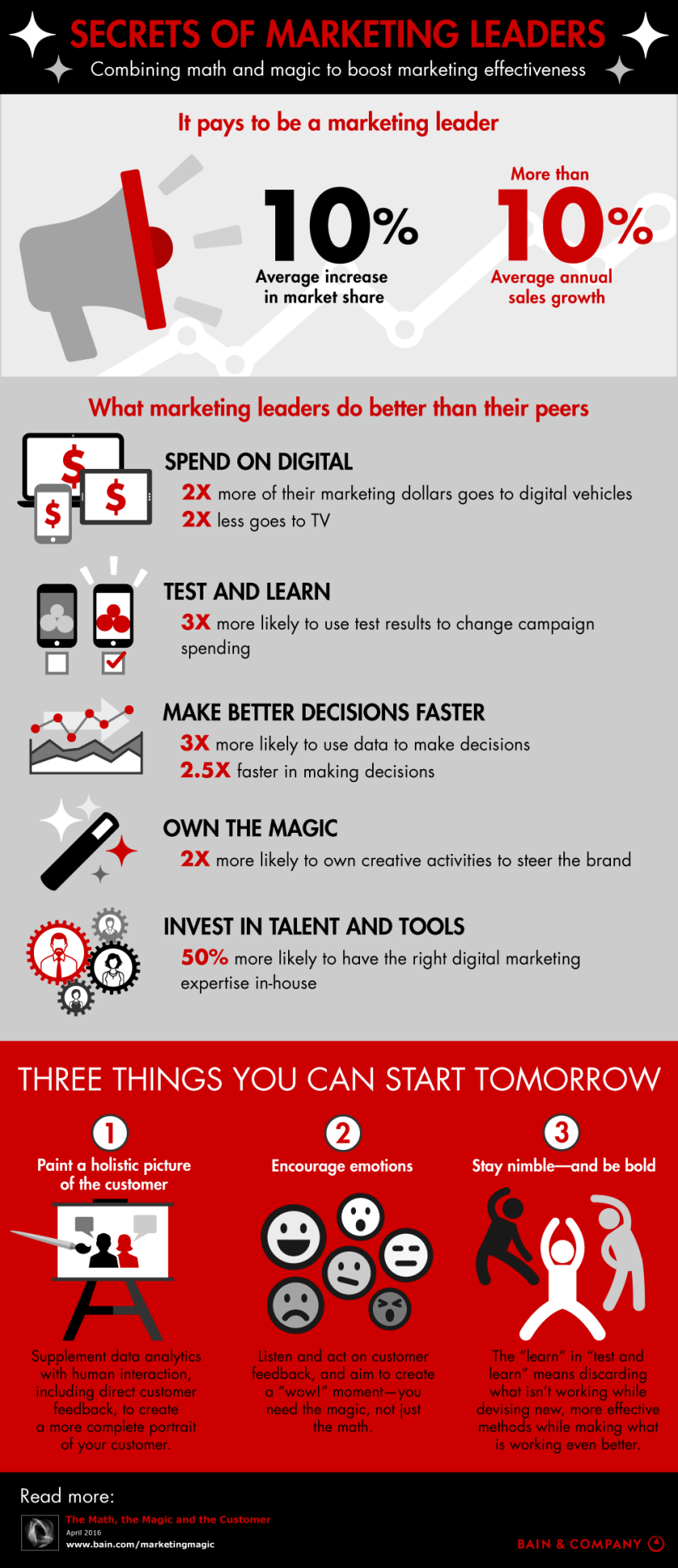
While I consider myself one of the most data-driven people in the gaming industry, I understand that quantitative data alone is not the optimal input for decision making. Combining analytics with qualitative data can often improve your decisions. You can think of it as a basic mathematic equation, if X is data and Y is qualitative information (ie. personal past experience), by definition X+Y will be equal or greater than X alone. An article by Bain & Co., one of the world’s leading consultancies, The Math, The Magic and the Customer shows how great marketers go beyond the data.

As the article points out, marketing departments now spend more on technology than IT departments. We have great tools not only to measure every marketing campaign, but each creative in the campaign, each channel we use and how each creative interacts with each customer in each channel. Often, however, we rely on this information without looking holistically at the customer or realizing that customers will not always behave consistently (or rationally). People make decisions emotionally as well as logically and as the article says, “great marketers have always known this, which is why they work hard to build an emotional bond with the customers they are targeting. They tell compelling stories about their brands through memorable messages and indelible images. At its best, this kind of marketing pops and dazzles, like magic. Marketing that ignores the magic and relies on math and science alone will be marketing that doesn’t work.”

Data and forging emotional connections are not mutually exclusive. Great marketers do not rely on just one. They use the myriad of data to create a holistic view of the customer and customer journey. The marketing is customer-centric rather than tool centric, all of the data and analysis comes down to what will be most effective in the future with the customer (not what the cohort did in the past). And as Bain writes, “contrary to the inclination of many marketers, moreover, they do not put measurement of ROI at the top of their agenda. When they can’t measure the ROI of an innovative effort, they are willing to let instinct guide their efforts—at least for a while.”

There are three keys to using data and the holistic view of the customer effectively. By combining a single view of the customer, understanding and tapping into their emotions and testing relentlessly you can replicate what is working for the most successful companies.

math and magic graphic

Paint a holistic picture of the customer

Most companies, not only online ones, have gigabytes of data about their customers. Data includes preferences, locations, device types, when and where they interact, purchase decision process, where they are browsing, what else they are doing online, etc. You can even see where your customers are and what they are doing at an exact time; you can interact on a real time basis. The information also comes from multiple sources and is stored in different locations.

The key to successful marketing is putting this data together for a single, real time, view of the customer. To achieve this goal companies must come together and the marketing team, IT team, analytics team — even finance — must all work together to share data and build systems to create a plan to build this complete view. Then the company needs to create a single customer record, where all of the information is held. While it sounds easy, this process can take years but in the interim data should be streaming into marketing so it can start looking at the customer holistically.

Encourage emotions

People are not algorithms or cells on a spreadsheet, not only is it immoral to treat them that way it is not good marketing. By understanding your customers’ journey, you can then tailor the experience to elicit the appropriate emotions at the right time. If it is a gambling game (either real money or virtual chips), provide excitement after a big win or help calm them down after a bad beat. By understanding your customers and potential customers emotions and encouraging the right one at the right time, you can make them more likely to choose and enjoy your product.

Stay nimble and be bold

You need to test many different approaches, as eliciting emotion is not easy. The important part of testing is learning from the results. Reinforce what is working and discard what is not, even if you were the advocate of the sub-optimal variant. Then think of new methods and promotions that will build on what you have learned and create even better results.

Moving forward you are not CFO

With the reliance on metrics and ROI in marketing, the marketing department is quietly becoming a mirror of finance. While metrics and ROI are critical to long-term success, so is generating emotions from your customers and potential customers. To become a truly great marketer, you need to understand how to connect to your customer as well as reading your daily dashboard.

Key takeaways

  • While data and ROI is critical to successful marketing, adding qualitative measures makes your marketing more effective as it is effectively additional data.
  • A key to successful marketing is generating the right emotion at the right time from your customer or potential customer, as emotions drive people, not data.
  • Continue testing different approaches and techniques, discarding what does not work and building off of what does work.

Share this:

  • Click to share on Facebook (Opens in new window) Facebook
  • Click to share on LinkedIn (Opens in new window) LinkedIn
Like Loading...
Unknown's avatarAuthor Lloyd MelnickPosted on March 20, 2018February 18, 2018Categories General Social Games Business, General Tech Business, Social Games MarketingTags marketing, roi, testingLeave a comment on Algorithms are not humans

Get my book on LTV

The definitive book on customer lifetime value, Understanding the Predictable, is now available in both print and Kindle formats on Amazon.

Understanding the Predictable delves into the world of Customer Lifetime Value (LTV), a metric that shows how much each customer is worth to your business. By understanding this metric, you can predict how changes to your product will impact the value of each customer. You will also learn how to apply this simple yet powerful method of predictive analytics to optimize your marketing and user acquisition.

For more information, click here

Follow The Business of Social Games and Casino on WordPress.com

Enter your email address to follow this blog and receive notifications of new posts by email.

Join 791 other subscribers

Most Recent Posts

  • Join me at PDMA Inspire for my talk on new product prioritization
  • Why keep studying?
  • The next three years of this blog
  • Interview with the CEO of Murka on the biggest growth opportunity in gaming, Barak David

Lloyd Melnick

This is Lloyd Melnick’s personal blog.  All views and opinions expressed on this website are mine alone and do not represent those of people, institutions or organizations that I may or may not be associated with in professional or personal capacity.

I am a serial builder of businesses (senior leadership on three exits worth over $700 million), successful in big (Disney, Stars Group/PokerStars, Zynga) and small companies (Merscom, Spooky Cool Labs) with over 20 years experience in the gaming and casino space.  Currently, I am the GM of VGW’s Chumba Casino and on the Board of Directors of Murka Games and Luckbox.

Topic Areas

  • Analytics (114)
  • Bayes' Theorem (8)
  • behavioral economics (8)
  • blue ocean strategy (14)
  • Crowdfunding (4)
  • DBA (2)
  • General Social Games Business (459)
  • General Tech Business (195)
  • Growth (88)
  • International Issues with Social Games (50)
  • Lloyd's favorite posts (101)
  • LTV (54)
  • Machine Learning (10)
  • Metaverse (1)
  • Mobile Platforms (37)
  • Prioritization (1)
  • Social Casino (52)
  • Social Games Marketing (105)
  • thinking fast and slow (5)
  • Uncategorized (33)

Social

  • View CasualGame’s profile on Facebook
  • View @lloydmelnick’s profile on Twitter
  • View lloydmelnick’s profile on LinkedIn

RSS

RSS Feed RSS - Posts

RSS Feed RSS - Comments

Categories

  • Analytics (114)
  • Bayes' Theorem (8)
  • behavioral economics (8)
  • blue ocean strategy (14)
  • Crowdfunding (4)
  • DBA (2)
  • General Social Games Business (459)
  • General Tech Business (195)
  • Growth (88)
  • International Issues with Social Games (50)
  • Lloyd's favorite posts (101)
  • LTV (54)
  • Machine Learning (10)
  • Metaverse (1)
  • Mobile Platforms (37)
  • Prioritization (1)
  • Social Casino (52)
  • Social Games Marketing (105)
  • thinking fast and slow (5)
  • Uncategorized (33)

Archives

  • September 2023
  • December 2021
  • July 2021
  • March 2021
  • February 2021
  • January 2021
  • December 2020
  • November 2020
  • October 2020
  • September 2020
  • August 2020
  • July 2020
  • June 2020
  • May 2020
  • April 2020
  • March 2020
  • February 2020
  • January 2020
  • November 2019
  • October 2019
  • September 2019
  • June 2019
  • May 2019
  • April 2019
  • March 2019
  • February 2019
  • January 2019
  • December 2018
  • June 2018
  • May 2018
  • April 2018
  • March 2018
  • February 2018
  • January 2018
  • December 2017
  • June 2017
  • May 2017
  • April 2017
  • March 2017
  • February 2017
  • January 2017
  • December 2016
  • November 2016
  • October 2016
  • September 2016
  • June 2016
  • May 2016
  • April 2016
  • March 2016
  • February 2016
  • January 2016
  • December 2015
  • November 2015
  • October 2015
  • September 2015
  • July 2015
  • June 2015
  • May 2015
  • April 2015
  • March 2015
  • February 2015
  • January 2015
  • December 2014
  • November 2014
  • October 2014
  • September 2014
  • August 2014
  • July 2014
  • June 2014
  • May 2014
  • April 2014
  • March 2014
  • February 2014
  • January 2014
  • December 2013
  • November 2013
  • October 2013
  • September 2013
  • August 2013
  • July 2013
  • June 2013
  • May 2013
  • April 2013
  • March 2013
  • February 2013
  • January 2013
  • December 2012
  • November 2012
  • October 2012
  • September 2012
  • August 2012
  • July 2012
  • June 2012
  • May 2012
  • April 2012
  • March 2012
  • February 2012
  • January 2012
  • December 2011
  • November 2011
  • October 2011
  • September 2011
  • August 2011
  • July 2011
  • June 2011
  • May 2011
  • December 2010
December 2025
S M T W T F S
 123456
78910111213
14151617181920
21222324252627
28293031  
« Sep    

by Lloyd Melnick

All posts by Lloyd Melnick unless specified otherwise
Google+

Enter your email address to subscribe to this blog and receive notifications of new posts by email.

Join 791 other subscribers
Follow Lloyd Melnick on Quora

RSS HBR Blog

  • Why Chief Technology Officers Can’t Afford to Guess on Planning AI - SPONSOR CONTENT FROM GOOGLE CLOUD
  • 6 Cybersecurity Predictions for the AI Economy in 2026 - SPONSOR CONTENT FROM PALO ALTO NETWORKS
  • Why SMBs Are Struggling to Find Talent
  • AI Tools Make Coders More Important, Not Less
  • The Power of Affirmation at Work
  • How One Manufacturer Is Aiming to Achieve Net Zero at Net Zero Cost
  • What Can U.S. Employers Do About Rising Healthcare Costs?
  • When You Have to Execute a Strategy You Disagree With
  • 4 Ways to Build Durable Relationships with Your Most Important Customers
  • What Jargon Says About Your Company Culture

RSS Techcrunch

  • An error has occurred; the feed is probably down. Try again later.

RSS MIT Sloan Management Review Blog

  • AI Coding Tools: The Productivity Trap Most Companies Miss
  • How Procter & Gamble Uses AI to Unlock New Insights From Data
  • Rewire Organizational Knowledge With GenAI
  • Hungry for Learning: Wendy’s Will Croushorn
  • Beat Burnout: 10 Essential MIT SMR Reads
  • How Leaders Stay True to Themselves and Their Stakeholders
  • Our Guide to the Winter 2026 Issue
  • Broadening Future Perspectives at the Bank of England
  • A Faster Way to Build Future Scenarios
  • Assess What Is Certain in a Sea of Unknowns
The Business of Social Games and Casino Website Powered by WordPress.com.
  • Subscribe Subscribed
    • The Business of Social Games and Casino
    • Join 726 other subscribers
    • Already have a WordPress.com account? Log in now.
    • The Business of Social Games and Casino
    • Subscribe Subscribed
    • Sign up
    • Log in
    • Report this content
    • View site in Reader
    • Manage subscriptions
    • Collapse this bar
 

Loading Comments...
 

    %d