Skip to content

The Business of Social Games and Casino

How to succeed in the mobile game space by Lloyd Melnick

Tag: social game design

Lessons from Overwatch to help you create a hit

One of the biggest hits in the gaming space this year has been Overwatch from Blizzard and there are several lessons game companies can learn from it. An article in Rolling Stone, Blizzard Reveals How to Make a Hit Game in 9 Easy Steps, highlights these lessons, though grossly underestimating the difficult in making a hit. I have been in the game industry since 1993 and have seen many companies do everything right but still fail. Actually, that is still the likely outcome with more than 80 percent of games failing but the expected value of a hit still makes it a (sometimes) profitable business.

By looking into the success of Overwatch, you can improve the odds of creating a successful game. Some of the keys that Blizzard’s team pointed to and that I agree with, with my prioritization:

  1. Ditch everything that gets in the way of players. According to Blizzard VP Jeffrey Kaplan, “Blizzard doesn’t focus on reducing game difficulty across the board. Instead, it preserves a game’s ‘core fantasy’ and gets rid of friction points: needlessly complex aspects where ‘normal’ human beings will step away from the computer in a moment of frustration, but the more-hardcore will stick around.”

    Blizzard looked at all the conventional norms of the industry and then asked the question of each, can they be reduced to make a simpler but still great experience. The key here, and one of the keys to great game (and product) design, is the more you eliminate, the better the product. This runs counter to conventional wisdom about always adding features.

  2. Appeal to new players with a subtle learning curve. Blizzard’s games take a long time to master, and any product that appeals to core players will need to so they can satisfy those hardcore players. These days, however, even the most hardcore gamers will not put up with a tutorial that lasts in the days or hours (and probably even minutes). The game industry has to face the same reality as electronics or car makers, the manual (or in this case tutorial) will not be opened or at most not read carefully.

    Rather than a long boring tutorial, Blizzard on boards players by controlling the early experience. “In most of its games, players start with a [short] tutorial, then play against the A.I. Finally, they start to battle other players, but in a very shallow pool amongst other beginners. They join the main group only after they figure out what’s going on. Even then, the learning process continues. In Overwatch, the “Kill Cam” and “Play of the Game” features showcase short videos that might prove instructive to beginners.”

    The key is for players to get immersed in the game quickly by controlling the competition, not by teaching. Thus they are already enjoying the game when they decide whether to come back (or monetize).

  3. Blow up your games and start over. A lot of your development efforts will fail, even if you are Blizzard or Supercell. Supercell “pops champagne” when a game fails. Blizzard has cancelled as many games as it has shipped. By canceling the games that were once promising but no longer have the magic they need to succeed, it allows your company to focus on the product most likely to succeed.

  4. Polish and prune as you go. One thing that I have not heard from other companies but makes ultimate sense is to polish and tweak your game throughout the development process, rather than at the end. I have seen many times how the last 20 percent is the difference between a hit and a failure. This reality is most obvious in the shooter space, where so many developers have great technology it is not a competitive advantage. It is the little features that generate hits, first shown by Duke Nukem’s unexpected rise in the market in 1996. At Blizzard, “instead of blocking out the larger elements and leaving the fine tweaks for the last stages, they pour effort into polishing each step as they go.” This is a great way to ensure you have a polished product that delights players even for your soft launch.

  5. Pick your genre. Blizzard has done a great job of focusing on a genre, allowing it to create product expertise, customer insight and brand equity. It’s titles, starting with World of Warcraft (or Diablo) and going to Overwatch, have all been markets targeting hardcore gamers. They know what these gamers want and have been able to create appealing products. This focus on a genre has allowed them to not only weather, but also thrive, during platform shifts (Hearthstone quickly established them as a leader on mobile).

    Conversely, Zynga shows what happens when you do not follow this strategy. After building a great business and deep customer knowledge of the casual female player with titles like Farmville and Fishville (and anything else ville they could think of), they tried to dominate the mid-core mobile space. Three CEOs later, they are still trying to gain a leadership position on mobile (where, not coincidentally, they are seeing their biggest success in social casino, which unsurprisingly targets an older female demographic).

Give yourself a fighting chance

I would summarize the key to great game development as eliminate, eliminate, eliminate and tweak, tweak, tweak. As I mentioned earlier, at least 80 percent of game launches fail (and I’m not talking Indie, look at King or Kabam or anyone not located in Finland). By creating a game that immerses players quickly and is not unduly complicated; and by focusing on a genre where you have expertise, you will have a chance to succeed where others fail. And, as Blizzard does, do not be afraid to kill projects and start tweaking from day one.

Key takeaways

  • The most important key to creating a successful game is eliminating elements and mechanics that are not really necessary. Less is more and good design is not adding more features.
  • You need to plan the early user journey so the player gets immersed and learns the game naturally, while having fun, rather than using a long tutorial as a crutch.
  • Be willing to kill projects quickly so you can focus on the games with the best chance of success.
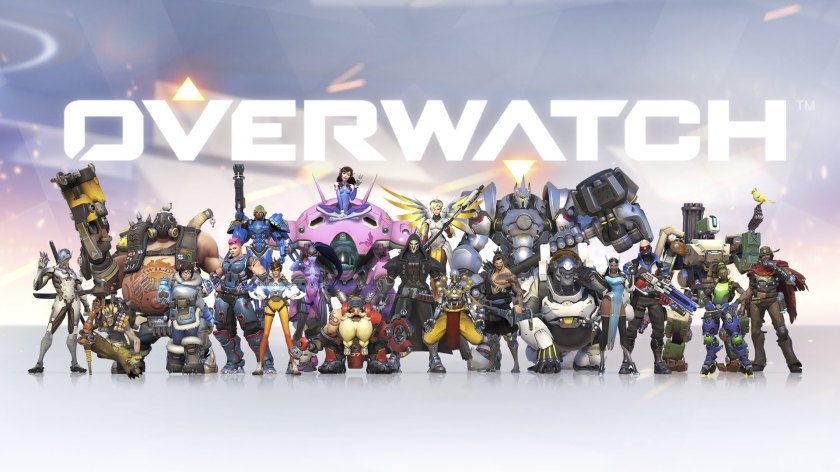
overwatch

Share this:

  • Click to share on Facebook (Opens in new window) Facebook
  • Click to share on LinkedIn (Opens in new window) LinkedIn
Like Loading...
Unknown's avatarAuthor Lloyd MelnickPosted on September 21, 2016September 10, 2016Categories General Social Games Business, General Tech BusinessTags Blizzard, game design, Game development, Overwatch, social game designLeave a comment on Lessons from Overwatch to help you create a hit

Putting the Fun into Games

I recently read an interesting paper, “Putting the Fun Factor Into Gaming: The Influence of Social Contexts on Experiences of Playing Videogames”, by British scholars Linda Kaye and Jo Bryce. Although we often look at the fun factor in a game as a subjective measurement, this paper does a great job of showing objectively what makes a game fun.

According to Kay and Bryce, the key to creating a fun experience is “flow.” Continue reading “Putting the Fun into Games”

Share this:

  • Click to share on Facebook (Opens in new window) Facebook
  • Click to share on LinkedIn (Opens in new window) LinkedIn
Like Loading...
Unknown's avatarAuthor Lloyd MelnickPosted on August 16, 2012August 21, 2012Categories General Social Games BusinessTags fun, game flow, Jo Bryce, Linda Kaye, social game design1 Comment on Putting the Fun into Games

Get my book on LTV

The definitive book on customer lifetime value, Understanding the Predictable, is now available in both print and Kindle formats on Amazon.

Understanding the Predictable delves into the world of Customer Lifetime Value (LTV), a metric that shows how much each customer is worth to your business. By understanding this metric, you can predict how changes to your product will impact the value of each customer. You will also learn how to apply this simple yet powerful method of predictive analytics to optimize your marketing and user acquisition.

For more information, click here

Follow The Business of Social Games and Casino on WordPress.com

Enter your email address to follow this blog and receive notifications of new posts by email.

Join 791 other subscribers

Most Recent Posts

  • Join me at PDMA Inspire for my talk on new product prioritization
  • Why keep studying?
  • The next three years of this blog
  • Interview with the CEO of Murka on the biggest growth opportunity in gaming, Barak David

Lloyd Melnick

This is Lloyd Melnick’s personal blog.  All views and opinions expressed on this website are mine alone and do not represent those of people, institutions or organizations that I may or may not be associated with in professional or personal capacity.

I am a serial builder of businesses (senior leadership on three exits worth over $700 million), successful in big (Disney, Stars Group/PokerStars, Zynga) and small companies (Merscom, Spooky Cool Labs) with over 20 years experience in the gaming and casino space.  Currently, I am the GM of VGW’s Chumba Casino and on the Board of Directors of Murka Games and Luckbox.

Topic Areas

  • Analytics (114)
  • Bayes' Theorem (8)
  • behavioral economics (8)
  • blue ocean strategy (14)
  • Crowdfunding (4)
  • DBA (2)
  • General Social Games Business (459)
  • General Tech Business (195)
  • Growth (88)
  • International Issues with Social Games (50)
  • Lloyd's favorite posts (101)
  • LTV (54)
  • Machine Learning (10)
  • Metaverse (1)
  • Mobile Platforms (37)
  • Prioritization (1)
  • Social Casino (52)
  • Social Games Marketing (105)
  • thinking fast and slow (5)
  • Uncategorized (33)

Social

  • View CasualGame’s profile on Facebook
  • View @lloydmelnick’s profile on Twitter
  • View lloydmelnick’s profile on LinkedIn

RSS

RSS Feed RSS - Posts

RSS Feed RSS - Comments

Categories

  • Analytics (114)
  • Bayes' Theorem (8)
  • behavioral economics (8)
  • blue ocean strategy (14)
  • Crowdfunding (4)
  • DBA (2)
  • General Social Games Business (459)
  • General Tech Business (195)
  • Growth (88)
  • International Issues with Social Games (50)
  • Lloyd's favorite posts (101)
  • LTV (54)
  • Machine Learning (10)
  • Metaverse (1)
  • Mobile Platforms (37)
  • Prioritization (1)
  • Social Casino (52)
  • Social Games Marketing (105)
  • thinking fast and slow (5)
  • Uncategorized (33)

Archives

  • September 2023
  • December 2021
  • July 2021
  • March 2021
  • February 2021
  • January 2021
  • December 2020
  • November 2020
  • October 2020
  • September 2020
  • August 2020
  • July 2020
  • June 2020
  • May 2020
  • April 2020
  • March 2020
  • February 2020
  • January 2020
  • November 2019
  • October 2019
  • September 2019
  • June 2019
  • May 2019
  • April 2019
  • March 2019
  • February 2019
  • January 2019
  • December 2018
  • June 2018
  • May 2018
  • April 2018
  • March 2018
  • February 2018
  • January 2018
  • December 2017
  • June 2017
  • May 2017
  • April 2017
  • March 2017
  • February 2017
  • January 2017
  • December 2016
  • November 2016
  • October 2016
  • September 2016
  • June 2016
  • May 2016
  • April 2016
  • March 2016
  • February 2016
  • January 2016
  • December 2015
  • November 2015
  • October 2015
  • September 2015
  • July 2015
  • June 2015
  • May 2015
  • April 2015
  • March 2015
  • February 2015
  • January 2015
  • December 2014
  • November 2014
  • October 2014
  • September 2014
  • August 2014
  • July 2014
  • June 2014
  • May 2014
  • April 2014
  • March 2014
  • February 2014
  • January 2014
  • December 2013
  • November 2013
  • October 2013
  • September 2013
  • August 2013
  • July 2013
  • June 2013
  • May 2013
  • April 2013
  • March 2013
  • February 2013
  • January 2013
  • December 2012
  • November 2012
  • October 2012
  • September 2012
  • August 2012
  • July 2012
  • June 2012
  • May 2012
  • April 2012
  • March 2012
  • February 2012
  • January 2012
  • December 2011
  • November 2011
  • October 2011
  • September 2011
  • August 2011
  • July 2011
  • June 2011
  • May 2011
  • December 2010
December 2025
S M T W T F S
 123456
78910111213
14151617181920
21222324252627
28293031  
« Sep    

by Lloyd Melnick

All posts by Lloyd Melnick unless specified otherwise
Google+

Enter your email address to subscribe to this blog and receive notifications of new posts by email.

Join 791 other subscribers
Follow Lloyd Melnick on Quora

RSS HBR Blog

  • How One Manufacturer Achieved Net Zero at Zero Cost
  • What Can U.S. Employers Do About Rising Healthcare Costs?
  • When You Have to Execute a Strategy You Disagree With
  • 4 Ways to Build Durable Relationships with Your Most Important Customers
  • What Jargon Says About Your Company Culture
  • Research: When Used Correctly, LLMs Can Unlock More Creative Ideas
  • Your New Role Requires Strategic Thinking…But You’re Stuck in the Weeds
  • For Circular Economy Innovation, Look to the Global South
  • Why Great Leaders Focus on the Details
  • Corporate Disclosure in the Age of AI

RSS Techcrunch

  • An error has occurred; the feed is probably down. Try again later.

RSS MIT Sloan Management Review Blog

  • AI Coding Tools: The Productivity Trap Most Companies Miss
  • How Procter & Gamble Uses AI to Unlock New Insights From Data
  • Rewire Organizational Knowledge With GenAI
  • Hungry for Learning: Wendy’s Will Croushorn
  • Beat Burnout: 10 Essential MIT SMR Reads
  • How Leaders Stay True to Themselves and Their Stakeholders
  • Our Guide to the Winter 2026 Issue
  • Broadening Future Perspectives at the Bank of England
  • A Faster Way to Build Future Scenarios
  • Assess What Is Certain in a Sea of Unknowns
The Business of Social Games and Casino Website Powered by WordPress.com.
  • Subscribe Subscribed
    • The Business of Social Games and Casino
    • Join 726 other subscribers
    • Already have a WordPress.com account? Log in now.
    • The Business of Social Games and Casino
    • Subscribe Subscribed
    • Sign up
    • Log in
    • Report this content
    • View site in Reader
    • Manage subscriptions
    • Collapse this bar
 

Loading Comments...
 

    %d