I have been around many games and products that had poor results but the game teams kept thinking that everything would be fixed with the new features they had on the roadmap. It never worked. A recent post by Andrew Chen, “The Next Feature Fallacy,” shows the metrics of why adding product does not turnaround an unsuccessful one.
New features won’t change the key metrics
Chen leads off his post with the sobering metrics that for a typical web app (mobile apps see similar numbers) that get, 20 percent of visitors sign up, 80 percent finish on-boarding, 40 percent return the next day, 20 percent return the next week and 10 percent return after 30 days. Thus, for every 1,000 visitors, you still have 20 after 30 days (and this is not even a poorly performing app). Chen’s graph below highlights this funnel:
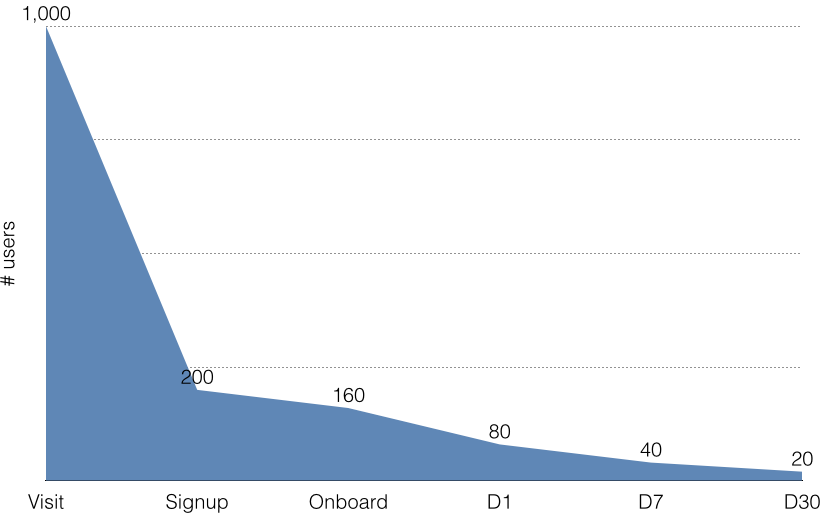
Chen points out that most features will not impact this curve for two reasons:
- Too few people will use the feature. Most features target retained users, but as the above shows that if it is a feature post-D7 (day 7) it will only touch 20 out of 1,000 users, and if it is D7 it only impacts 40.
- The other key failing is that the feature will make a small impact when users to engage. This is often the case when key functions are displayed like optional actions outside of the onboarding process.
This problem of focusing on features that will not fix your game are a result of focusing on users/players already deeply engagement and trying to make their experience better. Continue reading “Why your next feature probably won’t make an impact”
 The Business of Social Games and Casino