
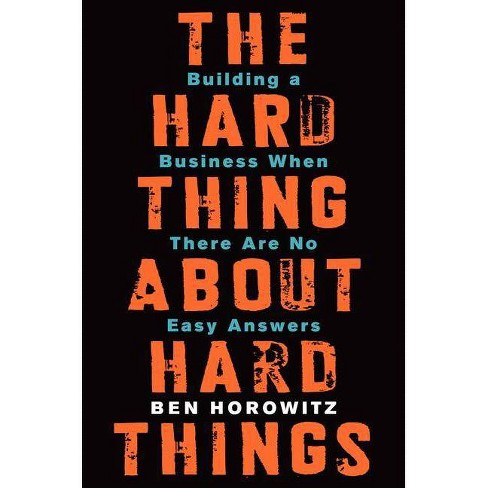
Many people write about how to be a great leader or CEO, but very few of them have actually achieved it. Ben Horowitz is one of the few whose credentials live up to his advice. He cofounded and was CEO of Opsware (formerly Loudcloud), which was acquired by Hewlett-Packard for $1.6 billion in 2007. Before Opsware, he was vice president and general manager of America Online’s (AOL) E-commerce Platform division and also ran several product divisions at Netscape. Even before joining Netscape in July 1995, he held various senior product marketing positions at Lotus Development Corporation (the father of the spreadsheet). Given this great track record, I put significant credence in Horowitz’s book, The Hard Thing About Hard Things: Building a Business When There Are No Easy Answers.
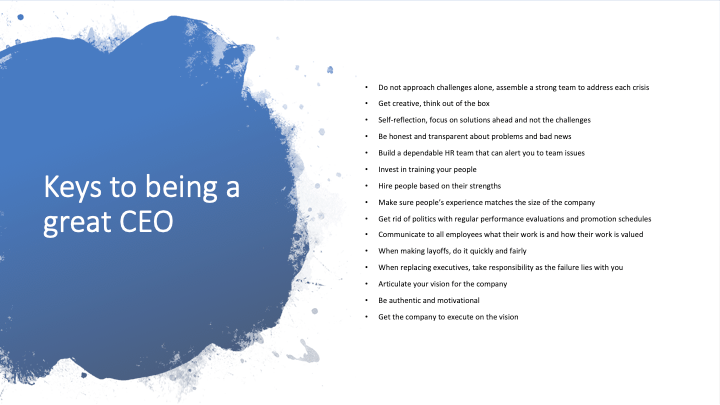
Horowitz rightfully focuses on the difficult things that leaders need to do to succeed. CEOs and others who are leading business units (BU) are responsible not only for their fate but the fate of their company or BU, having to make potentially life or death decisions daily (either for the business or for the individuals involved). Based on his experience both running BUs and actively involved in growing others as a VC, Horowitz provides some key principles on how to be a great CEO.
What is The Struggle
The greatest challenge a CEO faces is reality. Horowitz refers to the challenges in leading a business as “The Struggle,” which occurs when dreams of success meet reality. It is also an inescapable element of leading a company, and it consists of the stress and seemingly impossible decisions that come with the territory. The stress and weight of The Struggle will probably affect the CEO’s entire life, from their mental and physical well being to their career choices and social relationships. The CEO is responsible for negotiating the challenges the company faces, and thus it is the leader who will get credit for successes or be let go for failures.
Meeting The Struggle
Horowitz suggests several strategies for leaders to manage The Struggle. Among the most important is not trying to face it alone but assembling a strong team to face each crisis. While the burden will fall primarily on the leader, you should not try to bear it alone. Instead, include as many people as possible to face a crisis. When Horowitz’s Opsware faced a crisis caused by the dot-com crash, he got the entire company together in an offsite meeting and told them honestly and directly that unless they overhauled entirely their product they would not survive. As mentioned earlier, he eventually sold Opsware to HP for over $1.5 billion, so it worked.
The second approach to dealing with the Struggle is to get creative. Rather than business as usual, think out of the box for potential solutions. When Horowitz was leading Loudcloud and they were missing their revenue targets, he decided to take the company public to raise the funds he needed.
Horowitz’s third approach to dealing with The Struggle is self-reflection. He points out that dealing with your own psychology is the hardest challenge any CEO faces and it is often lonely. To overcome this challenge, he uses the analogy of a racecar driver. Successful drivers concentrate on the road ahead not on the potential hazards and track walls. Leaders must emulate this approach and focus on the solutions ahead, not the problem.
Intellectual honesty is critical
Another key element for successful leadership is being honest about problems and bad news. He admits that nobody likes to give bad news. He explains, however, that when you are the CEO and your company is dealing with challenges, discussing them openly and directly with your team (not just leadership but entire team) is critical for success.
Horowitz points out that bad news spreads very quickly, whether or not you disclose it. Thus, there is no sense in trying to contain it. Moreover, secrecy can be very damaging because it makes the bad news unexpected when it does surface. Sometimes this secrecy comes from good intent, what Horowitz refers to as the “positivity delusion,” the idea that their employees cannot handle the truth but need to be coddled. The reality is the opposite; employees usually deal with bad news better than the leader, in part because they can blame the leader for the problem.
Instead of keeping quiet, the leader should preemptively head off the bad news by divulging it as soon as possible. This allows the company to focus on a solution and stops gossiping (I would actually say slows gossiping, as gossip never stops). By disclosing problems as soon as you can, a great leader or CEO helps put those problems in the hands of the people who can solve them as quickly as possible.
Take care of your people
Horowitz has learned while building multiple companies that to achieve greatness you need to take care of the people in your company by training them well and creating a good human resource structure. He suggests you ensure you have a dependable HR department as it can give you valuable insights into problems invisible to you.
Second, he shows it is vital to invest in training your people to fit better their roles. He points out that every company has its own procedures and tools and no outsider can pick them up without training. He also stresses the training should be functional, proving employees with the experience and skills they need to succeed in their job and hit their goals.
Hiring based on strengths
In Horowitz’s experience, leaders succeed by hiring people based on their strengths, not their weaknesses. When recruiting, a CEO’s first priority should be hiring people for their strengths, not rejecting based on weaknesses, as the strengths will determine if the person excels at their job.
The second key when hiring executives is to make sure their experience matches the size of the company. In large companies, executives tend to have a lot of incoming work, which makes them have to adjust and review existing projects. In small companies, executives create their own projects and design their own work. These discrepancies can result in mismatches in rhythm, meaning the expected working pace and skill set.
Get rid of politics
Horowitz writes that if you want to build a company where people want to work you have to dispense with politics. By politics, he largely means the maneuvering that some people employ to get an undeserved promotion. The best way to avoid such politics is to only hire people who are ambitious in terms of the entire company, not simply their careers.
Another tool to mitigate politics is the implementation of strict processes that mandate regularly spaced performance evaluations, compensation scales and promotion schedules. These fixed timelines and processes make it more difficult for anyone to get an undeserved promotion.
A final step to eliminate politics is to communicate to all employees what their work is and how their work is valued. Make sure that your hierarchy of titles means something and is understood throughout the organization. One caveat that Horowitz points out is the need to avoid the Law of Crappy People, which states that the most incompetent person who holds a given title determines the value of the title in general. This leads to other title holders feeling undervalued and demotivated.
How to deal with redundancies and layoffs
Horowitz points out that nobody wants to lay people off, but if necessary, it should be done quickly and fairly. When layoffs are needed, it is critical to act fast. Once the decision is made, CEOs should take action, as delaying the inevitable that everyone knows is coming is like letting a wound fester.
It is also important to treat outgoing employees fairly, which is often a challenge as layoffs are frequently the result of deteriorating business conditions. Thus, there is an incentive to support the business rather than the exiting employees. Instead, you need to give the outgoing people decent severance packages and good references. These actions not only help the morale of those who stay but also makes future recruiting easier, not to mention it being the right thing to do.
Finally, the leader needs to be transparent and honest when explaining why they are making the layoffs. Horowitz gives two reasons to take this approach
- An admission of failures helps to solidify trust between the remaining employees and the leader
- Everyone should understand that the company failed and must now find its way forward and move on.
Own having to replace an Executive
While a company may have to make redundancies when dealing with challenging times, CEOs and other leaders sometimes also must fire members of their leadership team. Horowitz explains that having to let go of a leader is more difficult and serious because there is much more at stake for the company both financially and culturally. Horowitz suggests the best way to approach replacing a leader
- As the CEO or leader you are responsible for having hired the wrong person and you need to explain this either to the Board or your CEO. Figure out why you made this hiring mistake and how it can be avoided the next time.
- Prepare thoroughly for the conversation with the executive you are letting go. Include thinking about the kind of language you will use and how you will formulate the severance package. You never want to humiliate the person. You also should not be discussing performance with the outgoing executive, it is not a coaching session but an ending.
- Treat the outgoing executive fairly and respectfully. This will help morale and performance of the other executives, which will also help ensure smooth operations after the executive has left.
When letting go of an executive, Horowitz stresses that the primary issue is to maintain business continuity (both actual and perceived) despite the departure. The leader has to do what it takes to keep the affected part of the business running normally, including in the short term becoming a temporary replacement for the departed executive.
Set the direction
The key to leading a company or business unit is knowing what to do and getting the entire organization to do it. Horowitz points out that great leaders and CEOs find the right direction for the company to follow. Then they have to articulate that direction and get the rest of the company to follow them. There are thus three critical elements
- Articulating the vision.
- Being authentic and motivational.
- Getting the company to execute on your vision.
Both define the path and execute on it
While some leaders are excellent at defining a direction and others are very effective at execution and performance management, the truly great CEOs and leaders combine the characteristics of both. Some leaders focus on defining a path for their organization to follow rather than implementing it. These leaders have a compelling long-term vision for their company, like Bill Gates did at Microsoft. Sometimes companies led by this type of leader become disorganized and chaotic.
The other type of CEO prefers the execution and performance management aspect of leadership over research and planning. They do not like to make big decisions. With leaders such as these, it can slow down the company as important decisions are delayed or avoided.
Great CEOs and leaders combine characteristics of both. They are like the latter in that when it comes to overall corporate decisions, they like to focus on execution rather than planning the company’s path forward. Where they are different, however, is that when it comes to their own area of responsibility and expertise, they act as planners (the first category). The implication of Horowitz’s view is that no matter which type of leader you are, you should continue to work on skills outside your comfort zone to arrive at the ideal combination.
Becoming great
Horowitz points out that becoming a great CEO will initially be uncomfortable. CEOs and leaders grow into the job (unlike the television stereotype of the Homelander-type CEO who comes into the job with superhuman skills) and must develop the right characteristics and abilities for that particular role. You should always strive to be authentic and true to your personality and style.
Horowitz explains another skill to master in becoming a great leader is knowing how to give good feedback. He refers to the shit sandwich where the most unpleasant topic is sandwiched between two positive comments (though even this approach, you do not want to appear rehearsed and insincere).
Most importantly, Horowitz says, great leaders must learn to be comfortable doing inherently uncomfortable things. Just as boxers train themselves for initially unnatural feeling footwork, great CEOs have to make their unnatural job feel natural.
Key takeaways
- Being a great CEO or leader is very hard. CEOs and others leading business units are responsible not only for their fate but the fate of their company, having to make potentially life or death decisions.
- To meet The Struggle of leading a company, you need to rely on teamwork, think outside the box for solutions and continuously self-reflect.
- Great leaders must learn to be comfortable doing inherently uncomfortable things. Great CEOs have to make their unnatural job feel natural.

