Skip to content

The Business of Social Games and Casino

How to succeed in the mobile game space by Lloyd Melnick

Category: General Social Games Business

NOT predictions for 2018

This time of year always makes me chuckle at the arrogance of some but more the desire of others to accept proclamations of what the new year will bring. I am not a big fan of predictions. First, regardless of experts’ success or intelligence, there are too many variables to predict accurately what will happen in 2018. As much as I respect Bill Gates, Warren Buffett, Mary Meeker, etc., they cannot predict the future. If they could, they would even be wealthier (who has not played the mental game of what you would invest in if you could go back in time five years). It’s the same underlying reason why the best and brightest mutual fund managers cannot regularly beat the market indexes they are targeting.

Second, and a little more sinister, most people who claim to predict what will happen in 2018 are little more than fortune tellers you would meet at a State Fair (or social gaming conference). The predictions are generally broad enough that regardless of what happens next year they will be able to pull some “victories” from their predictions. It may be things as simple as bitcoin will have a volatile 2018 to there will be at least one major acquisition in the video gaming space; these are either broad enough that you can always claim victory or predictable by anyone who looks at the past trends. The point is, they are not providing any information that is actionable unless they get lucky. Again, if they were so visionary, they would act on it rather than talk about it.

So with that said, it is time for my predictions. Seriously, rather than predictions, I do feel it is helpful to look at trends that have gained momentum in 2017 and are likely to have a disproportionate impact in 2018.

The convergence of micro-segmentation, AI and machine learning to create extreme personalization

The most important trend that is gaining momentum is personalization. Various related technologies are allowing game and technology companies to optimize experiences for every individual. From Amazon showing you products you are most interested in to Supercell pairing you with a player whose gameplay style best complements yours, everyone will have an experience personal to them in ecommerce, gaming and pretty much anywhere in 2018.
Microsegmentation

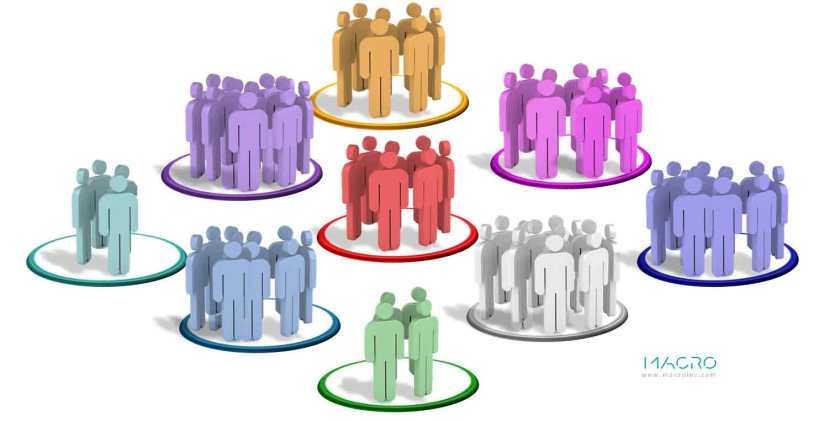
Three related technologies are driving this personalization: micro-segmentation, artificial intelligence and machine learning. Micro-segmentation allows companies to create hundreds or thousands of different clusters of customers and then provides the best experience for each of these segments. One segment may be players who have monetized 3-6 months ago and continue to play but not spend and are more open to free offers than sales; micro-segmentation will help create offers to optimize their experience and make them more likely to spend. Another segment might also have spent at some time 3-6 months ago and remain active but these players are more likely to spend if encouraged to play at higher stakes. Micro-segmentation allows companies to create the best path for each player.

Machine learning allows for more and better micro-segmentation, as it automatically creates hundreds, thousands or millions of segments. And artificial intelligence then determines what to offer each micro-segment.

The key takeaway is that customers will get very personal experiences on the successful sites, apps and games in 2018. They will then come to expect experiences and offers tailored to their needs, directing their money to those that deliver.

Voice recognition

I wrote in 2016 about the increasing importance of voice recognitionand this is likely to accelerate in 2018. Providing directions verbally is much more natural and simpler than having to type them. While the technology is still largely a novelty, everyone uses Alexa or Siri but primarily to listen to music or set a timer, in 2018 voice recognition will become more integrated on how you use/consume technology. In particular, I see it becoming a central part of the social/mobile game user interface, it will be much easier to play a game by speaking to it rather than typing or navigating with a mouse.

Big change in social casino

I have been in the social casino space (online free to play slot, poker, etc) for almost five years and have seen it mature and continue to grow revenue but it is still largely the same as it was in 2012. The interface, gameplay mechanics even art have changed very little. Companies have gotten better at monetizing their players but the games have not evolved. Even land-based casinos look more different now than they did five years ago than social casinos do.

While I do not expect an entirely new gaming mechanic to surface, one or two companies will innovate and create a very different product that not only steals existing market share but also brings new customers into the market. There is enough money in social casino that new entrants will try to innovate to build a competitive position and the company(ies) that is able to create a new market space will be the next Playtika.

Devices and platforms will become less important

When I first entered the game space, one of the biggest determinants of success was anticipating what platforms (Playstation, X-box, DS, etc.) would become big, getting on them early and not getting tied to a dying platform. Platforms (iOS, Android, Kindle, etc.), however, are becoming increasingly less important. Tools and underlying technology are allowing the best content to be used regardless of device. This trend should accelerate and companies that spend the bulk of their time trying to optimize for the next big thing will lose out to companies looking to create the next great content.

Privacy

I am one of those people who never really cares about privacy settings, have not read a Terms & Conditions in my life before clicking continue, and never worry about sharing my personal information. I am, however, in the minority. More and more people are concerned about privacy and products that either ignore this fact or try to trick customers and players into sharing information they do not want to share will fail in 2018. Successful products will empower customers to share the information they want to share, which will be different by individual (see first point on personalization). This is also the area where Blockchain can have the greatest impact, even more so than the crypto-currency space.

Dual devices

Not a 2018 trend (or even a 2015 trend) but more of a 2018 fact of life. People virtually never use only one screen. It is not only using your phone or tablet while watching television. It is using your phone while on your tablet. Using your tablet while on your work computer. Watching television while on your phone. Giving Alexa directions while watching television. You get the idea.

Your games and applications need to be sensitive both to people not focusing 100 percent and also provide a good experience as the second device your customer is focused on using. You also need to understand the different use cases and allow people to consume your product in different cases, whether they are also watching TV or working on their computer.

Big players will enter free to play, and fail

Remember how I said the hallmark of a good fortune teller is to include in their predictions something that definitely will happen (ie. there will be a lot of vitriol on Facebook about politics), here is my prediction that will come true in 2018. At least one major multi-billion company not currently in free to play will enter the space either through a new venture or acquisition because it just seems so easy to make money selling virtual goods; and they will fail miserably. It’s happened every year since social gaming took off and will probably happen for the next ten years.

Other trends

I would love to know what trends you are seeing and how they will help shape 2018. Let me know your thoughts on what we will be writing about this time next year.

Key Takeaways

  1. Personalization will dominate 2018. Successful games, sites and retailers will provide a hyper-personal experience to all customers with a combination of machine learning, artificial intelligence and micro-segmentation.
  2. Voice recognition will go from the domain of Alexa and Siri to become a primary and powerful user interface for people playing games, shopping or doing virtually anything.
  3. The social casino space will experience a disruptive product that not only takes significant existing market share but brings new customers to the market.

Share this:

  • Click to share on Facebook (Opens in new window) Facebook
  • Click to share on LinkedIn (Opens in new window) LinkedIn
Like Loading...
Unknown's avatarAuthor Lloyd MelnickPosted on January 2, 2018December 30, 2017Categories General Social Games Business, General Tech Business, Machine Learning, Social CasinoTags alexa, artificial intelligence, Blockchain, Machine learning, micro-segmentation, privacy, social casino, Voice recognitionLeave a comment on NOT predictions for 2018

Thinking, Fast and Slow, Part 4: The Yom Kippur War

When reading Michael Lewis great book about Daniel Kahneman and Alex Tversky, The Undoing Project, Lewis references several times the Yom Kippur War. The war had a big influence on the thinking of Kahneman and Tversky.

The references particularly piqued my interest because I was too young to understand what was happening during the conflict but it did not make its way into most history texts when I was in school. It was also interesting because in a matter of days it went from a war that looked like it could destroy Israel, there were rumors they were even considering the nuclear option, to a war where the entire Egyptian Third Army was encircled.

With changes on the battlefield that dramatic there had to be fantastic lessons in decision making so I decided to learn more about the conflict. By reading The The Yom Kippur War: The Epic Encounter That Transformed the Middle East by Abraham Rabinovich, I learned how the Yom Kippur War is a great case study in the biases and paradigms that form the foundation of Kahneman’s Thinking, Fast and Slow.


yom kippur war

The danger of overconfidence

The Yom Kippur War highlighted one of the biggest errors in decision-making, over-confidence. If Israel had not mobilized its reserves shortly before the war started, the odds at the beginning of war would be in the Arabs’ favor by several orders of magnitude. The 100,000 Egyptian soldiers and 1,350 tanks west of the Suez canal faced 450 Israeli soldiers in makeshift forts and 91 Israeli tanks in the canal zone. On the northern front, where Israel faced Syria, the Syrians enjoyed 8 to 1 superiority in tanks and far greater in infantry and artillery.

The limited forces Israel deployed on both the Syrian and Egyptian fronts opposite vastly larger enemy armies reflected a self-assurance induced by the country’s stunning victory in the Six Day War. Israel believed it had attained a military superiority that no Arab nation or combination of nations could challenge.

Even when war appeared likely, the Israelis moved only a small number of forces to face the Syrians. Abramovich quoted the Israeli Chief of Staff, Dado Elazar as saying “’We’ll have one hundred tanks against their eight hundred, that ought to be enough.’ In that sentence, Elazar summed up official Israel’s attitude towards the Arab military threat.“

This overconfidence almost led to the collapse of the Israeli military. Abramovich wrote, “a common factor behind all these failings was the contempt for Arab arms born of that earlier war, a contempt that spawned indolent thinking.“

The reality was that the Egyptian and Syrian forces were not like their predecessors in earlier conflicts, but instead had the most modern Soviet weapons and a more disciplined and professional military. The overconfidence that prompted the Israeli military to not take seriously its opponents put its soldiers in an untenable position that led them initially to be overwhelmed.

Impact on your life

Given that you probably do not lead an organization with tanks and artillery, you may ask why should I care whether the Israeli military was overconfident. The lesson, however, that is pertinent is that underestimating your competition could be disastrous. Just because your competitor has not been able to develop a product in the past that is of comparable quality to your product, does not mean that they will never have that capability. You may dominate the market but your competition is working on ways to jump over you.

You also may underestimate their likelihood to want to compete in certain market sectors. You may have gained 80 percent of the racing game market after pushing your top competitors away so you move your development to sports games because you now own racing games. Do not assume they do not have a secret project to create a new racing game that will suddenly make your product obsolete.

Confirmation bias

The Yom Kippur War highlighted one of the biases that Kahneman and Tversky have regularly wrote about, confirmation bias. Confirmation bias is when you ignore information that conflicts with what you believe and only select the information that confirms your beliefs.

In the Yom Kippur War, Egypt and Syria were able to almost overwhelm the Israelis because the Israelis did not expect to be attacked by overwhelming force. Although the Arab states did launch a surprise attack, it should not have been a surprise. Both Egypt and Syria mobilized huge numbers of forces (which was visible to the Israelis), while multiple intelligence sources and even the leader of Jordan warned the Israelis an attack was imminent. It was confirmation bias, however, that kept the Israelis from believing they would be attacked and preparing for it (until the last minute).

First, the Israelis ignored any information that did not support their theory that they would not be attacked. Abramovich writes, “Eleven warnings of war were received by Israel during September from well-placed sources. But [Head of Military Intelligence] Zeira continued to insist that war was not an Arab option. Not even [Jordan’s King] Hussein’s desperate warning succeeded in stirring doubts.”

Explaining away every piece of information that conflicted with their thesis, they embraced any wisp that seemed to confirm it.  The Egyptians claimed they were just conducting exercises while the Syrian maneuvers were discounted as defensive measures. Fed by this double illusion—an Egyptian exercise in the south and Syrian nervousness in the north—Israel looked on unperturbed as its two enemies prepared their armies for war in full view. Abramovich writes, “the deception succeeded beyond even Egypt’s expectations because it triggered within Israel’s intelligence arm and senior command a monumental capacity for self-deception. ‘We simply didn’t feel them capable [of war].’”

As I mentioned above, examples of decision making flaws were abundant on both sides and Egypt also suffered greatly because of confirmation bias. When Israel began its counter-attack that eventually led to the encirclement of the 3rd Army, the Egyptians President Sadat only looked at data that supported his hypothesis. Given the blow the Israelis had received at the start of the war and the fact that they were heavily engaged on the Syrian front, the Egyptians were thinking in terms of a raid, not a major canal crossing.  An early acknowledgement of the Israeli activity could have stemmed the attack and possibly left the Egyptians in the superior position but they only saw what they wanted to see.

Impact on your life

I come across confirmation bias almost weekly in the business world. One example you often see in the game space is when a product team is looking to explain either a boost in performance or a setback. If the numbers look good, they will often focus on internal factors, such as a new feature, and “confirm” that this development has driven KPIs. If metrics deteriorate, they will often focus on external factors, maybe more Brazilian players, that confirm the problem is outside of their control. These examples of confirmation bias often lead to long delays identifying and dealing with problems or shifting too many resources to reinforce features that do not have an impact.

Not acknowledging or seeking reality

Another major decision making flaw that the Yom Kippur War highlights is avoiding reality. One of the leading Israeli commanders did not venture out of his bunker and relied on his own pre-conceptions of what was going on rather than the actual situation. Rabinovich writes that “although he was only a short helicopter trip from the front, [General] Gonen remained in his command bunker at Umm Hashiba, oblivious to the true situation in the field and the perceptions of his field commanders. As an Israeli analyst would put it, Gonen was commanding from a bunker, rather than from the saddle.”

On the Egyptian side, to avoid panic, the Egyptian command had refrained from issuing an alert about the Israeli incursion. Thus, the Israeli forces were able to pounce on unsuspecting convoys and bases. There had been a number of clashes involving Israeli tanks and the paratroopers but no one in Cairo—or Second Army headquarters—was fitting the pieces together.

Thus, rather than successfully defending against the Israelis, the Egyptians left their troops blind to what was happening.

Impact on your life

If your game or product is not performing, you need to understand what is really happening. I have often seen products soft launched in tier three markets that show poor KPIs. Rather than reporting these KPIs to leadership, they will proceed with the real launch in tier one markets. This pre-empts the product team from fixing the product and also wastes money with a failed launch.

Assuming the past is the same as the present

Another decision-making bias demonstrated in the Yom Kippur war was assuming the past would repeat. As I wrote earlier, the Israelis would assume the Arabs would fight poorly because they did in previous wars, including the Six-Day War in 1967, where Israel routed the Arab States. They thus did not prepare their forces for any different type of opponent or different weaponry.

This bias also contributed to their failure to realize they would be attacked imminently. When General Shalev, assistant to Israel’s Commander in Chief, was warned of a likely attack, he reminded the so-called alarmist that he had said the same thing during a previous alert in the spring, “you’re wrong this time too,” he said.  Because a previous alert was wrong, the Israeli high command discounted a clear danger.

Impact on your life

In the game space, you frequently see decisions made based on looking in the rear view mirror. I have seen many executives decide to make a type of game – first person shooter, invest express sim, tower defense, etc – because these are the hot type of games. Then when their game comes to market and fails, they do not understand why they always seem to be behind the trends.

Key takeaways

  • The Yom Kippur War provides examples of key errors in decision-making, by both sides, that can be leverages in business.
  • One of the key learnings is that over-confidence can be fatal. Underestimating your competition because you have dominated them can allow them to gain a superior position.
  • Another key error in decision making is confirmation bias, picking out the information that confirms what you want to believe and disregarding the data that conflicts with your hypothesis.

Share this:

  • Click to share on Facebook (Opens in new window) Facebook
  • Click to share on LinkedIn (Opens in new window) LinkedIn
Like Loading...
Unknown's avatarAuthor Lloyd MelnickPosted on June 14, 2017June 6, 2017Categories General Social Games Business, General Tech Business, thinking fast and slowTags confirmation bias, over-confidence, thinking fast and slow, Yom Kippur WarLeave a comment on Thinking, Fast and Slow, Part 4: The Yom Kippur War

Thinking, Fast and Slow, Part 3: The Invisible Gorilla

I have written several times about the work of Kahneman and Tversky, highlighted in the book Thinking, Fast and Slow, and how helpful it is in understanding decision-making and consumer behavior. One of the most enlightening experiments done Kahneman and Tversky, the Invisible Gorilla experiment, shows the difference between tasks that require mental focus and those we can do in the background.

Invisible gorilla

The Invisible Gorilla experiment

In this experiment, people were asked to watch a video of two teams playing basketball, one with white shirts versus one with black shirts (click to see Invisible Gorilla experiment). The viewers of the film need to count the number of passes made by members of the white team and ignoring the players wearing black.

This task is difficult and absorbing, forcing participants to focus on the task. Halfway through the video, a gorilla appears, crossing the court, thumps its chest and then continues to move across and off the screen.

The gorilla is in view for nine seconds. Fifty percent, half, of the people viewing the video do not notice anything unusual when asked later (that is, they do not notice the gorilla). It is the counting task, and especially the instruction to ignore the black team, that causes the blindness.

While entertaining, there are several important insights from this experiment

  • One important insight is that nobody would miss the gorilla if they were not doing the task. When you are focusing on a mentally challenging task, which can be counting passes or doing math or shooting aliens, you do not notice other actions nor can you focus on them.
  • A second insight is we do not realize the limitations we face when focused on one task. People are sure they did not miss the gorilla. As Kahneman writes, “we are bind to our blindness.”

System 1 and System 2

The Invisible Gorilla also serves as a framework to understand the two systems people use to think. System 1 operates automatically and quickly, with liitle or no effort and no sense of voluntary control. An example of System 1 thinking would be taking a shower (for an adult), where you do not even think about what you are doing.

System 2 thinking is deliberate, effortful and orderly, slow thinking. System 2 allocates attention to the effortful mental activities that demand I, including complex computations. The operations of System 2 are often associated with subjective experience of agency, choice, and concentration. The highly diverse operations of System 2 have one feature in common: they require attention and are disrupted when attention is drawn away .

The automatic operation of System 1 generates surprisingly complex patterns of ideas, but only the slower System 2 can construct thoughts in an orderly series of steps.

Implications

Understanding System 1 and System 2 has several implications. First, if you are involved in an activity requiring System 2 thought, do not try to do a second activity requiring System 2 thought. While walking and chewing bubble gum are both System 1 for most people and can be done simultaneously, negotiating a big deal while typing an email are both System 2 and should not be done at the same time.

Second, do not create products that require multiple System 2 actions concurrently. While System 2 is great for getting a player immersed in a game, asking them to do two concurrently will create a poor experience. A third implication is when onboarding someone to your product, only expose them to one System 2 activity at a time.

Example from our world, Urbano’s Failed App

I like to use examples from the game space to illustrate how understanding Kahneman and Tversky’s work can impact your business. In this example, Urbano runs product design for a fast growing app company at the intersection of digital and television. He has built a great sports product that allows players to play a very fun game while watching any sporting activity on television. Unfortunately, Urbano’s company is running out of funds and the next release needs to be a hit or else they will not survive. Although the product has tested well, Urbano is nervous because of the financial situation and decides to add more to the product, to make the app based on what happens the past three minutes during the televised match. They launch the app and although players initially start playing, they never come back and the product fails.

Another company buys the rights to the product and conducts a focus test. They find out users forgot what happened on television because they were focusing on the app and then could not complete the game. They take out the part requiring attention to the televised match and the product is a huge success. The difference was that the latter did not require multiple System 2 thinking simultaneously, it left television watching as a System 1 activity.

Key Takeaways

  1. In a famous experiment, people watching a basketball game who had to count passes one team made missed the appearance of a gorilla on the video. The experiment showed when you are focusing on something, you do not notice what else is happening.
  2. We are blind to things in the background. We are blind to our blindness. In the Invisible Gorilla experiment, not only did people not see the gorilla, they refused to believe that they missed a gorilla.
  3. There are two types of mental activities, System 1 that are automatic and reflexive, and System 2, that requires deliberate, effortful and orderly thinking.

Share this:

  • Click to share on Facebook (Opens in new window) Facebook
  • Click to share on LinkedIn (Opens in new window) LinkedIn
Like Loading...
Unknown's avatarAuthor Lloyd MelnickPosted on May 31, 2017May 29, 2017Categories General Social Games Business, General Tech Business, thinking fast and slowTags Amos Tversky, attention span, Daniel Kahneman, decision making, Invisible gorilla, Product design, thinking fast and slow1 Comment on Thinking, Fast and Slow, Part 3: The Invisible Gorilla

Making happy customers more profitable

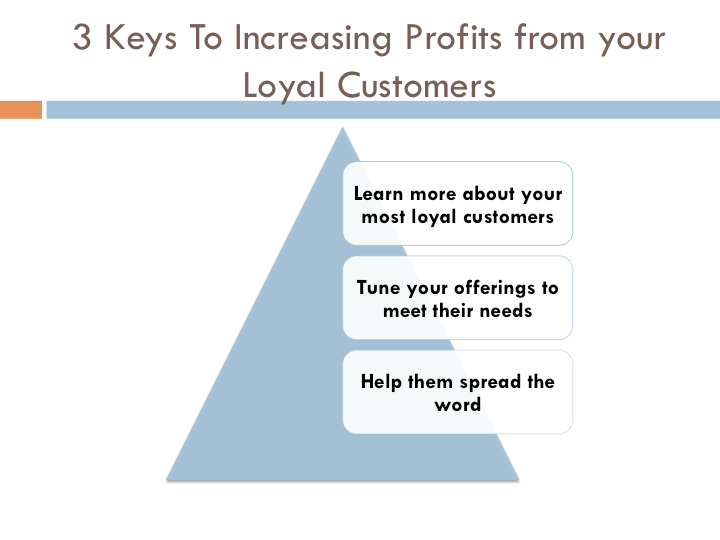
While the key to business success is creating happy and loyal customers, you still need to get them to generate more revenue. A good NPS score and low churn rate shows your customers are satisfied but you only benefit when these customers act on their positive feelings. An article in Harvard Business Review, Make it Easier for Customers to Buy More by Bain Capital’s Rob Markey, shows how to convert this satisfaction into profits.

Slide1.png

Learn more about your most loyal customers

The first key to generate more profits from your loyal customers is to understand them better. Markey makes the point that companies focus on learning why detractors, or unhappy customers, are dissatisfied but they do not put the same effort in understanding why the happy customers are happy. As Markey writes, “Converting feelings into action requires knowing exactly what you did to earn their loyalty, so you can replicate the action and extend it. To maintain that kind of intimate relationship with your most loyal customers, you have to create effective mechanisms for staying in close touch.”

Add to all of your communication channels feedback loops to ascertain why they love your company. Have your account or customer service reps ask customers why they first became enthusiastic. When sending out NPS surveys, make sure you ask those providing high scores the reason they gave such a score. Have customers post stories on social media on why they like your offering. Have events for your top customers and ensure part of the agenda is having customers discuss how they fell in love with your brand. Use all of your channels not only to help your customers but to learn from them.

Tune your offerings to meet their needs

When communicating with your best customers, you will learn both what they like and do not like about your offering. You will also understand if your competitors are offering something they want that you do not offer. Markey writes, “ideally, your offerings should be so attractive to your loyalists that they have no reason to look elsewhere for additional products or services.”

Once you understand your customers needs, then adjust your product to meet these needs. It may be by providing additional features or more support services. It could also entail offering your product through new distribution channels or in another format. The key is understanding what your best customers want from your product but are not getting, then adjusting your product to fill this need so they do not move to competitors.

Help them spread the word

Since your most loyal customers by definition love your offering, you want to harness this positive vibe by getting them to promote you to their friends. As people communicate best via stories, you need to provide them with stories that they can share. These stories can range from great interaction with your staff (maybe customer service, VIP management or on Facebook), a great experience with your game or product or even a little bonus you got via email. Once they have the stories, you need to facilitate them sharing the stories. This sharing often is by social media but it can be video testimonials on your website or even quotes in your game.

Loyal customers drive profits

While it is critical to create incredibly satisfied customers, that is not the end of the battle. You need to learn from them, use this knowledge to make your products even more suited to them and then turn them into advocates.

Key takeaways

  1. The first key to generate higher profits is learning from your most loyal customers why they love your product.
  2. The second key is taking this knowledge and further tweaking your product to meet your loyal customers’ needs.
  3. The final key is getting these loyal customers to advocate for you by sharing stories that show their friends why your product or company is great.

Share this:

  • Click to share on Facebook (Opens in new window) Facebook
  • Click to share on LinkedIn (Opens in new window) LinkedIn
Like Loading...
Unknown's avatarAuthor Lloyd MelnickPosted on May 10, 2017April 18, 2017Categories General Social Games Business, General Tech BusinessTags customer service, loyalty, NPSLeave a comment on Making happy customers more profitable

Thinking, Fast and Slow, Part 2: Why we should care about judgment errors

As promised last month, I will spend a few blog posts summarizing Thinking, Fast and Slow by Daniel Kahneman. Before diving into the heuristics, biases and processes that he and his colleague Amos Tversky identified, it is important to understand why he wrote the book and why it is so useful. Fortunately, he largely does this in his introduction so it is a great place to start.

Let’s not beat ourselves up but make ourselves better

First, Kahneman points out that the goal of his research is not to prove we are idiots but to help us minimize bad decisions. Understanding flaws in human decision-making is no more insulting or denigrating than writing about diseases in a medical journal belittles good health. Rather, our decision-making is generally quite good, most of our judgments are appropriate most of the time, but there are systemic biases that if we understand can make our decision-making more effective.

By understanding Kahneman’s work, you will be better able to identify and understand errors of judgment and choice, in others and then yourself. As Kahneman points out, “an accurate diagnosis may suggest an intervention to limit the damage that bad judgments and choices often cause.”

Is our judgment flawed?

At its roots, Kahneman began his career trying to determine if people consistently made biased judgments. Long story short, we do.

One example drove this determination home to Kahneman and Tversky and probably will to you also. Early in their collaboration, both Kahneman and Tversky realized they made the same “silly” prognostications about careers that toddlers would pursue when they became adults. They both knew an argumentative three year old and felt it was likely that he would become a lawyer, the empathetic and mildly intrusive toddler would become a psychotherapist and the nerdy kid would become a professor. They, both smart academics, neglected the baseline data (very few people became psychotherapists, professors or even lawyers compared with other professions) and instead believed the stories in their head about who ended up in what careers was accurate. This realization drove their ensuing research, that we are all biased.

How understanding Kahneman’s work impacts the world

The broad impact of Kahneman and Tversky’s work drives home it’s importance to everyone. When they published their first major paper, it was commonly accepted in academia that:

  1. People are generally rational, and their thinking is normally sound
  2. Emotions such as fear, affection and hatred explain most of the occasions on which people depart from rationality

Not only did these two assumptions drive academia (particularly economics and social sciences) but also their acceptance often drove business and government decisions. The work laid out in Thinking, Fast and Slow, however, disproved these two assumptions and thus drove entirely different decisions to generate strong results.

Scholars in a host of disciplines have found it useful and have leveraged it in other fields, such as medical diagnosis, legal judgment, intelligence analysis, philosophy, finance, statistics and military strategy. Kahneman cites an example from the field of Public Policy. His research showed that people generally assess the relative importance of issues by the ease with which they are retrieved from memory, and this is largely determined by the extent of coverage in the media. This insight now drives everything from election strategy to understanding (and countering) how authoritarian regimes manipulate the populace.

Kahneman and Tversky were also careful to ensure the subject of their experiments were not simply university students. By using scholars and experts as the subject of their experiments, thought leaders gained an unusual opportunity to observe possible flaws in their own thinking. Having seen themselves fail, they became more likely to question the dogmatic assumption, prevalent at the time that the human mind is rational and logical. I found the same myself and am confident that you will also. The idea that our minds are susceptible to systematic errors is now generally accepted.

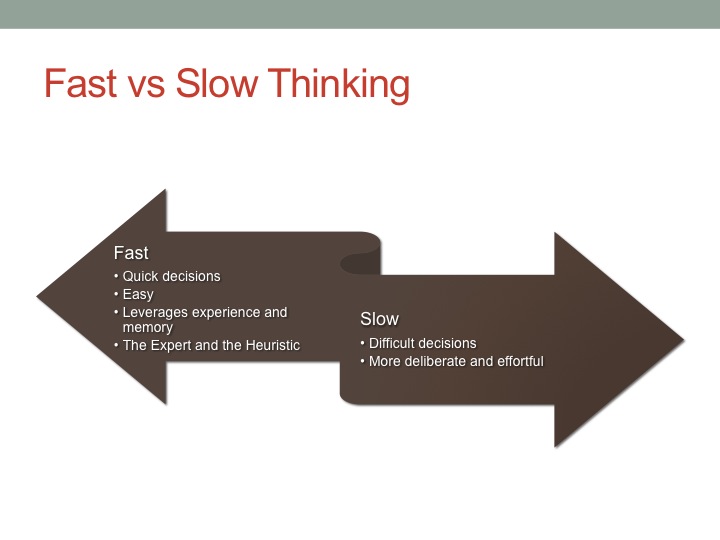
Why it is called Thinking, Fast and Slow

Slide1

While Kahneman and Tversky’s early work focused on our biases in judgment, their later work focused on decision-making under uncertainty. They found systemic biases in our decisions that consistently violated the rules of rational choice.

Again, we should not discount our decision-making skills. Many examples of experts who can quickly make critical decisions, from a chess master who can identify the top 20 next moves on a board as he walks by to a fireman knowing what areas to avoid in a burning building, experts often make critical decisions quickly.

What Kahneman and Tversky identified, though, is that while this expertise is often credited with good decision making, it is more of retrieving information from memory. The situation serves as a cue or trigger for the expert to retrieve the appropriate answer.

This insight helps us avoid a problem where our experience (which we consider intuition) does not actually help but hinders. In easy situations, intuition works. In difficult ones, we often answer the wrong questions. We answer the easier question, often without noticing the substitution.

If we fail to come to an intuitive solution, we switch to a more deliberate and effortful form of thinking. This is the slow thinking of the title. Fast thinking is both the expert and heuristic.

Example from our world, The Allan Mistake

Many of my readers are experienced “experts” from the mobile game space, so I will start with a hypothetical example that many of us can relate to. In this example, Allan is the GM of his company’s puzzle game division. He has been in the game industry over twenty years and has seen many successful and failed projects. The CEO, Mark, comes to Allan and says they are about to sign one of three celebrities to build a game around.

Allan knows the demographics of puzzle players intimately and identifies the one celebrity who is most popular with Allan’s target customers. Nine months later they launch the game and it is an abysmal failure. Allan is terminated and wonders what he did wrong.

Allan then looks over his notes from when he read Thinking, Fast and Slow, and realizes his fundamental mistake. When Mark came to him and asked which celebrity to use, Allan took the easy route and analyzed the three celebrity options. He did not tackle the actual question, whether it was beneficial to use a celebrity for a puzzle game and only if that was positive to pick between the three. If he had answered the more difficult question (difficult also because it would have set him against Mark), he would have found that celebrity puzzle games are never successful, regardless of the celebrity. Although it may have created tensions at the time with Mark, he probably would have been given an opportunity to create a game with a higher likelihood of success and still be in his position.

Key takeaways

  • Our decision making is not bad but by understanding our systemic biases we can be more efficient.
  • Understanding that people are not regularly rational and that this irrationality is not driven by emotion allows us to make better decisions in fields as diverse as medical diagnosis, legal judgment, intelligence analysis, philosophy, finance, statistics and military strategy.
  • Fast thinking refers to quick decisions and judgments based on our experience while slow thinking is the analysis of difficult questions.

Share this:

  • Click to share on Facebook (Opens in new window) Facebook
  • Click to share on LinkedIn (Opens in new window) LinkedIn
Like Loading...
Unknown's avatarAuthor Lloyd MelnickPosted on May 3, 2017May 11, 2017Categories General Social Games Business, General Tech Business, thinking fast and slowTags Amos Tversky, Daniel Kahneman, decision making, thinking fast and slowLeave a comment on Thinking, Fast and Slow, Part 2: Why we should care about judgment errors

Looking for consumer behavior expert

Anyone reading my blog knows my passion and respect for behavioral economics and consumer behavior, I consider these fields key to successful business. Putting my money where my mouth is, I am now recruiting a consumer behavior product manager to join my free to play team on the Isle of Man. This position will be critical as we continue to grow the free to play (social/mobile) gaming team at PokerStars and will have tremendous influence on our products.

For those not familiar with PokerStars, we are the largest real money poker company in the world, with over 70 percent market share. Last year, we generated over $1.1 billion in revenue and more importantly EBITDA (profits) of $524 million; a far cry from the struggles of most of my colleagues’ companies in the mobile and video game spaces. I lead the free to play team at PokerStars, which has seen tremendous growth in the last couple of years and has over 500,000 daily active players.

If you or a friend are interested in the consumer behavior position, send me a note at lloydm at pokerstars.com or apply directly to the job description. It will be a lot of fun. And for those who are not good at following HTML links, click below to get to the job description:

Job Description for Product Manager – Consumer Behaviour

PS logo

Share this:

  • Click to share on Facebook (Opens in new window) Facebook
  • Click to share on LinkedIn (Opens in new window) LinkedIn
Like Loading...
Unknown's avatarAuthor Lloyd MelnickPosted on April 23, 2017Categories General Social Games Business, General Tech BusinessTags behavioral economics, Consumer behavior, job description, product managerLeave a comment on Looking for consumer behavior expert

Thinking, Fast and Slow, Part 1: The Linda Problem

I recently finished Michael Lewis’ most recent book, The Undoing Project: A Friendship that Changed the World and it motivated me to revisit Daniel Kahneman’s Thinking, Fast and Slow. Lewis’ book describes the relationship between Daniel Kahneman and Amos Tversky, two psychologists whose research gave birth to behavioral economics, modern consumer behavior theory and the practical understanding of people’s decision making. He explains the challenges they faced and the breakthroughs that now seem obvious.

As I mentioned, The Undoing Project reminded me how important Kahneman’s book was, probably the most important book I have ever read. It has helped me professionally, both understand consumer behavior and make better business decisions. It has helped me in my personal life, again better decision making in everything from holiday choices to career moves. It helps even to explain the election of Donald Trump or how the situation in North Korea has developed.

In the Undoing Project, two things drove home the importance of Kahneman’s work. First, despite being a psychologist, Kahneman won the Nobel Prize for Economics in 2002. It is difficult enough to win a Nobel Prize (I’m still waiting for the call), but to do it in a field that is not your practice is amazing. The second item that proved the value of Kahneman’s (and his colleague Amos Tversky) work was the Linda Problem. I will discuss this scenario later in this post, but the Linda Problem proved how people do not make rational decisions, myself included. It convinced the mainstream that people, including doctors and intellectuals, consistently made irrational decisions.

Despite the value I derived from Thinking, Fast and Slow, I never felt I learned all I could from it. I found it very difficult to read, the exact opposite of a Michel Lewis book, and did not digest all the information Kahneman provided. Even when I recommended the book to friends, I often caveat the recommendation with a warning it will be hard to get through.

Given the importance of Kahneman’s work and the challenge I (and probably others) have had in fully digesting Thinking, Fast and Slow, I will be writing a series of blog posts, each one summarizing one chapter of Kahneman’s book. I hope you find it as useful as I know I will.

The Linda Problem

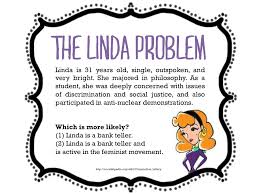
As discussed above, the Linda Problem is the research by Kahneman and Tversky that largely proved people thought irrationally, or at least did not understand logic. While I normally like to paraphrase my learnings or put them into examples relevant for my audience, in this case it is best to show the relevant description from The Undoing Project, as the Linda Project was a scientific study that I do not want to misrepresent:

Linda is 31 years old, single, outspoken and very bright. She majored in philosophy. As a student, she was deeply concerned with issues of discrimination and social justice, and also participated in anti-nuclear demonstrations.

Linda was designed to be the stereotype of a feminist. Danny and Amos asked: To what degree does Linda resemble the typical member of each of the following classes?

  1. Linda is a teacher in elementary school.
  2. Linda works in a bookstore and takes Yoga classes.
  3. Linda is active in the feminist movement.
  4. Linda is a psychiatric social worker.
  5. Linda is a member of the League of Women voters.
  6. Linda is a bank teller.
  7. Linda is an insurance salesperson.
  8. Linda is a bank teller and is active in the feminist movement.

Danny [Kahneman] passed out the Linda vignette to students at the University of British Columbia. In this first experiment, two different groups of students were given four of the eight descriptions and asked to judge the odds that they were true. One of the groups had “Linda is a bank teller” on its list; the other got “Linda is a bank teller and is active in the feminist movement.” Those were the only two descriptions that mattered, though of course the students didn’t know that. The group given “Linda is a bank teller and is active in the feminist movement” judged it more likely than the group assigned “Linda is a bank teller.” That result was all that Danny and Amos [Tversky] needed to make their big point: The rules of thumb people used to evaluate probability led to misjudgments. “Linda is a bank teller and is active in the feminist movement” could never be more probable than “Linda is a bank teller.” “Linda is a bank teller and active in the feminist movement” was just a special case of “Linda is a bank teller.” “Linda is a bank teller” included “Linda is a bank teller and activist in the feminist movement” along with “Linda is a bank teller and likes to walk naked through Serbian forests” and all other bank-telling Lindas.

One description was entirely contained by the other. People were blind to logic. They put the Linda problem in different ways, to make sure that the students who served as their lab rats weren’t misreading its first line as saying “Linda is a bank teller NOT active in the feminist movement.” They put it to graduate students with training in logic and statistics. They put it to doctors, in a complicated medical story, in which lay embedded the opportunity to make a fatal error of logic. In overwhelming numbers doctors made the same mistake as undergraduates.

The fact that almost everyone made the same logic mistakes shows how powerful this understanding is. It proves that our judgment, and thus decision making, is often not logical but does contain flaws. This understanding helps explain many things in life and business that sometimes do not seem to makes sense.

Linda Problem

The implications

Once you understand how our judgment is biased, it can help you make better decisions. It can also provide insights into how your customers view different options and why people behave as they do. In future posts, I will explore all of Kahneman and Tversky’s major findings and how they apply.

Key Takeaways

  • In the Undoing Project, Michael Lewis writes about the relationship and research of Daniel Kahneman and Amos Tversky, two psychologists who changed the way we understand decision making
  • The Linda Problem proved to the non-believers that people made illogical judgments. When given a story about a fictional person and then potential careers for that person, virtually everyone (from students to very successful professionals) chose a persona that was a subset of a broader persona, thus impossible that the former was more likely.
  • By understanding how people make judgments and decisions, we can improve our own decision making process and better understand our friends, family and customers.

Share this:

  • Click to share on Facebook (Opens in new window) Facebook
  • Click to share on LinkedIn (Opens in new window) LinkedIn
Like Loading...
Unknown's avatarAuthor Lloyd MelnickPosted on April 19, 2017April 20, 2017Categories General Social Games Business, General Tech Business, Lloyd's favorite posts, thinking fast and slowTags Amos Tversky, Daniel Kahneman, decision making, Linda Problem, michael lewis, thinking fast and slow3 Comments on Thinking, Fast and Slow, Part 1: The Linda Problem

How to manage your own biases

I have always been interested in decision making and how people often are not logical in not only their preferences but even how they remember and look at facts. The most useful book I ever read was Thinking, Fast and Slow by Daniel Kahneman, (highly recommend it if you haven’t read it yet) and one of my favorite academics is behavioral economist Dan Ariely. Not only does Kahneman and Ariely’s research help you understand consumer behavior, it helps you understand your own decision making and, most importantly, mistakes most of us make.

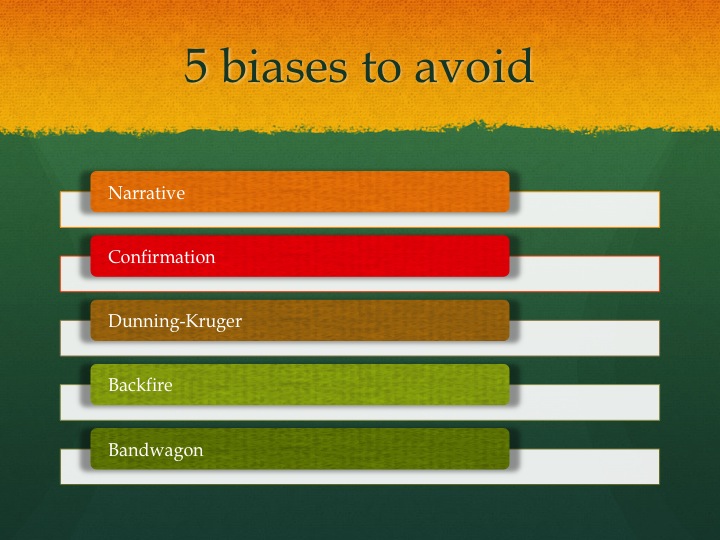
A recent guest blog post on the Amplitude Blog, 5 Cognitive Biases Ruining Your Growth, does a great job of describing five biases that can greatly impact your business. While I will try to avoid just repeating the blog post, below are the five biases and some ways they may be impacting you:

  1. Confirmation bias. Confirmation bias is when you interpret or recall information in a way that confirms your preexisting beliefs or hypotheses, while giving disproportionately less consideration to alternative possibilities.This bias occurs regularly in the game space, especially with free to play games.

    A product manager may have driven a new feature, maybe a new price point on the pay wall. Rather than running an AB test (maybe insufficient traffic or other changes going on), they then review the feature pre and post launch. Game revenue per user increased 10 percent so they create a Powerpoint and email the CEO that there new feature had a 10 percent impact. Then the company adds this feature to all its games. The reality is that at the same time the feature was released the marketing team stopped a television campaign that was attracting poorly monetizing players. The latter is actually what caused the change in revenue. As someone who has known a lot of product managers, I can confirm this bias in the real world.

  2. The narrative fallacy. People try to comprehend information in stories, rather than looking at just the facts they create a story that links them together even if there is not really a link. If you watch business news, when the stock market goes up 5 points, the narrative may be the market has rebounded from its Brexit blues. If the market goes down 5 points, the same story would be the market is still suffering from Brexit. The reality is that 5 points is statistically insignificant (the market is an aggregate of multiple stocks) so neither narrative is more likely in either scenario. The key issue here is that we attribute causation where there is none.An example in the game world.

    Two branded games are in the top 5 of new releases. All of the analysis is that branded games are now what customers are looking for. The realities is that the two games, totally unrelated, had strong mechanics and were just that lucky 10% of games that succeed. Allowing the Narrative Fallacy to win, however, you then put your resources to branded games, which are no more popular than before the launch of the two successful titles.

  3. Dunning-Kruger Effect. Before the Amplitude post, I had not heard of this bias, at least with this name, but once you read about it I am sure you will know cases of it. The Dunning-Kruger Effect is when incompetent or somewhat unskilled people think they are more skilled than they are. As the article quotes, “incompetent people do not recognize—scratch that, cannot recognize—just how incompetent they are.”

    Again, for the example from the game industry. Let’s say you want to port your game to a new VR platform. You go to your development team and they say it won’t be a problem. You sign up for the project, give them the specs, six months later they still cannot get the game to run on the VR platform as they have no idea how to develop VR (this is a nicer example than some others I can remember).

  4. Backfire effect. The backfire effect is after analyzing something that you or your company are doing, if the results are negative and the action was bad, you or your colleagues refuse to accept the results. As they write in the blog post, “the exact definition of the Backfire Effect [is]: ‘When people react to disconfirming evidence by strengthening their beliefs.’”

    As an example, you decide to analyze how your company has been calculating LTV. You look back at the analysis done the last two years and see how actual LTV tracked with projections at that time. You discover that you underestimated actual spend by 50 percent. Should be great news, will allow you to ramp up dramatically your user acquisition. Instead, when you present this data to your analytics team, they refuse to accept it, saying your analysis is flawed because you are not looking at the right cohorts.

  5. Bandwagon effect. The bandwagon effect is what you would assume, the tendency to do things because many other people are doing it. People will rally around a cause, an idea, a candidate, a variation, or a strategy simply because it is popular.

    Given that I want to keep this blog post under 500 GB, I will not list all the examples of the bandwagon effect I have seen in the game industry. Product strategy, however, is the most obvious culprit. When the free to play game industry started to evolve to mobile, everyone started porting its Facebook games over to mobile. Since Zynga and the other big companies were doing it, all of the smaller companies as well as newly funded ones also tried to bring the same core mechanics from Facebook over to mobile. Mechanics that worked on Facebook, however, did not work on mobile but companies continued doing it because everyone else was. Rather than identify the market need and a potential blue ocean, companies just joined the bandwagon.

Slide1

Avoid these biases

The key to making the right decisions is not to assume you do not have biases, but always to be diligent in reviewing your decisions and making sure you are thinking rationally. All of these biases can lead to personal or company failure, so the inability to identify them can have extreme consequences.

Key takeaways

  1. Understanding our biases allows us to not only understand our customers but make better decisions.
  2. A core bias you see in the game industry is confirmation bias, where someone looks at data to prove their hypothesis (or brilliance), even if the data does not really support it.
  3. Another critical bias is the narrative fallacy, where we create a story to explain an event even if the story is not the cause of the event.

Share this:

  • Click to share on Facebook (Opens in new window) Facebook
  • Click to share on LinkedIn (Opens in new window) LinkedIn
Like Loading...
Unknown's avatarAuthor Lloyd MelnickPosted on March 29, 2017March 28, 2017Categories General Social Games Business, General Tech Business, UncategorizedTags bias, decision making1 Comment on How to manage your own biases

Nintendo admits mistake

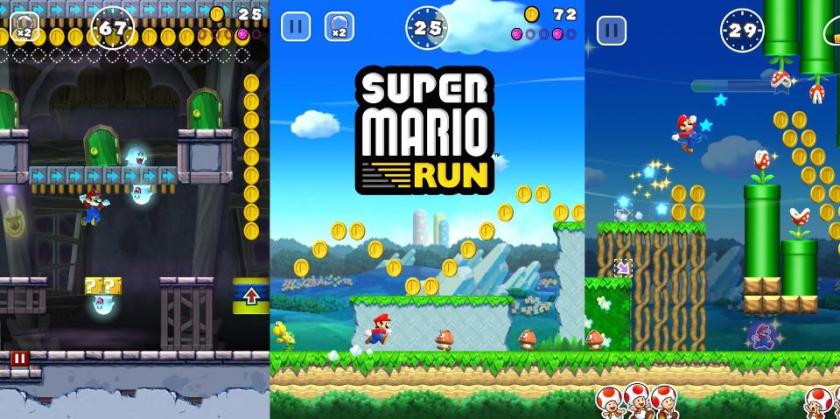
Last year, I wrote about why Nintendo failed with Super Mario Run, its first 1st party mobile title. The key was that they did not understand the mobile game ecosystem and how to manage player lifetime value. At the time, I ran into significant criticism that the product was a failure, given the millions of downloads and that maybe Nintendo had a goal other than revenue.

Nintendo admitted last week, however, that Super Mario Run did not meet its expectation.

While it is always nice to be proven correct, the most interesting element of Nintendo’s announcement suggests to me they still do not understand the mobile gaming world. The article also quotes a Nintendo official as saying “Heroes [their free to play product] is an outlier. We honestly prefer the Super Mario Run model.”

As I wrote last year, free to play is the most effective way to maximize player engagement. This not only derives the most monetary value from the game (i.e. you make the most money), it gives you a long window to engage with your customer and further that relationship.

Like other traditional game companies before it, Nintendo seems destined to flail outside of its existing channels, that is its proprietary consoles. The free to play world offers challenges that these game companies do not understand and are unwilling to accept.

Key takeaways

  • Nintendo stated publicly they were disappointed in the performance of Super Mario Run, their first mobile game.
  • Despite this disappointment, they still have not embraced free to play
  • They are likely to consider under-performing in mobile as it is very challenging for older companies to understand and embrace the mobile free to play ecosystem

super-mario-run-new1

Share this:

  • Click to share on Facebook (Opens in new window) Facebook
  • Click to share on LinkedIn (Opens in new window) LinkedIn
Like Loading...
Unknown's avatarAuthor Lloyd MelnickPosted on March 27, 2017Categories General Social Games Business, Social Games MarketingTags free to play, nintendo, Super Mario RunLeave a comment on Nintendo admits mistake

Neuromarketing and gaming

I recently finished a class on Coursera, An Introduction to Consumer Neuroscience & Neuromarketing, that gave some great insights applicable to gaming and the greater tech sector.

Neuromarketing is a very exciting new field that is driving business growth, think Big Data ten years ago. The course, taught by Neuromarketing pioneer Thomas Zoëga Ramsøy of the Copenhagen Business School, delves into neuroscience and how both small and large companies can use it. It leverages increasing understanding in how the brain works with the emergence of behavioral economics and data-driven marketing.

While marketing in the past largely relied on intuition, surveys and focus groups, neuromarketing starts by understanding how the brain functions and what parts of the brain drive different behavior. By understanding what parts of the brain drive emotion, motivation, etc., you can then create products and marketing campaign most likely to get customers to purchase.

While I am not the person to summarize how the brain works, below are some of the key learnings from Professor Ramsøy’s course and implications for the game industry.

Cognitive Load

The concept of cognitive load is critical to the success of many products, from games like slots to apps like Uber. Given the the human brain consumers 20 percent of the body’s energy but only is 2 percent of the body’s mass, it is important to understand that people will subconsciously work to reduce the amount of energy the brain is using.

Cognitive load is how much info people are processing at any one time. Cognitive load is tied to working memory, the more information in that short-term memory the higher the cognitive load. As cognitive load increases, consumers are less likely to make a purchasing decision.

The concept of cognitive load also confirms why UIUX is often better when simpler. A simple user experience minimizes cognitive load, thus not creating too much strain.

Implications

It is important to manage proactively consumers’ cognitive load. Giving consumers many choices increases their cognitive load, thus making them less likely to purchase. Thus, it is critical that rather than giving your customer 25 different packages they can buy, keep the purchasing decision simple.

While simpler is better is often considered the goal of UIUX, it often is abandoned so new features can be added. The reality is that simpler is more important than features and you need to build your products not as a tradeoff between the two but as something that focuses on minimizing customers cognitive load.

Uber is a great example of the success of this strategy. From a very simple interface to only a few options to not even letting customers think about tipping to not even having to worry about paying, using Uber requires very little thought. Yet this incredibly simple app has made Uber worth over $60 billion.

Not only is cognitive load important when creating the overall product but also the underlying mechanic in the product. People often question the enduring popularity of slot machines. There are, however, virtually no game mechanics that have lower cognitive load than slots. The slot mechanic provides entertainment without using too much energy. When creating other mechanics, it is critical to understand how much mental energy they will consume.

Search and attention

One of the most powerful applications of neuromarketing is related to search and what consumers select following the search process. Critically, there are two types of search, and each is driven by different parts of the brain.

First there is bottom-up search, which is largely unconscious. This is where a person comes across something and it grabs your attention. Certain receptors in eyes more receptive to things like contrast and density. The best example is when you are in a grocery store and you notice something you were not planning on buying. This type of search is generally driven by colors, shape and density. Consumers are likely to buy some that grabs their attention. As much of consumer behavior is unconscious,

The other type of search is top-down, which is primarily conscious. This is when somebody is searching for something in particular. You may again be in a grocery store and looking for eggs. You will focus your mental energy on thinking hard and finding what you need.

Implications

You need to design your UIUX based on what type of search your customers will be conducting. If they are conducting a top-down search, then you do not have to prioritize making it that visible. They will find it regardless. Conversely, if you want to engage your easier (get them to try a new feature or new content or have them think about monetizing), then you want to stand out during a bottom-up search.

In this case, there are some great new tools for UIUX to optimize visual search results. Professor Ramsøy, who taught the course, has a commercial product called Neurovision. Neurovision allows you to put in an image of your game (in our case) and see what players will notice without the need of a fancy heat test, thus what will jump out in a bottom-up search (see example below):

Screen Shot 2017-03-19 at 4.39.45 PM

It is also often used by retailers (including Walmart and Home Depot) to understand what consumers will see while walking through their store, it can even analyze what people will notice during videos. Neurovision is one of a host of new products based on Neuroscience that help you scientifically improve your products rather than relying on anecdotal experience with a limited number of users.

Branding

The value of brands is often debated but neuromarketing shows the value of a brand. Brands impact how we perceive and enjoy a product and stimulate additional parts of the brain that the product would not normally impact.

As discussed with cognitive load, the brain uses a lot of energy and consumers are constantly looking at ways to minimize this energy usage. Brands help consumers save energy because when they see a brand they are familiar with, the branding fills in a lot of information that they do not have to then ascertain (quality, style, etc.). Thus, when deciding between a branded product and a brand they are not familiar with (or no brand) the branded product has an advantage as choosing it requires less energy.

While this analysis may not seem like neuromarketing, neuromarketing confirms it. When people who have been exposed to branding for a certain paint are then in the paint section of a hardware store, eye-tracking confirms that they spend more attention on products from brands they are aware of. This phenomenon then leads to a higher likelihood of purchase.

Branding also helps with search, particularly bottom up search. While a consumer focused on finding a specific product or specific feature set may not respond to branding, as they are doing a top-down search, someone who is browsing for a new product (say a new casino app), a familiar brand would make it more likely to gain a customer’s attention.

Finally, branding stimulates parts of the brain that then impact how consumers feel about a product. A strong brand will create positive emotions around a product even before the consumer evaluates the product.

Implications

Branding is not dead or useless in a performance marketing world. Strong brand can translate into a higher impact from your performance marketing, customers are more likely to click on your ads. They are also more likely to pick your product when searching organically for one.

Using Neuroscience

Neuroscience is a strong tool to help improve your product and marketing. By understanding how the brain processes information, you can tailor your product and marketing to optimize your chances for success.

Key takeaways

  1. Neuromarketing, based on neuroscience, uses understanding of the brain to drive product and marketing decisions, just as big data creates much higher returns.
  2. You can increase sales and satisfaction by minimizing cognitive load, how much your customer’s brain has to process navigating your app or store
  3. Your UIUX should account for whether your customer is conducint a top-down search (looking for something in particular) or bottom-up search where you want them to find something.

Share this:

  • Click to share on Facebook (Opens in new window) Facebook
  • Click to share on LinkedIn (Opens in new window) LinkedIn
Like Loading...
Unknown's avatarAuthor Lloyd MelnickPosted on March 22, 2017March 19, 2017Categories General Social Games Business, General Tech Business, Growth, Lloyd's favorite posts, Social Casino, Social Games MarketingTags cognitive load, neuromarketing, Product design, search, Thomas Zoëga Ramsøy, uiux1 Comment on Neuromarketing and gaming

Posts pagination

Previous page Page 1 … Page 11 Page 12 Page 13 … Page 46 Next page

Get my book on LTV

The definitive book on customer lifetime value, Understanding the Predictable, is now available in both print and Kindle formats on Amazon.

Understanding the Predictable delves into the world of Customer Lifetime Value (LTV), a metric that shows how much each customer is worth to your business. By understanding this metric, you can predict how changes to your product will impact the value of each customer. You will also learn how to apply this simple yet powerful method of predictive analytics to optimize your marketing and user acquisition.

For more information, click here

Follow The Business of Social Games and Casino on WordPress.com

Enter your email address to follow this blog and receive notifications of new posts by email.

Join 791 other subscribers

Most Recent Posts

  • Join me at PDMA Inspire for my talk on new product prioritization
  • Why keep studying?
  • The next three years of this blog
  • Interview with the CEO of Murka on the biggest growth opportunity in gaming, Barak David

Lloyd Melnick

This is Lloyd Melnick’s personal blog.  All views and opinions expressed on this website are mine alone and do not represent those of people, institutions or organizations that I may or may not be associated with in professional or personal capacity.

I am a serial builder of businesses (senior leadership on three exits worth over $700 million), successful in big (Disney, Stars Group/PokerStars, Zynga) and small companies (Merscom, Spooky Cool Labs) with over 20 years experience in the gaming and casino space.  Currently, I am the GM of VGW’s Chumba Casino and on the Board of Directors of Murka Games and Luckbox.

Topic Areas

  • Analytics (114)
  • Bayes' Theorem (8)
  • behavioral economics (8)
  • blue ocean strategy (14)
  • Crowdfunding (4)
  • DBA (2)
  • General Social Games Business (459)
  • General Tech Business (195)
  • Growth (88)
  • International Issues with Social Games (50)
  • Lloyd's favorite posts (101)
  • LTV (54)
  • Machine Learning (10)
  • Metaverse (1)
  • Mobile Platforms (37)
  • Prioritization (1)
  • Social Casino (52)
  • Social Games Marketing (105)
  • thinking fast and slow (5)
  • Uncategorized (33)

Social

  • View CasualGame’s profile on Facebook
  • View @lloydmelnick’s profile on Twitter
  • View lloydmelnick’s profile on LinkedIn

RSS

RSS Feed RSS - Posts

RSS Feed RSS - Comments

Categories

  • Analytics (114)
  • Bayes' Theorem (8)
  • behavioral economics (8)
  • blue ocean strategy (14)
  • Crowdfunding (4)
  • DBA (2)
  • General Social Games Business (459)
  • General Tech Business (195)
  • Growth (88)
  • International Issues with Social Games (50)
  • Lloyd's favorite posts (101)
  • LTV (54)
  • Machine Learning (10)
  • Metaverse (1)
  • Mobile Platforms (37)
  • Prioritization (1)
  • Social Casino (52)
  • Social Games Marketing (105)
  • thinking fast and slow (5)
  • Uncategorized (33)

Archives

  • September 2023
  • December 2021
  • July 2021
  • March 2021
  • February 2021
  • January 2021
  • December 2020
  • November 2020
  • October 2020
  • September 2020
  • August 2020
  • July 2020
  • June 2020
  • May 2020
  • April 2020
  • March 2020
  • February 2020
  • January 2020
  • November 2019
  • October 2019
  • September 2019
  • June 2019
  • May 2019
  • April 2019
  • March 2019
  • February 2019
  • January 2019
  • December 2018
  • June 2018
  • May 2018
  • April 2018
  • March 2018
  • February 2018
  • January 2018
  • December 2017
  • June 2017
  • May 2017
  • April 2017
  • March 2017
  • February 2017
  • January 2017
  • December 2016
  • November 2016
  • October 2016
  • September 2016
  • June 2016
  • May 2016
  • April 2016
  • March 2016
  • February 2016
  • January 2016
  • December 2015
  • November 2015
  • October 2015
  • September 2015
  • July 2015
  • June 2015
  • May 2015
  • April 2015
  • March 2015
  • February 2015
  • January 2015
  • December 2014
  • November 2014
  • October 2014
  • September 2014
  • August 2014
  • July 2014
  • June 2014
  • May 2014
  • April 2014
  • March 2014
  • February 2014
  • January 2014
  • December 2013
  • November 2013
  • October 2013
  • September 2013
  • August 2013
  • July 2013
  • June 2013
  • May 2013
  • April 2013
  • March 2013
  • February 2013
  • January 2013
  • December 2012
  • November 2012
  • October 2012
  • September 2012
  • August 2012
  • July 2012
  • June 2012
  • May 2012
  • April 2012
  • March 2012
  • February 2012
  • January 2012
  • December 2011
  • November 2011
  • October 2011
  • September 2011
  • August 2011
  • July 2011
  • June 2011
  • May 2011
  • December 2010
January 2026
S M T W T F S
 123
45678910
11121314151617
18192021222324
25262728293031
« Sep    

by Lloyd Melnick

All posts by Lloyd Melnick unless specified otherwise
Google+

Enter your email address to subscribe to this blog and receive notifications of new posts by email.

Join 791 other subscribers
Follow Lloyd Melnick on Quora

RSS HBR Blog

  • What Actually Works to Change Someone’s Mind
  • Our Favorite Management Tips of 2025
  • How to Manage—and Motivate—Gen Z
  • The Most-Watched HBR Videos of 2025
  • The HBR Charts that Help Explain 2025
  • The Most Popular HBR Podcast Episodes of 2025
  • How the Best Leaders Develop and Spend “Innovation Capital”
  • The 10 Most Popular HBR Articles of 2025
  • How Work Changed in 2025, According to HBR Readers
  • What Leaders Can Learn from a Formula 1 Turnaround

RSS Techcrunch

  • An error has occurred; the feed is probably down. Try again later.

RSS MIT Sloan Management Review Blog

  • Calm: The Underrated Capability Every Leader Needs Now
  • The Top Five MIT SMR Videos of 2025
  • Three Steps Toward Fairer Talent Management
  • From Crisis to Coopetition: What Leaders Can Learn From Anesthesiologists
  • AI Coding Tools: The Productivity Trap Most Companies Miss
  • How Procter & Gamble Uses AI to Unlock New Insights From Data
  • Rewire Organizational Knowledge With GenAI
  • Hungry for Learning: Wendy’s Will Croushorn
  • Beat Burnout: 10 Essential MIT SMR Reads
  • How Leaders Stay True to Themselves and Their Stakeholders
The Business of Social Games and Casino Website Powered by WordPress.com.
  • Subscribe Subscribed
    • The Business of Social Games and Casino
    • Join 726 other subscribers
    • Already have a WordPress.com account? Log in now.
    • The Business of Social Games and Casino
    • Subscribe Subscribed
    • Sign up
    • Log in
    • Report this content
    • View site in Reader
    • Manage subscriptions
    • Collapse this bar
 

Loading Comments...
 

    %d