Skip to content

The Business of Social Games and Casino

How to succeed in the mobile game space by Lloyd Melnick

Category: General Social Games Business

How the marketing 4 P’s have changed

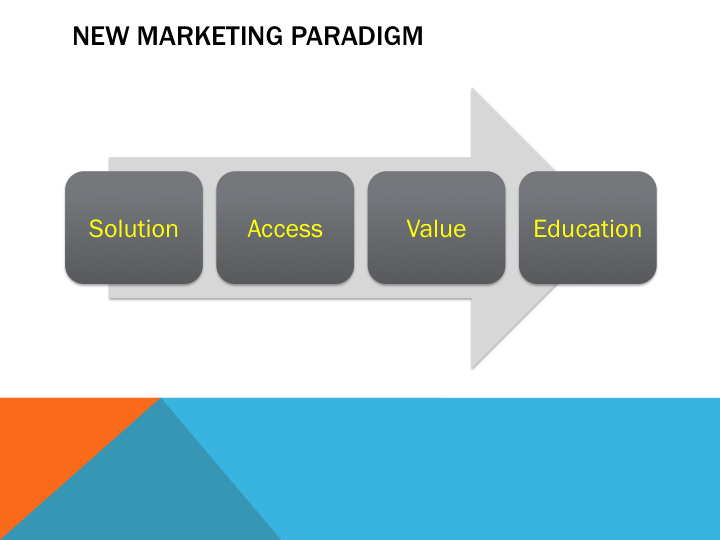
Most business schools based their marketing teachings on the 4 P’s (Product, Place, Price and Promotion) but they have not adjusted these pillars for the current reality. An article in the Harvard Business Review, “Rethinking the 4 P’s,” provides a great framework for building your marketing strategy going forward. Rather than the 4 P’s, they suggest a SAVE methodology. Although developed as a B2B marketing framework, SAVE is also relevant for consumer marketing and growth.
Slide1

Solution

Rather than the traditional focus on “Product,” either a good or service, the SAVE approach has you focus your offerings on the needs they meet. Do not concentrate on features or technology, but focus on what your customers want and then build your offering to meet their needs.

Access

Instead of “Place,” retail locations (online or physical) or distribution channels, you should develop an integrated cross-channel presence that considers users’ entire customer journey. The point here is that it is less important to be available through a specific channel or a device but to understand your customer and be available when, where and how they would want it. Continue reading “How the marketing 4 P’s have changed”
Like Loading...
Unknown's avatarAuthor Lloyd MelnickPosted on March 17, 2015March 6, 2021Categories General Social Games Business, General Tech Business, Growth, Social Games MarketingTags 4 P's, Customer satisfaction, marketing, SAVE1 Comment on How the marketing 4 P’s have changed

Why free stuff or lower prices don’t keep customers happy

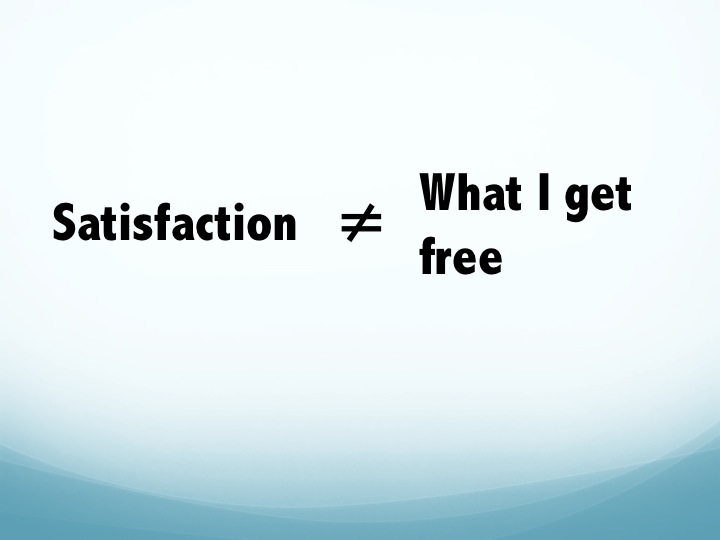
One lazy and ineffective way to keep customers happy is to lower prices or give them more things for free. Companies that do not know their customers well, or do not want to, often respond to the question of how to increase customer satisfaction or retention by lowering prices. In free-to-play products, this tactic involves giving users more virtual currency.

The lazy answer

This response is often a knee-jerk reaction to the question of “How do we improve our customer relationships?” It demonstrates that the person/company does not want to address the true dynamics of the relationships. Everybody would rather pay less for a product or get bigger free bonuses and rewards. It does not reflect any understanding of your users, their motivations or why they use your product.

Slide1

The reality of customer satisfaction

The reality is that users and players are motivated by many factors and rarely is cost the primary reason they use a product. The exception is companies that are focused solely on being a low cost provider, the Walmarts and Aldis, and for them price is the greatest lever to increase user satisfaction. In other cases people are driven by unique features or experiences that builds a bond with the product.

Does not create competitive advantage

The biggest mistake in throwing free stuff at users or players (or lowering prices) is that it does not create competitive advantage. Your competitors can easily match or beat what you are doing. If you are giving away five dollars worth of product daily and they want to steal your customers, they can give away $10. You end up with a race to the bottom in terms of pricing, and when you reach the bottom nobody has a particularly good business other than the companies built to compete on price (again, the Walmarts and Aldis).

Determining what creates satisfaction for your users

The first step is understanding what about your product or game motivates people to use it. There are several ways to build this understanding (listed in my order of preference): Continue reading “Why free stuff or lower prices don’t keep customers happy”

Like Loading...
Unknown's avatarAuthor Lloyd MelnickPosted on March 12, 2015April 24, 2021Categories General Social Games Business, General Tech BusinessTags Customer satisfaction, customer service, free, retention, Sean Ellis1 Comment on Why free stuff or lower prices don’t keep customers happy

App to find Blue Ocean opportunities

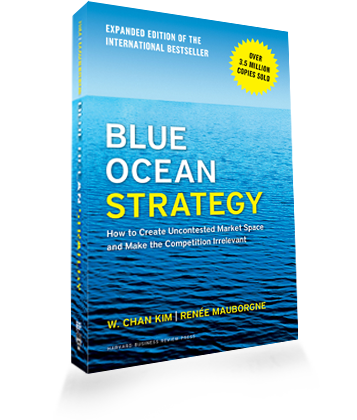
blue oceanAnyone who reads this blog knows I am a huge fan of Blue Ocean strategy. Not to over-simplify, but blue ocean strategy is a methodology to find non-competitive market opportunities rather than fighting with other companies in an existing space. It is also a tactic popularized by Peter Thiel in his new book, in which he urges companies to find a monopoly opportunity.

Recently, someone from the Insead Blue Ocean Strategy Institute reached out to me and shared an app that they have created. The Blue Ocean Strategy app for the iPad facilitates finding a blue ocean strategy. I have just started playing around with it but if you love blue ocean like I do, you should give it a try.

Like Loading...
Unknown's avatarAuthor Lloyd MelnickPosted on March 10, 2015April 11, 2020Categories blue ocean strategy, General Social Games Business, General Tech BusinessTags blue ocean strategyLeave a comment on App to find Blue Ocean opportunities

It is about your Majors, Captains and Lieutenants

ArmyMy first business partner taught me something very valuable: The worth of captains and lieutenants in the military, which you can extend to the business environment. During the Cold War, NATO had a significant disadvantage in the number of forces it had versus the number that the East Bloc possessed. It was a widely held belief, however, not only among NATO leaders but also military academics, that the two sides were very evenly matched and in an actual battle the western forces would hold their own or prevail despite the numbers.

Even now, you see many of the forces that oppose the west (such as ISIS and al-Qaeda) score large successes against much better-equipped opponents. Part of this success can be attributed to the power of local commanders in these forces.

Midlevel officers make the difference

The strength of NATO’s mid-level officers was credited with closing this gap. While Eastern Bloc mid-level officers were taught to blindly follow orders from their superiors, or suffer harsh consequences, Western mid-level officers were given great autonomy to make battlefield decisions without waiting for direction or even contravening standing orders that were overtaken by events. By having strong leaders who had the independence to make decisions, western military forces were at a competitive advantage. (And let’s not forget, Captain Kirk never got into real trouble for crossing into the neutral zone and the Federation regularly beat up on the more militarized Romulans and Klingons.) Continue reading “It is about your Majors, Captains and Lieutenants”

Share this:

  • Click to share on Facebook (Opens in new window) Facebook
  • Click to share on LinkedIn (Opens in new window) LinkedIn
Like Loading...
Unknown's avatarAuthor Lloyd MelnickPosted on March 5, 2015April 6, 2015Categories General Social Games Business, General Tech BusinessTags leadership, Middle Management, Midlevel officers, NATOLeave a comment on It is about your Majors, Captains and Lieutenants

Why a Chief Advocacy Officer is a bad idea

I have been reading many articles about customer delight and how great customer experiences improve a company’s profitability and growth. I recently came across a  trendy concept in business: having a Chief Advocacy Officer (CAO). A CAO is a senior (C-Level) executive who represents the customers interests. While initially appealing and backed by some of the best thinkers in the customer experience universe, the idea of having a C-level position to advocate on behalf of the customers’ interests is flawed.

Slide1

The fundamental flaw in establishing a CAO position is that it implicitly allows everyone else in the organization not to think about the customer. If a company is going to consistently exceed customer expectations, everybody in the organization must focus on the customer. When there is a CAO, others in the organization feel that since the CAO is serving as the representative of the customer, they do not have to think about the user.

An additional flaw is that a CAO often becomes an adversary to other functions. Finance sees the CAO as somebody who is going to make demands that impact revenue. Design sees the CAO as somebody who is going to conflict with their vision. Marketing tries to avoid the CAO. While all of these functions would benefit from being customer driven, the insertion of a CAO creates a dynamic where the customer becomes an internal competitor.

The key to building a successful business is not putting one person in the role of customer advocate, but making everyone across all functions think as customer advocates. That is when you will truly delight your users and generate great loyalty and retention.

Key takeaways

  1. While the idea of creating a Chief Advocacy Officer is appealing, it is a flawed concept that prevents a company from truly becoming customer driven.
  2. Rather than having one person or a team represent your customers’ interests, everyone in your organization should be building and marketing products to delight customers.
  3. A Chief Advocacy Officer also can create tensions between functional areas because they see the the role as a competing interest and not part of their success.


Like Loading...
Unknown's avatarAuthor Lloyd MelnickPosted on March 3, 2015April 6, 2015Categories General Social Games Business, General Tech BusinessTags CAO, customer drivenLeave a comment on Why a Chief Advocacy Officer is a bad idea

How bad profits can kill your company

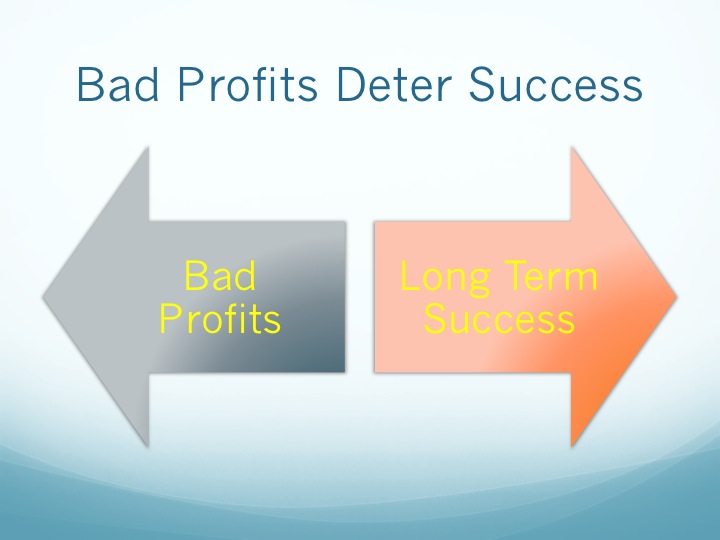
I came across an article from 2012, “Is Your Company Hooked on bad profits?” by Fred Reichheld, a Bain Fellow, that is very relevant to today’s tech companies. Bad profits are revenues earned at the expense of customer relationships. These bad profits are generated usually with short-term revenue goals that over a longer period make your customers more likely to churn.

Slide1

Examples of bad profits

As a consumer, you probably have many examples you can list of bad profits. Some of these are banks charging late payment or bounced check fees not in line with their costs. It could also be rental car agencies charging you more per gallon if you do not return your vehicle with a full tank of gasoline than you would pay for a fine French Bordeaux. It could be a wireless phone company charging you crazy international roaming fees. Maybe a fitness center locks you into a one year contract because they know you won’t be happy in a month. And it could be a free to play game company tricking players into spending premium currency by creating misleading buttons. Remember how AOL made you jump through about twenty agents to cancel its service? Unfortunately, these examples are too numerous to list. Continue reading “How bad profits can kill your company”

Like Loading...
Unknown's avatarAuthor Lloyd MelnickPosted on February 26, 2015April 6, 2015Categories General Social Games Business, General Tech Business, GrowthTags Bad Profits, Customer satisfaction, NPSLeave a comment on How bad profits can kill your company

Smart CRM is not spam

When I wrote about dumb companies and smart CRM last month, one surprising concern I heard is that the CRM would be interpreted as spam by customers. The value, however, of smart CRM is that customers consider it relevant and value it.Smart email

My definition of spam

What most people consider spam is communications (primarily email but it can be push notifications, SMS messages or even robo-calls) that has not meaning to the user and the user easily sees that. It is communications that is sent to thousands or millions of customers (or potential customers) with the hope that a fraction of a percent will respond to it.One element that does not define spam normally is frequency. I met only get one message from a company (say a Canadian pharmacy selling cholesterol medicine) but because the message is undifferentiated and clearly not written for me personally, I consider it spam. Continue reading “Smart CRM is not spam”

Like Loading...
Unknown's avatarAuthor Lloyd MelnickPosted on February 24, 2015April 6, 2015Categories General Social Games Business, General Tech BusinessTags CRM, email, smart CRM, spam2 Comments on Smart CRM is not spam

Cancel all meetings, be successful

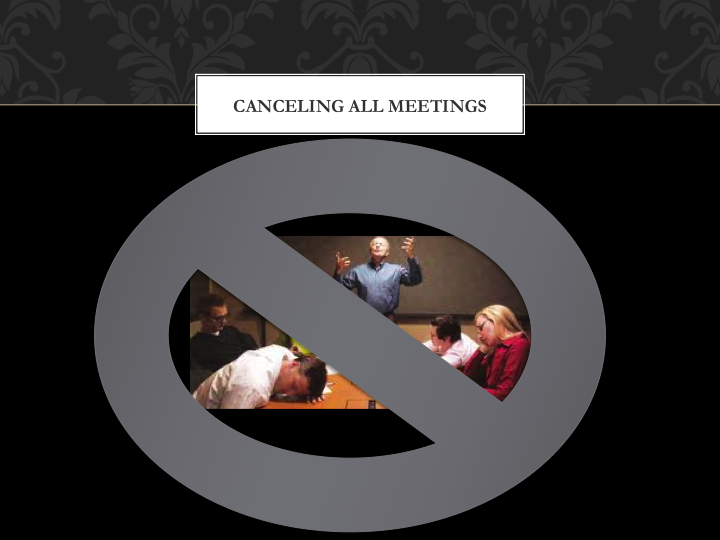
I recently met with a former colleague who has been leading marketing efforts for one of the top five US game companies for the last ten years, and she told me about one small thing they did that has had a tremendous impact on their success and culture. The company has gone from being a relatively small game developer with no external financing to a part of one of the largest, multi-billion companies in the video game industry. What is amazing that over the ten years, the company has not experienced any serious downturns or down-sizing, which in the game industry makes it the exception to the rule.

Slide1

The secret to success

I was speaking with my colleague about what they do differently that leads to this success and she mentioned how at the beginning of every year they cancel all meetings. Then they start from scratch scheduling necessary meetings. There are multiple benefits to this tactic: Continue reading “Cancel all meetings, be successful”

Like Loading...
Unknown's avatarAuthor Lloyd MelnickPosted on February 24, 2015April 6, 2015Categories General Social Games BusinessTags Efficiency, MeetingsLeave a comment on Cancel all meetings, be successful

How to measure customer satisfaction

Although I have written many times about customer satisfaction and how good experiences positively impact customer lifetime value, I have not presented a good way to measure it. As we all know, if you do not measure something, it usually does not get done. A recent article in Bain & Company’s Insights newsletter, “Who Should Run Your Net Promoter System,” does a great job of explaining how to measure customer satisfaction and how to manage the measurement process.

What is the Net Promoter Score?

For such a powerful metric, the net promoter score is very straightforward. It is the answer to one question, on a scale of 1-10: How likely is it that you would recommend the company to a friend? Those who are answer with a 9 or 10 are considered loyal enthusiasts who will keep buying and refer others. Those who answer 7 or 8 are passives, satisfied but unenthusiastic customers who are vulnerable to churning. Those with a score of 0-6 are considered detractors, unhappy customers who can damage your brand and impede growth through negative word-of-mouth. Continue reading “How to measure customer satisfaction”

Like Loading...
Unknown's avatarAuthor Lloyd MelnickPosted on February 19, 2015March 19, 2015Categories General Social Games Business, General Tech BusinessTags Bain, CS, customer service, Net Promoter Score, NPS6 Comments on How to measure customer satisfaction

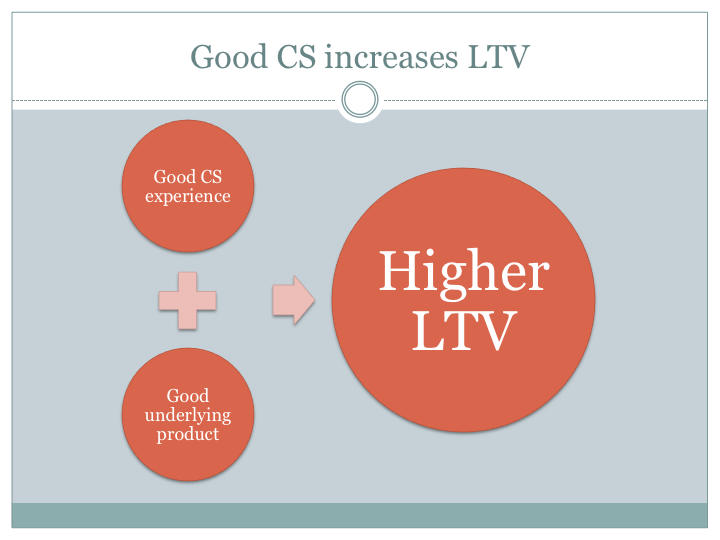
How CS can impact LTV

Two personal, and comparable, experiences recently showed directly how customer service impacts lifetime value. As many of you know, I travel frequently on business and rent a car about 40 weeks per year, making me a “whale” to car rental companies. I am also relatively loyal to companies, I limit my choices to two companies and probably use my favorite 75 percent of the time.

Slide1

The Ace Rent-A-Car story

A few months ago, I rented a car from ACE Rent-A-Car. I had rented from Ace about 15 times already in 2014, for 30+ weeks, from its Chicago location.

After going out for dinner one night, I discovered that my rental car had a flat tire. Unfortunately, the car I rented did not have a spare tire (yes, there are cars now that are sold without a spare). It was about midnight in Chicago and it was cold so I called Ace with my problem even though I had waived roadside assistance. The first two times I called I was placed on hold 5-10 minutes and the person had no idea how to help. The third time I called they were friendly but explained they could not help because they were acquired by Budget Rent-A-Car (still not sure if it was a system-wide acquisition or the O’Hare location) and gave me a phone number for Budget. I was annoyed as it was getting quite late and I did not feel it was appropriate to rent cars that did not have a spare (and not let the customer know). Continue reading “How CS can impact LTV”

Like Loading...
Unknown's avatarAuthor Lloyd MelnickPosted on February 17, 2015March 19, 2015Categories General Social Games Business, General Tech Business, LTVTags Ace Rent-A-Car, customer service, Enterprise Rent-A-Car, lifetime value, LTVLeave a comment on How CS can impact LTV

Posts pagination

Previous page Page 1 … Page 20 Page 21 Page 22 … Page 46 Next page

Get my book on LTV

The definitive book on customer lifetime value, Understanding the Predictable, is now available in both print and Kindle formats on Amazon.

Understanding the Predictable delves into the world of Customer Lifetime Value (LTV), a metric that shows how much each customer is worth to your business. By understanding this metric, you can predict how changes to your product will impact the value of each customer. You will also learn how to apply this simple yet powerful method of predictive analytics to optimize your marketing and user acquisition.

For more information, click here

Follow The Business of Social Games and Casino on WordPress.com

Enter your email address to follow this blog and receive notifications of new posts by email.

Join 791 other subscribers

Most Recent Posts

  • Join me at PDMA Inspire for my talk on new product prioritization
  • Why keep studying?
  • The next three years of this blog
  • Interview with the CEO of Murka on the biggest growth opportunity in gaming, Barak David

Lloyd Melnick

This is Lloyd Melnick’s personal blog.  All views and opinions expressed on this website are mine alone and do not represent those of people, institutions or organizations that I may or may not be associated with in professional or personal capacity.

I am a serial builder of businesses (senior leadership on three exits worth over $700 million), successful in big (Disney, Stars Group/PokerStars, Zynga) and small companies (Merscom, Spooky Cool Labs) with over 20 years experience in the gaming and casino space.  Currently, I am the GM of VGW’s Chumba Casino and on the Board of Directors of Murka Games and Luckbox.

Topic Areas

  • Analytics (114)
  • Bayes' Theorem (8)
  • behavioral economics (8)
  • blue ocean strategy (14)
  • Crowdfunding (4)
  • DBA (2)
  • General Social Games Business (459)
  • General Tech Business (195)
  • Growth (88)
  • International Issues with Social Games (50)
  • Lloyd's favorite posts (101)
  • LTV (54)
  • Machine Learning (10)
  • Metaverse (1)
  • Mobile Platforms (37)
  • Prioritization (1)
  • Social Casino (52)
  • Social Games Marketing (105)
  • thinking fast and slow (5)
  • Uncategorized (33)

Social

  • View CasualGame’s profile on Facebook
  • View @lloydmelnick’s profile on Twitter
  • View lloydmelnick’s profile on LinkedIn

RSS

RSS Feed RSS - Posts

RSS Feed RSS - Comments

Categories

  • Analytics (114)
  • Bayes' Theorem (8)
  • behavioral economics (8)
  • blue ocean strategy (14)
  • Crowdfunding (4)
  • DBA (2)
  • General Social Games Business (459)
  • General Tech Business (195)
  • Growth (88)
  • International Issues with Social Games (50)
  • Lloyd's favorite posts (101)
  • LTV (54)
  • Machine Learning (10)
  • Metaverse (1)
  • Mobile Platforms (37)
  • Prioritization (1)
  • Social Casino (52)
  • Social Games Marketing (105)
  • thinking fast and slow (5)
  • Uncategorized (33)

Archives

  • September 2023
  • December 2021
  • July 2021
  • March 2021
  • February 2021
  • January 2021
  • December 2020
  • November 2020
  • October 2020
  • September 2020
  • August 2020
  • July 2020
  • June 2020
  • May 2020
  • April 2020
  • March 2020
  • February 2020
  • January 2020
  • November 2019
  • October 2019
  • September 2019
  • June 2019
  • May 2019
  • April 2019
  • March 2019
  • February 2019
  • January 2019
  • December 2018
  • June 2018
  • May 2018
  • April 2018
  • March 2018
  • February 2018
  • January 2018
  • December 2017
  • June 2017
  • May 2017
  • April 2017
  • March 2017
  • February 2017
  • January 2017
  • December 2016
  • November 2016
  • October 2016
  • September 2016
  • June 2016
  • May 2016
  • April 2016
  • March 2016
  • February 2016
  • January 2016
  • December 2015
  • November 2015
  • October 2015
  • September 2015
  • July 2015
  • June 2015
  • May 2015
  • April 2015
  • March 2015
  • February 2015
  • January 2015
  • December 2014
  • November 2014
  • October 2014
  • September 2014
  • August 2014
  • July 2014
  • June 2014
  • May 2014
  • April 2014
  • March 2014
  • February 2014
  • January 2014
  • December 2013
  • November 2013
  • October 2013
  • September 2013
  • August 2013
  • July 2013
  • June 2013
  • May 2013
  • April 2013
  • March 2013
  • February 2013
  • January 2013
  • December 2012
  • November 2012
  • October 2012
  • September 2012
  • August 2012
  • July 2012
  • June 2012
  • May 2012
  • April 2012
  • March 2012
  • February 2012
  • January 2012
  • December 2011
  • November 2011
  • October 2011
  • September 2011
  • August 2011
  • July 2011
  • June 2011
  • May 2011
  • December 2010
January 2026
S M T W T F S
 123
45678910
11121314151617
18192021222324
25262728293031
« Sep    

by Lloyd Melnick

All posts by Lloyd Melnick unless specified otherwise
Google+

Enter your email address to subscribe to this blog and receive notifications of new posts by email.

Join 791 other subscribers
Follow Lloyd Melnick on Quora

RSS HBR Blog

  • What Actually Works to Change Someone’s Mind
  • Our Favorite Management Tips of 2025
  • How to Manage—and Motivate—Gen Z
  • The Most-Watched HBR Videos of 2025
  • The HBR Charts that Help Explain 2025
  • The Most Popular HBR Podcast Episodes of 2025
  • How the Best Leaders Develop and Spend “Innovation Capital”
  • The 10 Most Popular HBR Articles of 2025
  • How Work Changed in 2025, According to HBR Readers
  • What Leaders Can Learn from a Formula 1 Turnaround

RSS Techcrunch

  • An error has occurred; the feed is probably down. Try again later.

RSS MIT Sloan Management Review Blog

  • Calm: The Underrated Capability Every Leader Needs Now
  • The Top Five MIT SMR Videos of 2025
  • Three Steps Toward Fairer Talent Management
  • From Crisis to Coopetition: What Leaders Can Learn From Anesthesiologists
  • AI Coding Tools: The Productivity Trap Most Companies Miss
  • How Procter & Gamble Uses AI to Unlock New Insights From Data
  • Rewire Organizational Knowledge With GenAI
  • Hungry for Learning: Wendy’s Will Croushorn
  • Beat Burnout: 10 Essential MIT SMR Reads
  • How Leaders Stay True to Themselves and Their Stakeholders
The Business of Social Games and Casino Website Powered by WordPress.com.
  • Subscribe Subscribed
    • The Business of Social Games and Casino
    • Join 726 other subscribers
    • Already have a WordPress.com account? Log in now.
    • The Business of Social Games and Casino
    • Subscribe Subscribed
    • Sign up
    • Log in
    • Report this content
    • View site in Reader
    • Manage subscriptions
    • Collapse this bar
 

Loading Comments...
 

    %d