Skip to content

The Business of Social Games and Casino

How to succeed in the mobile game space by Lloyd Melnick

Category: General Tech Business

WeWork, 1.5 billion examples of the power of recombination

Last year (and I have been waiting to say that), I wrote about the power of recombinations and how it is a driving force for entrepreneurs in creating billion dollar businesses. I recently was reading about WeWork and its $1.5 billion valuation (which should rise to $6 billion this year) and realized it is an ideal example of the power of recombination (or some would say 1.5 billion examples).

Recombination

Recombination is a phrase I picked up from Erik Brynjolfsson and Andrew McAfee’s book The Second Machine Age. To recap, recombinations are taking different technological improvements and combining them to create disruptive products. An example they use is Waze, the smartphone app that provides optimal driving directions. Waze is a recombination of a location sensor, data transmission device (that is, a phone), GPS system, and social network. The team at Waze invented none of these technologies; they just put them together in a new way. None of these elements was particularly novel, but their combination was revolutionary.

WeWork

WeWork co-working office

WeWork is a provider of shared office space for entrepreneurs that, as mentioned above, was valued at $1.5 billion last year when it raised $150 million from investors including Benchmark Capital. WeWork has 31 locations where it provides business services and office space to 15,023 companies. Given that many of us would like to start $1 billion companies, WeWork provides a great example of how recombination can be used to create billions of dollars of value. Continue reading “WeWork, 1.5 billion examples of the power of recombination”

Like Loading...
Unknown's avatarAuthor Lloyd MelnickPosted on January 6, 2015January 29, 2015Categories General Social Games Business, General Tech BusinessTags Erik Brynjolfsson, recombination, Second Machine Age, WeWorkLeave a comment on WeWork, 1.5 billion examples of the power of recombination

The perils of saying your product or game is the best

I read an interesting piece in the Harvard Business Review, “The Danger of Touting a Product as The Best” by Jingjing Ma and Neal Roese, on why touting your game or product as the best can backfire. Ma and Roese show that positioning your product as the best in comparative ads actually activates a maximizing mindset with customers, where people regard anything less than perfect as a waste of money. While there are some people who are always maximizers (that is, they consider anything not perfect a waste), with most people this attitude is not fixed.

In Ma and Roese’s research, you can induce the maximizing mind-set with situations that encourage customers to make comparisons or to look for the very best product. Once this is activated, the customer may face post-purchase regret and be more likely to switch to another product after a minor disappointment. This phenomenon is particularly powerful in the free-to-play game space, as losing users early has a very powerful impact on lifetime value.Slide1

There are several approaches growth and marketing experts can use to mitigate this situation:

  • Think twice before running comparative ads.
  • Limit assertions of optimal features.
  • Do not claim overall to be best, even if you are very good.

Key takeaways

  1. Telling customers your product is the best can backfire because it sets unreasonable expectations.
  2. You should consider carefully whether it is beneficial to run comparative ads against your competitors
  3. Limit your assertions of optimal features.

Share this:

  • Click to share on Facebook (Opens in new window) Facebook
  • Click to share on LinkedIn (Opens in new window) LinkedIn
Like Loading...
Unknown's avatarAuthor Lloyd MelnickPosted on December 23, 2014December 15, 2014Categories General Social Games Business, General Tech Business, Social Games MarketingTags Comparative ads, marketing messaging1 Comment on The perils of saying your product or game is the best

Testing innovation opportunities

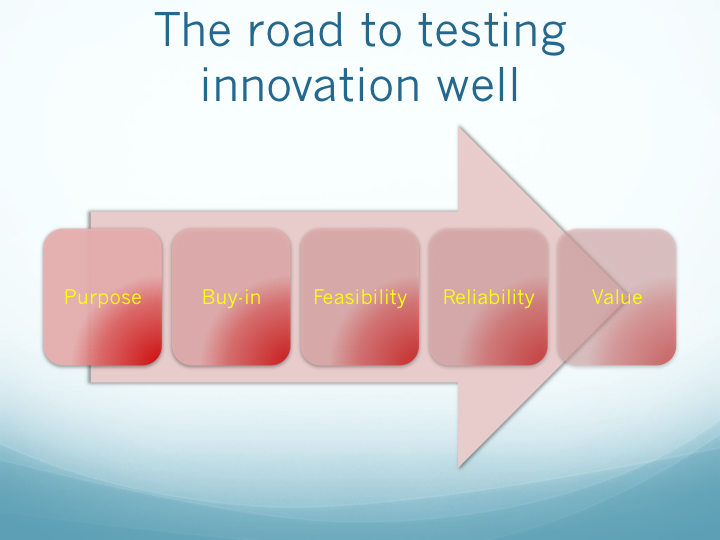
While almost everyone now accepts the value of analytics and metrics-driven decision making, one area where it is often neglected is in implementing innovation. Even data driven companies are hampered in implementing innovation because their data is backward looking. In the absence of sufficient data to inform decisions about proposed innovations, managers often rely on their experience, intuition and conventional wisdom, and none of these is necessarily relevant. Although many of my readers are from the mobile game space, where much is tested, even in the game space pure innovation often is not. An article in the Harvard Business Review, “Increase your chances of success with innovation test-drives” by Stefan Thomke and Jim Manzi, does a great job of showing how to test these hypotheses.

Slide1
Most companies do not conduct rigorous tests of their risky overhauls because they are reluctant to fund proper business experiments and have considerable difficulty executing them. Although the concept of experimentation is straightforward, there are many organizational, cultural and technical challenges to implementing experiments. While running an A/B test on a website is simple, many business need to deal with complex distribution systems, sales territories, bank branches, etc. Business experimentation in such environments suffers from many analytic complexities, most importantly that sample sizes are often too small to be significant (e.g., only a few stores). Continue reading “Testing innovation opportunities”

Like Loading...
Unknown's avatarAuthor Lloyd MelnickPosted on December 18, 2014January 2, 2015Categories Analytics, General Social Games Business, General Tech BusinessTags A/B testing, big data, Experiments, innovation, reliability, valueLeave a comment on Testing innovation opportunities

Evaluating your virtual event

As more companies use virtual events as part of their growth and engagement mix, it is increasingly important to be able to evaluate the effectiveness of the event. I have used virtual events multiple times and it is an element of our growth mix.

Slide1

Simply having the event is not a success; you need to measure and evaluate it. Has the event been worth the time and resources devoted to it and should you replicate the event? How can you optimize future events so they have a bigger impact on your business? I read a recent article on MarketingProfs that offers some great advice on what you should track on your next virtual event.

Behavior

Unlike physical events, with virtual events you can measure much of the attendees’ behavior. You can see which content they interact with and how they engage with other attendees and speakers.

Engagement

By tracking attendee engagement, you see what worked and what did not, as well as seeing which potential customers you are most likely to convert. In a physical event, you assume the people playing on their phones are the least engaged. In a virtual event, you can see if they are progressing their slides with the presentation, asking questions, whether they clicked on links you provided etc. Continue reading “Evaluating your virtual event”

Share this:

  • Click to share on Facebook (Opens in new window) Facebook
  • Click to share on LinkedIn (Opens in new window) LinkedIn
Like Loading...
Unknown's avatarAuthor Lloyd MelnickPosted on December 16, 2014January 2, 2015Categories Analytics, General Social Games Business, General Tech Business, Social Games MarketingTags analytics, measurement, Virtual events1 Comment on Evaluating your virtual event

It’s all about the base

I was recently reading about the challenges NASCAR has faced in the last ten years and it reminded me of that great philosopher, Meghan Trainor, who wrote “it’s all about the base.” When I first moved to North Carolina in the early nineties, NASCAR was the fastest-growing sport in the world. It went from a regional play to a national television contract and star drivers from other auto-racing leagues switched to the NASCAR circuit. Races were sold out and NASCAR seemed poised to capture the number two spot among US sports (the NFL was still the top dog around). NASCAR moved races from places such as North Wilkesboro and Rockingham to big cities including Chicago and Dallas/Fort Worth.

Since those glory days NASCAR has run into major difficulties. Rather than continue on its growth trajectory, television ratings have plummeted to the point where many doubt the contract will be renewed by major television networks. Moreover, many races no longer sell out and on most broadcasts the empty seats are impossible to avoid.

nascar

Why NASCAR faded

Although there are many theories on why NASCAR failed to live up to the promise it showed in the 90s, it points to a problem many companies have experienced when they lose focus on their most loyal users. In NASCAR’s situation, it was the audience in the Southeast that largely built the sport, the same people who made “Duck Dynasty” the most popular television show at one point. It moved races from local venues, as described above like Rockingham, to big cities where they felt they would get exposure to a larger audience. These moves broke the bond between the people in these communities and the sport. While NASCAR aimed for the big audience, its base started to disintegrate. Now the sport no longer has its core customers (or at least does not have as strong a relationship with them) and has not added enough casual viewers in the bigger market to stem this loss, let alone grow. Also, with the base less engaged, the virality of these fans has decreased and is bringing in fewer new fans. Continue reading “It’s all about the base”

Like Loading...
Unknown's avatarAuthor Lloyd MelnickPosted on December 11, 2014January 2, 2015Categories General Social Games Business, General Tech Business, Social Games MarketingTags base, marketing, NASCAR, NFLLeave a comment on It’s all about the base

What it really means to be a thought leader

Although many refer to themselves as industry thought leaders, few understand what a thought leader represents. By leading, true thought leaders initiate new ideas and strategies that others follow and eventually becomes the new normal.

True thought leadership

There is a lot of value in disseminating best practices and strategies, it is what 90 percent of my blog posts do, but that does not constitute though leadership. Leadership is introducing new ways of looking at problems or executing. Reid Hoffman’s ideas on building an alliance between employees and employers instead of the traditional model of long-term employment is thought leadership. Google’s implementation of a multi-armed bandit approach to replace AB testing is thought leadership. Reed Hastings’ decision to rent DVDs by mail subscription instead of through stores was thought leadership. Continue reading “What it really means to be a thought leader”

Like Loading...
Unknown's avatarAuthor Lloyd MelnickPosted on December 9, 2014January 2, 2015Categories General Social Games Business, General Tech BusinessTags Reid Hoffman, thought leadership4 Comments on What it really means to be a thought leader

90-day plan to increase your company’s innovation

While everyone agrees that companies need to innovate to succeed, actually doing it is often quite challenging. While most successful companies can lay credit to some innovations, most have occurred by chance and the companies actually lack an orderly, reliable way to innovate regularly. A recent article in the Harvard Business Review, “Build an Innovation Engine in 90 Days” by Scott Anthony and two of his colleagues, does a great job of laying out a tactical plan to help your company to innovate.

Slide1

While some companies address this problem by building large—and expensive—innovation centers or R&D facilities, Anthony shows there is a middle way that almost any company can pursue regardless of resources. In many ways, what Anthony describes (and the term he uses) is the equivalent of the minimum viable product (MVP), from lean start-up fame. In this case, it is a minimum viable innovation system (MVIS). There are four phases to building such a system, and it takes about 90 days.

Phase 1: Define your innovation buckets

There are two types of innovation: improving existing products or operations, and generating growth by reaching new customer segments or markets. For an innovation program (including an MVIS) to be successful, everyone involved must understand the two types of innovation. If your team fails to make this distinction, you increase the likelihood that you either discount the importance of innovations that strengthen the ongoing business or demand too much revenue from the new-growth initiatives too early. Innovations meant to improve the core business (the former of the two innovation categories) should be tied to the current strategy and managed mostly with the primary organizational structure. The return on these projects will be relatively quick with high initial returns and thus should be funded at scale.

While all of your innovation projects may be focused on core activities, they you are probably missing preparing for the future and reaching your long-term goals. New growth initiatives, the latter category, should fill this gap. These new growth initiatives push the frontier of your strategy by offering new or complementary products to existing customers, moving into adjacent product or geographic markets, or developing something utterly original, perhaps delivered in a novel way. Continue reading “90-day plan to increase your company’s innovation”

Like Loading...
Unknown's avatarAuthor Lloyd MelnickPosted on December 4, 2014December 15, 2014Categories General Social Games Business, General Tech Business, Growth, Lloyd's favorite postsTags innovation, MVIS, Scott AnthonyLeave a comment on 90-day plan to increase your company’s innovation

How negative churn can be a strong growth driver

I came across a great post by VC Tomasz Tunguz on a great growth mechanism: negative churn. In effect, negative churn creates the same compounding effect as a high-rate bond; over time it generates tremendous growth. Negative churn means that the actual churn rate, the number of customers or players moving out of a collective group over a specific period of time, is lower than the increase in the value of the retained customers.

What is negative churn

Tunguz uses a great example to illustrate negative churn. Say your company has a five percent monthly churn rate, which means that five percent of your users quit each month. In Tunguz’s example, the remaining 95 percent of the customers increase their spend with your company by ten percent, so total revenue from this cohort (group) of users is equal to 105 percent of the revenue from the previous month. Even with 5 percent monthly churn, each month this cohort of users becomes increasingly valuable.

In the 5 percent monthly churn case, the company exits the year with $919 in monthly recurring revenue and the customer lifetime value (assuming a one-year lifetime and no virality) is $77. In the negative churn case (where you have a 10 percent monthly increase in spend), your company’s revenue is 73 percent larger at $1592 and the LTV is worth $133.

In both cases, the company has the same number of customers (or game, players). But with negative churn, revenue is over 70 percent higher. This shows the power of compounding growth every month.

Acct value by cohortThis graphic from Tunguz’s blog illustrates the opportunity:

How to achieve negative churn

Continue reading “How negative churn can be a strong growth driver”

Like Loading...
Unknown's avatarAuthor Lloyd MelnickPosted on December 2, 2014December 15, 2014Categories General Social Games Business, General Tech Business, Growth, Lloyd's favorite posts, LTVTags churn, Growth, lifetime value, LTV, negative churn, Tomasz TunguzLeave a comment on How negative churn can be a strong growth driver

Don’t fight the last war

I recently read To End All Wars by Adam Hochschild, a book about the First World War, and although I was trying to avoid reading another business book, it pointed to some things very relevant in the business world. When learning about the mistakes the British military leadership made in World War I that literally cost millions their lives, I saw the same mistakes many leaders make in the business community. The key problem is creating competencies and strategies based on history rather than focusing on what it now takes to win.

Over-confidence

In World War I, the British and French suffered several defeats because they believed their past successes made them destined for victory. A lopsided victory in the Boer War, particularly the battle of Omdurman, gave the British a feeling of superiority. They felt their Maxim gun (the first recoil-operated machine gun), would always provide superiority. What they did not realize was that the weapon gave them superiority over poorly armed Arabs, Africans and Asians, and did not guarantee superiority against a well-armed enemy. This over-confidence, exemplified by John French, the first commander-in-chief of British forces in WWI, led to multiple infantry charges against well-armed Germans that cost millions of soldiers their lives.

The French also suffered a catastrophe due to over-confidence. At the beginning of the war, the French army proved incapable of containing the Germans flooding across the Belgian frontier. Additionally, in the southeast, a French offensive was disastrous. French prewar planning had centered on the mystique of the attack: great masses of men filled with élan rushing forward in shoulder-to-shoulder bayonet charges or thunderous cavalry assaults that would strike fear into German hearts. Furthermore, France’s troops went into battle in the highly visible blue coats and bright red trousers that had long made them the most flamboyantly dressed of Europe’s foot soldiers. This over confidence put the French, and the Allies, on the brink of defeat.

We have witnessed this same phenomenon repeatedly in the tech space. Research in Motion’s arrogance that Apple and others would not eat into Blackberry’s market share because it was so successful in the past, and Microsoft’s belief that the Surface would dominate the tablet market not because it was better but because it was a Microsoft product, are but two examples.

Not accepting change

While over-confidence often had disastrous results, even more damage was caused by strategy based on the past and not the present. General French, the first British commander in WWI whom I mentioned earlier, fought relentlessly to keep the lance as a cavalry weapon. In French’s mind, if the lance went, the next casualty could be the sword. In 1909, French won, and the lance was officially restored to the cavalry’s arsenal. No general was ready to acknowledge that the machine gun had upended warfare as it had been known for centuries. A single such gun emplacement could stave off hundreds, even thousands of attackers. Continue reading “Don’t fight the last war”

Like Loading...
Unknown's avatarAuthor Lloyd MelnickPosted on November 25, 2014December 3, 2014Categories General Social Games Business, General Tech BusinessTags microsoft, World War 1Leave a comment on Don’t fight the last war

Foster a growth mindset in your company to improve growth

There are two ways of looking at employees, and for them to look at themselves, either a fixed mindset where they either possess or lack talent, or a growth mindset, where your team can develop new skills. An article in the Harvard Business Review, “How Companies Can Profit from a ‘Growth Mindset’” by Stanford’s Carol Dweck, shows the benefits having a growth mindset has for your company.

Mindset: The New Psychology of Success

According to Dweck’s research, failure is the end of the world for some people but an exciting opportunity for others. People with a growth mindset enjoy challenges, strive to learn and consistently see potential to develop new skills. Conversely, those with a fixed mindset view talent as a quality they either have or do not have.

In the article, Dweck extends her definition of mindsets from individuals to companies. Dweck and her colleagues found that some organizations believe their people have a certain amount of talent, thus a fixed mindset. Others held the opposite view and those companies were considered to have a growth mindset.

Dweck also found the company mindset had a significant impact on its employees. In organizations with a fixed mindset, employees largely felt there was a handful of “star” employees that were highly valued. The employees who felt this way were less committed than employees at growth-mindset companies and did not think the company had their back. These employees worried about failing so they pursued fewer innovative projects. They regularly kept secrets, cut corners and cheated to try to get ahead. Continue reading “Foster a growth mindset in your company to improve growth”

Like Loading...
Unknown's avatarAuthor Lloyd MelnickPosted on November 20, 2014December 1, 2014Categories General Social Games Business, General Tech Business, Growth, Lloyd's favorite postsTags Carol Dweck, collaboration, Growth, innovationLeave a comment on Foster a growth mindset in your company to improve growth

Posts pagination

Previous page Page 1 … Page 17 Page 18 Page 19 Page 20 Next page

Get my book on LTV

The definitive book on customer lifetime value, Understanding the Predictable, is now available in both print and Kindle formats on Amazon.

Understanding the Predictable delves into the world of Customer Lifetime Value (LTV), a metric that shows how much each customer is worth to your business. By understanding this metric, you can predict how changes to your product will impact the value of each customer. You will also learn how to apply this simple yet powerful method of predictive analytics to optimize your marketing and user acquisition.

For more information, click here

Follow The Business of Social Games and Casino on WordPress.com

Enter your email address to follow this blog and receive notifications of new posts by email.

Join 791 other subscribers

Most Recent Posts

  • Join me at PDMA Inspire for my talk on new product prioritization
  • Why keep studying?
  • The next three years of this blog
  • Interview with the CEO of Murka on the biggest growth opportunity in gaming, Barak David

Lloyd Melnick

This is Lloyd Melnick’s personal blog.  All views and opinions expressed on this website are mine alone and do not represent those of people, institutions or organizations that I may or may not be associated with in professional or personal capacity.

I am a serial builder of businesses (senior leadership on three exits worth over $700 million), successful in big (Disney, Stars Group/PokerStars, Zynga) and small companies (Merscom, Spooky Cool Labs) with over 20 years experience in the gaming and casino space.  Currently, I am the GM of VGW’s Chumba Casino and on the Board of Directors of Murka Games and Luckbox.

Topic Areas

  • Analytics (114)
  • Bayes' Theorem (8)
  • behavioral economics (8)
  • blue ocean strategy (14)
  • Crowdfunding (4)
  • DBA (2)
  • General Social Games Business (459)
  • General Tech Business (195)
  • Growth (88)
  • International Issues with Social Games (50)
  • Lloyd's favorite posts (101)
  • LTV (54)
  • Machine Learning (10)
  • Metaverse (1)
  • Mobile Platforms (37)
  • Prioritization (1)
  • Social Casino (52)
  • Social Games Marketing (105)
  • thinking fast and slow (5)
  • Uncategorized (33)

Social

  • View CasualGame’s profile on Facebook
  • View @lloydmelnick’s profile on Twitter
  • View lloydmelnick’s profile on LinkedIn

RSS

RSS Feed RSS - Posts

RSS Feed RSS - Comments

Categories

  • Analytics (114)
  • Bayes' Theorem (8)
  • behavioral economics (8)
  • blue ocean strategy (14)
  • Crowdfunding (4)
  • DBA (2)
  • General Social Games Business (459)
  • General Tech Business (195)
  • Growth (88)
  • International Issues with Social Games (50)
  • Lloyd's favorite posts (101)
  • LTV (54)
  • Machine Learning (10)
  • Metaverse (1)
  • Mobile Platforms (37)
  • Prioritization (1)
  • Social Casino (52)
  • Social Games Marketing (105)
  • thinking fast and slow (5)
  • Uncategorized (33)

Archives

  • September 2023
  • December 2021
  • July 2021
  • March 2021
  • February 2021
  • January 2021
  • December 2020
  • November 2020
  • October 2020
  • September 2020
  • August 2020
  • July 2020
  • June 2020
  • May 2020
  • April 2020
  • March 2020
  • February 2020
  • January 2020
  • November 2019
  • October 2019
  • September 2019
  • June 2019
  • May 2019
  • April 2019
  • March 2019
  • February 2019
  • January 2019
  • December 2018
  • June 2018
  • May 2018
  • April 2018
  • March 2018
  • February 2018
  • January 2018
  • December 2017
  • June 2017
  • May 2017
  • April 2017
  • March 2017
  • February 2017
  • January 2017
  • December 2016
  • November 2016
  • October 2016
  • September 2016
  • June 2016
  • May 2016
  • April 2016
  • March 2016
  • February 2016
  • January 2016
  • December 2015
  • November 2015
  • October 2015
  • September 2015
  • July 2015
  • June 2015
  • May 2015
  • April 2015
  • March 2015
  • February 2015
  • January 2015
  • December 2014
  • November 2014
  • October 2014
  • September 2014
  • August 2014
  • July 2014
  • June 2014
  • May 2014
  • April 2014
  • March 2014
  • February 2014
  • January 2014
  • December 2013
  • November 2013
  • October 2013
  • September 2013
  • August 2013
  • July 2013
  • June 2013
  • May 2013
  • April 2013
  • March 2013
  • February 2013
  • January 2013
  • December 2012
  • November 2012
  • October 2012
  • September 2012
  • August 2012
  • July 2012
  • June 2012
  • May 2012
  • April 2012
  • March 2012
  • February 2012
  • January 2012
  • December 2011
  • November 2011
  • October 2011
  • September 2011
  • August 2011
  • July 2011
  • June 2011
  • May 2011
  • December 2010
December 2025
S M T W T F S
 123456
78910111213
14151617181920
21222324252627
28293031  
« Sep    

by Lloyd Melnick

All posts by Lloyd Melnick unless specified otherwise
Google+

Enter your email address to subscribe to this blog and receive notifications of new posts by email.

Join 791 other subscribers
Follow Lloyd Melnick on Quora

RSS HBR Blog

  • How One Manufacturer Achieved Net Zero at Zero Cost
  • What Can U.S. Employers Do About Rising Healthcare Costs?
  • When You Have to Execute a Strategy You Disagree With
  • 4 Ways to Build Durable Relationships with Your Most Important Customers
  • What Jargon Says About Your Company Culture
  • Research: When Used Correctly, LLMs Can Unlock More Creative Ideas
  • Your New Role Requires Strategic Thinking…But You’re Stuck in the Weeds
  • For Circular Economy Innovation, Look to the Global South
  • Why Great Leaders Focus on the Details
  • Corporate Disclosure in the Age of AI

RSS Techcrunch

  • An error has occurred; the feed is probably down. Try again later.

RSS MIT Sloan Management Review Blog

  • AI Coding Tools: The Productivity Trap Most Companies Miss
  • How Procter & Gamble Uses AI to Unlock New Insights From Data
  • Rewire Organizational Knowledge With GenAI
  • Hungry for Learning: Wendy’s Will Croushorn
  • Beat Burnout: 10 Essential MIT SMR Reads
  • How Leaders Stay True to Themselves and Their Stakeholders
  • Our Guide to the Winter 2026 Issue
  • Broadening Future Perspectives at the Bank of England
  • A Faster Way to Build Future Scenarios
  • Assess What Is Certain in a Sea of Unknowns
The Business of Social Games and Casino Website Powered by WordPress.com.
  • Subscribe Subscribed
    • The Business of Social Games and Casino
    • Join 726 other subscribers
    • Already have a WordPress.com account? Log in now.
    • The Business of Social Games and Casino
    • Subscribe Subscribed
    • Sign up
    • Log in
    • Report this content
    • View site in Reader
    • Manage subscriptions
    • Collapse this bar
 

Loading Comments...
 

    %d