Skip to content

The Business of Social Games and Casino

How to succeed in the mobile game space by Lloyd Melnick

Tag: VIP hosting

Convergence of social and real money casino goes both ways

Convergence of social and real money casino goes both ways

When I listed my expectations for 2019, the one that generated the most conversation was that the convergence between Real Money Gaming and social casino would accelerate. The underlying driver of this convergence is that both ecosystems are strong and have many learnings to offer. Real Money casino is a $10.6 billion business. Meanwhile, social casino is a $5.4 billion industry that has grown every year since 2012 and is projected to continue growing 7-12 percent per year through 2022.

What social casino can learn from Real Money gaming

Content is king

Real Money casinos focus on adding more content (slots and table games) to increase revenue. While social casino operators also will profess content is king and acknowledge that new games are the strongest driver of KPIs, they do not have the singular focus on adding content that their Real Money counterparts have. Most social casino companies are happy releasing a new slot every second week and launching with 20-30 machines. Conversely, the top Real Money casinos often have over 500 slots and introduce new games much more rapidly.

Given the proven results from launching new content, social casinos should look at much more aggressive content schedules. To achieve this result, social casinos will need to move from their reliance on exclusive, homemade content.

Real Money operators can launch hundreds of games because they license the slots non-exclusively, thus providing access to thousands of slot machines and table games. While exclusivity does provide a unique selling point, many of the homemade social slots are not truly unique. They have common themes and standard math, they are effectively a commodity. Thus the exclusivity is only a perceived advantage, it has no value to the player. Rather than recreating the wheel for every machine, social casinos can still create a unique machine every two weeks (or four weeks or one week) but supplement it with non-exclusive content from the many third-party slot developers.

Cross-sell

While most social casino operators are focused on creating a strong slots app and then optimizing acquisition for that app, Real Money operators have a more robust model. While they still will acquire slots players for their casino products, they have entire verticals that exist largely to acquire players that can be cross-sold into casino. Virtually all the Real Money Bingo products derive the bulk of their revenue from slots. While sports betting is a profitable real money vertical on its own, all of the major sports betting companies rely on slots to drive LTV and allow for more aggressive user acquisition.

In the social space, the siloes are much stronger. Only Kama Games, which uses products like Blackjackist and Roulettist to drive traffic to its poker offering, regularly uses other casino mechanics to acquire players and then cross sell them to its core poker product. Even the social game companies with strong bingo products generally treat bingo as a standalone vertical with its own P&L, just acquiring players for bingo rather than to cross sell into their slots offerings.

Social game companies need to look more at their ecosystem rather than individual products. This will allow them to acquire more players at a higher ROI.

New mechanics

All successful social casino products are based on mechanics proven in the real money space (either land based or online) but not all real money gaming mechanics have made it to social casino. One of the challenges faced by social casino is that the number of players is no longer growing. While revenue continues to increase, it is driven by better monetization of the player base, rather than expanding the player base. One of the most obvious ways to appeal to more players is offering more gameplay options.

There are several real money mechanics that could benefit social casino companies:

  • Sports betting. Sports betting is the largest Real Money gaming vertical, worth well over $22 billion. Social casino companies have tried to replicate Real Money sports betting apps with no success; they have failed for several reasons. The products are normally very complicated, not lending itself to a new sports betting player. Sports betting is also very event driven (you are only interested when there is a match you want to bet on), while social games rely on strong daily retention. Despite these issues, given the overall interest in sports, strength of social fantasy applications and lack of Real Money sports betting in some core markets, a creative game designer can come up with the killer social app for this segment.
  • Virtual sports. Virtual sports is an important but small part of the online real money gaming ecosystem. Technology, however, has made it much more viable and a great option for social casino companies. Virtual sports are similar to slot machines in that winning is based on a random number generator with set odds, they just simulate a real sporting event. Technology, however, has made these simulated games look as good as real sports. The video below from virtual sports provider Inspired Gaming shows these matches look better than what you would see on a gaming console. Unlike actual sports betting, virtual sports are always available to the player so you can create an experience players can return to daily.
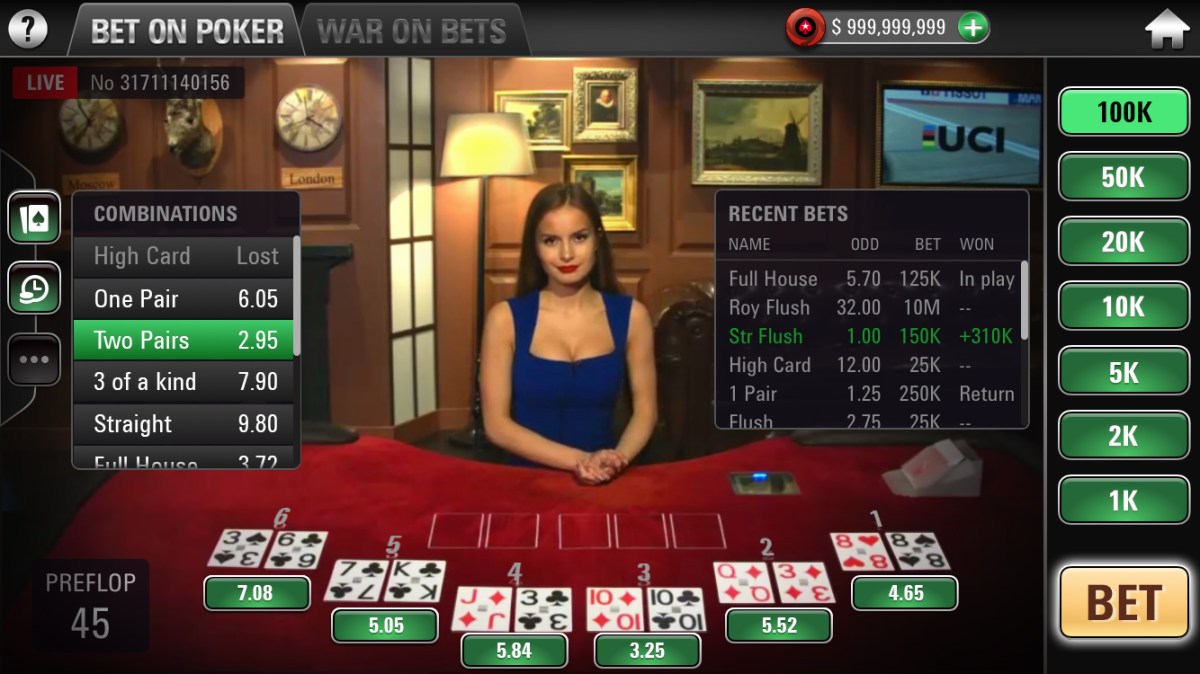
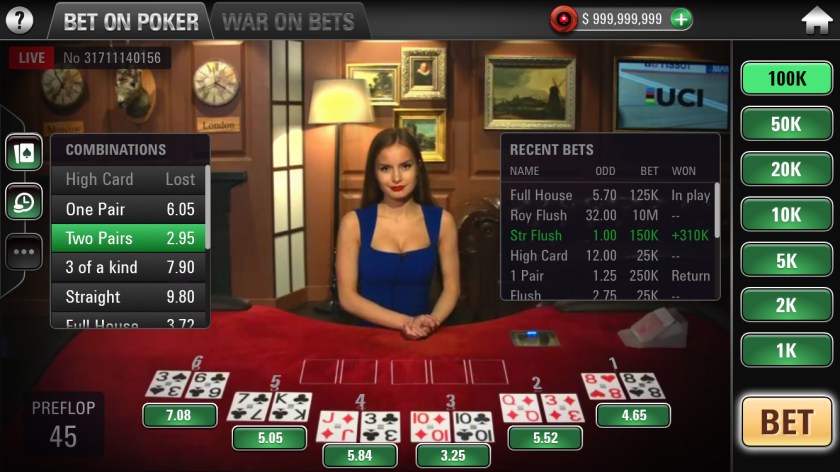
  • Live dealer. Live dealer games are the fastest growing mechanic in the real money gaming space. Companies led by Evolution Gaming, provide games where customers play against a live dealer or host through a video feed. Just as with virtual sports, technology has made this offering much better than only a few years ago, with smoother and higher quality streaming. It is the fastest growing segment of real money gaming and virtually when any B2C company reports its financial results, Live Dealer is the highlight or only bright spot. There are challenges integrating it into social games, bandwidth costs, one-to-one dealer requirements, etc., but as Stars Group showed these issues can be overcome.
  • PSP_ftue_bop.jpg

New Audience

Real Money gaming shows that the addressable market is not limited to 40+ women. While 73 percent of social casino players are female, 65 percent of real money gamers (and 55 percent of real money casino players) are men. With user growth stagnant in social casino, appealing to a male demographic can expand the market for social casino.

Offer driven user acquisition

While social casino companies are more sophisticated with their overall digital marketing, Real Money operators are better at using promotional offers to bring in players. Promotions, such as a free money welcome bonus, spin to win, triple winnings their first day playing, etc., have a very strong pull. While the cost in Real Money of these promotions is sometimes challenging, in social casino they are less risky as providers are only gifting virtual currency. These offers are complicated by AppStore restrictions but this challenge is not insurmountable and more creative offers will improve social game companies user acquisition efforts.

VIP 3.0

While social casino is more reliant on VIPs than Real Money casinos, more than 60 percent of social casino revenue comes from 0.5 percent of players, Real Money operators are much more sophisticated in working with their VIPs. Only a few social casino operators, such as Zynga, have true VIP management programs, most social casinos have one person (who may also be responsible for social media or support) who runs their VIP “program.” Conversely, the most successful real money casinos have a more robust VIP support initiative:

  • Proactive. While much of VIP management in social casino is better customer support for spenders, VIP management in Real Money gaming consists of proactively reaching out to your top players and understanding them as a process. The VIP team can then anticipate problems or opportunities and provide a better experience to the player.
  • Rake back or loss return. Many real money gaming companies (both land based and online) refund part of player losses to their best players. This practice allows players to take more risks and helps overcome periods of bad luck. While it is a controversial practice, many in the real money space lament the cost is not worth the effort, it is a strong way to increase loyalty of your most active players.
  • First class promotions. Why are most fights in Las Vegas, answer is so the casinos can give their VIPs front row seats. Real Money operators will send their top players to great sporting events, sold out concerts, the top restaurants or even a luxury cruise to show their appreciation. While VIPs will often spend over $200,000 in a social game, these VIPs are often rewarded with a t-shirt (if they are lucky). Treating top VIPs similarly to the real money industry will keep them more engaged with social casino offerings.
  • Hospitality events. Not only do Real Money casinos send their VIPs to great events, they create great events. By creating your own event, you are building something unique that competitors cannot replicate and the player cannot get anywhere else. Thus, they are less likely to churn as they would not want to lose access to these events, while they can always buy fight or concert tickets. It is also a great opportunity for your VIP team to build personal relationships with your VIPs, and the personal bond is often stronger than financial benefits of being a VIP.

By replicating these practices, social casinos can reduce VIP churn and improve their lifetime value to the company.

What Real Money gaming can learn from social casino

Although Real Money casino is a larger business, in many ways it is less sophisticated than social gaming. For many years, Real Money casino operators could succeed by getting a stable product in front of customers. With LTVs upward of $400, they had significant margin of error in user acquisition and product features. Conversely, social casinos continuously had to optimize all facets of their business to continue growing. This optimization has led to the development of many features and tactics that can benefit Real Money gaming.

Progression

Providing progression serves many valuable purposes in games. First, it gives people a reason to play, they want to keep moving forward. Even in Real Money gaming, studies have shown over 65 percent do not play to win money, thus progression will appeal to the majority of these customers.

Progression also prevents churn. Loss aversion is a very strong driver of behaviour, people do not want to lose something they already have. The endowment effect also explains that they will also overvalue it.

In addition to reducing churn, progression increases engagement. Players want to complete as many levels as quickly as possible. If there are outstanding levels, they will want to reach them as they will want to finish everything open.

Progression also is a strong monetization driver. Candy Crush is a great example of a game genre that did not monetize but by adding progression King.com was able to create a billion-dollar franchise. Progression prompts players to want to keep playing even when they are out of chips, so thus depositing more, and to play at higher stakes, increasing their bet size.

In the Real Money casino world, where players will often jump between casino offerings to capitalize on the best promotions, progression creates loyal and valuable customers.

Social features

Social features are another strong behaviour driver that has largely been perfected by free to play games. Social interaction is a core value for customers, driving success across many industries. While many features satisfy base needs, social interaction appeals to a higher need and thus people are willing to pay more for it and less likely to give it up. The success of Big Fish Casino, and more recently Huuuge Games, shows how social features can create a unique and very profitable market position. Outside of the casino space, Clash of Clans is a great example of social features driving billions in revenue.

There are many different types of social features that Real Money casino operators can implement, with some of the most successful including:

  • Guilds or clans, where players join together to overcome challenges or compete with other groups.
  • Group challenges, so players have to team together to win rewards.
  • Chat, to enable players to interact with each other.
  • Customizable and useful player profiles, so players can know more about other players.
  • Social shares to unlock gifts.
  • Personalized videos, so players can share their gameplay with friends.
  • Team competitions, where players form teams to get higher scores (which could be chips won) than other teams.
  • Synchronous slot game play.
  • Social lobby, so players know they are not playing alone.
  • Visibility into where friends and other players are winning.
  • Player review of games and slots, similar to Amazon.
  • Referral program, so your players can also be your evangelists.

Some of these features will work better in certain products than others but a mix of these features will not only create bonds with your players but amongst your players.

UIUX

Social casino developers provide a much cleaner and smoother user interface (UI) and user experience (UX) than real money gaming companies. Players can quickly start playing and there is virtually no learning curve. It is easy to navigate in the product, take advantage of offers and understand every offering. Real Money, conversely, often overwhelms the customer with choice, increasing the cognitive load. This problem is not only in the lobby but in the products, betting options are often very complex and confusing. Overall, social gaming companies create an experience much more consistent with customers expectations in 2019.

In-product VIP

While Real Money gaming companies are great at hosting and managing their VIPs, social game companies are much better at giving them incentives and rewards in product. Virtually all social casinos have an in-game VIP system, where the more VIPs play, the more privileges they earn. This type of automated system provides continuous reinforcement and reminds VIPs why they want to remain in their favourite product.

Events

Within the past year, social casinos have become very adept at creating events that boost engagement. It could be the December Challenge or the Race to the Mountain Top, but in effect it is a collection of challenges and specialized content that is available for a limited time. Often the player has a chance to win an item(s) that is only available by completing the event and will not be available again, creating an incentive both to participate and to visit the game regularly (so they know about the events). These events also break the monotony of playing the same games repeatedly. Finally, they can provide an incentive to try new slots or mechanics.

The most successful social games are now running at least one event daily and this practice can be replicated in the Real Money world. A regular schedule of events increase loyalty, engagement and monetization.

Key takeaways

  1. The strength of both the Real Money Gaming and social casino businesses suggest they both have many lessons to offer.
  2. Social casino companies should focus on adding even more content than they do currently (in part by using third party content they do not have exclusively), create an ecosystem based on cross-sell, try game mechanics from Real Money gaming (sports, virtual sports, live dealer), try to engage male players, create more unique new player offers and replicate the high-touch VIP programs found in real money.
  3. Real Money casinos can improve their profitability by adding progression mechanic, social features, more simple user interface and user experience, in-product VIP programmes and daily events.

Share this:

  • Click to share on Facebook (Opens in new window) Facebook
  • Click to share on LinkedIn (Opens in new window) LinkedIn
Like Loading...
Unknown's avatarAuthor Lloyd MelnickPosted on January 29, 2019January 28, 2019Categories General Social Games Business, Growth, Lloyd's favorite posts, Social Casino, Social Games MarketingTags cross-selling, Live Dealer, real money online gambling, slots, social casino, sports, uiux, vip, VIP hosting, Virtual Sports1 Comment on Convergence of social and real money casino goes both ways

It’s easier to create than steal VIPs

I, and many others, have written multiple times on how important VIPs are for free-to-play games but one area that is opaque is how do you get VIPs. In most free-to-play games, VIPs (which I define as a player who spends over $2,000 lifetime but is genre and game dependent) represent less than 0.5 percent of all players but generate 60-80 percent of revenue. It is thus critical for a game’s success to find and nurture VIPs.

Given the importance of VIPs, many think the road to success is stealing VIPs from competitors. This technique works in land based casinos, to a degree, and some other industries, but should not form the foundation of your efforts. If you are focused on winning competitors’ VIPs, you are likely to fail in the long term. You will be disappointed in the number of VIPs you can steal and will find that overall your game is deficient. Instead, you need to focus on creating VIPs, as that will ensure long-term success.

Why you should not rely on stealing VIPs

There are many techniques to woo competitors’ VIPs in social games but they yield surprisingly disappointing results. You can recruit competitors’ VIP hosts, troll VIP forums, target players based on their level in competitors’ games, etc. Surprisingly, however, this strategy fails to have a higher ROI than traditional user acquisition, where you cast a wide net.

VIPs love the game they are already playing

The first reason that it is very challenging to win over VIPs is that, by definition, they love the game they are currently spending in. They are VIPs because they are highly engaged and thus willing to spend liberally. If they were not happy with your competitor’s game, they would not be spending large sums of money there. A typical new product has to be 9 times better than an existing product to win over a customer. A VIP is going to be even more committed to the existing product, so your game will need to be 10X or 20X better to prompt the VIP switch. It also has to be better in areas the VIP cares about because their needs are already served with their current game.

All games are different

Unlike with some businesses, all mobile and social games are different. While players and developers often lament the copycat nature of the industry, there are no identical products in the market. It may just be a different theme or user interface, but there is a difference between games. In social slots games, everyone has different slot machines. In match-3 games, there are different themes and animations even in games that are largely the same.

Some other industries, where VIP “stealing” is easier, do not have this differentiation. In land-based casinos, most high-end casinos have the same slot machines. With department stores, most stores targeting the affluent will carry Gucci. Thus, a VIP at an MGM casino is likely to go to the casino for a game they can play at Caesars or a customer at Nordstrom can find the same product at Nieman Marcus. Conversely, it you love the slots in Hit It Rich!, you cannot play them in Heart of Vegas.

Your spender is not my spender

One thing that has surprised me in the mobile game space is that a spender in one game probably will not spend in another. I have been part of or around multiple initiatives in major mobile gaming companies to move spenders and VIPs to other products. Sometimes we have tried because the games were being phased out or we thought they would continue spending in the existing game and start spending the new game. All of these efforts have failed. They have not failed due to cannibalization but almost always there has been no correlation between spend in one game and spend in other games.

This surprising result is probably due to the reasons a person monetizes in a particular game. As discussed above, someone will spend in a game because they really love that game. They are not spending to spend, they are spending to enjoy. Thus, they are no more likely to fall in love with the new game than any other (non-spending) player.

How you should build your VIP base

Slide1

If winning over VIPs will not drive your VIP revenue, you need to create your own VIPs. Having a strong VIP base is critical to a successful game, and like most things that drive success; it requires hard work. These efforts range from developing products focused on fostering VIPs, treating your VIPs right and acquiring players most likely to become VIPs.

Building products to create VIPs

People become VIPs because they love your game, so you have to create a product with something for them to love. If your game is a weak copy of the market leader, why should they spend in an inferior lookalike (unless you are competing on price, which does not work in mobile gaming). Instead, you need to give players something unique so the 0.5 percent who could become VIPs has something to fall in love with. Give players unique content that they cannot find anywhere else, if you are in social casino, that means slot machines that are unlike your competitors.

Also, give them features that reward a huge commitment. Love is mutual, and if you are asking for their commitment you must reciprocate. Rather than having some superficial features that get boring after a few hours or days of gameplay, make very deep features that only a few players may ever get through but gives those few VIPs an incredibly deep and fulfilling experience.

Create an in-game VIP program that shows VIPs they are important and advancing. Airlines were the first to roll out frequent flyer programs; you need to have a program focused on rewarding your top players. A few months ago, I wrote about how to create a top in-product VIP program and the key is creating compelling differentiated benefits and experiences.

Treating your VIPs right

The second critical element in building a strong VIP base is to have an effective VIP host program. VIPs are very valuable (hence the V in VIP) and you need to treat them properly. Many game companies have treated a player who never spends exactly the same as someone who spends thousands. The cost, however, of losing someone who is a great customer is huge so the ROI on investing in keeping this player is also very high. A good VIP host program will proactively deal with its top customers, ensuring they are happy and anticipating problems before they arise.

Spend to reactivate

If someone loved your game at one point, there are likely still elements of the product they love. Rather than focusing on bringing in new players, also focus on bringing back your VIPs. If you have good VIP hosts, one of their priorities should be to bring back players. Spending part of your user acquisition budget to reacquire churned VIPs is likely to generate higher returns than hunting for new ones. Adding features or content that your VIPs wanted, and then letting those who left know what you now have, is often a better investment than creating generic new features.

Acquiring players who will become VIPs

Finally, although you are not likely to grow your VIP base through acquiring competitors’ VIPs, you can still increase the likelihood that your user acquisition will find future VIPs. You need first to recognize what it is about your game that VIPs love. I have found it very helpful to understand what is your North Star metric, the metric that indicates if a player will become a VIP (i.e. makes three purchases in their first seven days). You can then optimize your paid user acquisition on players that achieve this North Star metric, even moving to a CPA model where you only pay (though pay much more) for players who perform this action(s). You can also run lookalike campaigns that target players who look like your VIPs. Unlike targeting players who look like VIPs of competitors, your VIPs love something in your game and if you find similar players, there is a high likelihood they will also love it.

It’s not easy but it is worth it

There is no silver bullet in building your VIP base but it is critical for your success. Regardless of your available funds, you cannot just go out and buy your competitor’s VIPs. Instead, you need to focus your business on creating a VIP receptive product. From the product development to your marketing, you need to create a holistic experience that appeals to the customers who will drive your business.

Key takeaways

  1. VIPs, less than 0.5% of all of your players, will drive 60-80 percent of revenue for a typical social game, so it is critical you have a strong VIP base.
  2. It is virtually impossible to build VIP base by wooing your competitor’s VIPs as they already love the competitive product and thus will probably not like yours better.
  3. You should focus on building a game that gives people something unique, something they can love, so they will become VIPs.

Share this:

  • Click to share on Facebook (Opens in new window) Facebook
  • Click to share on LinkedIn (Opens in new window) LinkedIn
Like Loading...
Unknown's avatarAuthor Lloyd MelnickPosted on April 17, 2018March 18, 2018Categories General Social Games Business, Growth, Lloyd's favorite posts, Social Games MarketingTags user acquisition, vip, VIP hosting, VIP program1 Comment on It’s easier to create than steal VIPs

Get my book on LTV

The definitive book on customer lifetime value, Understanding the Predictable, is now available in both print and Kindle formats on Amazon.

Understanding the Predictable delves into the world of Customer Lifetime Value (LTV), a metric that shows how much each customer is worth to your business. By understanding this metric, you can predict how changes to your product will impact the value of each customer. You will also learn how to apply this simple yet powerful method of predictive analytics to optimize your marketing and user acquisition.

For more information, click here

Follow The Business of Social Games and Casino on WordPress.com

Enter your email address to follow this blog and receive notifications of new posts by email.

Join 791 other subscribers

Most Recent Posts

  • Join me at PDMA Inspire for my talk on new product prioritization
  • Why keep studying?
  • The next three years of this blog
  • Interview with the CEO of Murka on the biggest growth opportunity in gaming, Barak David

Lloyd Melnick

This is Lloyd Melnick’s personal blog.  All views and opinions expressed on this website are mine alone and do not represent those of people, institutions or organizations that I may or may not be associated with in professional or personal capacity.

I am a serial builder of businesses (senior leadership on three exits worth over $700 million), successful in big (Disney, Stars Group/PokerStars, Zynga) and small companies (Merscom, Spooky Cool Labs) with over 20 years experience in the gaming and casino space.  Currently, I am the GM of VGW’s Chumba Casino and on the Board of Directors of Murka Games and Luckbox.

Topic Areas

  • Analytics (114)
  • Bayes' Theorem (8)
  • behavioral economics (8)
  • blue ocean strategy (14)
  • Crowdfunding (4)
  • DBA (2)
  • General Social Games Business (459)
  • General Tech Business (195)
  • Growth (88)
  • International Issues with Social Games (50)
  • Lloyd's favorite posts (101)
  • LTV (54)
  • Machine Learning (10)
  • Metaverse (1)
  • Mobile Platforms (37)
  • Prioritization (1)
  • Social Casino (52)
  • Social Games Marketing (105)
  • thinking fast and slow (5)
  • Uncategorized (33)

Social

  • View CasualGame’s profile on Facebook
  • View @lloydmelnick’s profile on Twitter
  • View lloydmelnick’s profile on LinkedIn

RSS

RSS Feed RSS - Posts

RSS Feed RSS - Comments

Categories

  • Analytics (114)
  • Bayes' Theorem (8)
  • behavioral economics (8)
  • blue ocean strategy (14)
  • Crowdfunding (4)
  • DBA (2)
  • General Social Games Business (459)
  • General Tech Business (195)
  • Growth (88)
  • International Issues with Social Games (50)
  • Lloyd's favorite posts (101)
  • LTV (54)
  • Machine Learning (10)
  • Metaverse (1)
  • Mobile Platforms (37)
  • Prioritization (1)
  • Social Casino (52)
  • Social Games Marketing (105)
  • thinking fast and slow (5)
  • Uncategorized (33)

Archives

  • September 2023
  • December 2021
  • July 2021
  • March 2021
  • February 2021
  • January 2021
  • December 2020
  • November 2020
  • October 2020
  • September 2020
  • August 2020
  • July 2020
  • June 2020
  • May 2020
  • April 2020
  • March 2020
  • February 2020
  • January 2020
  • November 2019
  • October 2019
  • September 2019
  • June 2019
  • May 2019
  • April 2019
  • March 2019
  • February 2019
  • January 2019
  • December 2018
  • June 2018
  • May 2018
  • April 2018
  • March 2018
  • February 2018
  • January 2018
  • December 2017
  • June 2017
  • May 2017
  • April 2017
  • March 2017
  • February 2017
  • January 2017
  • December 2016
  • November 2016
  • October 2016
  • September 2016
  • June 2016
  • May 2016
  • April 2016
  • March 2016
  • February 2016
  • January 2016
  • December 2015
  • November 2015
  • October 2015
  • September 2015
  • July 2015
  • June 2015
  • May 2015
  • April 2015
  • March 2015
  • February 2015
  • January 2015
  • December 2014
  • November 2014
  • October 2014
  • September 2014
  • August 2014
  • July 2014
  • June 2014
  • May 2014
  • April 2014
  • March 2014
  • February 2014
  • January 2014
  • December 2013
  • November 2013
  • October 2013
  • September 2013
  • August 2013
  • July 2013
  • June 2013
  • May 2013
  • April 2013
  • March 2013
  • February 2013
  • January 2013
  • December 2012
  • November 2012
  • October 2012
  • September 2012
  • August 2012
  • July 2012
  • June 2012
  • May 2012
  • April 2012
  • March 2012
  • February 2012
  • January 2012
  • December 2011
  • November 2011
  • October 2011
  • September 2011
  • August 2011
  • July 2011
  • June 2011
  • May 2011
  • December 2010
December 2025
S M T W T F S
 123456
78910111213
14151617181920
21222324252627
28293031  
« Sep    

by Lloyd Melnick

All posts by Lloyd Melnick unless specified otherwise
Google+

Enter your email address to subscribe to this blog and receive notifications of new posts by email.

Join 791 other subscribers
Follow Lloyd Melnick on Quora

RSS HBR Blog

  • How One Manufacturer Achieved Net Zero at Zero Cost
  • What Can U.S. Employers Do About Rising Healthcare Costs?
  • When You Have to Execute a Strategy You Disagree With
  • 4 Ways to Build Durable Relationships with Your Most Important Customers
  • What Jargon Says About Your Company Culture
  • Research: When Used Correctly, LLMs Can Unlock More Creative Ideas
  • Your New Role Requires Strategic Thinking…But You’re Stuck in the Weeds
  • For Circular Economy Innovation, Look to the Global South
  • Why Great Leaders Focus on the Details
  • Corporate Disclosure in the Age of AI

RSS Techcrunch

  • An error has occurred; the feed is probably down. Try again later.

RSS MIT Sloan Management Review Blog

  • AI Coding Tools: The Productivity Trap Most Companies Miss
  • How Procter & Gamble Uses AI to Unlock New Insights From Data
  • Rewire Organizational Knowledge With GenAI
  • Hungry for Learning: Wendy’s Will Croushorn
  • Beat Burnout: 10 Essential MIT SMR Reads
  • How Leaders Stay True to Themselves and Their Stakeholders
  • Our Guide to the Winter 2026 Issue
  • Broadening Future Perspectives at the Bank of England
  • A Faster Way to Build Future Scenarios
  • Assess What Is Certain in a Sea of Unknowns
The Business of Social Games and Casino Website Powered by WordPress.com.
  • Subscribe Subscribed
    • The Business of Social Games and Casino
    • Join 726 other subscribers
    • Already have a WordPress.com account? Log in now.
    • The Business of Social Games and Casino
    • Subscribe Subscribed
    • Sign up
    • Log in
    • Report this content
    • View site in Reader
    • Manage subscriptions
    • Collapse this bar
 

Loading Comments...
 

    %d