Companies from outside the game industry often envy our industry and try to replicate our practices to improve their profitability. They often refer to this practice as “Gamification,” presumably making products like waste removal as entertaining as games. At the end of the day, they usually fail miserably but never understand why. The reason why they fail, though, is that these companies are gaining the wrong lessons from the game industry.
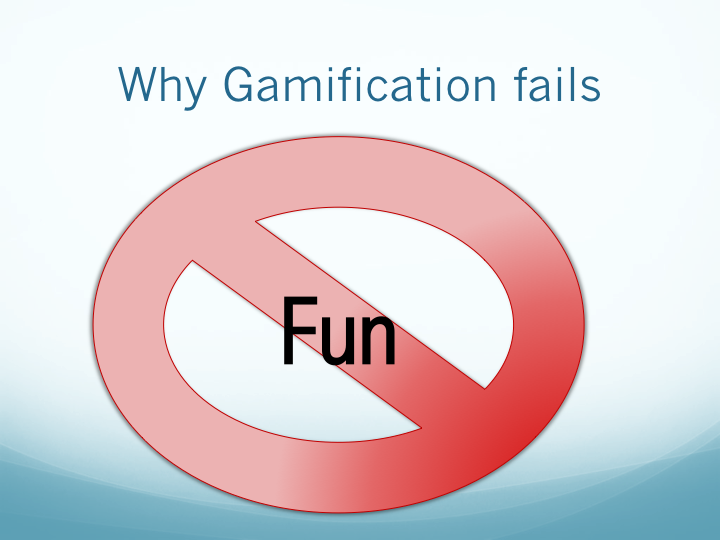
Games, almost by definition, are an entertainment industry. People play games because they are fun. The problem is people do not take out the trash or stop smoking because it is fun. And you don’t make these activities fun by “gamifying” them.
For most of these companies, they are not really looking at trying to create an entertainment product, they are actually trying to manipulate customers. They understand how games can be habit forming, to use the terminology of Nir Eyal in Hooked, but most of the companies are actually hoping to create an unhealthy addiction.
Many outside the industry, and some unfortunately inside the industry, believe people play games only due to the retention and monetization mechanics. It’s the simplification of games, referring to them as Skinner boxes, that lead people down the wrong path.
The companies that feel games are about manipulation are not successful when they try to apply game mechanics. The problem occurs because successful games are not successful due to manipulation. They are successful because users get an entertainment value. Sometimes these techniques do enhance monetization or retention to the detriment of gameplay, though in those cases the game normally implodes, but if the person is not having fun in the game they will not come back or spend money. Even the game companies that do not realize the goal is for the player to have fun also fail, you can’t succeed by tricking players.
The gamification problem
And that is the problem with gamification; the goal is usually manipulation and not entertainment. They are trying to turn something that is not fun into something that people will use more often or spend more money on by adding leaderboards or spoilage or a collection mechanic. None of these things create fun, and the gamification fails.


Leave a Reply