Skip to content

The Business of Social Games and Casino

How to succeed in the mobile game space by Lloyd Melnick

Month: February 2016

Dealing with a changing business environment

Nobody can argue that the business environment is constantly changing, probably at a faster rate than ever before. New technologies are introduced almost daily, customer tastes change frequently as our global society exposes people to new products and the business cycle is compressed with automated trading. An article in the Harvard Business Review — The Biology of Corporate Survival by Martin Reeves, Simon Levin and Daichi Ueda – explains how companies are like biological species and need to adapt to survive.

As the authors write, “companies operate in an increasingly complex world. Business environments are more diverse, dynamic, and interconnected than ever – and far less predictable. Yet many firms pursue classic approaches to strategy that were designed for more stable times, emphasizing analysis and planning focused on maximizing short-term performance rather than long-term robustness.”

When looking at the results of this practice, the authors say that companies are disappearing faster than ever. Over 30 percent of publicly traded companies will be delisted in the next five years, due to bankruptcy, liquidation, M&A or other causes. Compared to 40 years ago (the 1970s for those who did not major in mathematics), this represents a 6 times greater likelihood that a public company disappears.

The authors believe this higher mortality rate is due to companies failing to adapt to the increasing complexity of the business environment. Many misread the environment, selected the wrong approach to strategy, or failed to support a viable approach with the right behaviors and capabilities.

HBR death of companies

Business is complex

As the article states, “in a complex adaptive system, local events and interactions among the “agents,” whether ants, trees, or people, can cascade and reshape the entire system—a property called emergence. The system’s new structure then influences the individual agents, resulting in further changes to the overall system. Thus the system continually evolves in hard-to-predict ways through a cycle of local interactions, emergence, and feedback. In nature we see this play out when ants of some species, for example, although individually following simple behavioral rules, collectively create ‘supercolonies’ of several hundred million ants covering more than a square kilometer of territory. In business we see workers and management, through their local actions and interactions, shape the overall structure, behavior, and performance of a firm. In both spheres these emergent outcomes influence individuals and create new contexts for their interactions. Whether we look at team dynamics, the evolution of strategies, or the behavior of markets, the pattern of local interactions, emergence, and feedback is apparent.

Complex adaptive systems are often nested in broader systems. A population is a CAS nested in a natural ecosystem, which itself is nested in the broader biological environment. A company is a CAS nested in a business ecosystem, which is nested in the broad societal environment. Complexity therefore exists at multiple levels, not just within organizational boundaries; and at each level there is tension between what is good for an individual agent and what is good for the larger system.”

This complexity has several implications for business leaders:

  1. Do not overestimate what you can predict and control as much is beyond the reach of managerial influence. You need to expect unpredictable and extreme emergent outcomes will cascade from actions at the lower levels.
  2. You must look beyond what your company owns or controls, monitoring and addressing complexity outside of your company.
  3. You must embrace the inconvenient truth that attempts to control directly agents at lower levels of the system often create counter-intuitive outcomes at higher levels. Rather than trying to control the behavior seek to shape the context for that behavior.

Six principles to build complex adaptive systems

Based on the complexity of the business environment, the authors of the article propose six principals to make complex adaptive systems in business robust. Some of the principles help create a more robust structure while the others provide managerial guidance.

Avoid Homogeneity

Variety in a complex adaptive system allows the system to adapt to a changing environment. As a leader, you must ensure the company is diverse in terms of people, ideas and endeavors. This practice often starts with who you hire but you must also encourage your diverse team to express diverse ideas.

Sustain Modularity

You should build your system to consist of different nodes of loosely connected components. Highly modular systems impede the spread of shocks from one component to the next. Within a company, tight connections across regions or businesses can enhance information flows, innovation and agility. These tight connections, however, tend to make your company vulnerable to severe adverse events.

Preserve Redundancy

In systems with redundancy, multiple components play overlapping functions. When one fails, another takes over the same role. Redundancy is particularly important in highly dynamic environments, where adverse shocks occur frequently.

Expect surprises while reducing uncertainty

A key feature of complex adaptive systems is that we cannot precisely predict their future states. However, we can collect signals, detect patterns of change, and imagine plausible outcomes—and take action to minimize undesirable ones.

As the article states, “In business systems few things are harder to predict than the progress and impact of new technologies. But it can be worthwhile to actively monitor and react to the activities of maverick competitors in an effort to avoid being blindsided. Companies that do this follow a few best practices. First, if they are incumbents, they accept that their business models will be superseded at some point, and they consider how that may happen and what to do about it. Second, they understand that change often comes from an industry’s periphery—from start-ups or challengers who have no choice but to bet against incumbents’ models. Third, they collect weak signals from the smart money flows and early-stage entrepreneurial activity that constitute those bets against their models. Fourth, they practice contingent thinking: Rather than posing the unanswerable question of whether this or that company or technology will succeed, they ask, If the maverick’s idea worked, what would be the consequences for us? Finally, they take preemptive action against such threats by replicating the idea, acquiring it, or building defenses against it.”

Create feedback loops and adaptive mechanisms

Feedback loops ensure that selection occurs and improves the fitness of the system. Your company can identify quickly changes in the environment by having good feedback loops in place. As the authors write, “In nature, mutation and natural selection—the variation, selection, and propagation of genes that contribute to reproductive success—is an autonomous process. In business the analog is a predominantly “managed” activity. The variation, selection, and propagation of innovations happen only when leaders explicitly create and encourage mechanisms that promote those things. In fact, mainstream management thinking, as taught in many business schools, may actively suppress the intrinsic “variance” and “inefficiency” associated with iterative experimentation. Yet the cultivation of this adaptive capability is now essential for companies that may have managed themselves for decades using only analysis and planning.”

There are two steps you can take to adapt this principle to iterative innovation:

  • It must detect the correct signals from across your company. The key here is to interact with employees at all levels.
  • You must translate those signals into actions.

If the feedback cycle becomes too short or the response to change is too strong, the system may overshoot its targets and become unstable. As with the other principles, calibration is essential.

Foster trust and reciprocity

Complex adaptive systems require vigorous cooperation, while direct control of system participants is seldom possible. Individual interests often conflict, and when individuals pursue their own interests, the system becomes weaker and everyone suffers. Individuals lack incentives to act in ways that benefit the overall system unless they benefit in immediate ways themselves. Trust and the enforcement of reciprocity combine to provide a mechanism for organizations to overcome this predicament.

Leaders should consider how their firms contribute to other stakeholders in their ecosystem. They must ensure that they are adding value to the system even as they seek to maximize profits.

What it all means

You must build your organization and company for the reality of a constantly changing business ecosystem. To do this, you need a structure that minimizes these risks. This includes heterogeneity (so you get different ideas), modularity (so that you can isolate negative disturbances) and redundancy (so you can deal with large shocks). You also need to put in place managerial principles to deal proactively with this changing environment. These principals include expecting surprises while reducing uncertainty, creating feedback loops and implementing them and creating an atmosphere of trust and reciprocity. Only by proactively adapting to this fast changing system will you survive and thrive.

Key takeaways

  1. Businesses face ever more diverse environments, which are harsher, less predictable and more malleable than historical environments.
  2. To adapt to the changing system, you need to implement an adaptive structure. This includes heterogeneity (so you get different ideas), modularity (so that you can isolate negative disturbances) and redundancy (so you can deal with large shocks).
  3. You also need to put in place three key managerial principles. These principals include expecting surprises while reducing uncertainty, creating feedback loops and implementing them and creating an atmosphere of trust and reciprocity.
Share this:

  • Click to share on Facebook (Opens in new window) Facebook
  • Click to share on LinkedIn (Opens in new window) LinkedIn
Like Loading...
Unknown's avatarAuthor Lloyd MelnickPosted on February 24, 2016February 14, 2016Categories General Social Games Business, General Tech BusinessTags Change, innovation, system1 Comment on Dealing with a changing business environment

Four trends in social casino

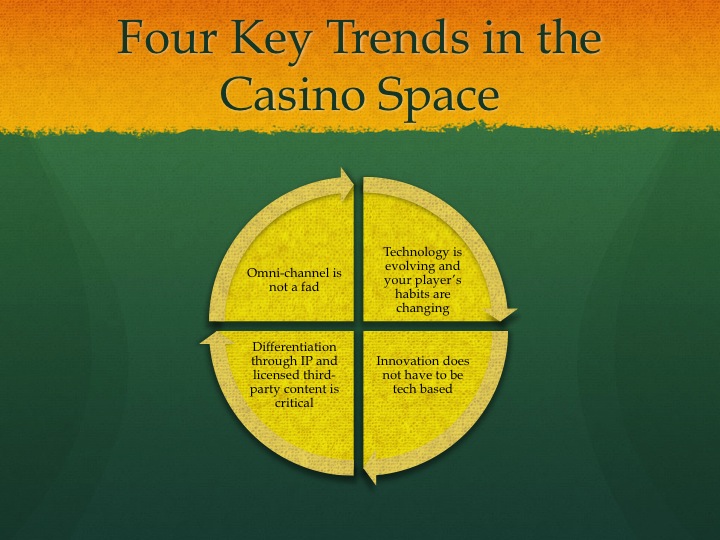
I recently came across a great article, The Top Ice Takeaways, by a former colleague of mine, Barry Cottle, that highlighted four key trends in the casino space. Barry has a unique perspective, involved in online real money, land based casino as well as the social space. He’s identified several trends that will impact all three businesses. The four trends, in what I consider the most important order for social casino businesses, are:

Slide1

  1. Technology is evolving and your player’s habits are changing.We live in an age where technology changes constantly. Several years ago, Blackberries and PDAs were at the edge of technology. Then users migrated to iPhones. Then the iPad and tablets became the primary way that people consumed mobile content. Now players are leaving tablets for phablets and larger devices. It is critical to stay at the front of these trends. You need to make sure your content is available not only on the new devices people are using but also optimize the experience for these devices.

    Barry uses the example of building casino apps now for portrait mode. He cites studies that show users are quickly moving to a portrait-only mentality that is driven by the speed of play ease of holding your phone in one hand while doing something else. The key is to understand how your players are consuming content and build your experience for that, rather than focusing on an old technology or any particular device.

  2. Innovation does not have to be tech based. I frequently discuss Clay Christensen’s theory on innovation and the key is to disrupt markets by addressing users who are not served by the existing companies. A key to this strategy is not simply creating a new product but building a new business model that better serves these customers. About ten years ago, the free-to-play model disrupted the video game industry rather than a cool new technology. The innovation can be in the promotions that you offer players, the partnerships you strike with IP holders or companies in adjacent casino spaces or even your on-boarding experience.
  3. Differentiation through IP and licensed third-party content is critical. IP allows companies to take a commoditized space and create a unique position. When Zynga launched HitItRich! slots in 2013, there were already many successful social casino titles. One problem in the space, however, was that players could play one title, use up their free chips, then play a competing product. HitItRich! pursued a strategy of integrating exclusive IP into its casino. It was the only place where you could play a Sex in the City or Wizard of Oz slot machines. This unique content allowed it to differentiate from other social casinos and be Zynga’s most successful new product in years. There is no reason that IP cannot have a similar impact on other parts of the casino space.
  4. Omni-channels is not a fad. As Barry points out, “in the mobile age of gaming, players expect a seamless crossover in both content and experience from land-based to online.” I would add that consumers also want a seamless experience from desktop to mobile and from real money online to social. They also want the same experience if they are in Des Moines or Tel Aviv. It is thus critical that you look at your offerings holistically and build the best experience for your customers.

Key takeaways

  • There are four key trends impacting the casino business, from social to real money online to land based.
  • One of the most important trends is that technology is continually evolving and it is critical to ensure your offering creates a great experience for how your customers are consuming content today, not last year.
  • Other trends include the importance of innovating your business practices as well as your products, differentiating your content through IP and providing a holistic experience between land-based, social and real money on-line.

Share this:

  • Click to share on Facebook (Opens in new window) Facebook
  • Click to share on LinkedIn (Opens in new window) LinkedIn
Like Loading...
Unknown's avatarAuthor Lloyd MelnickPosted on February 17, 2016February 13, 2016Categories General Social Games Business, Social Casino, Social Games MarketingTags Barry Cottle, innovation, licensing, omni-channel, Portrait modeLeave a comment on Four trends in social casino

How to encourage your team to speak freely

While almost every company professes and often tries to get its employees to speak freely, most are unsuccessful. Employees either feel retribution for speaking openly or believe their efforts will be fruitless. An article in the Harvard Business Review, Can Your Employees Really Speak Freely by James Detert and Ethan Burris, shows the value of getting employees to speak up and how to do it.

Many leaders believe that by professing to have an open door policy, employees will come to them to raise issues or suggest improvements. It could be a project is going to miss its schedule or one of your manager’s is putting in a lackluster effort, Detert and Burris’ research shows your team is more likely to keep quiet than to question initiatives or suggest new ideas. When employees freely express their concerns, companies experience higher retention and better performance.

As Detert and Burris write, “leaders use a variety of tools to get people to speak up, like “climate” surveys and all-staff feedback sessions. Many of these efforts focus on improving communication up and down the hierarchy. But they usually fall short, regardless of good intentions, for two key reasons: a fear of consequences (embarrassment, isolation, low performance ratings, lost promotions, and even firing) and a sense of futility (the belief that saying something won’t make a difference, so why bother?).“

Why your team keeps quiet

There are two key reasons why employees fail to express their concerns, fear and futility. While you may think you are encouraging your team to speak up, you actually may be doing the opposite and leaving them afraid to openly discuss issues.

Part of the problem comes from relying on anonymous feedback. This policy has multiple problems:

  1. Encouraging anonymous feedback implicitly says it is not safe to raise issues publicly. If you were truly an open organization, people would not have to comment anonymously.
  2. Rather than focus on the content of the anonymous comment, the focus often becomes a hunt for who made or could have made the comment.
  3. It can be difficult to address issues while protecting the identify of the people who raised them.

Another element that contributes to the fear factor is sending signals that you are in charge. While you may be encouraging open conversation, forcing someone to sit in a small chair in your large office or set up an appointment can create a power situation. In this atmosphere, people may not be willing to tell you the unvarnished truth.

The other enemy of open conversation is futility, people feel it just will not make a difference to raise issues. This is referred to as the why-bother attitude. One contributor to this attitude is when leaders fail to convey issues to their superiors. If your team members raise concerns but you fail to address them with your superior, they feel they have wasted their time.

Another contributor to this problem is leaders who are unclear about the input they want. They may encourage “all” feedback but you have your own priorities and will only act on input that can help you advance these priorities (it could be improving efficiency, making marketing more user driven, etc.). By telling your team to bring you all issues but then not acting on all issues, and we all need to prioritize, they will feel their input is fruitless.

The most frustrating area to me that leads to people suppressing comments is a lack of resources to address the issues raised. You may spend excessive time getting ideas for new products or software that could improve efficiency, but you then do not have the resources to create the product or license the software. Devoting resources to collecting ideas without making commitments, financial and otherwise, to see some of them to fruition can lead your team to feel their input will have no impact.

Slide1

How to create a more vocal culture

While saying be open and not always closing your door probably will not generate open conversation, there are ways to get strong feedback from your team.

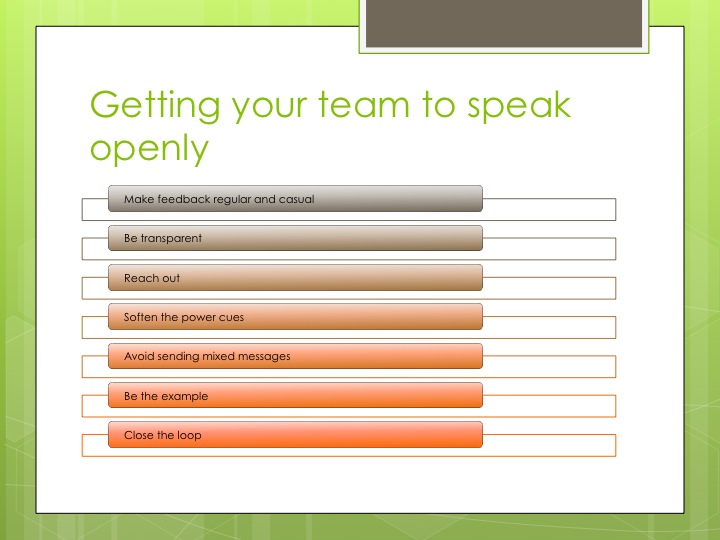
  • Make feedback a regular and casual exchange. Try to schedule regular one-to-one meetings with your team, this will make it less of a special even when they have something to share. The meetings also should not be with only your direct reports, but try to reach out to all the units you oversee, the ideas are not limited to your direct reports. Even when there is nothing to discuss, still hold the meeting and see what comes out. Often, if there is not a set agenda, the true issues will rise to the top.
  • Be transparent. As Detert and Burris write, “transparency about feedback processes can reduce anxiety and increase participation…. Spelling out guidelines and commitements up front made contributing feel less daunting and futile to employees.”
  • Reach out. When you want to understand what your team thinks of something, ask them. Call people in and ask them what are the company’s biggest problems or where they feel costs can be reduced or what is wrong with your product. Soliciting feedback proactively is more effective than just listening to it when someone brings an issue to you. First, it allows you to focus on your biggest problems. Second, since it is an issue you are already trying to address, there is a higher likelihood you will act on the employee’s feedback.
  • Soften the power cues. To get earnest feedback, play down the power relationship. Walk over to your employee to talk to them rather than asking them to your office. Sit with them at a table rather than having them sit across from your desk. Join your employees for lunch or a drink. The key is to interact with your team as peers rather than subordinates.
  • Avoid sending mixed messages. Do not encourage ideas and then cut them apart. Make sure not to focus the employee on process, it does not matter if their Powerpoint is awful, but instead pull the ideas out of the conversation and see which ideas will help the company.
  • Be the example. Employees feel inspired when they see you advocating for them. It is important to help move the ideas along. Unless you feel they will hurt the company, and provide visibility to the team on your efforts in getting their ideas implemented. As Detert and Burris write, “Employees feel inspired when they see you advocating for them. While it’s great when your subordinates can see you speaking up, in many cases that’s not possible, because they aren’t present when you interact with your own boss. But you can tell them what happened and involve them directly in any follow-up steps.”
  • Close the loop.The most critical element in creating a culture where people are truly open with their feedback and suggestions is telling them what you did with their idea and what they can expect as a result. Even in cases where the idea was not implemented, tell them why it was not moved forward so that they both see it was taken seriously and can adjust future suggestions to the reality of the business. Also, where possible, tell the entire team about the feedback you received and how it was acted upon.

While it is much easier to say you have an open door policy than follow through on the seven suggestions above, these suggestions will prompt your team to raise important issues to improve your company. You will find the effort is well worth it both in increased morale and a better business.

Key takeaways

  1. Open feedback and suggestions improve retention and the company’s performance, yet just having an “open door policy is not effective at soliciting feedback.
  2. Most people do not speak openly out of fear that there will be negative consequences or a belief that nothing will happen if they do.
  3. To counteract this reluctance, make feedback regular, be transparent, proactively reach out to employees, soften the power position, set an example by bringing ideas up the corporate chain and provide feedback on what action came from the suggestion or criticism.

Share this:

  • Click to share on Facebook (Opens in new window) Facebook
  • Click to share on LinkedIn (Opens in new window) LinkedIn
Like Loading...
Unknown's avatarAuthor Lloyd MelnickPosted on February 10, 2016February 9, 2016Categories General Social Games Business, General Tech BusinessTags communication, Feedback, leadership, management2 Comments on How to encourage your team to speak freely

Why data is more important than hair: The Donald Trump story

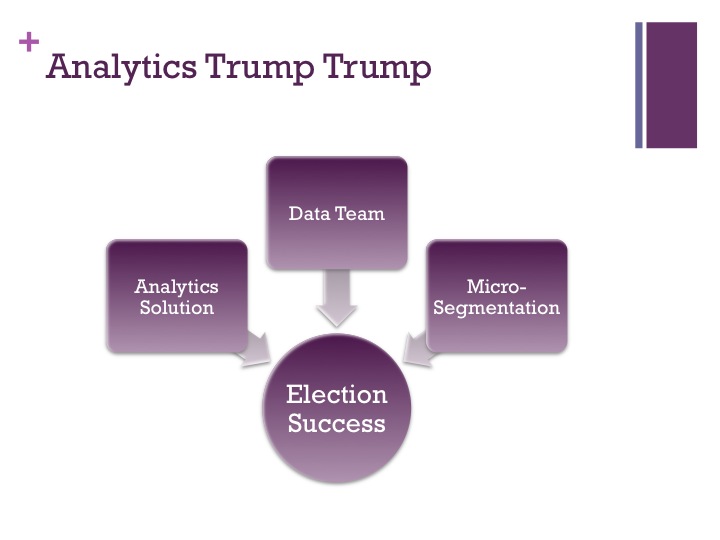
There is a great article on Politico, How Trump Let Himself Get Out-Organized, that explains how Trump’s Iowa debacle was a result of a failed analytics strategy. Trump made the same mistake many companies commit, he felt a strong brand and what he believe compelling product allowed him to under-invest in analytics. This issue was compounded by the aggressive use of analytics by competitors. Although this occurred in the political arena, there are lessons for all businesses.

The article explains that despite Trump’s strength in the polls, he did not have “the tools they needed, which is why they overpromised and underperformed.”

Slide1

Penny wise and pound foolish

While Ted Cruz and Marco Rubio spent millions building sophisticated voter targeting machines, Trump did not start building a data operation to target voters until mid-October. It did not even start buying data (i.e. voter lists, etc) until November and waited to December to start using the Republican National Committee’s (RNC’s) voter file.

The Trump campaign declined to use Cambridge Analytica, a behavioral modeling company with political expertise, due to cost. Cruz, however, retained Cambridge Analytica’s services and the firm is now widely credited with engineering Cruz’s cutting-edge targeting operation. Rubio, who also over delivered on expectations, spent $750,000 for an outside company to assist in its data operations. Trump overall spent $560,000 on data services in 2015, compared to $3.6 million by the Cruz campaign. It is also about $700,000 less than Trump spent on hats.

You also need the analytics team

The Iowa caucas also showed the value of having a strong analytics team, not simply software. Cruz’s data team, which they call the Oorlog (the Afrikaner word for ‘war’) project, includes four full-time data scientists and embedded talent from Cambridge Analytics.

The Rubio campaign, which also exceeded expectations, has also invested heavily in its analytics team. It has a 22-person data war room in DC.

The Cruz campaign also hired ten canvassers (and recruited many volunteers) to go door-to-door to contact people the analytics suggested were supportive or could be persuaded. Traditionally, these so-called match rate initiatives are 50 percent successful but with Cruz’s advanced analytics the success rate reached 70 percent. The Cruz campaign also used the voter profiles to shape its strategies for most marketing activities, from television ad buys to telephone banks.

Micro-segmentation

Micro-segmentation, or creating very small customer segments and treating them uniquely, is another area where Trump fell down compared to Cruz. As Politico wrote, the Cruz campaign, “built a list of more than 9,000 Iowans who were still on the fence between their candidate and Trump. The team divided the undecided voters ― who were heavily evangelical and 91 percent male ― into more than 150 different subgroups based off ideology, religion and personality type, Wilson said. It used Facebook experiments to determine which issues jazzed up their voters the most.”

The lesson

No matter how strong you feel your product is, or how well it has performed in the past, you are vulnerable to competitors who may have a superior analytics solution. To combat this risk, you not only need to match the investment your competitor’s are making in analytics and look at micro-segmentation but also build a world class data team.

Key Takeaways

  • Donald Trump’s loss to Ted Cruz in Iowa can be attributed to Cruz’s superior use of analytics to build a competitive advantage.
  • Cruz invested much more in both analytic products and a great data team and it helped him get pro-Cruz people to caucus.
  • Cruz also did a great job of micro-segmenting potential voters into more than 150 different subgroups based off ideology, religion and personality type and used Facebook experiments to determine which issues were most relevant for each subgroup.

Share this:

  • Click to share on Facebook (Opens in new window) Facebook
  • Click to share on LinkedIn (Opens in new window) LinkedIn
Like Loading...
Unknown's avatarAuthor Lloyd MelnickPosted on February 3, 2016Categories Analytics, General Social Games Business, General Tech Business, UncategorizedTags analytics, data, Donald Trump, iowa, micro-segmentation, politico, Ted Cruz1 Comment on Why data is more important than hair: The Donald Trump story

Get my book on LTV

The definitive book on customer lifetime value, Understanding the Predictable, is now available in both print and Kindle formats on Amazon.

Understanding the Predictable delves into the world of Customer Lifetime Value (LTV), a metric that shows how much each customer is worth to your business. By understanding this metric, you can predict how changes to your product will impact the value of each customer. You will also learn how to apply this simple yet powerful method of predictive analytics to optimize your marketing and user acquisition.

For more information, click here

Follow The Business of Social Games and Casino on WordPress.com

Enter your email address to follow this blog and receive notifications of new posts by email.

Join 791 other subscribers

Most Recent Posts

  • Join me at PDMA Inspire for my talk on new product prioritization
  • Why keep studying?
  • The next three years of this blog
  • Interview with the CEO of Murka on the biggest growth opportunity in gaming, Barak David

Lloyd Melnick

This is Lloyd Melnick’s personal blog.  All views and opinions expressed on this website are mine alone and do not represent those of people, institutions or organizations that I may or may not be associated with in professional or personal capacity.

I am a serial builder of businesses (senior leadership on three exits worth over $700 million), successful in big (Disney, Stars Group/PokerStars, Zynga) and small companies (Merscom, Spooky Cool Labs) with over 20 years experience in the gaming and casino space.  Currently, I am the GM of VGW’s Chumba Casino and on the Board of Directors of Murka Games and Luckbox.

Topic Areas

  • Analytics (114)
  • Bayes' Theorem (8)
  • behavioral economics (8)
  • blue ocean strategy (14)
  • Crowdfunding (4)
  • DBA (2)
  • General Social Games Business (459)
  • General Tech Business (195)
  • Growth (88)
  • International Issues with Social Games (50)
  • Lloyd's favorite posts (101)
  • LTV (54)
  • Machine Learning (10)
  • Metaverse (1)
  • Mobile Platforms (37)
  • Prioritization (1)
  • Social Casino (52)
  • Social Games Marketing (105)
  • thinking fast and slow (5)
  • Uncategorized (33)

Social

  • View CasualGame’s profile on Facebook
  • View @lloydmelnick’s profile on Twitter
  • View lloydmelnick’s profile on LinkedIn

RSS

RSS Feed RSS - Posts

RSS Feed RSS - Comments

Categories

  • Analytics (114)
  • Bayes' Theorem (8)
  • behavioral economics (8)
  • blue ocean strategy (14)
  • Crowdfunding (4)
  • DBA (2)
  • General Social Games Business (459)
  • General Tech Business (195)
  • Growth (88)
  • International Issues with Social Games (50)
  • Lloyd's favorite posts (101)
  • LTV (54)
  • Machine Learning (10)
  • Metaverse (1)
  • Mobile Platforms (37)
  • Prioritization (1)
  • Social Casino (52)
  • Social Games Marketing (105)
  • thinking fast and slow (5)
  • Uncategorized (33)

Archives

  • September 2023
  • December 2021
  • July 2021
  • March 2021
  • February 2021
  • January 2021
  • December 2020
  • November 2020
  • October 2020
  • September 2020
  • August 2020
  • July 2020
  • June 2020
  • May 2020
  • April 2020
  • March 2020
  • February 2020
  • January 2020
  • November 2019
  • October 2019
  • September 2019
  • June 2019
  • May 2019
  • April 2019
  • March 2019
  • February 2019
  • January 2019
  • December 2018
  • June 2018
  • May 2018
  • April 2018
  • March 2018
  • February 2018
  • January 2018
  • December 2017
  • June 2017
  • May 2017
  • April 2017
  • March 2017
  • February 2017
  • January 2017
  • December 2016
  • November 2016
  • October 2016
  • September 2016
  • June 2016
  • May 2016
  • April 2016
  • March 2016
  • February 2016
  • January 2016
  • December 2015
  • November 2015
  • October 2015
  • September 2015
  • July 2015
  • June 2015
  • May 2015
  • April 2015
  • March 2015
  • February 2015
  • January 2015
  • December 2014
  • November 2014
  • October 2014
  • September 2014
  • August 2014
  • July 2014
  • June 2014
  • May 2014
  • April 2014
  • March 2014
  • February 2014
  • January 2014
  • December 2013
  • November 2013
  • October 2013
  • September 2013
  • August 2013
  • July 2013
  • June 2013
  • May 2013
  • April 2013
  • March 2013
  • February 2013
  • January 2013
  • December 2012
  • November 2012
  • October 2012
  • September 2012
  • August 2012
  • July 2012
  • June 2012
  • May 2012
  • April 2012
  • March 2012
  • February 2012
  • January 2012
  • December 2011
  • November 2011
  • October 2011
  • September 2011
  • August 2011
  • July 2011
  • June 2011
  • May 2011
  • December 2010
February 2016
S M T W T F S
 123456
78910111213
14151617181920
21222324252627
2829  
« Jan   Mar »

by Lloyd Melnick

All posts by Lloyd Melnick unless specified otherwise
Google+

Enter your email address to subscribe to this blog and receive notifications of new posts by email.

Join 791 other subscribers
Follow Lloyd Melnick on Quora

RSS HBR Blog

  • How One Manufacturer Achieved Net Zero at Zero Cost
  • What Can U.S. Employers Do About Rising Healthcare Costs?
  • When You Have to Execute a Strategy You Disagree With
  • 4 Ways to Build Durable Relationships with Your Most Important Customers
  • What Jargon Says About Your Company Culture
  • Research: When Used Correctly, LLMs Can Unlock More Creative Ideas
  • Your New Role Requires Strategic Thinking…But You’re Stuck in the Weeds
  • For Circular Economy Innovation, Look to the Global South
  • Why Great Leaders Focus on the Details
  • Corporate Disclosure in the Age of AI

RSS Techcrunch

  • An error has occurred; the feed is probably down. Try again later.

RSS MIT Sloan Management Review Blog

  • AI Coding Tools: The Productivity Trap Most Companies Miss
  • How Procter & Gamble Uses AI to Unlock New Insights From Data
  • Rewire Organizational Knowledge With GenAI
  • Hungry for Learning: Wendy’s Will Croushorn
  • Beat Burnout: 10 Essential MIT SMR Reads
  • How Leaders Stay True to Themselves and Their Stakeholders
  • Our Guide to the Winter 2026 Issue
  • Broadening Future Perspectives at the Bank of England
  • A Faster Way to Build Future Scenarios
  • Assess What Is Certain in a Sea of Unknowns
The Business of Social Games and Casino Website Powered by WordPress.com.
  • Subscribe Subscribed
    • The Business of Social Games and Casino
    • Join 726 other subscribers
    • Already have a WordPress.com account? Log in now.
    • The Business of Social Games and Casino
    • Subscribe Subscribed
    • Sign up
    • Log in
    • Report this content
    • View site in Reader
    • Manage subscriptions
    • Collapse this bar
 

Loading Comments...
 

    %d