

Skip to content

The Business of Social Games and Casino

How to succeed in the mobile game space by Lloyd Melnick

Tag: Disney

The Power of Content

The Power of Content

While even I take what I say with a grain of salt, Disney’s announcement last week about their 2021 strategy puts an exclamation point on the overriding supremacy of content (both quality and quantity) over every other variable in the entertainment industry. In April, shortly after the launch of Disney+, I expressed concerns with its lack of new content once customers got past the Star Wars/Marvel/Disney back catalog. These concerns did not impact Disney+ in the short term, as it announced 86.8 million subscribers as of 2 December (effectively the populations of Italy, the Netherlands and Switzerland combined).

The announcement

The most insightful announcement, though, was Disney’s plans for 2021. Disney announced “a blitz of new projects” including ten series from the Star Wars universe, fifteen Disney branded movies, a ”cluster” of shows from Pixar and ten Marvel series, all for Disney+. The power of this announcement is the voice behind it, Disney is the largest and most successful media company (brand) in the world and it is folly to argue that anyone knows entertainment better than how they understand it. Unpacking Disney’s strategy shows two keys to success in the entertainment space.
star wars

You cannot avoid the content treadmill

To become dominant in streaming, Disney’s move showed that a pillar of their strategy needed to be a constant stream of fresh content. Rather than relying on the best back catalog in the entertainment industry, or a few popular new series, Disney move showed you need a constant and robust stream of quality content. Launching 25 or 50 new series is neither easy nor inexpensive, yet Disney feels the need to devote these resources.

Many companies in the gaming and entertainment space have looked at various tactics to avoid the need to create fresh content regularly, what is often referred to as a content treadmill. Companies try to add new features, roadblocks to slow content consumption, incentives to reuse existing content and cloning of existing IP to avoid creating new content. A company with Disney’s resources and sophistication would not commit to such a large content stream, however, if there were less costly alternatives to creating new content.

The power of Forever Franchises

The second lesson from Disney’s strategy is the power of powerful franchises. Zynga has reinvigorated its business, becoming the largest mobile game publisher, based on a strategy it refers to as “Forever Franchises.” In Zynga’s case, they have grown internal franchises (Zynga Poker and Words with Friends) and also acquired additional games (CSR, Toon Blast, Toy Blacks, Empires & Puzzles and Merge Dragons) to build a stable of Forever Franchises that each generates over $100 million/year, which they can then leverage into future growth. The strategy of coupling internally built franchises with the acquisition of new franchises has resulted in Zynga’s share price nearly tripling over the last four years.
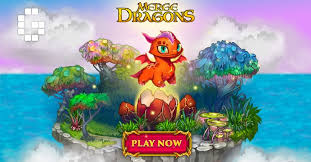
merge

Disney’s announcement confirms this strategy as the way to become and remain a leader the entertainment industry. Disney was never shy about acquiring franchises, the acquisitions of Pixar, LucasFilm and Marvel, were some of the biggest achievements of Disney. Disney’s plans for Disney+ further confirm the importance of Forever Franchises.

Hawkeye-Header

With Disney+ the most important component of its future strategy (there was very little talk about Disney’s parks, cruise or even film business during the 2021 discussion), it was telling that the strategy to add rocket fuel to its subscriber growth centered on Forever Franchises. Virtually all of the new content coming to Disney+ builds on its core franchises, Star Wars, the Marvel Universe, the Disney characters and Pixar. While it is not easy, or cheap, to develop or buy Forever Franchises, they are critical to building a leading position in the entertainment space.

What it means

Even if you are not Disney (or Zynga), these two lessons are critical for any gaming or entertainment company. To maintain and grow your business, you need a constant stream of strong content. You also should focus on trying to build franchises, these are critical if you hope to dominate your space.

Key takeaways

  • Disney has enjoyed phenomenal growth with Disney+ and last week announced it’s plans to accelerate this growth, showing what is critical to the success of an entertainment brand.
  • The first pillar of this strategy is to release a plethora of new content in 2021, more than 25 new television series plus multiple movies, showing how critical new content is (especially telling as Disney has the strongest back catalog of content in the world).
  • The second pillar is to rely on its franchises (Star Wars, Marvel, Disney characters) for this new content, showing the value of Forever Franchises in the entertainment space.


Share this:

  • Click to share on Facebook (Opens in new window) Facebook
  • Click to share on LinkedIn (Opens in new window) LinkedIn
Like Loading...
Unknown's avatarAuthor Lloyd MelnickPosted on December 16, 2020April 24, 2021Categories General Social Games BusinessTags content, Disney, Disney+1 Comment on The Power of Content

Winners and Losers in the entertainment space post-Coronavirus

Winners and Losers in the entertainment space post-Coronavirus

While it is impossible to predict exactly what businesses in the (broadly defined) entertainment space will benefit from Coronavirus and which are likely to fail, some basic and timeless principles help understand the likely winners and losers. There are two keys for successful entertainment company.

First, an abundance of content is the biggest revenue driver. While quality is obviously important, nobody wants to consume bad content, quantity is also critical. Content is a consumable and once it is consumed people look for more, if it is not available they will find something else. Successful operators constantly deliver new quality content to keep customers engaged.

Second, the subscription model is emerging as the dominant model in the entertainment space (not necessarily a new phenomenon, as Netflix and Amazon Prime have been around for years), growing from its existing stronghold to other parts of media. Additionally, subscriptions driven by Coronavirus are more likely to stay resilient in the aftermath of Covid19 as they will require action to cancel rather than asking people to continue making purchases.

Using this filter of abundant content or a compelling subscription model, it becomes easier to ascertain what companies and products will emerge from the Coronavirus situation in a good position.

Winners

There are likely winners that will emerge from the current situation. Those that I consider most prone to benefit include:

  • TikTok. While TikTok was already experiencing amazing growth, Coronavirus provided the rocket fuel. TikTok is a video sharing network used to create short dance, lip-sync, comedy, and talent videos. Since it relies on user-generated content, its increased traffic driven by Covid19 has led to increased content, creating a network effect that makes it an even more compelling destination for customers.
  • Houseparty. Houseparty is a social networking service that enables group video chatting through mobile and desktop apps. Since Houseparty relies on users to create content, in this case chats and virtual parties, it enjoys the same benefits as TikTok, increased use has led to increased content. Already a winner as it was acquired last month by Epic Games (Unreal, Fortnite, etc.), Houseparty is poised to grow its first party base and spread into Epic’s family of games developed using Unreal.
  • Netflix. It is hard to say the largest streaming media company can benefit further, but Netflix is likely to see a long-term benefit. With the broadest range of programming including a plethora of original programming, Netflix cemented its value to existing customers while bringing in new subscribers. One only has to hear the words Tiger King to know how Netflix has won.
  • Amazon Prime. Amazon Prime, Amazon’s streaming video service, which also includes free delivery on Amazon purchases, is likely to enjoy the same benefits as Netflix due to its abundance of content. Given its huge library of third-party content coupled with a large amount (though less compelling than Netflix) of original content, very few customers (if any) are likely to have become satiated. New subscribers are apt to continue their subscription while existing customers are less prone to churn as they have experienced the value of their Prime subscriptions.
  • Steam. Just as video streaming services with abundant content like Netflix and Amazon Prime will benefit, Steam will profit in the video gaming space. Steam describes itself as the ultimate destination for playing, discussing and creating games. Like Netflix and Amazon, it has the largest catalog of quality PC games and its library continues to grow faster than customers can consume the content. This ever-growing library will help it sustain the growth from Covid19.
  • Coursera. Electronic learning was already a sector in its ascendancy and the increasing number of people looking for options to stay busy while in lockdown or quarantine sped the adoption of this sector. Coursera has the most courses from top learning institutions and given the importance of breadth and depth of content, it is thus likely to be the biggest winner in its space.
  • Udemy. Udemy is similar to Coursera in that it is an online learning platform. Unlike Coursera, however, Udemy crowd-sources its content, allowing individuals and companies to create content. This crowd-sourcing strategy helps it offers thousands of courses on a huge variety of topics. With quantity of content paramount, Udemy is likely to benefit greatly in the aftermath of Covid19.
  • Hit Free-2-Play games. Early data has shown that Coronavirus has increased downloads almost across the board for mobile and free-to-play games but the revenue increase is more localized to the top games. This phenomenon reflects that most hit games already have a deep reservoir of content, giving players many options and incentives to spend. This growth is likely to sustain after Covid19 as the more players spend in the game, the more invested they feel and are thus less likely to churn.

Losers

While there are multiple winners in the entertainment space, Coronavirus is also likely to highlight the companies with a flawed value proposition.

  • Quibi Quibi is a new streaming service focused on delivering professionally created content in 10 minute episodes. Founded by Jeffrey Katzenberg and Meg Whitman, it has raised almost $2 billion. Quibi’s lack of content spells disaster, despite what you may think of Quibi’s business model, execution or ability to raise investment. While Netflix and Amazon Prime have had years to develop original content, Quibi has had less than two years and it shows in a very non-compelling catalog. Due to its model, Quibi also needs to create six episodes (at about 10 minutes each) for every episode of original content a competitor creates (at 60 minutes each) to deliver the same value to the customer. Moreover, as both Netflix and Amazon were able to launch and grow their businesses using third party content to supplement their initial offerings (in the early days it was their initial offering) and give a broad catalog to customers, as Quibi is introducing a new format there is no third party content available. Moreover, while TikTok can generate almost unlimited crowd sourced content, Quibi has shunned this option. This lack of content spells doom for Quibi.
  • Apple Arcade and Google Stadia. Apple Arcade and Google Stadia are two streaming games services on Apple’s iOS and Google’s Android
    platforms, respectively. While both are subscription services and should thus benefit, content dooms them. Although they both offer a somewhat large number of games, they must compete with the near unlimited number of games on their own app stores. Layering on to this challenge is that most mobile games are free-to-play, you can enjoy the games without ever making a purchase, so they do not have a compelling value proposition for their subscriptions.
  • Movie theatres. One segment of the entertainment space whose existing challenges were accelerated by Coronavirus are movie theatres. Unlike streaming services like Netflix or Amazon Prime, theatres do not have a plethora of content or offer a subscription service. Thus, they are unlikely to recapture many of the customers they have lost.
  • edX. edX is an online learning platform similar to Coursera, founded by MIT and Harvard universities. Unlike Coursera, though, edX has a much more limited catalog of courses. Given the importance of content, it is likely to fall behind its more robust rivals.
  • Mediocre Free-2-Play games. The rich get richer. While the hit games are enjoying a big boost in revenue due to players staying at home, mid-tier games are not seeing a similar uplift. While their downloads have increased, it is not translating into more in-app purchases. In part, this activity is driven by the top games having a very deep pool of content, be it virtual goods, levels, battle passes, etc. Their success allows them to create even more content as content creation is resource intensive. In the aftermath of Covid19, the gap between the haves and the have not games is likely to have increased while customers who sampled games with limited content are probably done with those games.

Maybe

There is one entertainment offering that I am not willing to call a winner or loser yet, Disney+. There are mixed signal using both the content and subscription screen.

While Wall Street has lauded the initial subscriber numbers for Disney+, I am not convinced it will be a long term success. In only a few months, more than 50 million people subscribed to the service, exceeding even the most optimistic projections. Given these subscriber numbers, it is easy to assume that the service will be a long-term success approaching the value of a Netflix.

The concern, however, should be the depth and breadth of content. Unlike Netflix and Amazon Prime, Disney+’s content is limited to the Disney family (Disney, Star Wars, Marvel, National Geographic and Pixar). While this is very compelling content for many (about 50 million) initially, will it sustain? People consume content and even this large back catalog of offerings will be old to many of the 50 million in a few months or a year. Relying on first party content, will Disney be able to keep a sufficient content flow not only to appeal to new customers but keep from churning a big portion of these 50 million subscribers.

Key takeaways

  1. While streaming and digital entertainment has enjoyed a windfall from people staying at home, winners and losers will emerge in the aftermath of Covid19.
  2. The winners will be the companies that have a very deep and broad content offering (either by first party development or crowdsourcing) and leverage effectively the subscription model, while losers are likely to have limitations on their proposition.
  3. Among the likely winners are crowdsourcing champions TikTok and HouseParty as well as streaming services like Netflix, Amazon Prime, Coursera and Steam. Likely losers are Quibi, edX, Apple Arcade and Stadia who either have limited or less compelling content. The jury is still out on whether Disney will have enough content to make Disney+ a long-term winner.

Share this:

  • Click to share on Facebook (Opens in new window) Facebook
  • Click to share on LinkedIn (Opens in new window) LinkedIn
Like Loading...
Unknown's avatarAuthor Lloyd MelnickPosted on April 29, 2020April 13, 2020Categories General Social Games BusinessTags Coronavirus, Covid19, Disney, Quibi, TikTok2 Comments on Winners and Losers in the entertainment space post-Coronavirus

Anatomy of the perfect acquisition

This is hopefully not a spoiler for anybody, but Disney will make a lot of money from Star Wars. While most of you will put this statement down as one of the most obvious things you heard in 2015, the reality is most companies do not make money from acquisitions. Although there are no firm figures, an article in Business Insider showed that 50 to 90 percent of M&A (mergers and acquisitions) deals failed to meet their financial expectation; in my experience the reality is probably closer to the 90 percent number as creative accounting hides some of the failures.

Latest-The-Force-Awakens-Trailer-Description

Even with these numbers, you can initially write off the success of Disney’s acquisition of Lucasfilm as just luck; even though the majority of M&As fail, some do succeed. Upon further review (as we like to say at this point of the NFL season), however, it becomes clear that Disney has instead used acquisitions to create hundreds of billions of dollars of value.

  • Disney’s acquisition of Pixar has led to multiple billion dollar franchises (from Toy Story to Cars)
  • Disney’s acquisition of Marvel has helped them created multiple billion dollar film franchises (Avengers, Iron Man, Captain America, Guardians of the Galaxy)
  • Disney acquisition of ESPN has created a cash machine that largely drives Disney’s profitability (despite a recent slowdown)

So why was the Star Wars acquisition destined to succeed, while so many acquisitions by other companies are doomed to fail? It is due to a combination of investing in the acquisition, understanding the underlying value of what they bought, finding real synergies with other parts of their business and true efforts to retain and build the team.

Investing in the acquisition

When many companies make an acquisition, the cost of the acquisition is often seen as the primary cost. The acquirer is looking at the acquisition to contribute to its business rather than requiring additional investment. Many companies are acquired because they are growing but growth is not easy or automatic. They are often growing because of internal investment in their business. When this internal investment is diverted to the parent company, it moves the company off the growth path.

Star Wars is a great example of how Disney does things differently. Rather than trying to recoup the $4 billion it paid for Lucasfilm by squeezing the Star Wars franchise to get the most revenue from existing Star Wars revenue streams (e.g., toy sales, new distribution of the past movies), Disney invested an additional $400 million to create two new movies. Not only will this investment more than pay for itself (the movie is on its way to generating $1 billion) it reinvigorated sales for the IP overall. Continue reading “Anatomy of the perfect acquisition”

Share this:

  • Click to share on Facebook (Opens in new window) Facebook
  • Click to share on LinkedIn (Opens in new window) LinkedIn
Like Loading...
Unknown's avatarAuthor Lloyd MelnickPosted on December 21, 2015January 4, 2016Categories General Social Games Business, General Tech BusinessTags Disney, Mergers and Acquisition, Star WarsLeave a comment on Anatomy of the perfect acquisition

My thoughts on Facebook’s valuation

This is going to be a short post as I am at the Social Gaming Summit, but I wanted to share my feeling on why Facebook’s stock has been under pressure since the IPO as it is obviously having an effect on the social gaming ecosystem. This post is not a deep financial analysis, I will leave that to the “geniuses” on Wall Street. Instead, it is a simple observation.

Facebook is currently valued at slightly over $70 billion, after the declines since its IPO. In 2011, Facebook generated $3.7 billion in net revenue and net income of about $1 billion. Conversely, Disney currently has a market cap of slightly more than $79 billion, after several advances this week. So they have very comparable valuations. Continue reading “My thoughts on Facebook’s valuation”

Share this:

  • Click to share on Facebook (Opens in new window) Facebook
  • Click to share on LinkedIn (Opens in new window) LinkedIn
Like Loading...
Unknown's avatarAuthor Lloyd MelnickPosted on May 22, 2012August 27, 2012Categories General Social Games BusinessTags Disney, Facebook, valuation1 Comment on My thoughts on Facebook’s valuation

Get my book on LTV

The definitive book on customer lifetime value, Understanding the Predictable, is now available in both print and Kindle formats on Amazon.

Understanding the Predictable delves into the world of Customer Lifetime Value (LTV), a metric that shows how much each customer is worth to your business. By understanding this metric, you can predict how changes to your product will impact the value of each customer. You will also learn how to apply this simple yet powerful method of predictive analytics to optimize your marketing and user acquisition.

For more information, click here

Follow The Business of Social Games and Casino on WordPress.com

Enter your email address to follow this blog and receive notifications of new posts by email.

Join 791 other subscribers

Most Recent Posts

  • Join me at PDMA Inspire for my talk on new product prioritization
  • Why keep studying?
  • The next three years of this blog
  • Interview with the CEO of Murka on the biggest growth opportunity in gaming, Barak David

Lloyd Melnick

This is Lloyd Melnick’s personal blog.  All views and opinions expressed on this website are mine alone and do not represent those of people, institutions or organizations that I may or may not be associated with in professional or personal capacity.

I am a serial builder of businesses (senior leadership on three exits worth over $700 million), successful in big (Disney, Stars Group/PokerStars, Zynga) and small companies (Merscom, Spooky Cool Labs) with over 20 years experience in the gaming and casino space.  Currently, I am the GM of VGW’s Chumba Casino and on the Board of Directors of Murka Games and Luckbox.

Topic Areas

  • Analytics (114)
  • Bayes' Theorem (8)
  • behavioral economics (8)
  • blue ocean strategy (14)
  • Crowdfunding (4)
  • DBA (2)
  • General Social Games Business (459)
  • General Tech Business (195)
  • Growth (88)
  • International Issues with Social Games (50)
  • Lloyd's favorite posts (101)
  • LTV (54)
  • Machine Learning (10)
  • Metaverse (1)
  • Mobile Platforms (37)
  • Prioritization (1)
  • Social Casino (52)
  • Social Games Marketing (105)
  • thinking fast and slow (5)
  • Uncategorized (33)

Social

  • View CasualGame’s profile on Facebook
  • View @lloydmelnick’s profile on Twitter
  • View lloydmelnick’s profile on LinkedIn

RSS

RSS Feed RSS - Posts

RSS Feed RSS - Comments

Categories

  • Analytics (114)
  • Bayes' Theorem (8)
  • behavioral economics (8)
  • blue ocean strategy (14)
  • Crowdfunding (4)
  • DBA (2)
  • General Social Games Business (459)
  • General Tech Business (195)
  • Growth (88)
  • International Issues with Social Games (50)
  • Lloyd's favorite posts (101)
  • LTV (54)
  • Machine Learning (10)
  • Metaverse (1)
  • Mobile Platforms (37)
  • Prioritization (1)
  • Social Casino (52)
  • Social Games Marketing (105)
  • thinking fast and slow (5)
  • Uncategorized (33)

Archives

  • September 2023
  • December 2021
  • July 2021
  • March 2021
  • February 2021
  • January 2021
  • December 2020
  • November 2020
  • October 2020
  • September 2020
  • August 2020
  • July 2020
  • June 2020
  • May 2020
  • April 2020
  • March 2020
  • February 2020
  • January 2020
  • November 2019
  • October 2019
  • September 2019
  • June 2019
  • May 2019
  • April 2019
  • March 2019
  • February 2019
  • January 2019
  • December 2018
  • June 2018
  • May 2018
  • April 2018
  • March 2018
  • February 2018
  • January 2018
  • December 2017
  • June 2017
  • May 2017
  • April 2017
  • March 2017
  • February 2017
  • January 2017
  • December 2016
  • November 2016
  • October 2016
  • September 2016
  • June 2016
  • May 2016
  • April 2016
  • March 2016
  • February 2016
  • January 2016
  • December 2015
  • November 2015
  • October 2015
  • September 2015
  • July 2015
  • June 2015
  • May 2015
  • April 2015
  • March 2015
  • February 2015
  • January 2015
  • December 2014
  • November 2014
  • October 2014
  • September 2014
  • August 2014
  • July 2014
  • June 2014
  • May 2014
  • April 2014
  • March 2014
  • February 2014
  • January 2014
  • December 2013
  • November 2013
  • October 2013
  • September 2013
  • August 2013
  • July 2013
  • June 2013
  • May 2013
  • April 2013
  • March 2013
  • February 2013
  • January 2013
  • December 2012
  • November 2012
  • October 2012
  • September 2012
  • August 2012
  • July 2012
  • June 2012
  • May 2012
  • April 2012
  • March 2012
  • February 2012
  • January 2012
  • December 2011
  • November 2011
  • October 2011
  • September 2011
  • August 2011
  • July 2011
  • June 2011
  • May 2011
  • December 2010
December 2025
S M T W T F S
 123456
78910111213
14151617181920
21222324252627
28293031  
« Sep    

by Lloyd Melnick

All posts by Lloyd Melnick unless specified otherwise
Google+

Enter your email address to subscribe to this blog and receive notifications of new posts by email.

Join 791 other subscribers
Follow Lloyd Melnick on Quora

RSS HBR Blog

  • How One Manufacturer Achieved Net Zero at Zero Cost
  • What Can U.S. Employers Do About Rising Healthcare Costs?
  • When You Have to Execute a Strategy You Disagree With
  • 4 Ways to Build Durable Relationships with Your Most Important Customers
  • What Jargon Says About Your Company Culture
  • Research: When Used Correctly, LLMs Can Unlock More Creative Ideas
  • Your New Role Requires Strategic Thinking…But You’re Stuck in the Weeds
  • For Circular Economy Innovation, Look to the Global South
  • Why Great Leaders Focus on the Details
  • Corporate Disclosure in the Age of AI

RSS Techcrunch

  • An error has occurred; the feed is probably down. Try again later.

RSS MIT Sloan Management Review Blog

  • AI Coding Tools: The Productivity Trap Most Companies Miss
  • How Procter & Gamble Uses AI to Unlock New Insights From Data
  • Rewire Organizational Knowledge With GenAI
  • Hungry for Learning: Wendy’s Will Croushorn
  • Beat Burnout: 10 Essential MIT SMR Reads
  • How Leaders Stay True to Themselves and Their Stakeholders
  • Our Guide to the Winter 2026 Issue
  • Broadening Future Perspectives at the Bank of England
  • A Faster Way to Build Future Scenarios
  • Assess What Is Certain in a Sea of Unknowns
The Business of Social Games and Casino Website Powered by WordPress.com.
  • Subscribe Subscribed
    • The Business of Social Games and Casino
    • Join 726 other subscribers
    • Already have a WordPress.com account? Log in now.
    • The Business of Social Games and Casino
    • Subscribe Subscribed
    • Sign up
    • Log in
    • Report this content
    • View site in Reader
    • Manage subscriptions
    • Collapse this bar
 

Loading Comments...
 

    %d