Last week I discussed how you need to manage your customers based on their expected lifetime value, and machine learning technology is a powerful tool to execute this strategy. When applied effectively, machine learning can reduce your service and support costs while increasing your profit margin. Machine learning lets you tailor virtually any part of your business to each individual customer so you optimize the value of that customer.

Predicting and placing users in the right bucket
The first key in maximizing profitability is segmenting your customers based on expected lifetime value. You can accomplish this manually by examining their past behaviors and key metrics, but most analytic teams do not have the resources to analyze how all the metrics and data interact. Machine learning algorithms, however, can not only incorporate hundreds of variables, but also predict future behavior based on these patterns. Thus, two customers who may have both spent $500 may warrant very different treatment, if the first one is likely to spend $20,000 while the latter is projected to spend $750. Machine learning is a strong tool for making these projections and optimizing the segmentation of your users. Continue reading “Lifetime Value Part 14: Machine learning and LTV”
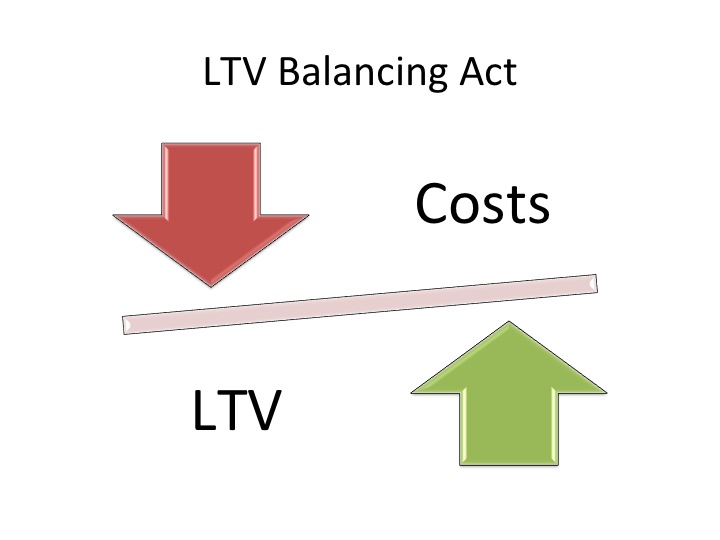


 , I realized that it is crucial to understand that LTV is a prediction and suffers the same risk as other predictions (e.g., elections, weather, sports scores).
 The Business of Social Games and Casino