
One lazy and ineffective way to keep customers happy is to lower prices or give them more things for free. Companies that do not know their customers well, or do not want to, often respond to the question of how to increase customer satisfaction or retention by lowering prices. In free-to-play products, this tactic involves giving users more virtual currency.
The lazy answer
This response is often a knee-jerk reaction to the question of “How do we improve our customer relationships?” It demonstrates that the person/company does not want to address the true dynamics of the relationships. Everybody would rather pay less for a product or get bigger free bonuses and rewards. It does not reflect any understanding of your users, their motivations or why they use your product.
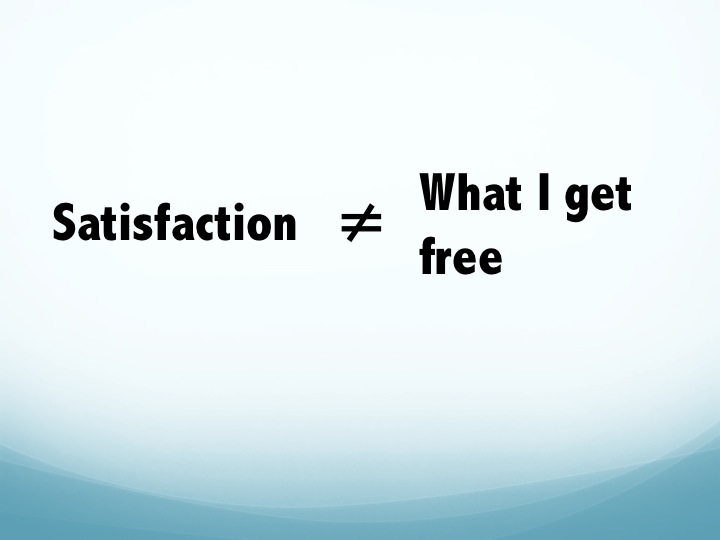
The reality of customer satisfaction
The reality is that users and players are motivated by many factors and rarely is cost the primary reason they use a product. The exception is companies that are focused solely on being a low cost provider, the Walmarts and Aldis, and for them price is the greatest lever to increase user satisfaction. In other cases people are driven by unique features or experiences that builds a bond with the product.
Does not create competitive advantage
The biggest mistake in throwing free stuff at users or players (or lowering prices) is that it does not create competitive advantage. Your competitors can easily match or beat what you are doing. If you are giving away five dollars worth of product daily and they want to steal your customers, they can give away $10. You end up with a race to the bottom in terms of pricing, and when you reach the bottom nobody has a particularly good business other than the companies built to compete on price (again, the Walmarts and Aldis).
Determining what creates satisfaction for your users
The first step is understanding what about your product or game motivates people to use it. There are several ways to build this understanding (listed in my order of preference): Continue reading “Why free stuff or lower prices don’t keep customers happy”
 The big buzz phrase in the Bay Area the last year or so has been “growth hacking,” and the ideas behind it can help significantly game companies. The underlying principle in the phrase is that modern start-ups should be focused on using the new tools available via technology to grow rapidly their user base rather than relying on older, sometimes outdated, marketing techniques. Growth—unlike marketing—usually encompasses multiple aspects of an organization, with the growth team not only bringing in users but also working with the product team to optimize the product for growth. It stresses the importance of product to growth and how the two should work together rather than having marketing set aside in a corner. The phrase itself was coined by
  The Business of Social Games and Casino