Skip to content

The Business of Social Games and Casino

How to succeed in the mobile game space by Lloyd Melnick

Category: General Social Games Business

Turning unhappy customers

I have always said the best measure of a company and its customer relationships is not how they avoid unhappy customers but how they deal with unpleasant situations. Inevitably, you will do something that some customers do not like. Rather than focusing on avoiding the inevitable, there is more value in building a strong plan to react to these unhappy people and turning them into a resource. In fact, if they are engaged enough to complain to you rather than just go to a competitor, unhappy customers have the potential to be VIPs if you handle them appropriately.

A recent KISSmetrics blog post by Josh Brown, “5 Ways to Turn Your Unhappy Customer Into A Valuable Resource,” provides strong tactical advice on addressing unhappy customers. By applying these tactics, you not only improve the word of mouth the users generate, but also increase lifetime value by building customers (or players) who will continue to purchase your product.

Slide1

Make your customers feel heard

The most effective way to be liked and admired is by listening to other people, a philosophy around which Dale Carnegie built a career. It is no different when dealing with your customers. An unhappy customer often cares more about being heard and understood than having their issue resolved. This means you need to listen to them and acknowledge their problem, not simply fix it.

As the Brown writes, “if you respond to an unhappy customer by immediately trying to get to a solution, it can possibly backfire and make the customer even more upset. Being unhappy or angry with a company or product puts the customer in a highly emotional state, so the first thing you should try to do is get them into a more agreeable frame of mind.”

Social media is often an opportunity to leverage this principle. You may see multiple Facebook posts about a problem and immediately fix it. While that sounds great, if you do not acknowledge the posts and communicate with the active community, they may not be satisfied and can negate the impact of the fix. Continue reading “Turning unhappy customers”
Share this:

  • Click to share on Facebook (Opens in new window) Facebook
  • Click to share on LinkedIn (Opens in new window) LinkedIn
Like Loading...
Unknown's avatarAuthor Lloyd MelnickPosted on November 6, 2014December 1, 2014Categories General Social Games Business, General Tech BusinessTags customer, Customer satisfaction, customer service, unhappy1 Comment on Turning unhappy customers

Are you a high-motor worker?

For those who watch sports, we almost universally admire the “high-motor” players. It might be fans, announcers, teammates, but whoever it is, we love players who give an incredible effort on every single play. In baseball, it is the player who sprints to first base even on a pop-up with a 99 percent chance of being out. In American football, it is the player who runs 90 yards to tackle someone who just intercepted a pass before they score a touchdown even if the team is down by 35 points (who can forget Don Beebe in the Super Bowl for the Bills). In basketball, it is the relatively small player who gets more rebounds than the 7-footer because they want it more.

In this post, I want to raise the question: Are you a high-motor worker? If they did live commentary on the tech industry, would the announcers talk about your intangibles? I often write about how to lead or build a team, but today I want you to focus on you.

There are two questions:

  1. Are you a high-motor worker?
  2. Do you want to be? As with most of my posts, there is not a right or wrong approach. You can be a great leader or employee without being high motor; there are only a few in every sport. There is nothing wrong with not being one of them, as it depends on your priorities or needs.

The goal of this post is not to be critical of people or behaviors, but to help make you more self-aware so you can be the person you want to be.

Go hard on every play

There are two elements to being high motor. The first is going hard on every project, even when it seemingly does not matter. In a business setting, it is often referred to when people are acting with a sense of urgency. Continue reading “Are you a high-motor worker?”

Share this:

  • Click to share on Facebook (Opens in new window) Facebook
  • Click to share on LinkedIn (Opens in new window) LinkedIn
Like Loading...
Unknown's avatarAuthor Lloyd MelnickPosted on November 4, 2014December 1, 2014Categories General Social Games Business, General Tech Business, Lloyd's favorite postsTags dennis rodman, High motor, intangibles, sportsLeave a comment on Are you a high-motor worker?

Psychology that can improve your metrics

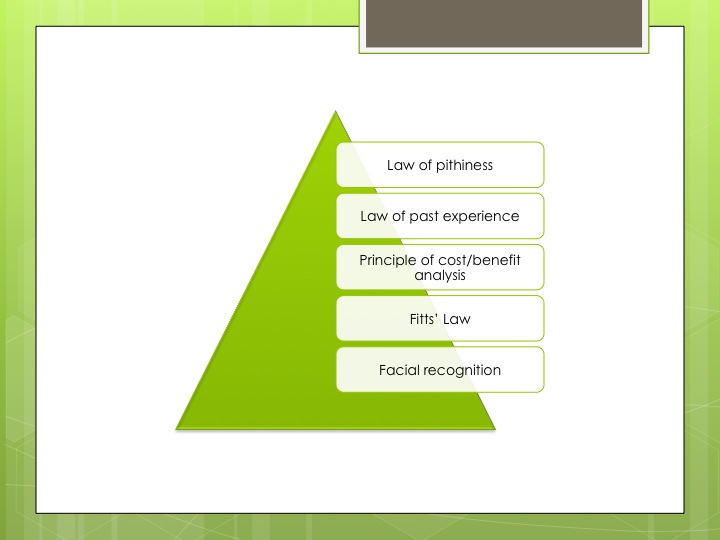
There was an interesting post recently on the Kissmetrics blog, “5 Psychological Principles of High Converting Websites,” that had some very interesting insights not just for website conversion but for overall product performance. Although I do not agree with all of these principles, understanding how your users think or play is crucial to success.

Slide1

Law of pithiness

The article starts with the law of pithiness, in which people tend to order their experiences in a symmetrical, simple manner. They prefer things that are clear and orderly, and are afraid of complex, complicated ideas or designs. The law of pithiness leads to a design principle that I think is critical: The simpler your product or game, the greater its chances for success. If it is a game, every second of training or tutorial reduces the chance it succeeds. If it is a product, the easier it is to use and the simpler it makes the users life, the more powerful it will be. Uber is successful because it takes about 15 seconds to hail a taxi, set the destination and pay. Social casinos games are habitually in the top grossing because you download the game, click on a slot machine, and you are playing. The more complex or difficult the process, the less likely for success.

Law of past experience

This principle suggests people interpret current experiences by their past experiences. If you try to change the way they need to do things, they are likely to not understand or rebel. For example, in your shopping cart or buy page, you may have a clever attractive icon for people to buy, but they are more likely to make a purchase if you have a button that says buy now because they remember that is how they make a purchase. Also, if you have an existing product with a large user base, you may improve the product but lose many of your existing users because they are used to using the product in a traditional way. For many years, in the land-based slot machine business, even when the slots went digital and only needed the push of a digital button, they had to include a mechanical arm because that is how people felt they should play a slot machine. Continue reading “Psychology that can improve your metrics”

Like Loading...
Unknown's avatarAuthor Lloyd MelnickPosted on October 28, 2014November 4, 2014Categories General Social Games Business, General Tech Business, GrowthTags cost/benefit, Facial recognition, Fitts Law, Kissmetrics, past experience, Pithiness, Psychology2 Comments on Psychology that can improve your metrics

Using tours of duty to have a better company employee relationship

One of the best books I read this year is The Alliance: Managing Talent in the Networked Age by Reid Hoffman. The core concept in the book is that there is no longer employment for life but there is still a way to build a win-win relationship between employers and employees. Hoffman and his co-authors suggest a tour-of-duty type relationship, where employer and employee agree to a short or medium term engagement with a defined goal.
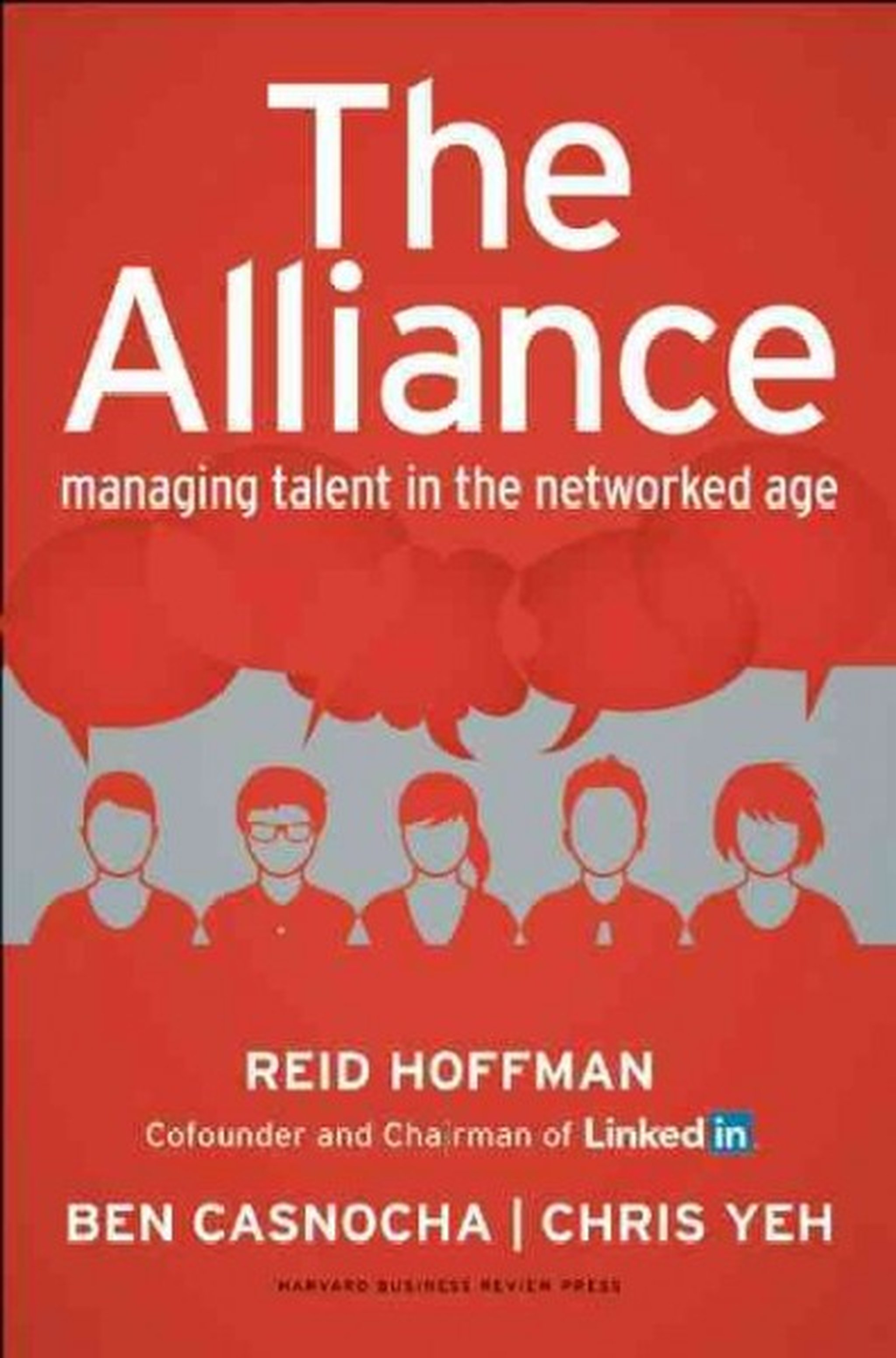

The Alliance by Reid Hoffman

The current reality

Hoffman begins by pointing out that in the at-will era (when employers can and do fire employees at their discretion), employees thus think of themselves as “free agents,” seeking out the best opportunities for growth and changing jobs whenever they get a better offers. He points to a 2012 study that found even though about half of employees wanted to stay with their current employer, most of them felt that they would have to take a job at a different company to advance their careers. Hoffman writes, “loyalty is scarce, long-term ties are scarcer, but there’s plenty of disillusionment to go around.”

Related to this point, employees’ trust of management is at an all-time low. One reason employees do not trust their employer is that the foundation of the relationship is built on dishonesty. When employees are courted, they are told about the fantastic long-term opportunities. When they answer interview question, they comment on how there goal is to spend their life contributing to the company. Both parties know this is nonsense but feel they must utter these phrases. It creates a relationship built on lies and a relationship without trust is a relationship without loyalty. A business without loyalty is a business without long-term thinking. A business without long-term thinking is a business that’s unable to invest in the future and thus one doomed to fail.

Tour of duty concept

A tour of duty is when the employer and employee mutually agree on a finite project, with goals for the employee’s contribution. It also includes how the tour of duty will benefit the employee. To create a fictitious example, say Uber wants to open the Las Vegas market to its service. When recruiting a VP, rather than pitching them on working for Uber for life, the hiring manager specifically lays out that the task will be a two-year project to penetrate Las Vegas. The employee will need to work with the legal team to counteract the local taxi companies and then recruit drivers. The candidate would learn how to lobby local governments and launch a location based tech product. Both agree that at the end of the two-year tour of duty, there may be another tour of duty at Uber that is mutually beneficial or the employee might use the skills he learned to help another company. For example, he may go over to Peapod to open the Austin market with the skills he learned at Uber. Uber benefits by having a successful launch in Las Vegas, and the employee is more valuable and has a great new opportunity. The important thing is both parties are honest with each other and they have built a mutually beneficial relationship. Continue reading “Using tours of duty to have a better company employee relationship”

Like Loading...
Unknown's avatarAuthor Lloyd MelnickPosted on October 23, 2014November 4, 2014Categories General Social Games Business, General Tech Business, Lloyd's favorite postsTags HR, recruiting, Reid Hoffman, The Alliance3 Comments on Using tours of duty to have a better company employee relationship

Bringing out the best in your team

I have written multiple times about collaboration and how valuable it is, and a recent piece in the Harvard Business Review – “Bringing out the best in your team” by Brian Bonner and Alexander Bolinger – reminded me of one critical ingredient. As all of us have experienced repeatedly, from case studies in business school to conference calls to team meetings, usually a small subset of the group drives the call or meeting. This phenomenon leads to two problems:

  1. The people dominating the meeting are not necessarily the ones with the most relevant knowledge.
  2. Everyone at the meeting should have something valuable to add, otherwise they should not be at the meeting, so letting a few monopolize restricts the knowledge shared.

Effectively, outgoing people get the most air time and visibility even if they are not the most expert on the topic or problem. Continue reading “Bringing out the best in your team”

Share this:

  • Click to share on Facebook (Opens in new window) Facebook
  • Click to share on LinkedIn (Opens in new window) LinkedIn
Like Loading...
Unknown's avatarAuthor Lloyd MelnickPosted on October 21, 2014November 4, 2014Categories General Social Games Business, General Tech BusinessTags collaboration, Meetings, teamsLeave a comment on Bringing out the best in your team

Look closely at track record, with the emphasis on closely

You often hear how important it is to look at a person or company’s history before hiring, investing, etc., and although it is crucial, it is also crucial to do more than look superficially. Conversely, just looking superficially can cause significant damage and lead you into a bad decision.

track

Using track record when hiring

Probably the most important factor when considering a candidate is what they have previously done in their career. While a weak candidate can shine for a day of interviews and a great candidate may not be good in an interview environment, what a person has done previously in their career is a strong indicator of what they can do for you.

The challenge is how to analyze a person’s track record. If you look on LinkedIn, 90 percent of people are all in the top 10 percent. In some cases (though I have found it rare among candidates for senior positions), people lie about their prior roles and achievements. This issue is easy to uncover; you just need to ensure you do your due diligence on background and reference checks. The one caveat is not to rely on the references that you are given, as almost anyone can find three or four people (often friends) that will say good things about them. You need to dig deeper, for key positions and achievements figure out who they reported to or worked with, then reach out directly to those people (I usually use LinkedIn) to get the real story.

The other key element of checking candidates’ track records is understanding their true roles on the major achievements they tout. Continue reading “Look closely at track record, with the emphasis on closely”

Share this:

  • Click to share on Facebook (Opens in new window) Facebook
  • Click to share on LinkedIn (Opens in new window) LinkedIn
Like Loading...
Unknown's avatarAuthor Lloyd MelnickPosted on October 16, 2014October 21, 2014Categories General Social Games Business, General Tech BusinessTags hiring, investment, recruiting, track record, VCLeave a comment on Look closely at track record, with the emphasis on closely

Creating billion-dollar businesses through recombination

I recently wrote about the winner-takes-all economy, based on what I read in The Second Machine Age by Erik Brynjolfsson and Andrew McAfee. The authors also provided some fascinating insights into how recombinations are driving economic growth. The insights about recombinations is very helpful in understanding the type of start-ups that are most likely to succeed.


Effectively, recombinations are taking different technological improvements and combining them to create disruptive products. An example they use is Waze, the smartphone app that provides optimal driving directions. Waze is a recombination of a location sensor, data transmission device (that is, a phone), GPS system, and social network. The team at Waze invented none of these technologies; they just put them together in a new way. None of these elements was particularly novel. Their combination was revolutionary.

While recombinations initially feel like something that would drive incremental innovation, because you are combining multiple rapidly increasing technologies it leads toexponential growth that creates staggeringly big numbers, ones that leave our intuition and experience behind.

The authors cite economist Martin Weitzman, who developed a mathematical model of new growth theory, in which the fixed factors in an economy—machine tools, trucks, laboratories, etc— are augmented over time by pieces of knowledge that he calls ‘seed ideas,’ and knowledge itself increases over time as previous seed ideas are recombined into new ones. This is an innovation-as-building-block view of the world, where both the knowledge pieces and the seed ideas can be combined and recombined over time. This model has a fascinating result: Because combinatorial possibilities explode so quickly, there is an infinite number of recombinations of the existing knowledge pieces. Continue reading “Creating billion-dollar businesses through recombination”

Share this:

  • Click to share on Facebook (Opens in new window) Facebook
  • Click to share on LinkedIn (Opens in new window) LinkedIn
Like Loading...
Unknown's avatarAuthor Lloyd MelnickPosted on October 14, 2014October 20, 2014Categories General Social Games Business, General Tech Business, Lloyd's favorite postsTags digitization, instagram, networks, recombination, Second Machine Age, Uber, WhatsApp1 Comment on Creating billion-dollar businesses through recombination

How games help licensors

There has been a lot written about how licensing intellectual property (IP) can help game companies succeed, but in many ways the real story is how games can make the IP more valuable. While a quick look at the app stores shows multiple highly ranked games tied to IP, with EA’s The Simpsons: Tapped Out a prime example of the power of a brand, many licensors are sub-optimizing or missing out by not realizing the value a successful game has for the brand.

This lesson was driven home to me by the near-simultaneous launch of Star Wars Commander and Star Trek Trexels. While Star Wars Commander is still a top-performing game, Trexels is virtually non-existent. While the initial reaction may be that Disney (the owner of the Star Wars franchise) is realizing some income that Viacom (the owner of the Star Trek franchise) is missing out on, the true impact on both licensors is much more important. Overall, the revenue from either Commander or Trexels will not impact the licensor; both are multi-billion dollar companies. Yet the importance of the Commander success should not be overlooked.

Star wars commander

Continue reading “How games help licensors”

Share this:

  • Click to share on Facebook (Opens in new window) Facebook
  • Click to share on LinkedIn (Opens in new window) LinkedIn
Like Loading...
Unknown's avatarAuthor Lloyd MelnickPosted on October 9, 2014October 15, 2014Categories General Social Games Business, Growth, Social Games MarketingTags IP, licensing, Star Trek Trexels, Star Wars Commander1 Comment on How games help licensors

Lifetime Value Part 23: Triggers, the key to both retention and virality

One theme that comes up repeatedly in what I read, and thus write, is the importance of Triggers. In my February analysis of Jonah Berger’s book Contagious, I discussed how triggers are one of the five core elements to creating a product with word of mouth. Then in June, I discussed Nir Eyal’s bestseller, Hooked, in which the author builds a model on creating a habit-forming product; triggers represent one of four phases of the model. Given the importance of word of mouth (virality) and habit (retention) as two of the three core components of customer lifetime value (LTV), this highlights the crucial role that triggers provide in success.

The role of triggers in virality and retention

Triggers are reminders for people to talk about our product, game or ideas. In Berger’s book, triggers are the foundation of word of mouth and contagiousness. For example, you may regularly show images of your game with coffee, so that people will think about and start discussing your product when they go to Starbucks.

The first step of Eyal’s Hook Model of retention is triggers. Triggers cue the user to take action. There are two types of triggers: external and internal. Habit-forming products start by alerting users with external triggers like an email, a website link or the app icon on a phone. An external trigger communicates the next action the user should take. Online, an external trigger may take the form of a prominent button, such as the Play Now button on many games. When users start to automatically cue their next behavior, the new habit becomes part of their everyday routine. Continue reading “Lifetime Value Part 23: Triggers, the key to both retention and virality”

Share this:

  • Click to share on Facebook (Opens in new window) Facebook
  • Click to share on LinkedIn (Opens in new window) LinkedIn
Like Loading...
Unknown's avatarAuthor Lloyd MelnickPosted on October 7, 2014October 15, 2014Categories General Social Games Business, General Tech Business, Growth, LTV, Social Games MarketingTags Contagious, Hooked, Jonas Berger, LTV, Nir Eyal, Triggers1 Comment on Lifetime Value Part 23: Triggers, the key to both retention and virality

Don’t underestimate the competition

One mistake I frequently see is when tech or game companies underestimate the competition, particularly when responding to a competitor’s product or game. Coupled with the need to be 9X better to get someone to switch to your product, this failure leads to many businesses nose-diving.

Maybe I should have considered the competition

Thinking your competitor is dumb

The most basic mistake is acting as if you are smarter than your competitor. Although most readers of this blog are quite intelligent (hence, why you are reading this blog ☺), so are leaders of your competitors. You are not going to create a more successful product or better game simply because you are smarter than other companies in the space. They also have great teams who are looking at the market. You need to find true competitive advantages. You are not going to win just because your mother told you that you were smart. Continue reading “Don’t underestimate the competition”

Share this:

  • Click to share on Facebook (Opens in new window) Facebook
  • Click to share on LinkedIn (Opens in new window) LinkedIn
Like Loading...
Unknown's avatarAuthor Lloyd MelnickPosted on October 2, 2014October 14, 2014Categories General Social Games Business, General Tech BusinessTags 9x better, competition, competitive response1 Comment on Don’t underestimate the competition

Posts pagination

Previous page Page 1 … Page 23 Page 24 Page 25 … Page 46 Next page

Get my book on LTV

The definitive book on customer lifetime value, Understanding the Predictable, is now available in both print and Kindle formats on Amazon.

Understanding the Predictable delves into the world of Customer Lifetime Value (LTV), a metric that shows how much each customer is worth to your business. By understanding this metric, you can predict how changes to your product will impact the value of each customer. You will also learn how to apply this simple yet powerful method of predictive analytics to optimize your marketing and user acquisition.

For more information, click here

Follow The Business of Social Games and Casino on WordPress.com

Enter your email address to follow this blog and receive notifications of new posts by email.

Join 791 other subscribers

Most Recent Posts

  • Join me at PDMA Inspire for my talk on new product prioritization
  • Why keep studying?
  • The next three years of this blog
  • Interview with the CEO of Murka on the biggest growth opportunity in gaming, Barak David

Lloyd Melnick

This is Lloyd Melnick’s personal blog.  All views and opinions expressed on this website are mine alone and do not represent those of people, institutions or organizations that I may or may not be associated with in professional or personal capacity.

I am a serial builder of businesses (senior leadership on three exits worth over $700 million), successful in big (Disney, Stars Group/PokerStars, Zynga) and small companies (Merscom, Spooky Cool Labs) with over 20 years experience in the gaming and casino space.  Currently, I am the GM of VGW’s Chumba Casino and on the Board of Directors of Murka Games and Luckbox.

Topic Areas

  • Analytics (114)
  • Bayes' Theorem (8)
  • behavioral economics (8)
  • blue ocean strategy (14)
  • Crowdfunding (4)
  • DBA (2)
  • General Social Games Business (459)
  • General Tech Business (195)
  • Growth (88)
  • International Issues with Social Games (50)
  • Lloyd's favorite posts (101)
  • LTV (54)
  • Machine Learning (10)
  • Metaverse (1)
  • Mobile Platforms (37)
  • Prioritization (1)
  • Social Casino (52)
  • Social Games Marketing (105)
  • thinking fast and slow (5)
  • Uncategorized (33)

Social

  • View CasualGame’s profile on Facebook
  • View @lloydmelnick’s profile on Twitter
  • View lloydmelnick’s profile on LinkedIn

RSS

RSS Feed RSS - Posts

RSS Feed RSS - Comments

Categories

  • Analytics (114)
  • Bayes' Theorem (8)
  • behavioral economics (8)
  • blue ocean strategy (14)
  • Crowdfunding (4)
  • DBA (2)
  • General Social Games Business (459)
  • General Tech Business (195)
  • Growth (88)
  • International Issues with Social Games (50)
  • Lloyd's favorite posts (101)
  • LTV (54)
  • Machine Learning (10)
  • Metaverse (1)
  • Mobile Platforms (37)
  • Prioritization (1)
  • Social Casino (52)
  • Social Games Marketing (105)
  • thinking fast and slow (5)
  • Uncategorized (33)

Archives

  • September 2023
  • December 2021
  • July 2021
  • March 2021
  • February 2021
  • January 2021
  • December 2020
  • November 2020
  • October 2020
  • September 2020
  • August 2020
  • July 2020
  • June 2020
  • May 2020
  • April 2020
  • March 2020
  • February 2020
  • January 2020
  • November 2019
  • October 2019
  • September 2019
  • June 2019
  • May 2019
  • April 2019
  • March 2019
  • February 2019
  • January 2019
  • December 2018
  • June 2018
  • May 2018
  • April 2018
  • March 2018
  • February 2018
  • January 2018
  • December 2017
  • June 2017
  • May 2017
  • April 2017
  • March 2017
  • February 2017
  • January 2017
  • December 2016
  • November 2016
  • October 2016
  • September 2016
  • June 2016
  • May 2016
  • April 2016
  • March 2016
  • February 2016
  • January 2016
  • December 2015
  • November 2015
  • October 2015
  • September 2015
  • July 2015
  • June 2015
  • May 2015
  • April 2015
  • March 2015
  • February 2015
  • January 2015
  • December 2014
  • November 2014
  • October 2014
  • September 2014
  • August 2014
  • July 2014
  • June 2014
  • May 2014
  • April 2014
  • March 2014
  • February 2014
  • January 2014
  • December 2013
  • November 2013
  • October 2013
  • September 2013
  • August 2013
  • July 2013
  • June 2013
  • May 2013
  • April 2013
  • March 2013
  • February 2013
  • January 2013
  • December 2012
  • November 2012
  • October 2012
  • September 2012
  • August 2012
  • July 2012
  • June 2012
  • May 2012
  • April 2012
  • March 2012
  • February 2012
  • January 2012
  • December 2011
  • November 2011
  • October 2011
  • September 2011
  • August 2011
  • July 2011
  • June 2011
  • May 2011
  • December 2010
January 2026
S M T W T F S
 123
45678910
11121314151617
18192021222324
25262728293031
« Sep    

by Lloyd Melnick

All posts by Lloyd Melnick unless specified otherwise
Google+

Enter your email address to subscribe to this blog and receive notifications of new posts by email.

Join 791 other subscribers
Follow Lloyd Melnick on Quora

RSS HBR Blog

  • New Research on Copycat Products, Your Pitch-Day Dress Code, When Hand Gestures Help Persuasion, and More
  • Leaders, Bring Your Best Self into the New Year
  • What Actually Works to Change Someone’s Mind
  • Our Favorite Management Tips of 2025
  • How to Manage—and Motivate—Gen Z
  • The Most-Watched HBR Videos of 2025
  • The HBR Charts that Help Explain 2025
  • The Most Popular HBR Podcast Episodes of 2025
  • How the Best Leaders Develop and Spend “Innovation Capital”
  • The 10 Most Popular HBR Articles of 2025

RSS Techcrunch

  • An error has occurred; the feed is probably down. Try again later.

RSS MIT Sloan Management Review Blog

  • Calm: The Underrated Capability Every Leader Needs Now
  • The Top Five MIT SMR Videos of 2025
  • Three Steps Toward Fairer Talent Management
  • From Crisis to Coopetition: What Leaders Can Learn From Anesthesiologists
  • AI Coding Tools: The Productivity Trap Most Companies Miss
  • How Procter & Gamble Uses AI to Unlock New Insights From Data
  • Rewire Organizational Knowledge With GenAI
  • Hungry for Learning: Wendy’s Will Croushorn
  • Beat Burnout: 10 Essential MIT SMR Reads
  • How Leaders Stay True to Themselves and Their Stakeholders
The Business of Social Games and Casino Website Powered by WordPress.com.
  • Subscribe Subscribed
    • The Business of Social Games and Casino
    • Join 726 other subscribers
    • Already have a WordPress.com account? Log in now.
    • The Business of Social Games and Casino
    • Subscribe Subscribed
    • Sign up
    • Log in
    • Report this content
    • View site in Reader
    • Manage subscriptions
    • Collapse this bar
 

Loading Comments...
 

    %d