Customer service is a function that is usually neglected in the tech or game space. A recent article in the MIT Sloan Management Review, “The High Price of Customer Satisfaction,” shows companies can also err by focusing on creating too much customer delight. The article points out that customer satisfaction is the most widely used metric to measure and manage customer loyalty because companies assume highly satisfied customers are good for business. The article points out that the reality is not as simple as the belief that high customer satisfaction optimizes profitability. In the article, the authors look across industries and find the correlation between companies’ customer-satisfaction levels for a given year and the company’s performance (as measured by stock price) only explains 1 percent of the variation in a company’s market return. Another study by Bloomberg’s Business Week actually shows a negative relationship. Although you can poke holes in these studies, overall the relationship between customer spending and customer satisfaction is very weak. Because of this and similar research, many consultants and authors have argued that achieving customer satisfaction is a waste of money. The authors, however, conducted extensive research and uncovered three critical issues that keep customer satisfaction from generating higher revenue. By understanding these three issues, any tech or game company (which I think will find them very familiar) can create a better customer service strategy.
Avoid money losing delighters
Strong customer service (CS) scores are normally considered universally good for business but the data is not as clear-cut. There is a downside to devoting resources continually to raise customer satisfaction levels. As companies cannot usually quantify the costs associated with raising customer satisfaction levels, you cannot determine the value of an increase. Often, the return on investment for improving customer satisfaction is trivial or negative. Although higher satisfaction scores can increase revenue, the costs of getting the higher scores frequently outweigh the benefits. Pricing is a great example of this phenomenon.
One key factor that drives customer satisfaction is low prices, as satisfaction and price are almost inversely related. Thus, lowering price tends to be one of the easiest ways to improve satisfaction levels (in the game industry, which could be the same as giving away premium currency). The problem is that most companies and products, low prices are often bad for business and there is not much room to drop prices and remain profitable. The authors used examples of a large financial services institution and Groupon to illustrate this point. With the financial institution, the majority of customers were highly satisfied. Unfortunately, over two-thirds of these highly satisfied customers were also unprofitable for the company. The customers’ high satisfaction was driven primarily by their belief that they were getting great deals, which they were. Each time the company underpriced its offer, these customers bought in large quantities. The problem was exacerbated as the more they spent, the more additional services they expected. With Groupon, there is a usually negative relationship between customer satisfaction and merchant profitability. Four of the six top performing categories of Groupon offers in terms of satisfaction were money losers for the merchants. These four categories, as they were so popular, generate half of Groupon’s volume.
These examples show that customer satisfaction and profitability are often not aligned. There are other ways to improve customer satisfaction, a better customer experience or more innovative products. However, not all alternatives will be profitable. Moreover, not all customers can be profitably satisfied; some will not pay the necessary price for the level of service being offered. Others demand a level of service that more than offsets any revenue they provide. The point of this issue: you must understand the profit impact of efforts to improve customer satisfaction.
Smaller often equals happier
While conventional wisdom suggests that higher satisfaction would lead to higher market share, the author’s research shows that high satisfaction is a negative predictor of market share. They use some very obvious examples to make their point. McDonalds has lower customer satisfaction scores than Wendy’s but much higher sales. Target, Sears and JC Penney all consistently outperform Wal-Mart on customer satisfaction but there sales and profits fall way behind. The primary reason for this seeming contradiction is that the broader a company’s market appeal relative to the offerings of competitors, the lower the level of satisfaction. Gaining market share normally comes from attracting customers whose needs are not completely aligned with the company’s core target market. Thus, smaller niche companies can better serve their customers while companies with large market share must serve a more diverse set of customers. This data suggests you should not necessarily benchmark against the companies in your space with the highest customer satisfaction levels, they are probably niche players that by design are tailored to their individual audience. It also shows that you a focus on improving your score may not improve your profitability.
The importance of being number one
Improving customers’ share of spending with your brand often represents a far greater opportunity than efforts to improve customer retention. Many companies assume that higher customer satisfaction scores will result in a greater share of customer’s wallet. The research, however, shows virtually no correlation between satisfaction and wallet share. They hypothesize this occurs because customers now have divided loyalty (they are not committed to a single brand), more customers partially defect than completely defect from a business or brand. This is particularly true in the free to play game space, where players will partially defect to another game or app. The weak relationship between satisfaction and wallet share leaves many companies unable to identify what they can do to capture a greater share of customer spending. They tend to believe that customers who consider themselves completely satisfied are more likely to give the bulk of their spending in the category to their brand. The goal then becomes to get that number up. Unfortunately, company’s satisfaction or NPS (Net Promoter Score) is a poor indicator of the relative preference that customers have toward the brands they use. Customers normally divide their spending among multiple competing games or brands. Since not all are equal in satisfying customers, those that better satisfy will get a greater share of customers’ spending. The measure that really impacts revenue is the relative rank that your brand’s satisfaction level represents compared to your competitors. Satisfaction is relative to competitive alternatives.
How to succeed with customer satisfaction
 While focusing simply on high customer satisfaction is not a profitable strategy, using it appropriately has huge benefits. Continue reading “Optimizing customer service is not about keeping everyone happy”
 . The core concept in the book is that there is no longer employment for life but there is still a way to build a win-win relationship between employers and employees. Hoffman and his co-authors suggest a tour-of-duty type relationship, where employer and employee agree to a short or medium term engagement with a defined goal.
 . The authors also provided some fascinating insights into how recombinations are driving economic growth. The insights about recombinations is very helpful in understanding the type of start-ups that are most likely to succeed.

 by Jay Bilas and was surprised how many of Bilas’ ideas from sports were also relevant to success in business. There are many examples from sports that can help you be successful in business, and Bilas’ analysis of toughness is at the forefront of these lessons. Since reading the book, I have asked my team to read regularly the article that led to the book. The underlying principle for Bilas is that toughness is not about bravado and conflict. It is found in the heart of an individual willing to devote him- or herself to what s/he knows is right. Toughness isn’t physical. It has nothing to do with size, physical strength or athleticism. It’s an intangible, an attitude, a philosophy.Toughness comes from how you handle your experiences, what you learn from them, and how others guide you through them in your life. Most importantly, it is a skill that can be improved by working on it.
 Bend but do not break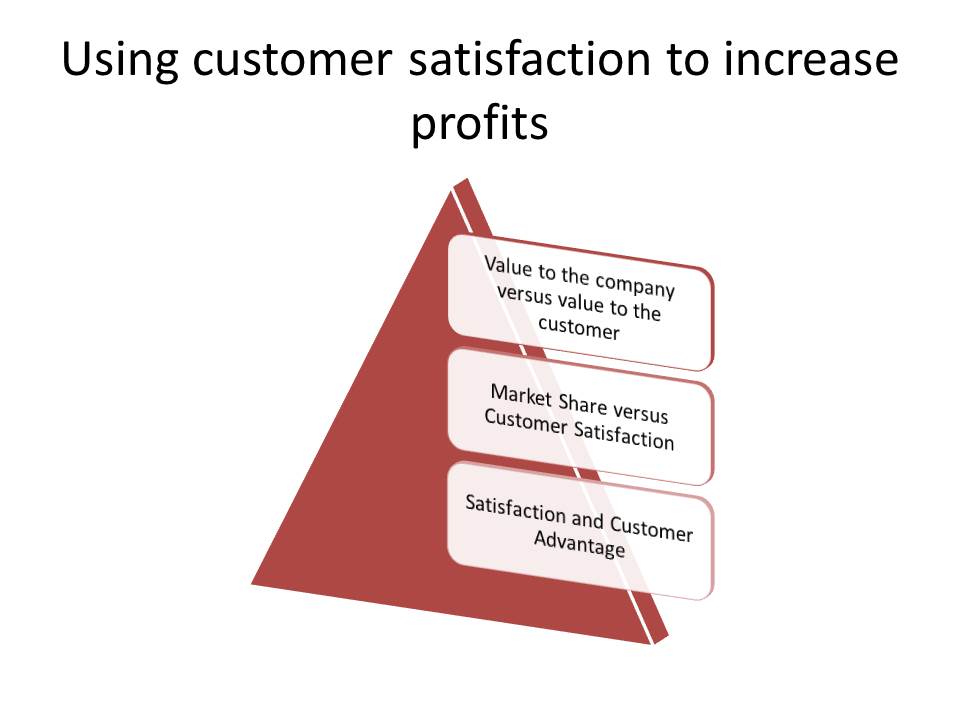
 The Business of Social Games and Casino