Skip to content

The Business of Social Games and Casino

How to succeed in the mobile game space by Lloyd Melnick

Category: General Social Games Business

Creating that Aha moment

There was a great blog post on the Mode Blog, “Facebook’s Aha Moment is Simpler Than You Think,” which provided a straightforward strategy to creating Aha moments. Aha moments when a player or user understands the value of your product are widely considered the key to growth.

Slide1

The key point of the post was that you create the aha moment through simple math and strong messaging; it is not a complex task that requires advanced analytics. Take Facebook’s self-defined aha moment, acquiring seven friends in ten days. In practice, this is not a binary. Some people may fall in love with Facebook after getting three friends in a week; others may need to get twenty friends in thirty days. This fact does not take away from the aha moment, it is actually the point of the aha moment. The blog post states, “Facebook’s decision to define their ‘aha moment’ in such simple terms suggests they weren’t trying to optimize it to be precise as possible. Other “aha moments”—30 follows, 1 file upload, 2,000 messages—follow the same pattern: they emphasize simplicity over science…. Because “aha moments” aren’t about precision, but about defining a core principle and a quotable rally cry for the entire company. “

Defining the aha moment

To create a useful aha moment, you need to tie it to a metric that defines customer value. Keep in mind that it is not one “moment,” Facebook’s aha moment is over ten days and requires seven different actions (friending seven people).

The most useful metrics for quantifying your aha moment are based on retention. Customers who find value come back. If you identify which actions separate retained customers from lost ones, you will know what drives customer value and then have your “aha moment.” Continue reading “Creating that Aha moment”

Like Loading...
Unknown's avatarAuthor Lloyd MelnickPosted on February 12, 2015April 24, 2021Categories Analytics, General Social Games Business, General Tech Business, GrowthTags aha moment, analytics, Growth, retentionLeave a comment on Creating that Aha moment

It is NOT going to be different this time

One phrase has wiped billions of dollars off the balance sheets of individuals and companies: “This time is going to be different because….” It is how people often rationalize jumping on a trend or bubble, even when past experience shows it will not last. The rise of Trivia Crack (which I play frequently), and the commentary accompanying it, is the latest example of this phenomenon.

Trivia Crack

The housing crisis

During the height of the US housing market bubble, I remember seeing multiple experts explain why the steep run-up in prices was not the same as past bubbles. They explained that it was due to changing demographics, realignment of wealth, new consumer behavior that favored home ownership over other asset classes, and other arguments that made them sound very smart on CNBC. Years earlier during the dot.com boom, experts (many of them the same) explained how that was not a bubble and companies would no longer be valued on profitability (but on market share) and how the economics have changed.

In each of these boom times, experts and laymen alike refused to look at past history, such as Tulip Mania, and picked facts to justify a difference where none existed. Turns out these arguments, while factually correct in some cases (i.e. demographics have changed in the US) were simply noise and did not truly impact the underlying asset value.

Trivia Crack

This same phenomenon is evident in the technology and digital game space. A game becomes very popular and immediately the entire industry thinks there is a new formula for success. The company behind the game may sell for millions and literally hundreds of companies try to “fast-follow” or add the mechanic to existing products. Continue reading “It is NOT going to be different this time”

Like Loading...
Unknown's avatarAuthor Lloyd MelnickPosted on February 10, 2015April 24, 2021Categories General Social Games Business, General Tech BusinessTags bubble, trivia crack, tulip mania, us housing marketLeave a comment on It is NOT going to be different this time

It is about creating a monopoly, not winning

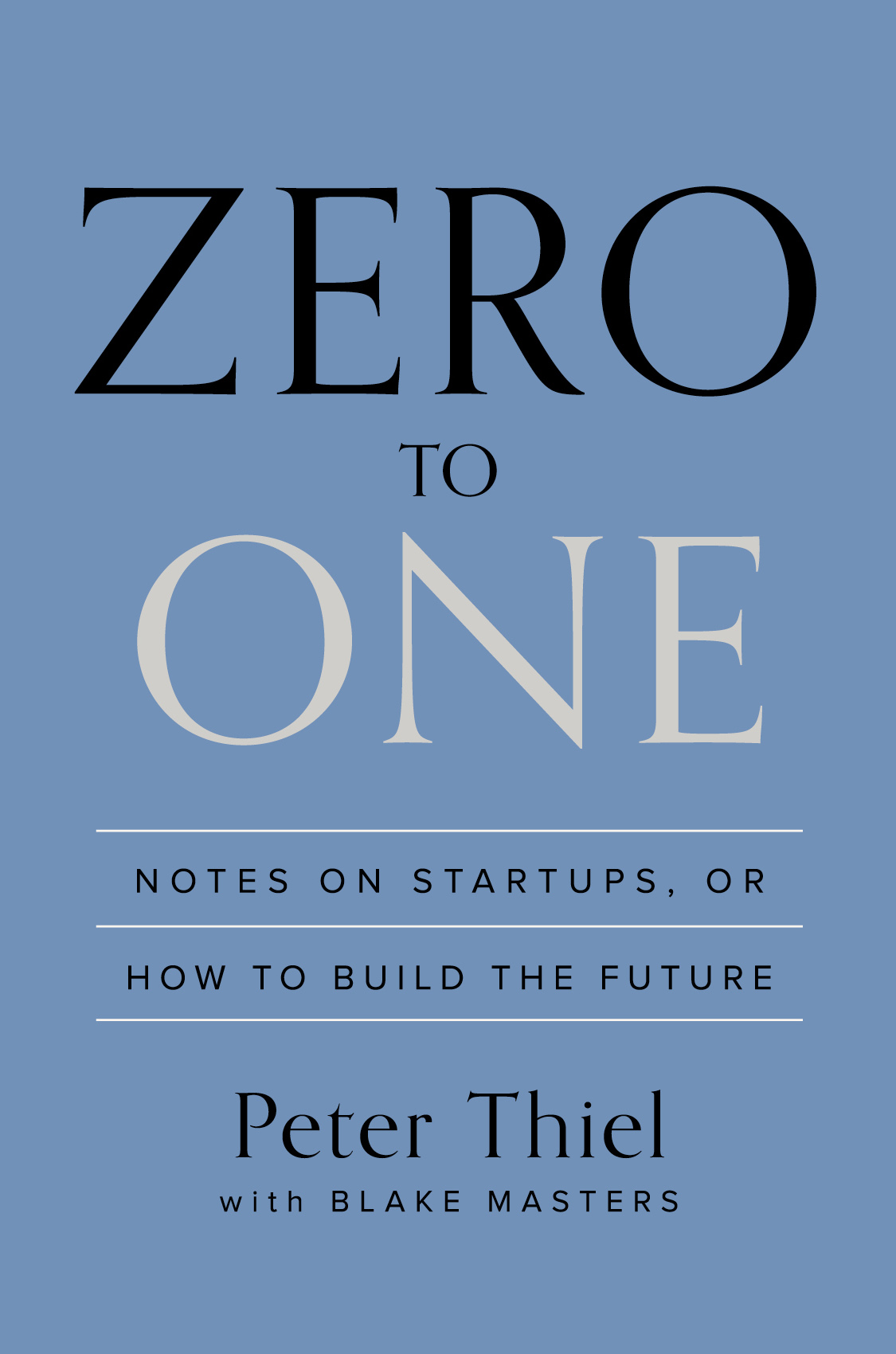
thiel_6_4_frontIn Peter Thiel’s hot book, Zero to One: Notes on Startups, or How to Build the Future, he makes many interesting observations (some I agree with, some I do not) but one in particular is particularly valuable. Thiel asserts that great companies are not great because they beat their competition, they are great because they do not have competition. Although he does not quote Blue Ocean Strategy, it is very consistent with their thesis and data that shows that companies that create new markets have much higher economic returns than those who come up with new strategies to defeat their competition.

Basic economics

Thiel’s point about the benefits of creating what he refers to as a monopoly, what I call a blue ocean opportunity, resonated with me as he use basic economics to prove the point. At its core, classical economics shows competition will drive out excess profits. That is why although Exxon makes a lot of money, they do not make a higher return on investment than another oil company. Whatever you are doing, somebody else will copy.

Thiel points out that, “Americans mythologize competition and credit it with saving us from socialist bread lines. Actually, capitalism and competition are opposites. Capitalism is premised on the accumulation of capital, but under perfect competition all profits get competed away. The lesson for entrepreneurs is clear: if you want to create and capture lasting value, don’t build an undifferentiated commodity business.“ Instead he advocates building a virtual monopoly, a company so good at what it does that no other firm can offer a close substitute. Continue reading “It is about creating a monopoly, not winning”

Like Loading...
Unknown's avatarAuthor Lloyd MelnickPosted on February 5, 2015April 24, 2021Categories General Social Games Business, General Tech Business, Growth, Lloyd's favorite postsTags blue ocean strategy, brand, competition, Excess Profits, Monopolies, Peter Thiel, Playing to Win, proprietary technology, Zero to One3 Comments on It is about creating a monopoly, not winning

Success = Vision + Process + Output

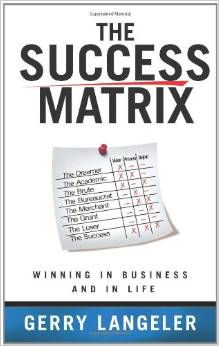
Possibly the best book I have read in the past year (not just in 2015) is The Success Matrix by Gerry Langeler. Langeler is a highly successful venture capitalist and entrepreneur who credits this concept to his success. The Success Matrix puts forth a very straightforward concept: Success needs a combination of vision, process and output. Langeler primarily uses this idea to suggest how to build and lead a successful team. Rather than trying to find people who excel at all three variables, since very few exist, great companies combine people so that the company can excel at all three elements.

Success Matrix

The three elements of success

  • Vision. Vision represents a broadly understood sense of direction that encompasses competitive leadership in your industry over time.
    You should ask whether you or your employee has the vision of where you need to go and what you need to do over time. This vision should be sensible, focused and well grounded with a sense of direction. As Langeler writes, “this is different than any specific task, product plans or targets. It means precisely what it says. If you are headed in a direction, you know roughly where you are going, even if you don’t know exactly where you’ll end up.”
  • Process. Process is the structures, methods and procedures to produce repeatedly timely, high-quality products or services, independent of changes in people. You can determine if you have strong process whether profitable products and services are
    being produced with predictable regularity.
  • Output. Langeler defines as output as profitable products and services are being produced with predictable regularity. “Profitable products and services” is the key driver for output. It identifies if costs are in line value is recognized in the marketplace. Any Output short of profitable is wasted effort. “Predictable” regularity speaks to whether the Output is both sustained and sustainable. Short bursts of excellence are not enough.

Evaluate your team

Very few people are strong at all three components (vision, process and output) of the success matrix. If you look at vision, process and output as binaries (people are either good at them or not), there are nine possible combinations to classify everyone (e.g., good at vision and output, not process; good at process and output, not vision). Langeler actually puts labels on each of the nine possible combinations but that is the one element of his work I do not like; I feel that the labels are loaded and create unnecessary value judgments. Continue reading “Success = Vision + Process + Output”

Like Loading...
Unknown's avatarAuthor Lloyd MelnickPosted on January 29, 2015March 19, 2015Categories General Social Games Business, General Tech Business, Lloyd's favorite postsTags gerry langeler, leadership, output, process, recruiting, Success matrix, team building, visionLeave a comment on Success = Vision + Process + Output

How to avoid a product change or new feature debacle

A recent post on TechCrunch about TaskRabbit’s roll-out of a new market structure, largely seen as a failed roll-out, offers many lessons for all types of companies. TaskRabbit rolled out a very different version of its market place last July and faced what many called a “revolt” and “rabbit revolution.” Outside of the business reasons for the change and whether it was a net positive for the company (still debatable), there are many lessons from the experience for any company.

TaskRabbit logo

Do not surprise your customers

TaskRabbit’s change to a new platform caught many of its customers by surprise, leading to immediate protests. TaskRabbit had tested its new platform in the United Kingdom (where it previously did not have a presence) and saw substantial improvement in its metrics. Based on these results, it decided to replace its platform in the U.S. with the new model. As TechCruch wrote, “as soon as the launch actually went live, the protests and confusion started to pour in.” The company underestimated just how strong the bidding and auction model was ingrained in its brand identity here in the U.S., and how that resonated emotionally with users. Continue reading “How to avoid a product change or new feature debacle”

Like Loading...
Unknown's avatarAuthor Lloyd MelnickPosted on January 27, 2015January 29, 2015Categories Analytics, General Social Games Business, General Tech BusinessTags customer service, metrics, new feature, taskrabbitLeave a comment on How to avoid a product change or new feature debacle

Use smart CRM to avoid being dumb

I recently read an interesting book, Smart Customers Stupid Companies by Michael Hinshaw and Bruce Kasanoff, that made an excellent case on why you should make your CRM (customer retention management) systems more sophisticated. The underlying idea is that customers, players, users, etc., are very connected, they regularly use mobile devices and tablets, have easy access to a computers and thus can find almost any data quickly (ever hear of Google?). As customers have and take advantage of instant access to information, they thus expect the companies they deal with to be equally sophisticated.


Consumers and businesses alike research, connect, and purchase online and over their phones. As Hinshaw and Kasanoff write, “[w]ith these tools come radically higher customer expectations. Higher expectations of experience. Greater demands for personalization and customization. Lower tolerance for mistakes, for running through inane hoops, or for interactions that require mindless repetition.”

What are smart customers?

Customers these days have immediate access to almost all information, with Google, Wikipedia, Angie’s List, etc., literally in the palm of their hands. Customers can outwit salespeople, easily spot misstatements by customer service reps, and have near-instant access to the accumulated knowledge of human civilization. The trend is continuing to accelerate; with each new generation of devices people have access to more information.

Customers are also getting less patient, and younger customers never had much patience to begin with. Anyone 20 or younger has never known a world without the Web. The oldest of this generation are now adults, soon to graduate from college and start households of their own. Continue reading “Use smart CRM to avoid being dumb”

Like Loading...
Unknown's avatarAuthor Lloyd MelnickPosted on January 22, 2015January 29, 2015Categories General Social Games Business, General Tech BusinessTags CRM, customer experience, customer service, segmentation, smart CRM, smart customers, smart customers dumb companies1 Comment on Use smart CRM to avoid being dumb

Ignorance is a competitive advantage

I recently had a conversation with a gaming industry CEO whom I deeply respect that reinforced a MIT Sloan Management Review article, “Embrace Your Ignorance” by Michael Schrage, about how the savviest leaders promote and embrace ignorance. The thesis for both Schrage and the CEO was that you cannot accurately predict what your customers will want, like or need. Thus, you need to embrace this ignorance and run experiments to get the data.

Moneyball and The Innovator’s Dilemma

I have seen many companies where the leadership “felt” they understood the customer and would develop new products for these customers. It leads to project green light meetings very similar to the draft room in Moneyball, where people argue based on their experience which initiatives have the most potential. It is also one of the biggest contributors to the huge number of failed projects, particularly in the gaming space where we typically see more than 8 out of 10 new games fail.

This issue is actually often a bigger problem with executives who have had past successes. Even if they knew their existing or past customers very well, they do not necessarily know what a broader or new market wants. Even their existing data can skew innovation effort, which is the core point of the Innovator’s Dilemma: Companies that have been leap-frogged often create innovations for existing markets rather than new markets.

You already are ignorant—accept it

Slide1

In Schrage’s article, he discusses how Microsoft’s Ronny Kohavi (a pioneer in online experimentation) challenges tech-savvy audiences when he speaks. Kohavi shows screenshots of actual A/B tests that Microsoft has run for website design. He then asks his audience to predict the outcome of the tests. Although the audience is sophisticated, they almost always fragment with different opinions. Kohavi then advises, “stop debating…it’s easier to get data.” Continue reading “Ignorance is a competitive advantage”

Like Loading...
Unknown's avatarAuthor Lloyd MelnickPosted on January 13, 2015January 29, 2015Categories Analytics, General Social Games Business, General Tech Business, Lloyd's favorite postsTags analytics, experimentation, ignorance, Innovator's Dilemma, michael schrage, MoneyballLeave a comment on Ignorance is a competitive advantage

Analytics in 2015

Since Thomas Davenport wrote Competing on Analytics in 2007, the use of analytics has evolved from a niche contributor to the central role of successful companies decision making, product development, marketing and other core functions. A great white paper published by Tableau highlights what it considers the top 10 trends for business intelligence. Of these ten trends, there are five that I agree will impact significantly companies this year.

Slide1

Analytics emerge across the organization

Analytics will no longer be a domain dominated by analysts and data scientists; instead everyone in the organization will be using analytics daily for their decision making. Easier-to-use technologies that provide browser-based or mobile analytics let people answer ad-hoc business questions. Companies that recognize this as a strategic advantage will begin to support managers and front-line personnel with data, tools and training to help them do their jobs more effectively.

Everything integrates

There has been a huge amount of innovation across the data space, resulting in mixed environments for everything from data storage to analytics to business applications. Although there will not be one system or application for all of your needs, the different analytic systems will be more integrated and easier to use, making them more accessible across your company. You will laugh at the multiple logins and clunky processes you had to use during analytics 1.0. Continue reading “Analytics in 2015”

Like Loading...
Unknown's avatarAuthor Lloyd MelnickPosted on January 8, 2015January 29, 2015Categories Analytics, General Social Games Business, General Tech BusinessTags analytics, social intelligence, social media, TableauLeave a comment on Analytics in 2015

WeWork, 1.5 billion examples of the power of recombination

Last year (and I have been waiting to say that), I wrote about the power of recombinations and how it is a driving force for entrepreneurs in creating billion dollar businesses. I recently was reading about WeWork and its $1.5 billion valuation (which should rise to $6 billion this year) and realized it is an ideal example of the power of recombination (or some would say 1.5 billion examples).

Recombination

Recombination is a phrase I picked up from Erik Brynjolfsson and Andrew McAfee’s book The Second Machine Age. To recap, recombinations are taking different technological improvements and combining them to create disruptive products. An example they use is Waze, the smartphone app that provides optimal driving directions. Waze is a recombination of a location sensor, data transmission device (that is, a phone), GPS system, and social network. The team at Waze invented none of these technologies; they just put them together in a new way. None of these elements was particularly novel, but their combination was revolutionary.

WeWork

WeWork co-working office

WeWork is a provider of shared office space for entrepreneurs that, as mentioned above, was valued at $1.5 billion last year when it raised $150 million from investors including Benchmark Capital. WeWork has 31 locations where it provides business services and office space to 15,023 companies. Given that many of us would like to start $1 billion companies, WeWork provides a great example of how recombination can be used to create billions of dollars of value. Continue reading “WeWork, 1.5 billion examples of the power of recombination”

Like Loading...
Unknown's avatarAuthor Lloyd MelnickPosted on January 6, 2015January 29, 2015Categories General Social Games Business, General Tech BusinessTags Erik Brynjolfsson, recombination, Second Machine Age, WeWorkLeave a comment on WeWork, 1.5 billion examples of the power of recombination

The perils of saying your product or game is the best

I read an interesting piece in the Harvard Business Review, “The Danger of Touting a Product as The Best” by Jingjing Ma and Neal Roese, on why touting your game or product as the best can backfire. Ma and Roese show that positioning your product as the best in comparative ads actually activates a maximizing mindset with customers, where people regard anything less than perfect as a waste of money. While there are some people who are always maximizers (that is, they consider anything not perfect a waste), with most people this attitude is not fixed.

In Ma and Roese’s research, you can induce the maximizing mind-set with situations that encourage customers to make comparisons or to look for the very best product. Once this is activated, the customer may face post-purchase regret and be more likely to switch to another product after a minor disappointment. This phenomenon is particularly powerful in the free-to-play game space, as losing users early has a very powerful impact on lifetime value.Slide1

There are several approaches growth and marketing experts can use to mitigate this situation:

  • Think twice before running comparative ads.
  • Limit assertions of optimal features.
  • Do not claim overall to be best, even if you are very good.

Key takeaways

  1. Telling customers your product is the best can backfire because it sets unreasonable expectations.
  2. You should consider carefully whether it is beneficial to run comparative ads against your competitors
  3. Limit your assertions of optimal features.

Share this:

  • Click to share on Facebook (Opens in new window) Facebook
  • Click to share on LinkedIn (Opens in new window) LinkedIn
Like Loading...
Unknown's avatarAuthor Lloyd MelnickPosted on December 23, 2014December 15, 2014Categories General Social Games Business, General Tech Business, Social Games MarketingTags Comparative ads, marketing messaging1 Comment on The perils of saying your product or game is the best

Posts pagination

Previous page Page 1 … Page 21 Page 22 Page 23 … Page 46 Next page

Get my book on LTV

The definitive book on customer lifetime value, Understanding the Predictable, is now available in both print and Kindle formats on Amazon.

Understanding the Predictable delves into the world of Customer Lifetime Value (LTV), a metric that shows how much each customer is worth to your business. By understanding this metric, you can predict how changes to your product will impact the value of each customer. You will also learn how to apply this simple yet powerful method of predictive analytics to optimize your marketing and user acquisition.

For more information, click here

Follow The Business of Social Games and Casino on WordPress.com

Enter your email address to follow this blog and receive notifications of new posts by email.

Join 791 other subscribers

Most Recent Posts

  • Join me at PDMA Inspire for my talk on new product prioritization
  • Why keep studying?
  • The next three years of this blog
  • Interview with the CEO of Murka on the biggest growth opportunity in gaming, Barak David

Lloyd Melnick

This is Lloyd Melnick’s personal blog.  All views and opinions expressed on this website are mine alone and do not represent those of people, institutions or organizations that I may or may not be associated with in professional or personal capacity.

I am a serial builder of businesses (senior leadership on three exits worth over $700 million), successful in big (Disney, Stars Group/PokerStars, Zynga) and small companies (Merscom, Spooky Cool Labs) with over 20 years experience in the gaming and casino space.  Currently, I am the GM of VGW’s Chumba Casino and on the Board of Directors of Murka Games and Luckbox.

Topic Areas

  • Analytics (114)
  • Bayes' Theorem (8)
  • behavioral economics (8)
  • blue ocean strategy (14)
  • Crowdfunding (4)
  • DBA (2)
  • General Social Games Business (459)
  • General Tech Business (195)
  • Growth (88)
  • International Issues with Social Games (50)
  • Lloyd's favorite posts (101)
  • LTV (54)
  • Machine Learning (10)
  • Metaverse (1)
  • Mobile Platforms (37)
  • Prioritization (1)
  • Social Casino (52)
  • Social Games Marketing (105)
  • thinking fast and slow (5)
  • Uncategorized (33)

Social

  • View CasualGame’s profile on Facebook
  • View @lloydmelnick’s profile on Twitter
  • View lloydmelnick’s profile on LinkedIn

RSS

RSS Feed RSS - Posts

RSS Feed RSS - Comments

Categories

  • Analytics (114)
  • Bayes' Theorem (8)
  • behavioral economics (8)
  • blue ocean strategy (14)
  • Crowdfunding (4)
  • DBA (2)
  • General Social Games Business (459)
  • General Tech Business (195)
  • Growth (88)
  • International Issues with Social Games (50)
  • Lloyd's favorite posts (101)
  • LTV (54)
  • Machine Learning (10)
  • Metaverse (1)
  • Mobile Platforms (37)
  • Prioritization (1)
  • Social Casino (52)
  • Social Games Marketing (105)
  • thinking fast and slow (5)
  • Uncategorized (33)

Archives

  • September 2023
  • December 2021
  • July 2021
  • March 2021
  • February 2021
  • January 2021
  • December 2020
  • November 2020
  • October 2020
  • September 2020
  • August 2020
  • July 2020
  • June 2020
  • May 2020
  • April 2020
  • March 2020
  • February 2020
  • January 2020
  • November 2019
  • October 2019
  • September 2019
  • June 2019
  • May 2019
  • April 2019
  • March 2019
  • February 2019
  • January 2019
  • December 2018
  • June 2018
  • May 2018
  • April 2018
  • March 2018
  • February 2018
  • January 2018
  • December 2017
  • June 2017
  • May 2017
  • April 2017
  • March 2017
  • February 2017
  • January 2017
  • December 2016
  • November 2016
  • October 2016
  • September 2016
  • June 2016
  • May 2016
  • April 2016
  • March 2016
  • February 2016
  • January 2016
  • December 2015
  • November 2015
  • October 2015
  • September 2015
  • July 2015
  • June 2015
  • May 2015
  • April 2015
  • March 2015
  • February 2015
  • January 2015
  • December 2014
  • November 2014
  • October 2014
  • September 2014
  • August 2014
  • July 2014
  • June 2014
  • May 2014
  • April 2014
  • March 2014
  • February 2014
  • January 2014
  • December 2013
  • November 2013
  • October 2013
  • September 2013
  • August 2013
  • July 2013
  • June 2013
  • May 2013
  • April 2013
  • March 2013
  • February 2013
  • January 2013
  • December 2012
  • November 2012
  • October 2012
  • September 2012
  • August 2012
  • July 2012
  • June 2012
  • May 2012
  • April 2012
  • March 2012
  • February 2012
  • January 2012
  • December 2011
  • November 2011
  • October 2011
  • September 2011
  • August 2011
  • July 2011
  • June 2011
  • May 2011
  • December 2010
January 2026
S M T W T F S
 123
45678910
11121314151617
18192021222324
25262728293031
« Sep    

by Lloyd Melnick

All posts by Lloyd Melnick unless specified otherwise
Google+

Enter your email address to subscribe to this blog and receive notifications of new posts by email.

Join 791 other subscribers
Follow Lloyd Melnick on Quora

RSS HBR Blog

  • What Actually Works to Change Someone’s Mind
  • Our Favorite Management Tips of 2025
  • How to Manage—and Motivate—Gen Z
  • The Most-Watched HBR Videos of 2025
  • The HBR Charts that Help Explain 2025
  • The Most Popular HBR Podcast Episodes of 2025
  • How the Best Leaders Develop and Spend “Innovation Capital”
  • The 10 Most Popular HBR Articles of 2025
  • How Work Changed in 2025, According to HBR Readers
  • What Leaders Can Learn from a Formula 1 Turnaround

RSS Techcrunch

  • An error has occurred; the feed is probably down. Try again later.

RSS MIT Sloan Management Review Blog

  • Calm: The Underrated Capability Every Leader Needs Now
  • The Top Five MIT SMR Videos of 2025
  • Three Steps Toward Fairer Talent Management
  • From Crisis to Coopetition: What Leaders Can Learn From Anesthesiologists
  • AI Coding Tools: The Productivity Trap Most Companies Miss
  • How Procter & Gamble Uses AI to Unlock New Insights From Data
  • Rewire Organizational Knowledge With GenAI
  • Hungry for Learning: Wendy’s Will Croushorn
  • Beat Burnout: 10 Essential MIT SMR Reads
  • How Leaders Stay True to Themselves and Their Stakeholders
The Business of Social Games and Casino Website Powered by WordPress.com.
  • Subscribe Subscribed
    • The Business of Social Games and Casino
    • Join 726 other subscribers
    • Already have a WordPress.com account? Log in now.
    • The Business of Social Games and Casino
    • Subscribe Subscribed
    • Sign up
    • Log in
    • Report this content
    • View site in Reader
    • Manage subscriptions
    • Collapse this bar
 

Loading Comments...
 

    %d