Skip to content

The Business of Social Games and Casino

How to succeed in the mobile game space by Lloyd Melnick

Category: General Social Games Business

Winner takes it all

I recently read The Second Machine Age by Erik Brynjolfsson and Andrew McAfee and they highlighted a phenomenon extremely critical for technology and game companies. The economy has evolved, especially for apps and other entertainment products, from a system in which there are multiple profitable products to one where there is one product that sees tremendous success and virtually all competitors are failures.

Second machine age

Why the economy has become winner takes all

There are three reasons described in the book that winner-takes-all markets have come to dominate the landscape. In addition to the three I detail below, I have noticed an additional strong factor in the app and gaming spaces.

  • Shifts in the technology for production and distribution, particularly these three changes: a) the digitization of more and more information, goods, and services, b) the vast improvements in telecommunications and, to a lesser extent, transportation, and c) the increased importance of networks and standards. Digitization creates winner-take-all markets because with digital goods capacity constraints become increasingly irrelevant, according to Brynjolfsson and McAfee. A single producer with a website can fill the demand from millions or even billions of customers.Facebook is a great example. Since they have had little trouble scaling (not meaning to underestimate the tech effort but proprietary technology was not the key to Facebook’s growth), it did not leave room for competitors to be a successful second or third social network. In the twentieth century, even a business as successful as a Facebook would only have been able to satisfy a subset of potential customers, leaving profitable opportunities for competitors to satisfy people who could not get Facebook. With digitization, everyone can get Facebook.
  • Technological improvements in telecommunications and transportation that expand the market individuals and companies can reach contributes to winner-takes-all markets. If there are many small local markets, there can be leading local providers in each (winners for those markets), and these local heroes frequently can all earn a good income. If these markets merge into a single global market, top performers have an opportunity to win more customers, while the next-best performers face harsher competition from all directions. A similar dynamic comes into play when technologies like Google or even Amazon’s recommendation engine reduce search costs. Suddenly second-rate producers can no longer count on consumer ignorance or geographic barriers to protect their margins.A great example is the demise of chain restaurants, like Darden’s Red Lobster chain, which were very profitable until Yelp came around and helped people find better dining options.As the authors point out, when there are capacity constraints or significant transportation costs, then the best seller will only be able to satisfy a small fraction of the global market. Inferior products will also have a market. Fast forward to now and the top-quality provider can capture the whole market. The next-best provider might be almost as good, but it will not matter. Each time a market becomes more digital, these winner -take-all economics become more compelling.
  • A third reason the authors cite is the increased importance of networks (like the Internet or credit card networks ) and interoperable products (like computer components) can also create winner-takes-all markets. The App store is an example of this phenomenon. When Apple’s app ecosystem is strong, buyers will want to buy into that platform, attracting even more developers. But the opposite dynamic can unravel a dominant standard, as it almost did for the Apple Macintosh platform in the mid-1990s. Like low marginal costs, network effects can create both winner -take-all markets and high turbulence.
  • There is a fourth driver that the authors do not discuss but that contributes to the winner-takes-all phenomenon: The emergence of freemium and free-to-play business models. When a product is sold discretely as a one-time purchase, it is created to have a limited life, be a consumable. People will use it or play it, finish it and move onto a product so there is room for second and third best products. With a free-to-play or freemium product, however, rather than creating a consumable the company creates a service that is constantly upgraded with new content and features. Thus, the user never uses up the product and has no need to switch to the second best offering.

Continue reading “Winner takes it all”

Share this:

  • Click to share on Facebook (Opens in new window) Facebook
  • Click to share on LinkedIn (Opens in new window) LinkedIn
Like Loading...
Unknown's avatarAuthor Lloyd MelnickPosted on September 30, 2014October 15, 2014Categories General Social Games Business, General Tech BusinessTags 9X, digitization, Erik Brynjolfsson, Second Machine Age, Winner Takes All2 Comments on Winner takes it all

Why starting companies is habit forming

Earlier this year, I wrote about Nir Eyal’s great book, Hooked, and how it can help you create a product with great retention (e.g, something habit forming). What is particularly interesting is that one of the most habit-forming endeavors is entrepreneurship and building companies. The four principles of the Hook Model—Triggers, Actions, Variable Rewards and Investment—also show why entrepreneurship is so addictive.

HookedTriggers

First, there must be a trigger. Triggers prompt you to take an action. In the case of starting a business, the trigger is seeing an opportunity. It could be waiting for a taxi that never arrives (probably the trigger for Travis Kalanick to start Uber) or going to a restaurant based on a critics review and getting a bad meal (possibly the trigger for Jeremy Stoppelman with Yelp). It is consistent at retail, you cannot find a good wine so you think about starting a wine store.

Actions

The next step in the Hook model is the action phase. The trigger, driven by internal or external cues, tells the user of what to do next. There are three ingredients required to initiate any and all behaviors:

  • The user must have sufficient motivation.
  • The user must have the ability to complete the desired action.
  • A trigger must be present to activate the behavior.

Continue reading “Why starting companies is habit forming”

Share this:

  • Click to share on Facebook (Opens in new window) Facebook
  • Click to share on LinkedIn (Opens in new window) LinkedIn
Like Loading...
Unknown's avatarAuthor Lloyd MelnickPosted on September 25, 2014October 15, 2014Categories General Social Games BusinessTags Actions, Founders, Hooked, investment, Nir Eyal, start-ups, Triggers, Variable RewardsLeave a comment on Why starting companies is habit forming

Getting coffee is not a sales strategy

One issue I find perpetually frustrating is how often companies neglect the goal of their sales efforts: Getting a deal. As someone who has been on both sides of the fence—initiating partnerships and being sold to –—I am particularly sensitive when I see people making fundamental mistakes.

Focus on the goal

The first manifestation of this problem is when people focus on arranging meetings (or calls), rather than qualifying potential partners and seeing if there is a reason to meet. There is no value in a meeting just for meeting’s sake.

Trade shows are a great example of people losing track of the goal. Prior to a major trade show, even if I am not attending, I got multiple meeting requests. Very rarely do people try to qualify whether or not it is worth their time meeting. Given that everyone has a limited schedule, they are potentially not only wasting 30 minutes with me but more importantly losing the opportunity to meet with someone who may need their product.

Also, make sure you are meeting with the right person. I am also often not the right person they should be meeting with at my company yet people still persist in trying to meet. If the area is one I focus on, not only will I not be able to understand completely the value that you are offering but I also will not be able to convey what our company is looking for. By not qualifying the person you are meeting with, or worse insisting on a meeting with someone who is not involved in your product area, you not only waste your time but set up a bad meeting that could hurt your company’s reputation at the partner company.

The corollary to this mistake is not pursuing an opportunity just because the person cannot meet. If you email someone to arrange a trade show meeting and they respond that they are not attending, that should not be the end of the conversation. Just because they are not attending does not mean they do not need your product or service. If you get a response that someone cannot meet at a trade show because they are not going, you should then discuss further your offering and see if it is a fit. The fact that the person even responded to your meeting request suggests there is some underlying opportunity. Continue reading “Getting coffee is not a sales strategy”

Share this:

  • Click to share on Facebook (Opens in new window) Facebook
  • Click to share on LinkedIn (Opens in new window) LinkedIn
Like Loading...
Unknown's avatarAuthor Lloyd MelnickPosted on September 23, 2014October 15, 2014Categories General Social Games BusinessTags business development, meeting, Sales5 Comments on Getting coffee is not a sales strategy

The Soft Edge for building a great business

Over the summer, I read Forbes Editor Rich Karlgaard’s The Soft Edge: Where Great Companies Find Lasting Success and it had some very interesting insights. I have written many blog posts on optimization, how to get the most out of your customers, etc., but Karlgaard points out that all good companies are optimizing. To be great, you have to find transformative gains.

The Soft Edge

As Karlgaard points out, the “innovation response” in companies is very much like a healthy immune response in living organisms. People who enjoy long-term health don’t have episodic bursts of health. They are healthy nearly all the time. In great companies, innovation is a natural response to threats. According to Karlgaard, a healthy innovative response comes from a deeper place within your company, what he calls the “Soft edge.” Continue reading “The Soft Edge for building a great business”

Share this:

  • Click to share on Facebook (Opens in new window) Facebook
  • Click to share on LinkedIn (Opens in new window) LinkedIn
Like Loading...
Unknown's avatarAuthor Lloyd MelnickPosted on September 16, 2014October 14, 2014Categories General Social Games BusinessTags cognitive diversity, Forbes, Rich Karlgaard, smarts, Soft Edge, story, taste, teams, trustLeave a comment on The Soft Edge for building a great business

How to sell

In this post, I want to share what I consider the key to being successful in business development and corporate development. Sales has probably generated more books, conferences, motivational speakers, etc., than any other business topic. While some provide useful tidbits, many are a waste of time, and success is much simpler than they make it out to be.

First, I want to provide some background on why you should listen to me about sales, business development (bizdev) and corporate development (corpdev). I have been doing bizdev and corpdev for over 20 years (since 1993), have been self-taught and have had some success. I have been part of the executive team that sold three companies for a total value of over $650 million, including initiating and leading the negotiations on one of the deals. I have arranged over 200 licensing deals, including when I was at a principal in a very small publisher and was still able to consummate deals with companies like Paramount, National Geographic, Starz, A+E, CAA and many others. In fact, a few years ago in my cover letters I used to liken my bizdev acumen to Michael Jordan’s basketball talent (I was more arrogant in those days).

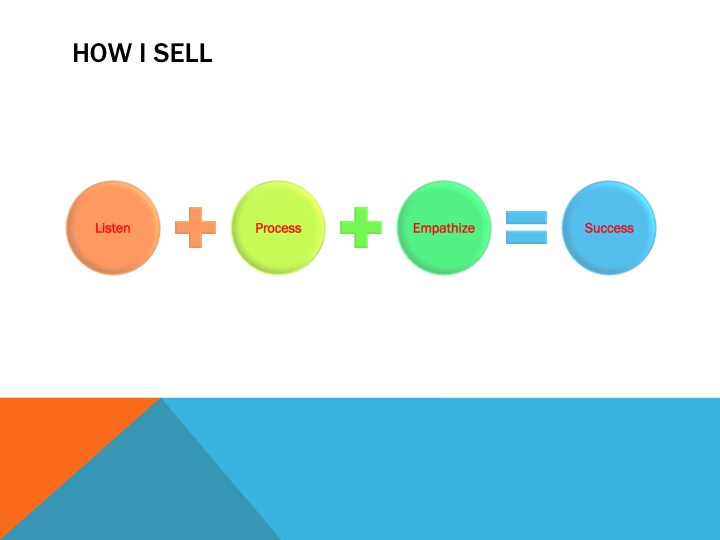
I am not writing to brag about what I have done (please don’t take it that way) but because the process is not as difficult as many “sales professionals” make it out to be. It all comes down to truly listening to the person on the other side of the negotiations and empathizing with that person. Both the listening and the emphasizing are crucial, and that is where many people fail.

Slide1

Listening

Let’s start with listening. Almost everyone has heard and knows that an effective sales person has to listen, but funny thing is about 75 percent of those I run into actually do. Most people, including (and maybe largely) salespeople like to hear themselves talk. They may be talking about how great their product or service is, they may be talking about what they did on Saturday night, they may be talking about who they think will win the World Cup, but most sales people prefer to talk. Rather than thinking about how you sell, think about the sales people you have come across and I will bet you agree with my 75-percent-plus estimation.

The extension of this problem is asking a lot of canned questions but not listening to the answers. Even if you overcome your desire to talk, it is not sufficient to get the other party to spend the bulk of the meeting or call talking. Many bizdev professionals have a checklist of questions they will ask to a potential partner (or have acquired a checklist from one of the many aforementioned books or seminars). They may write down the response but they do not actually process the information, which is the key to really listening . Continue reading “How to sell”

Share this:

  • Click to share on Facebook (Opens in new window) Facebook
  • Click to share on LinkedIn (Opens in new window) LinkedIn
Like Loading...
Unknown's avatarAuthor Lloyd MelnickPosted on September 11, 2014October 14, 2014Categories General Social Games Business, Lloyd's favorite postsTags business development, corporate development, Listening, Sales4 Comments on How to sell

My top ten summer posts

Slide1

For those of you who foolishly decided to take a vacation this summer rather than stay at home and read my blog, I wanted to summarize what I feel were my top ten posts this summer (and below will also summarize the rests of my posts since I am sure you will want to catch up on all of them). Continue reading “My top ten summer posts”

Share this:

  • Click to share on Facebook (Opens in new window) Facebook
  • Click to share on LinkedIn (Opens in new window) LinkedIn
Like Loading...
Unknown's avatarAuthor Lloyd MelnickPosted on September 9, 2014October 14, 2014Categories Analytics, General Social Games Business, General Tech Business, Growth, LTV, Machine LearningTags analytics, lifetime value, LTV, social gamesLeave a comment on My top ten summer posts

Lessons from sports analytics

I love writing about applying lessons from sports to the tech and game spaces, so an article I saw in the MIT Sloan Management Review, “What Businesses Can Learn from Sports Analytics” by Thomas Davenport, really resonated with me. Davenport is one of the people who have molded strongly my love of analytics, as his book Competing on Analytics initially got me thinking how the game industry could be improved by applying analytics. That the Oakland A’s are again one of the surprise success stories in baseball further reinforced the relationship of analytics and sports. In Davenport’s recent article, he shows how we can apply techniques used successfully in sports to tech or game companies.


A's

Analytics is all the rage in sports. Davenport points out that every professional baseball team has an analyst on staff, while many professional football, soccer and basketball teams also do. Yet, other sports teams are behind many other industries because they are often smaller organizations and typically have old-school executives who do not appreciate the value of analytics. Although not applied universally, Davenport draws several lessons from how sports teams use analytics that are relevant to all businesses. Continue reading “Lessons from sports analytics”

Share this:

  • Click to share on Facebook (Opens in new window) Facebook
  • Click to share on LinkedIn (Opens in new window) LinkedIn
Like Loading...
Unknown's avatarAuthor Lloyd MelnickPosted on September 4, 2014October 14, 2014Categories Analytics, General Social Games BusinessTags analytics, Moneyball, Oakland A's, sports, Thomas Davenport1 Comment on Lessons from sports analytics

Update on Uber’s partnership strategy

Last month, I wrote how Uber’s partnership with Open Table shows the value of strategic partnerships to all businesses. The Motley Fool just published an analysis that shows how Uber has teamed up with Starbucks, TripAdvisor, Hyatt Hotels and United Airlines in addition to Open Table. This means that a user making a reservation with OpenTable could also book a ride with Uber to get to the restaurant. Passengers on United Airlines could book Uber vehicles, along with their tickets, to pick them up from the airport. A Hyatt guest could book a room and get an Uber ride from the airport to the hotel.

The impact of these partnerships is huge. In the Motley Fool piece, they calculate that if only 6 percent of Open Table reservations then use an Uber, it will double Uber’s monthly active users. Furthermore, the partnerships can help increase Uber’s revenue 5X, to over $1 billion annually.

This analysis further strengthens the point that partnerships are an incredibly powerful way of growing your business. Rather than just focusing on building everything internally, partnerships can speed your growth often at a lower cost.

Uber and OpenTable logos

Share this:

  • Click to share on Facebook (Opens in new window) Facebook
  • Click to share on LinkedIn (Opens in new window) LinkedIn
Like Loading...
Unknown's avatarAuthor Lloyd MelnickPosted on September 2, 2014October 14, 2014Categories General Social Games Business, General Tech BusinessTags Hyatt, Open Table, partnerships, Starbucks, TripAdvisor, UberLeave a comment on Update on Uber’s partnership strategy

How to find talented employees

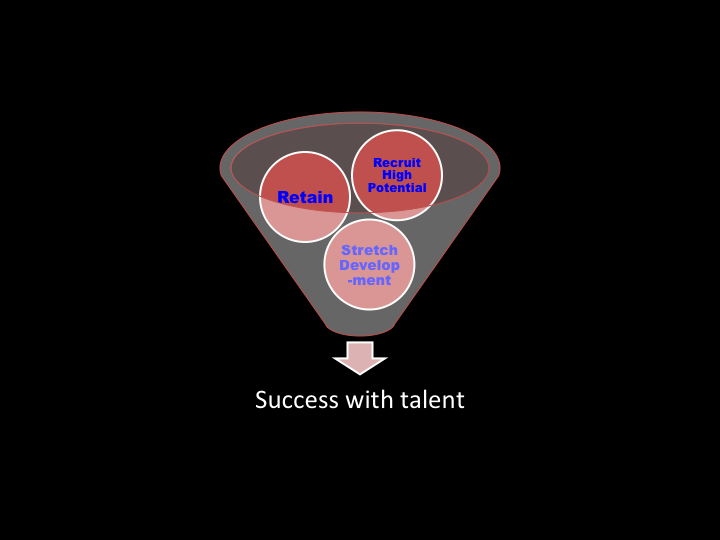
Finding strong members for your team is one of the most important skills needed to succeed and a recent Harvard Business Review article, “21st Century Talent Spotting” by Claudio Fernandez-Araoz, provides some strong insights on how to optimize your talent search. With skills and competencies now the key to finding employees, rather than past experience, you must become skilled at judging potential. This situation is exacerbated by the rapidly changing nature of the tech and game spaces, what worked yesterday are not necessarily the skills you need today.
Slide1
In the last millennium, workers were selected for physical attributes which readily translated into higher success at physical labor, from building a canal to fighting a war. Business then evolved to judge candidates on intelligence, experience and past performance. Much work was standardized, so if you were looking for an engineer or an accountant or a CEO, you would find somebody who has already succeeded in such a role and there was a high likelihood they would replicate this success. Then hiring evolved to the competency model, which stipulated that managers (and other workers) be evaluated on specific characteristics and skills that would help predict outstanding performance in the roles for which they were being hired. Hiring managers would decompose jobs into competencies and look for candidates with the best combination of these skills. Continue reading “How to find talented employees”

Share this:

  • Click to share on Facebook (Opens in new window) Facebook
  • Click to share on LinkedIn (Opens in new window) LinkedIn
Like Loading...
Unknown's avatarAuthor Lloyd MelnickPosted on August 27, 2014October 14, 2014Categories General Social Games BusinessTags Claudio Fernandez-Araoz, development, hiring, HR, Potential, recruiting, retention, stretch development, talent1 Comment on How to find talented employees

Partnerships, focus and competition

When I recently updated my OpenTable app, I noticed they incorporated a partnership with Uber in which you can request a car when looking at an upcoming reservation and the car would already know your destination. This partnership between Uber and OpenTable is a great example of strategic thinking by both companies. I wanted to comment on it as I think all companies can learn some key lessons from the initiative.

Uber and OpenTable logos

Continue reading “Partnerships, focus and competition”

Share this:

  • Click to share on Facebook (Opens in new window) Facebook
  • Click to share on LinkedIn (Opens in new window) LinkedIn
Like Loading...
Unknown's avatarAuthor Lloyd MelnickPosted on August 21, 2014October 14, 2014Categories General Social Games Business, GrowthTags competition, focus, OpenTable, partnerships, Uber3 Comments on Partnerships, focus and competition

Posts pagination

Previous page Page 1 … Page 24 Page 25 Page 26 … Page 46 Next page

Get my book on LTV

The definitive book on customer lifetime value, Understanding the Predictable, is now available in both print and Kindle formats on Amazon.

Understanding the Predictable delves into the world of Customer Lifetime Value (LTV), a metric that shows how much each customer is worth to your business. By understanding this metric, you can predict how changes to your product will impact the value of each customer. You will also learn how to apply this simple yet powerful method of predictive analytics to optimize your marketing and user acquisition.

For more information, click here

Follow The Business of Social Games and Casino on WordPress.com

Enter your email address to follow this blog and receive notifications of new posts by email.

Join 791 other subscribers

Most Recent Posts

  • Join me at PDMA Inspire for my talk on new product prioritization
  • Why keep studying?
  • The next three years of this blog
  • Interview with the CEO of Murka on the biggest growth opportunity in gaming, Barak David

Lloyd Melnick

This is Lloyd Melnick’s personal blog.  All views and opinions expressed on this website are mine alone and do not represent those of people, institutions or organizations that I may or may not be associated with in professional or personal capacity.

I am a serial builder of businesses (senior leadership on three exits worth over $700 million), successful in big (Disney, Stars Group/PokerStars, Zynga) and small companies (Merscom, Spooky Cool Labs) with over 20 years experience in the gaming and casino space.  Currently, I am the GM of VGW’s Chumba Casino and on the Board of Directors of Murka Games and Luckbox.

Topic Areas

  • Analytics (114)
  • Bayes' Theorem (8)
  • behavioral economics (8)
  • blue ocean strategy (14)
  • Crowdfunding (4)
  • DBA (2)
  • General Social Games Business (459)
  • General Tech Business (195)
  • Growth (88)
  • International Issues with Social Games (50)
  • Lloyd's favorite posts (101)
  • LTV (54)
  • Machine Learning (10)
  • Metaverse (1)
  • Mobile Platforms (37)
  • Prioritization (1)
  • Social Casino (52)
  • Social Games Marketing (105)
  • thinking fast and slow (5)
  • Uncategorized (33)

Social

  • View CasualGame’s profile on Facebook
  • View @lloydmelnick’s profile on Twitter
  • View lloydmelnick’s profile on LinkedIn

RSS

RSS Feed RSS - Posts

RSS Feed RSS - Comments

Categories

  • Analytics (114)
  • Bayes' Theorem (8)
  • behavioral economics (8)
  • blue ocean strategy (14)
  • Crowdfunding (4)
  • DBA (2)
  • General Social Games Business (459)
  • General Tech Business (195)
  • Growth (88)
  • International Issues with Social Games (50)
  • Lloyd's favorite posts (101)
  • LTV (54)
  • Machine Learning (10)
  • Metaverse (1)
  • Mobile Platforms (37)
  • Prioritization (1)
  • Social Casino (52)
  • Social Games Marketing (105)
  • thinking fast and slow (5)
  • Uncategorized (33)

Archives

  • September 2023
  • December 2021
  • July 2021
  • March 2021
  • February 2021
  • January 2021
  • December 2020
  • November 2020
  • October 2020
  • September 2020
  • August 2020
  • July 2020
  • June 2020
  • May 2020
  • April 2020
  • March 2020
  • February 2020
  • January 2020
  • November 2019
  • October 2019
  • September 2019
  • June 2019
  • May 2019
  • April 2019
  • March 2019
  • February 2019
  • January 2019
  • December 2018
  • June 2018
  • May 2018
  • April 2018
  • March 2018
  • February 2018
  • January 2018
  • December 2017
  • June 2017
  • May 2017
  • April 2017
  • March 2017
  • February 2017
  • January 2017
  • December 2016
  • November 2016
  • October 2016
  • September 2016
  • June 2016
  • May 2016
  • April 2016
  • March 2016
  • February 2016
  • January 2016
  • December 2015
  • November 2015
  • October 2015
  • September 2015
  • July 2015
  • June 2015
  • May 2015
  • April 2015
  • March 2015
  • February 2015
  • January 2015
  • December 2014
  • November 2014
  • October 2014
  • September 2014
  • August 2014
  • July 2014
  • June 2014
  • May 2014
  • April 2014
  • March 2014
  • February 2014
  • January 2014
  • December 2013
  • November 2013
  • October 2013
  • September 2013
  • August 2013
  • July 2013
  • June 2013
  • May 2013
  • April 2013
  • March 2013
  • February 2013
  • January 2013
  • December 2012
  • November 2012
  • October 2012
  • September 2012
  • August 2012
  • July 2012
  • June 2012
  • May 2012
  • April 2012
  • March 2012
  • February 2012
  • January 2012
  • December 2011
  • November 2011
  • October 2011
  • September 2011
  • August 2011
  • July 2011
  • June 2011
  • May 2011
  • December 2010
January 2026
S M T W T F S
 123
45678910
11121314151617
18192021222324
25262728293031
« Sep    

by Lloyd Melnick

All posts by Lloyd Melnick unless specified otherwise
Google+

Enter your email address to subscribe to this blog and receive notifications of new posts by email.

Join 791 other subscribers
Follow Lloyd Melnick on Quora

RSS HBR Blog

  • New Research on Copycat Products, Your Pitch-Day Dress Code, When Hand Gestures Help Persuasion, and More
  • Leaders, Bring Your Best Self into the New Year
  • What Actually Works to Change Someone’s Mind
  • Our Favorite Management Tips of 2025
  • How to Manage—and Motivate—Gen Z
  • The Most-Watched HBR Videos of 2025
  • The HBR Charts that Help Explain 2025
  • The Most Popular HBR Podcast Episodes of 2025
  • How the Best Leaders Develop and Spend “Innovation Capital”
  • The 10 Most Popular HBR Articles of 2025

RSS Techcrunch

  • An error has occurred; the feed is probably down. Try again later.

RSS MIT Sloan Management Review Blog

  • Calm: The Underrated Capability Every Leader Needs Now
  • The Top Five MIT SMR Videos of 2025
  • Three Steps Toward Fairer Talent Management
  • From Crisis to Coopetition: What Leaders Can Learn From Anesthesiologists
  • AI Coding Tools: The Productivity Trap Most Companies Miss
  • How Procter & Gamble Uses AI to Unlock New Insights From Data
  • Rewire Organizational Knowledge With GenAI
  • Hungry for Learning: Wendy’s Will Croushorn
  • Beat Burnout: 10 Essential MIT SMR Reads
  • How Leaders Stay True to Themselves and Their Stakeholders
The Business of Social Games and Casino Website Powered by WordPress.com.
  • Subscribe Subscribed
    • The Business of Social Games and Casino
    • Join 726 other subscribers
    • Already have a WordPress.com account? Log in now.
    • The Business of Social Games and Casino
    • Subscribe Subscribed
    • Sign up
    • Log in
    • Report this content
    • View site in Reader
    • Manage subscriptions
    • Collapse this bar
 

Loading Comments...
 

    %d