It is that time of year when esteemed VC and Internet Analyst Mary Meeker publishes her Internet trends and every blogger comments on them. I was going to skip commenting this year as I am not a big fan of prognostication, I do not feel anyone can predict the future, but her ideas are thought provoking so I did want to highlight the ones that may be interesting to my readers. She also points out many trends and data points that are useful to all tech companies (the full presentation is embedded below): Continue reading “Thoughts on Mary Meeker’s Internet Trends in 2014”
Lifetime Value Part 16: Using lifetime value to target prospects
One of the most valuable applications of customer lifetime value (LTV) modeling is using it to target the highest-valued customers or players. I have written many times about the importance of LTV and how to calculate it. One of the most powerful applications of LTV is online customer targeting.

As an article on MarketingProfs points out, LTV targeting starts with a deep understanding of your current customer base so you can develop high-LTV and low-LTV customer segments. Doing so will allow you to create a profile of the “personas” that will have the best retention, highest word of mouth and spend the most on your products.
High-LTV personas could be “women over 35 who spend most of their day at home.” By knowing the persona, you can create personalized messages to strategically target customers who match that profile, and reach them through a variety of channels.
Once you have built personas for your players or customers, there are four ways to leverage this understanding: Continue reading “Lifetime Value Part 16: Using lifetime value to target prospects”
The beauty of starting a business with a nice personality
While many entrepreneurs, especially those in Northern California, focus on starting the next sexy business, it is often the mundane ventures that generate the highest return. Companies like Waste Management generate billions in revenue yet investors fawn over and entrepreneurs try to replicate the Twitters and King.coms. Not that those are bad companies, but many would-be founders are overlooking opportunities in “boring” businesses that could yield billion-dollar returns.
The Amazon example
Probably the best example of this gap between the perceived opportunity and the real opportunity is Amazon. Most of the people reading this blog are probably excited about Amazon’s strategy to use drones for delivery or the newest content and original program that it has added to Amazon Prime. However, as Forbes Magazine wrote about in the article “Amazon’s Wholesale Slaughter”, its initiative in the $8 trillion wholesale distribution business is their most disruptive move yet.

AmazonSupply is an e-commerce site that targets the unsexy but huge wholesale and distribution market. While people are fascinated by the $4 trillion retail business (Amazon’s share is $74 billion) where Amazon has gained a huge share, wholesalers in the US alone generated $7.2 trillion. Continue reading “The beauty of starting a business with a nice personality”
Lifetime Value Part 15: Five ways to use data to improve customer lifetime value
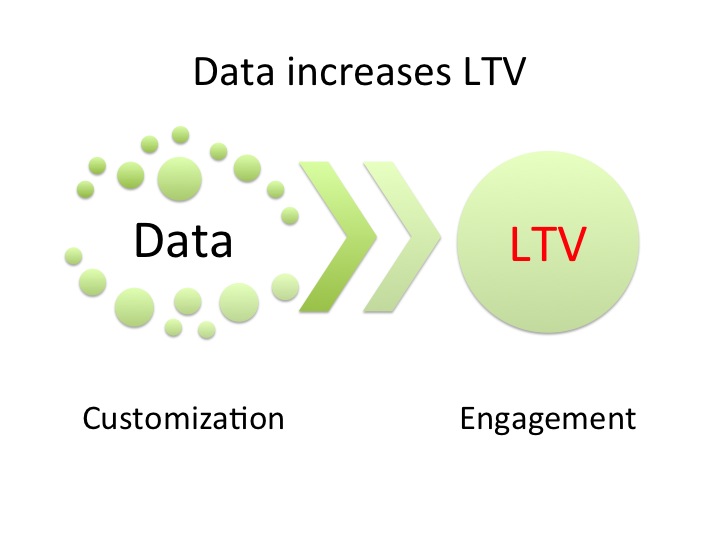
I recently came across a great post in Wired by Neil Capel about leveraging data to increase lifetime value. I have written many times about how lifetime value is the lifeblood of your business. A high lifetime value allows you to spend more on marketing and thus grow your business; low lifetime value makes it impossible to acquire new users. In Capel’s post, he outlines five ways you can leverage data to increase your lifetime value.
1: Use data to understand customer interests to create relevant content
Customers and players face an overwhelming amount of information and content. They are also not looking, and actively avoiding, advertising. What they want is information that is relevant to them. Customer’s interests and needs change constantly and you can tap into that inferred nature of the data to determine which elements of your content will be the most relatable and consumable to each user. Leveraging data you can determine which pieces of content an individual wants to interact with and then use that information to deliver automatically current and relevant content to that individual.
 Continue reading “Lifetime Value Part 15: Five ways to use data to improve customer lifetime value”
How thank you notes can help your business succeed
There was a great post recently on Forbes.com, “How 13,000 Handwritten Thank You Notes Built A Thriving Business,” about how good old-fashioned thank you notes could be used as a growth and retention tool.
To show the value of thank you notes, the author points to the example of HEX. HEX is a small company that competes with big brands from Tumi to Michael Kors, and has in part competed by incorporating personalized, handwritten thank you notes to purchasers–over 13,000 thanks notes to date. The notes do make it easy to respond or share word of HEX over social channels, both by the inclusion of social coordinates and because in addition to the handwritten note, the customers receive an automated online confirmation that can be replied to. Given that HEX is successfully competed with well financed companies, thank you notes turn into a strong tool for small companies.

Continue reading “How thank you notes can help your business succeed”
How to use a waitlist for growth
A recent post and slideshow (slideshow below), Robinhood Waiting List Breakdown, raised a great opportunity for how all types of company can use a waiting list to generate growth. Robinhood.com is a stock brokerage related product that already has 300,000 people on its waiting list and is adding more than 1,000 daily. By looking at Robinhood, not only are there great lessons for your product launches, but even for launching new features or content in your product. For example, a company like Uber could build a waiting list if it plans to launch a dog walking service, and then when the service launches already have enough demand for critical mass. Continue reading “How to use a waitlist for growth”
Lifetime Value Part 14: Machine learning and LTV
Last week I discussed how you need to manage your customers based on their expected lifetime value, and machine learning technology is a powerful tool to execute this strategy. When applied effectively, machine learning can reduce your service and support costs while increasing your profit margin. Machine learning lets you tailor virtually any part of your business to each individual customer so you optimize the value of that customer.

Predicting and placing users in the right bucket
The first key in maximizing profitability is segmenting your customers based on expected lifetime value. You can accomplish this manually by examining their past behaviors and key metrics, but most analytic teams do not have the resources to analyze how all the metrics and data interact. Machine learning algorithms, however, can not only incorporate hundreds of variables, but also predict future behavior based on these patterns. Thus, two customers who may have both spent $500 may warrant very different treatment, if the first one is likely to spend $20,000 while the latter is projected to spend $750. Machine learning is a strong tool for making these projections and optimizing the segmentation of your users. Continue reading “Lifetime Value Part 14: Machine learning and LTV”
15 tips for negotiating a job offer
I came across a great article in the Harvard Business Review, “15 Rules for Negotiating A Job Offer” by Deepak Malhotra, that hits on all the key issues when negotiating a job offer. At some point, almost everyone needs to have this skill, either your first job after leaving university or getting back in the workforce after selling a company for millions and not wanting to start another. As you probably have more experience growing a company or product or leading a team, something as seemingly simple as negotiating for your self may be a black box. These fifteen rules will help you come to a fair agreement with your potential employer: Continue reading “15 tips for negotiating a job offer”
Lifetime Value Part 13: Managing users and customers profitably
I have written many times about the importance of customer lifetime value (LTV), about its central role in determining a company’s success and how to impact it. In this post, In this post, I will address how to manage users (customers, players, etc.) based on LTV.
Profitability, success and LTV
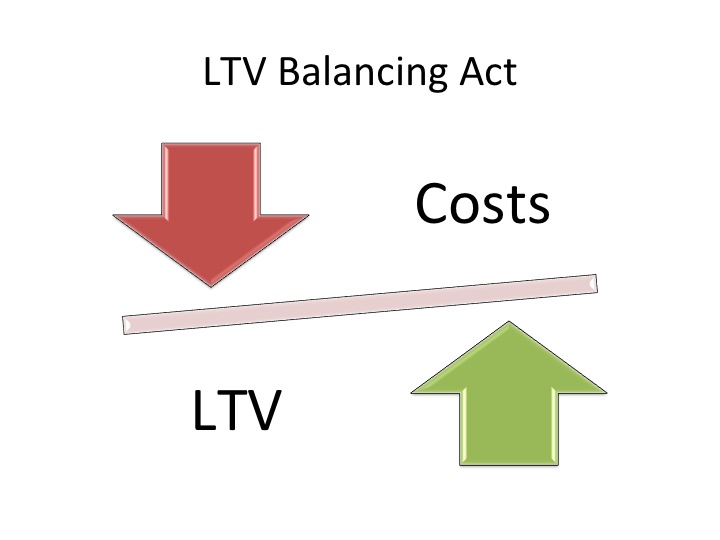
The success and growth of your company comes down to one basic principle, your customer LTV needs to be greater than the cost of acquiring and servicing the customer. The larger the difference between the value you get from a user and the costs associated with that user, the greater your profits. The greater the difference, the more resources you can devote to user acquisition. The greater the difference, the more someone will pay for your company.
The key to optimize the value of a customer versus their costs is not treating all customers the same. Each customer has a different LTV, which can be estimated from everything nearly all the data you are collecting, including from how you acquired the user, their demographic, their initial behavior, etc. The first step to optimizing your business is to determine your different customer segments (VIPs, heavy spenders, occasional spenders, one time spenders, social whales, browsers, etc.). You then put all of your users (hopefully automate this process) into these segments.
Managing a customer portfolio
Once you have segmented your users based on their behavior and predicted lifetime value, you need to manage actively this portfolio of users to optimize your profitability. For each segment, you need to build a strategy that maximizes the difference between the LTV and the costs. For users who spend frequently, you may want to give them enhanced customer service and free gifts so they come back (and spend) even more often. The costs of this additional service and gifts are more than offset by the additional revenue you generate. Conversely, for the one-time purchasers, you want to minimize expenses tied to them. Since they have a low lifetime value, you do not want to devote any resources (costs) to them. By allocating resources only where it increases the difference between LTV and costs, you optimize your profitability. Continue reading “Lifetime Value Part 13: Managing users and customers profitably”
Bayes’ Theorem Part 6: Making the best hiring choices
I have written several blog posts on how Bayes’ Rule can help you make better business decisions and application of this theorem. One of the areas where Bayes’ Rule is most often neglected is in hiring decisions. Often, rational and data driven individuals and organizations abandon the rules of optimal decision-making and rely on intuition.
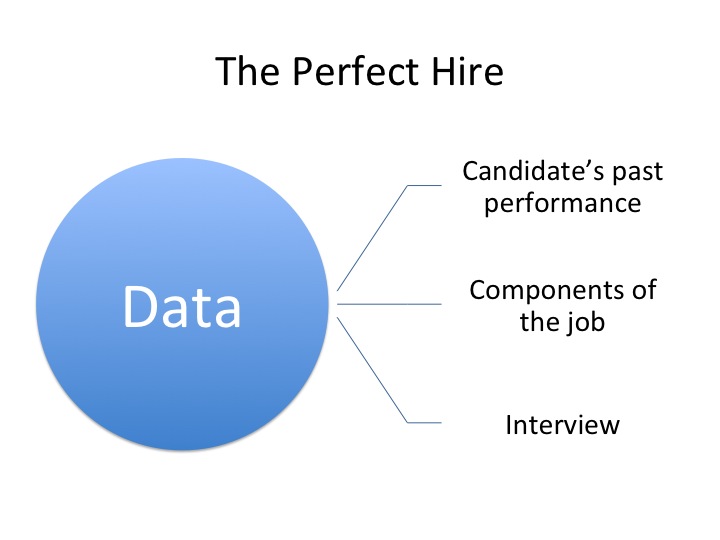
At its core, Bayes’ Rule shows how you can optimize the chance of a correct decision by looking at previous data points that encompass the decision you are trying to make. In the case of hiring, this analysis would be more effective by looking at the metrics and data that shows who succeeds, looking at what makes someone successful in the position you are hiring for and reducing the impact of data that does not lead to good hiring decisions.
What most companies end up doing is using data as a filter but then hiring based on intuition. If you really want to make good decisions, you need to understand your intuition is only one (weak) data point and base the decision on Bayes’ Theorem, using past data to make the optimal decision.
What has worked for others
First, look at the position you are hiring for and identify the most successful people (at other companies or at your’s) in the field and “reverse engineer” their background. What experience(s) did they have before they were hired? What is their educational background (school, degree, extra curricular activities, etc.)? Using Bayes’ Rule, if you are hiring for a Director of Social Media and find that 90 percent of the top performing Directors of Social Media went to Texas A&M, then the chances of making a good hire from Texas Tech is already at less than 10 percent. Continue reading “Bayes’ Theorem Part 6: Making the best hiring choices”
 The Business of Social Games and Casino