Skip to content

The Business of Social Games and Casino

How to succeed in the mobile game space by Lloyd Melnick

Tag: retention

Lifetime Value Part 29: Increasing Retention

Lifetime Value Part 29: Increasing Retention

I have written many times about LTV (customer lifetime value) being the lifeblood for a successful business, as a new customer has to have a higher LTV than the cost of acquiring the customer, and how retention is the biggest driver of LTV. Given the importance of retention, a recent article by Google’s Adam Carpenter, Why the first ten minutes are crucial if you want to keep players coming back , provides great guidance on what to measure and then improve to have the most impact on improving retention.

Retaining new installs is arguably the most important driver for whether your product succeeds or fails. As Carpenter says, “retention is the primary metric, since if you can retain your new players, you can always figure out how to make money. If you can’t retain any players, you have no ability to make money.”

The metric to focus on is your day 2 retention (D2). According to Google’s data, median day 2 retention (number of users active on the day after they installed your game divided by the number of installs in your cohort) is 38 percent, while exceeding 46 percent puts your product in the top quartile (3/4 of all products would be doing worse than you if hit this target). Conversely, if your D2 is 22 percent, then 78 percent of the players you pay to acquire do not come back the next day. It is very hard to justify marketing spend if 78 percent is wasted.
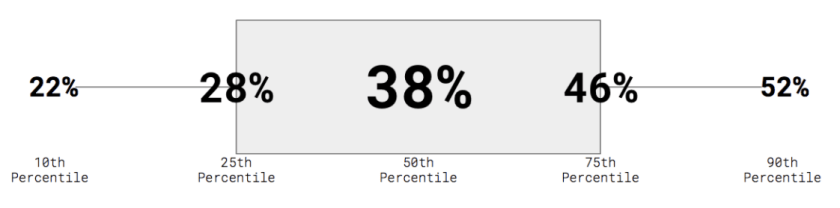
Retention for Google Play

What you should be looking at

While the amount of time a player spends in your game after they install it is important, the critical factor is the first ten minutes. If you divide Carpenter’s data by performance, the strongest games (top quartile) average Day 2 retention of 52 percent, with 22 percent returning the next day with virtually no gameplay the first day and then seeing D2 steadily increase with each successive minute played (see chart below). The second quartile has a similar curve but starts at a lower point. The key, though, is the impact from the first ten minutes.
Day 2 retention

The first ten minutes

In Carpenter’s analysis, performance is driven by how quickly in the first ten minutes you lose players. For games in the top quartile, retention starts out good and steadily improves. In the second quartile, retention is essentially flat across the first minute and a half, and then begins to increase steadily. In the third quartile, retention is largely flat for the first four minutes, then increases but more slowly than highly performing games. In the lowest quartile, retention declines in the first two minutes and does not start to improve until the fifth minute.

These early patterns have a strong impact on players. The worst apps lose 46 percent of their new installs by the fifth minute and this number increases to 58 percent by minute ten (so in less than ten minutes you have less than half the players you have spent money acquiring). The top games, however, only lose 17 percent of players by the fifth minute and 24 percent within ten minutes (retaining more than twice as many players as the lowest group).

How to improve your situation

Once you understand the importance of the first ten minutes, you need to focus on improving this performance. Carpenter explain this as avoiding retention flats and gorges. “The first pattern is called the ‘Flats’. This anti-pattern shows largely flat retention for up to 10 minutes, with the percentages only rising meaningfully after the 5th to 10th minute. The second is the ‘Gorge’, whereby retention appears to drop minute by minute for the first five minutes or so, and then begins to rise again.”

Once you review your data, you can understand if you are suffering flats or gorges. To alter the curves, you can then:

  1. Improve loading times. Evaluate your loading times, keeping in mind new players are particularly sensitive to long loading times (they are have not yet decided they want to wait). In my experience, even a fraction of a second will surprisingly have a bigger impact than many sexy features.
  2. Avoid large secondary download. You may improve loading times by creating a long secondary download but the impact can be equally damaging. Players, particularly those on a poor wireless connection, may abandon your game.
  3. Make the lobby intuitive. Allow players to find quickly the action (and the action they want) in the game. If you are using a tutorial, ensure a smooth transition from the tutorial to where your player wants to go.
  4. Enhance or eliminate the tutorial. Speaking of tutorials, they are largely a reason to leave a game; rather than enjoying the product customers are being sent to school. See if you really need a tutorial and, if you do, how you can make it more fun.
  5. Do not overload player with promotions. Your goal on D1 is to get your player back on D2, monetization is a bonus on top of this goal. If the player returns, you will have many opportunities to monetize them. Do not sacrifice D2 retention by distracting players with sales and offers, have them focus on enjoying the game. I prefer to have none or at most one monetization promotion on day one.

By focusing on a quick, fun experience, you are more likely to get your customer to return on Day 2. As the Google data shows, if you get them back the next day, you will enjoy greater long-term success. By increasing this one KPI, you will experience a disproportionate positive impact on your LTV.

Key takeaways

  • Retention is the strongest driver of LTV and data from Google shows the most important retention KPI is the amount of players who return on day 2 after installing your game.
  • The strongest driver of D2 retention is how many minutes your customers stay/play within the first ten minutes of starting the app.
  • To improve retention between the first and second days, make the early experience faster and more fun by improving load times (while reducing secondary loading), making your lobby intuitive, and not distracting your player with a bad tutorial or promotions.

Share this:

  • Click to share on Facebook (Opens in new window) Facebook
  • Click to share on LinkedIn (Opens in new window) LinkedIn
Like Loading...
Unknown's avatarAuthor Lloyd MelnickPosted on June 3, 2020May 23, 2020Categories Analytics, General Social Games Business, Growth, LTVTags lifetime value, LTV, retention1 Comment on Lifetime Value Part 29: Increasing Retention

Why you are probably under allocating resources to retention

One issue I see repeatedly with game and gaming companies, and many other industries, is under-indexing their investment in retention versus acquisition and reactivation. While there is no evil plot to neglect retention, it is the most challenging part of the life cycle to determine ROI on investments.

With acquisition marketing, most successful companies have visibility into the CPI (or CPA depending on how you look at your UA efforts) they are paying and the LTV for those players. By comparing CPI and LTV, there is a clear ROI. Companies can then allocate resources to acquisition marketing as long as the ROI is above their needed return on capital. Also, as you are probably spending thousands or even millions of dollars per month on acquisition, optimizing that spend justifies additional resources (analytics, tools, etc.) as you want to get the most out of your spend.

Reactivation is similarly easy to quantify. You look at the cost of getting the player back and then how much they are likely to spend once they are back. Not only is it easy to calculate the ROI on reactivation spend, you can justify the investment because the revenue will be higher than the investment. No executive can argue with spending $1 to get $2. The only caveat with reactivation spend is ensuring you are not spending to bring back customers who would return regardless.

While retention is your most important KPI, it often does not get the same level of love because the ROI is much less obvious. You are not adding a user and revenue. You are not bringing back a lost customer. Retention, however, warrants more investment than every other part of the business combined.

Retention spend avoids spending $1 for $0.40

Every dollar you spend to retain existing players impacts your recurring player base. With acquisition marketing, even the best apps and games are lucky to see a 40 percent D1 rate (40 percent of customers who download the app return the next day). Thus, for every dollar you spend on a new player, only $0.40 or less is contributing to your product’s performance the next day. Given that a normal (though still good) D7 retention rate is 10 percent (1 out of 10 newly acquired players play on the seven days after downloading your game), you effectively only have $0.10 left from that $1 of spend still working for you.

Conversely, virtually every dollar spent on existing players is contributing to your product for days or months. A contest that encourages people to play more touches all your players and could impact their behavior over their lifetime. You are not losing 60 percent or 90 percent even before you can do a thorough analysis.

Retention spend can make the cost of acquisition less painful

The first subject everyone talks about at conferences (and even importantly at the bar during conferences) is how expensive it has become to acquire customers. Yet despite the money and resources spent on acquiring the player, the same effort is not made keeping and delighting the player.

Many marketing teams feel their job is done once the player is in the game (or has made a purchase) and thus their efforts are focused on acquisition. The true value to the company, though, is turning those new customers into a loyal player. While it is not solely marketing’s responsibility, it is a critical part of the equation. If marketing acquires a player for $5, they then spend $7.50 and churn, it may look like (and is) a marketing success as they have achieved a 150% ROAS (return on ad spend). However, if they could use retention marketing to have that player make $7.50 purchases every month for a year, the impact is 12X better than the acquisition spend. Moreover, the cost of getting that player to become a repeat customer is almost certainly not 12 times the acquisition cost, but a fraction of that cost. Thus the ROI is significantly higher.

Retention is not just about the product

At this point, many of my marketing friends are probably saying (or thinking) that retention is the responsibility of the product team, they have already done their job. Product and marketing are no longer two distinct functions. Companies like Facebook and Uber have blitzscaled because their products were also their acquisition channels (hence the term growth hacking), thus these products were the marketing. Conversely, product can only touch players when they are in the product (though they can build systems to bring customers back). Marketing, however, can impact players any time. The player may not have been in the game a week but you can still impact them by email, text, Facebook, Snapchat, television, blimp, etc. Retention is largely about triggers, reminding customers to use a product again, and marketing must work with product to ensure customers stay engaged.

A bird in the hand…

bird in hand

Optimal investment is not only about maximizing return but also managing risk. There is much less risk dealing with a known entity (an existing player) than an unknown. If you do take more risk, you should only do it if you will have higher return. A risk-based approach to allocating your resources also suggests that retention is a neglected investment vehicle. With new user acquisition, the new player is a question mark. They may fit your existing LTV curve or they might over/under perform. There is little information to base your estimate (largely the performance of other players acquired from the same or similar channel).

With an existing player, it is easier to estimate the impact of additional retention marketing. You have data on what they play, how often they play, what incentives impact behavior, etc. Based on this data, you can estimate accurately the return one additional marketing dollar will bring. These estimates will track much closer to actual results than new acquisition, especially with new channels, thus reducing the volatility of your return on marketing spend.

Retailers get it

While game companies, and many tech companies, disproportionally emphasize acquisition, retailers have learned over hundreds of years that their marketing budget is better optimized for retention. Most of the advertising and promotions from retailers are focused on bringing back existing customers, not getting them into the store for the first time. JC Penney or Target or Curry’s are not focusing their marketing on getting new customers, they are focused on driving behavior from existing customers. Sales are designed to optimize repeat purchasers and getting existing customers to spend more, very few are built to bring in new customers.

Amazon Prime is arguably the biggest factor making Amazon one of the most valuable companies in the world. Prime, however, does not get many people to try Amazon. Instead it converts existing customers into ones who spend more and are more loyal. The dynamics of retail are not that different than gaming, it is just that they have learned that there is a higher return in devoting resources to existing customers.

What to do

The value of retention marketing does not diminish the importance of acquisition or reactivation but you should design your structure so it is not neglected.

  1. Build your organization so that retention marketing is on an equal level. The head of retention should not report to acquisition. You should not have an EVP or SVP leading acquisition and a Manager leading retention. On the org chart, they need to be at comparable levels.
  2. Ensure you have KPIs in place measuring retention, what gets measured gets done. Virtually any company is monitoring daily its acquisition spend, CPI (or CPA) and ROAS. You need to be both measuring and reviewing regularly the success and growth that your retention team is driving.
  3. Rebalance your resources to ensure that you are optimizing your retention programs. Not only should you be running programs, but you need sufficient resources to build the campaigns, create the marketing collateral and analytic resources to review and optimize. Do not skimp on these resources for the quick thrill of acquisition or reactivation.
  4. As well as physical resources, you need to deploy sufficient budget to retention for long-term success. Start with a basic smell test. If you are spending $1 million a month on acquisition and your retention budget is $25k, probably something wrong. Try to align all your marketing spend with the understanding that retention drives significant value at lower risk.

If you do not focus on retaining players, any success will be short lived. To become great, your entire company needs to focus on keeping your customers.

Key takeaways

  • While the primary focus of most game companies is user acquisition, retention marketing is often neglected. Retention marketing, however, is more important to a company’s prolonged success.
  • For every dollar spent on acquisition marketing, at least $0.60 is lost the next day only 40 percent (at best) of players come back. Conversely, all dollars spent on retention marketing impact customers over their lifetime in your game.
  • You should ensure your structure is built on optimizing retention as well as acquisition and allocate resources (both people and money) to reflect the immense opportunity with retention marketing.

Share this:

  • Click to share on Facebook (Opens in new window) Facebook
  • Click to share on LinkedIn (Opens in new window) LinkedIn
Like Loading...
Unknown's avatarAuthor Lloyd MelnickPosted on September 24, 2019September 15, 2019Categories Analytics, General Social Games Business, General Tech Business, Growth, Social Games MarketingTags Acquisition, retention, user acquisition1 Comment on Why you are probably under allocating resources to retention

Lifetime Value Part 26: My most valuable retention KPIs

Lifetime Value Part 26:  My most valuable retention KPIs

I have written many times about customer lifetime value (LTV)and how it is the critical determinant of a company’s success (any company, from mobile games to retailers). A user’s lifetime value has to exceed the cost of acquiring the customer, otherwise companies cannot grow and will eventually die.

Last year, I discussed that out of the three key components of LTV – monetization, virality and retention – retention was the one most critical for success. While people sometimes focus on monetization, its impact on the long-term value of a customer is limited. Think of a retail store. Would they rather have a customer who comes in, makes a $100 purchase but never returns or somebody who comes in every week and makes a purchase ranging from $10 to $25? Obviously, they would prefer the latter. Successful businesses, games, apps, have great retention, thus creating high LTVs and allowing for more marketing spend.

While the mathematical case for focusing on retention is incontrovertible, many companies have not perfected how to measure retention effectively. Most social game companies, among the most sophisticated users of analytics, rely on measuring retention by D1/D7/D30 retention (how many players who installed on Day 0 are play after one day, seven days and thirty days, respectively). While this method is an acceptable (and sometimes powerful) way of tracking how new users are performing, even D30 retention only reflects behavior of customers acquired in the last month. It does not show how well the game or company is retaining its existing customer base.

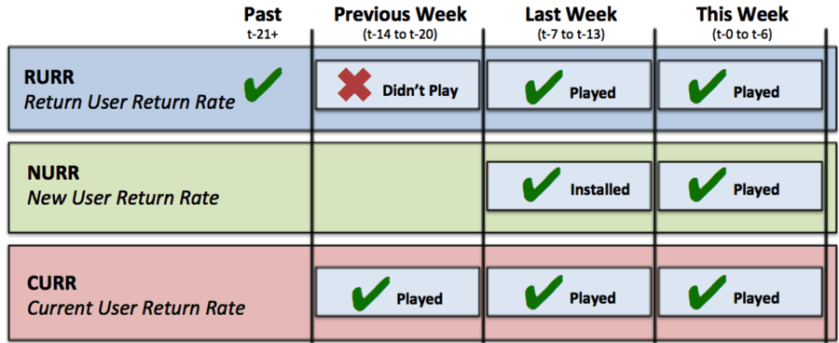
When I was at Zynga, I came across a metric that perfectly captures how well you are performing with your existing customers, CURR (current user return rate). CURR is complemented by NURR (new user return rate) and RURR (returning user return rate). Since leaving Zynga, not only have I taken these KPIs with me, I have used them as a key focus for optimizing products. A post by Nathan Williams, SaaS Retention Metrics: Lessons from Free-to-Play Games, reminded me how important these KPIs are and how to best use them.

urr retention chart

CURR

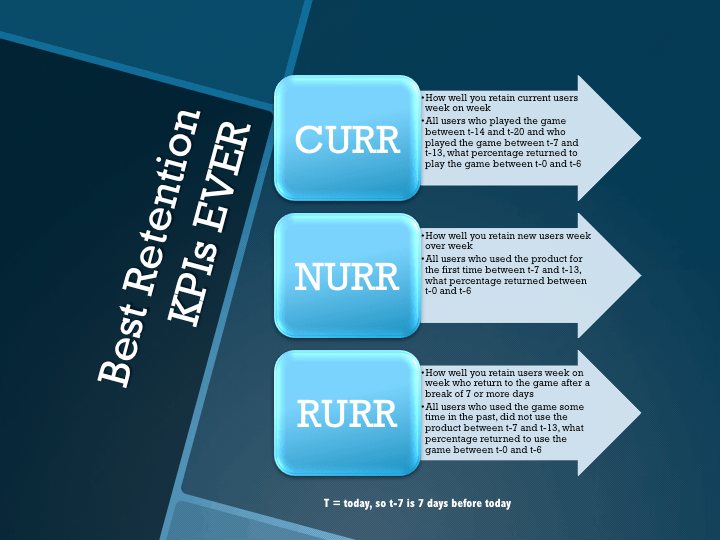
CURR (current user return rate) is the most important KPI to track (or at least a tie with NPS). It shows how loyal your existing customers are; you should consider CURR the inverse of churn. If your CURR increases, it means you have improved your product’s appeal to existing players or customers, if CURR declines you have made your game worse. CURR is also an excellent way of looking at how your game is performing among different segments, VIPs versus payers versus never-spenders.

To calculate CURR, you start with all the users who played the game between t-14 (14 days before today, today minus 14) and t-20 and who used the product between t-7 and t-13, what percentage returned to play between t-0 and t-6. The benchmark for a good, but not great, game is 80 percent.

NURR

NURR (new user return rate) is a great metric for understanding how appealing your game is to players you have just acquired. A low NURR shows you have a bad initial experience (or a bad traffic source), turning off many users. It is virtually impossible to acquire players profitably with a low NURR.

To calculate NURR, take all the players who used the game for the first time between t-7 and t-13 and look at what percentage returned to the game between t-0 and t-6. You can benchmark NURR at about 30 percent, though it is dependent on the type of game and platform. There is much higher variance in NURR than CURR among successful games (a game on desktop could succeed with a much lower NURR than a game on Google Play).

RURR

RURR (return user return rate) shows how many people who had churned and returned to your game stay active. It is a great way of measuring how well your game can capitalize on CRM and paid reactivation campaigns. If the number is low, you are doing a great job of bringing players back but the product is still not compelling to these players.

You can calculate RURR by taking all the players who were active at some point but did not use the product between t-14 and t-20, and did use the product between t-7 and t-13, what percentage returned to play the game between t-0 and t-6. There is also significant variance in this benchmark but I usually target 40 percent for social casino games.

slide1

Use *URR to track product performance

Once you start monitoring CURR/RURR/NURR, you should use them to understand what is working and where there are issues. If you see a significant change in CURR, it is almost certainly caused by recent product changes. Low NURR indicates either you have broken your FTUE or you have added weak sources of traffic. A low RURR indicates your CRM or reactivation team is doing a good job but you need to add product features to keep the players you are brining back.

Key takeaways

  1. Retention is the key driver of customer lifetime value (LTV), and CURR/NURR/RURR are the most accurate metrics to track retention.
  2. CURR (current user return rate) is your most valuable metric, the percent of your current players who are staying active. It shows whether changes in your product are appealing to or deterring your player base.
  3. NURR (new user return rate) shows if your initial user experience is strong while RURR (return user return rate) shows if your game is appealing to players who have churned but decide to try it again.

Share this:

  • Click to share on Facebook (Opens in new window) Facebook
  • Click to share on LinkedIn (Opens in new window) LinkedIn
Like Loading...
Unknown's avatarAuthor Lloyd MelnickPosted on February 5, 2019January 4, 2019Categories Analytics, General Social Games Business, General Tech Business, Growth, Lloyd's favorite posts, LTV, Social CasinoTags analytics, curr, LTV, retention4 Comments on Lifetime Value Part 26: My most valuable retention KPIs

How to add features that your customers actually want

How to add features that your customers actually want

One of the challenges successful game developers face is what features to add to the product. With a successful game, you are not in panic mode but you also must deal with the reality that in a free-to-play product you need to keep players engaged or you will become the next Trivia Crack. The fundamental issue is adding features that are useful and fun for your existing players, that enhances their enjoyment of your game.

Keys to adding successful features

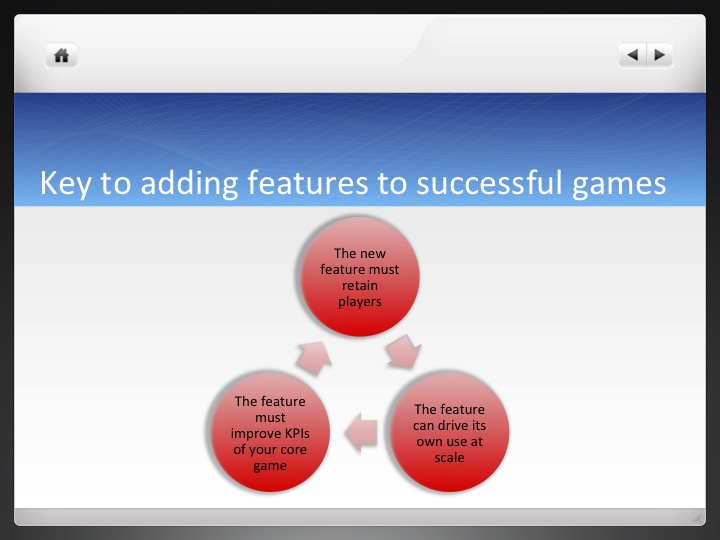
There is an excellent post by Casey Winters that highlights three keys to building features that enhance a successful product:

Slide1

  1. The new feature must retain players. The feature itself retains the player and you do not have to drive players artificially to it from other parts of the game. For example, if you add Blackjack to your social slots application, it works if players engage with Blackjack and then come back to play it regularly. You can use the same retention metrics (D1, D7, D30 and CURR) to assess if a feature is working as you do to look at an app.
  2. The feature can drive its own use at scale, you do not need to create a plan to build adaption. To use the Blackjack example, if you integrate it in your lobby players will try it without forcing you to run specific campaigns.
  3. The feature must improve KPIs of your core product. To use the blackjack example, it needs to improve either your overall retention or monetization.

The last point is critical to success. I used to be at a game company where product managers regularly presented analysis of their features and bragged about the great performance of the feature. Overall, though, the company’s games continued to lose players (DAU) and monetization per player (ARPDAU) was also decreasing. While the features appeared to perform great in a Powerpoint, they actually were costing the company money because they drove lower overall performance.

How to add features that improve LTV

While you may infer from the previous sections that you should only integrate features that appeal to everyone, the opportunity is to segment your players and build features to appeal to target segments. If you limit yourself to only adding features that are accretive to everyone, you have a small pool to pull from.

Given you already have a successful game, by definition your players are already enjoying your product. While there may be opportunities to add features everyone enjoys, you have a bigger set to choose from if you also identify features that may appeal to a subset of your players. This is particularly powerful because this feature can appeal to a segment that is likely to churn and keep them engaged or a segment that does not monetize and prompts them to spend. Conversely, it could only appeal to the ½ of 1 percent that are VIPs but given how much they spend could have a great impact on revenue

If you are building a feature that appeals to a specific segment, then you must be careful not to violate the third key to creating a successful feature, you do not want it to impact negatively overall KPIs. The way to achieve this balance is by positioning or displaying the feature only to the target audience. This can be done as an AB test, where you only surface the feature to specific players. It can be achieved through targeted CRM (in-game banners, push notifications, email, etc.) that is only sent to players in the target group. Surfacing a different UIUX to players who you want to engage with the feature can also accomplish the same goal. The key is maximizing how much the target audience uses the feature and minimizes how much other players see it.

Using the blackjack example yet again, we can illustrate how it could help a social casino game. Overall, slots monetizes much better than blackjack. It is a faster game and many blackjack players will play in a way so they lose very few chips. If you added blackjack to a successful slots game and promoted it across your player base, you probably would get great engagement as a lot of people love blackjack. It would, however, drive some players from your slots to blackjack where they are likely to monetize at a lower rate. If you were looking at how it would impact overall performance, then, you would say blackjack is a failure.

If, however, the blackjack game was not in the main lobby but embedded deeper in the game and you then drove players who were likely to churn (maybe you have a nice machine learning algorithm that can identify these players) to blackjack, it would engage some of these players. They would then come back regularly to play and rather than churn some would monetize. Thus, you would have a successful feature that helps the overall product.

Add features that help your game

Although it sounds obvious, when building your product roadmap you need to dive deeply into each potential feature and identify how it will improve KPIs of a target segment. Effectively, how will it solve a problem for you or your player (user churning, user not spending, etc.). The bigger the problem, the higher the priority.

Key takeaways

  • The key to adding new features to a successful product is ensure the feature itself retains players, can generate its own use and helps the overall KPIs of your game.
  • You must avoid features that seem to perform well when reviewed in a vacuum but actually hurt the KPIs of the game.
  • You can achieve launching a successful feature by targeting your players and then only showing or promoting the feature to players who will benefit from it.

Share this:

  • Click to share on Facebook (Opens in new window) Facebook
  • Click to share on LinkedIn (Opens in new window) LinkedIn
Like Loading...
Unknown's avatarAuthor Lloyd MelnickPosted on May 29, 2018May 27, 2018Categories General Social Games Business, Growth, Social CasinoTags features, monetization, Product design, product management, retentionLeave a comment on How to add features that your customers actually want

Lifetime Value Part 25: Why retention is THE KPI

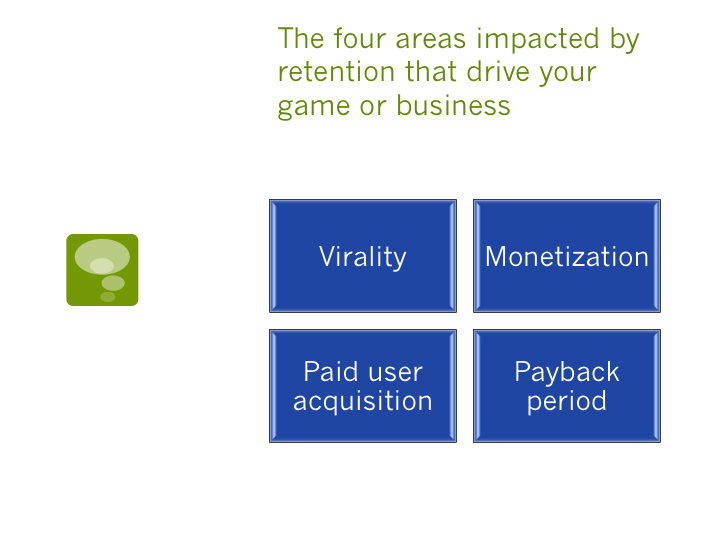
Whenever I write about lifetime value (LTV), I always try to stress that the key to growing a high LTV is retention. I recently came across an article, The One Growth Metric that Moves Acquisition, Monetization, and Virality by Brian Balfour, one of the top experts on growth, that does a wonderful job of showing just how powerful retention is to your LTV. Balfour identifies four areas that retention impacts.

Slide1

Acquisition

As you improve retention of existing users, you also acquire more new customers. A number of organic acquisition channels, such as virality and user-generated content (UGC), work when existing users take an action that introduces new users to your game or product (via inviting friends, sharing, word-of mouth, creating new content, etc.). A larger base of active users leads to better acquisition metrics. Players remaining in your game or product can invite new people to the product, so the more you retain, the more players who can send invites.

Monetization

Monetization is the second area impacted by retention. I get very frustrated when people, usually Product Managers, act as if there is a trade-off between retention and monetization. The reality is that retention drives monetization rather than damaging it. First, retention allows players to spend more frequently. If you retain a customer for three months rather than one month, they have 3X the opportunity to spend. Moreover, if your model is more robust than simply discreet purchases (either in-app purchases for a game or sales for a retailer), you also generate a longer stream of advertising or subscription revenue the longer the user is engaged with your product.

User acquisition becomes a competitive advantage

Paid user acquisition is one of the critical elements to growing a game or app, you need to have a positive return on ad spend to justify scaling your product. More importantly, since a bidding model drives user acquisition in the app space, with acquisition muscle you can push competitors out of acquisition channels, dominating a market and growing faster. As described earlier, your users are generating more revenue (they are in the product longer so spending more often and driving ad and subscription revenue), you can afford to outspend your competitors.

Payback period

Retention accelerates your payback period, allowing you to avoid raising additional funds or providing more free cash flow to funnel into acquisition. Payback period is the amount of time to pay for your full loaded user acquisition costs. As Balfour writes, “if you have a longer payback period, you either need to raise more money to fuel acquisition or wait longer to reinvest in acquisition. If you have a shorter payback period you will be able to reinvest the cash earned sooner in acquisition. Since improving retention drives monetization – meaning you make more money over a designated period of time – it also shortens your payback period.”

Build with retention top of mind

With retention driving so much value, you need both to create products that will retain customers or players and then the live services need to focus on improving retention. While it is sexy to try to boost ARPDAU, you will create the most value by strengthening your retention.

Key takeaways

  1. Retention is the most important area to focus on, as it drives four areas critical to growth: virality, monetization, paid acquisition and payback period.
  2. Retention generates more users because there is more virality, word of mouth, user generated content and an ability to spend more to acquire.
  3. Retention drives revenue because players have more opportunities to make purchases and generate additional advertising and subscription revenue.

Share this:

  • Click to share on Facebook (Opens in new window) Facebook
  • Click to share on LinkedIn (Opens in new window) LinkedIn
Like Loading...
Unknown's avatarAuthor Lloyd MelnickPosted on March 13, 2018February 4, 2018Categories General Social Games Business, General Tech Business, Growth, LTVTags Brian Balfour, customer lifetime value, lifetime value, monetization, retention, ViralityLeave a comment on Lifetime Value Part 25: Why retention is THE KPI

When you might lose some of your team

There was an interesting article in the Harvard Business Review, Why People Quit Their Jobs, that provides great analysis on when your team members are most likely to leave. I have written repeatedly on the importance of recruiting a great team, and the logical next step of retaining the great people you have recruited, and one key to retention is understanding when your people are most likely to leave.

Why people leave

Before looking at when people leave, it is important to recap why people leave. Traditionally there are three key reasons people will leave a job they have held for several years:

  1. They do not like their boss
  2. They do not see opportunities for promotion or growth
  3. They get a better opportunity (and often higher compensation

When people leaveslide1

Research cited in the article shows that there are certain events that trigger people to review their situation and thus exacerbates the above reasons people leave. The strongest of these events is work anniversaries, a natural time of reflection on whether joining the company turned out the way the person expected, when job-hunting activity increases 6-9 percent. These anniversaries are not only limited to joining the company but also starting a new role. Also, a formal review is likely to trigger a job search, especially if it does not include a promotion or clear promotion path.

The research also showed there are triggers outside of the company that also prompt heightened job search. Birthdays, particularly milestone birthdays (30, 40, 50, etc.) prompts employees to reflect on their life situation and whether they should pursue a move. School anniversaries serve a similar purpose, as they prompt employees to compare themselves against their classmates. The research shows a 16 percent increase in job-hunting activity after reunions. The key is that events outside of the workplace have a strong impact on whether an employee will be looking for another position.

Other clues to leavers

In addition to the extrinsic and intrinsic factors that trigger job search, there are other ways to identify employees (or teams) more likely to leave. Computer monitoring can identify higher usage of LinkedIn or other job search websites. Tracking employee badges can detect those leaving the office frequently, presumably to interview or speak with recruiters. There are even technology firms that can predict likelihood to leave based on who people are connecting with on LinkedIn.

What you should do

As I wrote, you should always be recruiting your own team to minimize their chance of leaving. Realistically, not everyone has the time or resources to do this so at a minimum you can use the above triggers and hints to focus on those employees when they are most likely to leave. Ensure that you have clear conversations with them their career path in the company, and if they do not have one you should work to create one. Also, encourage your HR team to recruit internal candidates who are likely to be job-hunting for other positions at the company, so if they are going to move they still stay within in the company. Research shows that pre-emptive intervention is much more effective that waiting for someone to get an offer and then making a counter-offer, as 50 percent of those you retain by counter-offer will still leave within twelve months.

Key takeaways

  • Retaining employees is important as recruiting them, and understanding when they are likely to start looking for other positions allows you to pre-empt a move
  • Employees generally leave because they dislike their boss, do not see opportunities for promotion or growth, or get a better opportunity
  • They are most likely to start or increase their job search during work related events (work anniversary, position anniversary, performance review) or life events (major birthday, class reunion, etc.).

Share this:

  • Click to share on Facebook (Opens in new window) Facebook
  • Click to share on LinkedIn (Opens in new window) LinkedIn
Like Loading...
Unknown's avatarAuthor Lloyd MelnickPosted on February 22, 2017February 19, 2017Categories General Social Games Business, General Tech BusinessTags HR, recruiting, retention1 Comment on When you might lose some of your team

Don’t forget to recruit your own team

The value of a good team cannot be overstated, it is more important than strategy, technology and even cash available. I have written before on some of the principals for recruiting a great team and how you should never stop recruiting. It is ironic how much effort companies put to recruiting the best but do not put the same effort into their existing team members until it is too late.

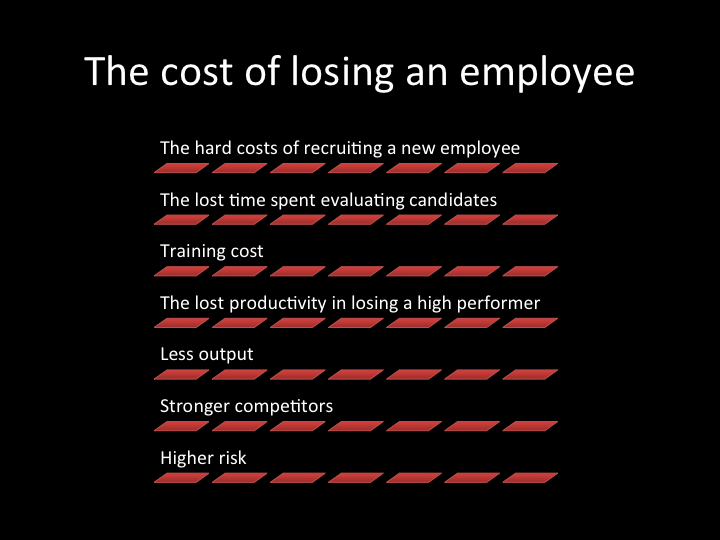
While most companies acknowledge the importance of recruiting, they often neglect the complementary principle that you need to put as much effort in keeping your existing team satisfied. Just as increasing user acquisition costs intensifies the value of retaining existing players, the increasing difficulty in finding great employees intensifies the need to minimize employee churn. There are multiple costs of replacing a good employee

Losing an employee is more costly than you realize
  • The hard costs of recruiting a new employee. This can be payments to a recruiter, referral fees to employees, travel costs to attend recruiting, travel costs to bring candidates in for interviews, etc.
  • The lost time spent evaluating candidates. The time you and your team spend reviewing resumes/CVs, interviewing candidates and discussing options. These days, almost all candidates go through multiple rounds of interviews before being offered a position. Each of those interviews takes 30 minutes or more of someone’s time, if you value that time based on the interviewer’s salary, you quickly get into the thousands of dollars (even more for a senior candidate who meets with leadership).
  • Training costs. These are both direct and indirect. You may have to send the new employee to various external training courses to prepare him for the job. More likely you will need to spend you time or your colleagues will training the new person on how the company works, practical issues (i.e. where the bathroom is), systems, interactions with other teams and what they need to perform their tasks optimally. Again, there is a cost for every minute that you and colleagues spend getting a new hire up to speed. When you break out salaries by how much the person earns per hour, this training cost often runs into the thousands of dollars.
  • The lost productivity in losing a high performer. You should never consider replacing an employee as an upgrade. If there are better people on the market, you need to recruit them proactively and replace weak team members. Assuming you adhere to this principle, if someone leaves voluntary, it means their replacement is not likely to be as good as the existing team member. The cost can range from minimal to huge in having somebody not as good performing a role on your team.
  • Less output. If you employ somebody, they should be providing a valuable service (or else you should proactively have eliminated the position). When you lose somebody, that task either does not get done until a replacement is in place or you must take other people off of their tasks (which again are worthwhile or you should not having them doing it). In either case, the overall output of your organization decreases.
  • Stronger competitors. When a good employee leaves, by definition they go somewhere else. That somewhere else is often a competitor, so not only are you losing their services but a competitor is likely improving. If Messi were to leave Barcelona for Real Madrid, the loss to Barcelona would be magnified by the improvement of their arch competitor.
  • Higher risk. Regardless of how rigorous your recruitment process, there is always risk that you make a bad hire. Many people interview above their actual competence, while others may just not be a good fit for your organization and processes. Thus, you have the risk that not only will the new hire be slightly weaker, they may prove incapable of doing the job and themselves have to be replaced. Then you have both an extended period of the job not getting done (or people being pulled off other tasks) and a repeat of the costs above.

Continue reading “Don’t forget to recruit your own team”

Like Loading...
Unknown's avatarAuthor Lloyd MelnickPosted on November 4, 2015May 1, 2021Categories General Social Games Business, General Tech Business, Lloyd's favorite postsTags employee retention, HR, productivity, recruiting, retention, training1 Comment on Don’t forget to recruit your own team

Why free stuff or lower prices don’t keep customers happy

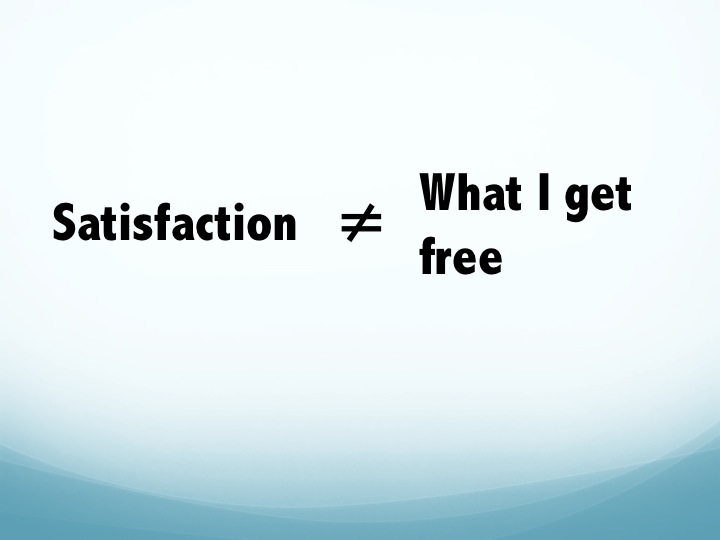
One lazy and ineffective way to keep customers happy is to lower prices or give them more things for free. Companies that do not know their customers well, or do not want to, often respond to the question of how to increase customer satisfaction or retention by lowering prices. In free-to-play products, this tactic involves giving users more virtual currency.

The lazy answer

This response is often a knee-jerk reaction to the question of “How do we improve our customer relationships?” It demonstrates that the person/company does not want to address the true dynamics of the relationships. Everybody would rather pay less for a product or get bigger free bonuses and rewards. It does not reflect any understanding of your users, their motivations or why they use your product.

Slide1

The reality of customer satisfaction

The reality is that users and players are motivated by many factors and rarely is cost the primary reason they use a product. The exception is companies that are focused solely on being a low cost provider, the Walmarts and Aldis, and for them price is the greatest lever to increase user satisfaction. In other cases people are driven by unique features or experiences that builds a bond with the product.

Does not create competitive advantage

The biggest mistake in throwing free stuff at users or players (or lowering prices) is that it does not create competitive advantage. Your competitors can easily match or beat what you are doing. If you are giving away five dollars worth of product daily and they want to steal your customers, they can give away $10. You end up with a race to the bottom in terms of pricing, and when you reach the bottom nobody has a particularly good business other than the companies built to compete on price (again, the Walmarts and Aldis).

Determining what creates satisfaction for your users

The first step is understanding what about your product or game motivates people to use it. There are several ways to build this understanding (listed in my order of preference): Continue reading “Why free stuff or lower prices don’t keep customers happy”

Like Loading...
Unknown's avatarAuthor Lloyd MelnickPosted on March 12, 2015April 24, 2021Categories General Social Games Business, General Tech BusinessTags Customer satisfaction, customer service, free, retention, Sean Ellis1 Comment on Why free stuff or lower prices don’t keep customers happy

Creating that Aha moment

There was a great blog post on the Mode Blog, “Facebook’s Aha Moment is Simpler Than You Think,” which provided a straightforward strategy to creating Aha moments. Aha moments when a player or user understands the value of your product are widely considered the key to growth.

Slide1

The key point of the post was that you create the aha moment through simple math and strong messaging; it is not a complex task that requires advanced analytics. Take Facebook’s self-defined aha moment, acquiring seven friends in ten days. In practice, this is not a binary. Some people may fall in love with Facebook after getting three friends in a week; others may need to get twenty friends in thirty days. This fact does not take away from the aha moment, it is actually the point of the aha moment. The blog post states, “Facebook’s decision to define their ‘aha moment’ in such simple terms suggests they weren’t trying to optimize it to be precise as possible. Other “aha moments”—30 follows, 1 file upload, 2,000 messages—follow the same pattern: they emphasize simplicity over science…. Because “aha moments” aren’t about precision, but about defining a core principle and a quotable rally cry for the entire company. “

Defining the aha moment

To create a useful aha moment, you need to tie it to a metric that defines customer value. Keep in mind that it is not one “moment,” Facebook’s aha moment is over ten days and requires seven different actions (friending seven people).

The most useful metrics for quantifying your aha moment are based on retention. Customers who find value come back. If you identify which actions separate retained customers from lost ones, you will know what drives customer value and then have your “aha moment.” Continue reading “Creating that Aha moment”

Like Loading...
Unknown's avatarAuthor Lloyd MelnickPosted on February 12, 2015April 24, 2021Categories Analytics, General Social Games Business, General Tech Business, GrowthTags aha moment, analytics, Growth, retentionLeave a comment on Creating that Aha moment

How to find talented employees

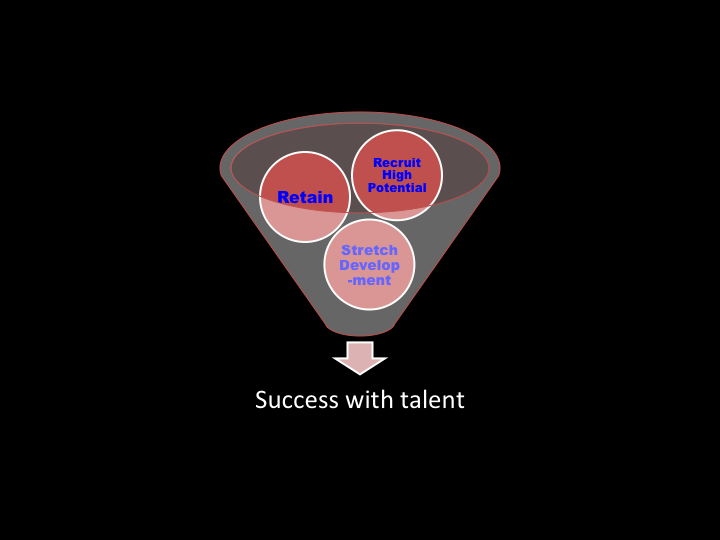
Finding strong members for your team is one of the most important skills needed to succeed and a recent Harvard Business Review article, “21st Century Talent Spotting” by Claudio Fernandez-Araoz, provides some strong insights on how to optimize your talent search. With skills and competencies now the key to finding employees, rather than past experience, you must become skilled at judging potential. This situation is exacerbated by the rapidly changing nature of the tech and game spaces, what worked yesterday are not necessarily the skills you need today.
Slide1
In the last millennium, workers were selected for physical attributes which readily translated into higher success at physical labor, from building a canal to fighting a war. Business then evolved to judge candidates on intelligence, experience and past performance. Much work was standardized, so if you were looking for an engineer or an accountant or a CEO, you would find somebody who has already succeeded in such a role and there was a high likelihood they would replicate this success. Then hiring evolved to the competency model, which stipulated that managers (and other workers) be evaluated on specific characteristics and skills that would help predict outstanding performance in the roles for which they were being hired. Hiring managers would decompose jobs into competencies and look for candidates with the best combination of these skills. Continue reading “How to find talented employees”

Share this:

  • Click to share on Facebook (Opens in new window) Facebook
  • Click to share on LinkedIn (Opens in new window) LinkedIn
Like Loading...
Unknown's avatarAuthor Lloyd MelnickPosted on August 27, 2014October 14, 2014Categories General Social Games BusinessTags Claudio Fernandez-Araoz, development, hiring, HR, Potential, recruiting, retention, stretch development, talent1 Comment on How to find talented employees

Posts pagination

Page 1 Page 2 Next page

Get my book on LTV

The definitive book on customer lifetime value, Understanding the Predictable, is now available in both print and Kindle formats on Amazon.

Understanding the Predictable delves into the world of Customer Lifetime Value (LTV), a metric that shows how much each customer is worth to your business. By understanding this metric, you can predict how changes to your product will impact the value of each customer. You will also learn how to apply this simple yet powerful method of predictive analytics to optimize your marketing and user acquisition.

For more information, click here

Follow The Business of Social Games and Casino on WordPress.com

Enter your email address to follow this blog and receive notifications of new posts by email.

Join 791 other subscribers

Most Recent Posts

  • Join me at PDMA Inspire for my talk on new product prioritization
  • Why keep studying?
  • The next three years of this blog
  • Interview with the CEO of Murka on the biggest growth opportunity in gaming, Barak David

Lloyd Melnick

This is Lloyd Melnick’s personal blog.  All views and opinions expressed on this website are mine alone and do not represent those of people, institutions or organizations that I may or may not be associated with in professional or personal capacity.

I am a serial builder of businesses (senior leadership on three exits worth over $700 million), successful in big (Disney, Stars Group/PokerStars, Zynga) and small companies (Merscom, Spooky Cool Labs) with over 20 years experience in the gaming and casino space.  Currently, I am the GM of VGW’s Chumba Casino and on the Board of Directors of Murka Games and Luckbox.

Topic Areas

  • Analytics (114)
  • Bayes' Theorem (8)
  • behavioral economics (8)
  • blue ocean strategy (14)
  • Crowdfunding (4)
  • DBA (2)
  • General Social Games Business (459)
  • General Tech Business (195)
  • Growth (88)
  • International Issues with Social Games (50)
  • Lloyd's favorite posts (101)
  • LTV (54)
  • Machine Learning (10)
  • Metaverse (1)
  • Mobile Platforms (37)
  • Prioritization (1)
  • Social Casino (52)
  • Social Games Marketing (105)
  • thinking fast and slow (5)
  • Uncategorized (33)

Social

  • View CasualGame’s profile on Facebook
  • View @lloydmelnick’s profile on Twitter
  • View lloydmelnick’s profile on LinkedIn

RSS

RSS Feed RSS - Posts

RSS Feed RSS - Comments

Categories

  • Analytics (114)
  • Bayes' Theorem (8)
  • behavioral economics (8)
  • blue ocean strategy (14)
  • Crowdfunding (4)
  • DBA (2)
  • General Social Games Business (459)
  • General Tech Business (195)
  • Growth (88)
  • International Issues with Social Games (50)
  • Lloyd's favorite posts (101)
  • LTV (54)
  • Machine Learning (10)
  • Metaverse (1)
  • Mobile Platforms (37)
  • Prioritization (1)
  • Social Casino (52)
  • Social Games Marketing (105)
  • thinking fast and slow (5)
  • Uncategorized (33)

Archives

  • September 2023
  • December 2021
  • July 2021
  • March 2021
  • February 2021
  • January 2021
  • December 2020
  • November 2020
  • October 2020
  • September 2020
  • August 2020
  • July 2020
  • June 2020
  • May 2020
  • April 2020
  • March 2020
  • February 2020
  • January 2020
  • November 2019
  • October 2019
  • September 2019
  • June 2019
  • May 2019
  • April 2019
  • March 2019
  • February 2019
  • January 2019
  • December 2018
  • June 2018
  • May 2018
  • April 2018
  • March 2018
  • February 2018
  • January 2018
  • December 2017
  • June 2017
  • May 2017
  • April 2017
  • March 2017
  • February 2017
  • January 2017
  • December 2016
  • November 2016
  • October 2016
  • September 2016
  • June 2016
  • May 2016
  • April 2016
  • March 2016
  • February 2016
  • January 2016
  • December 2015
  • November 2015
  • October 2015
  • September 2015
  • July 2015
  • June 2015
  • May 2015
  • April 2015
  • March 2015
  • February 2015
  • January 2015
  • December 2014
  • November 2014
  • October 2014
  • September 2014
  • August 2014
  • July 2014
  • June 2014
  • May 2014
  • April 2014
  • March 2014
  • February 2014
  • January 2014
  • December 2013
  • November 2013
  • October 2013
  • September 2013
  • August 2013
  • July 2013
  • June 2013
  • May 2013
  • April 2013
  • March 2013
  • February 2013
  • January 2013
  • December 2012
  • November 2012
  • October 2012
  • September 2012
  • August 2012
  • July 2012
  • June 2012
  • May 2012
  • April 2012
  • March 2012
  • February 2012
  • January 2012
  • December 2011
  • November 2011
  • October 2011
  • September 2011
  • August 2011
  • July 2011
  • June 2011
  • May 2011
  • December 2010
December 2025
S M T W T F S
 123456
78910111213
14151617181920
21222324252627
28293031  
« Sep    

by Lloyd Melnick

All posts by Lloyd Melnick unless specified otherwise
Google+

Enter your email address to subscribe to this blog and receive notifications of new posts by email.

Join 791 other subscribers
Follow Lloyd Melnick on Quora

RSS HBR Blog

  • How Zak Brown Led the Revival of McLaren Racing
  • New Research on AI and Fairness in Hiring
  • A New Era for the Digital Resale Market
  • Where Speed Meets Strategy
  • When Supply Chains Become Autonomous
  • Future of Business: Mars CEO on How Business Can Be a Force for Good
  • The New Tools That Can Improve Workforce Training
  • The Myth of Cloud Resilience in the Age of Intelligence - SPONSOR CONTENT FROM RELTIO
  • Unlocking Productive Conflict on Your Executive Team
  • The 5 AI Tensions Leaders Need to Navigate

RSS Techcrunch

  • An error has occurred; the feed is probably down. Try again later.

RSS MIT Sloan Management Review Blog

  • How Leaders Stay True to Themselves and Their Stakeholders
  • Our Guide to the Winter 2026 Issue
  • Broadening Future Perspectives at the Bank of England
  • A Faster Way to Build Future Scenarios
  • Assess What Is Certain in a Sea of Unknowns
  • How to Make Scenario Planning Stick
  • Leading an Industrial Giant Through Volatility
  • The Greenhushing Trap
  • Three Things to Know About Implementing Workplace AI Tools
  • AI-Savvy Boards Drive Superior Performance
The Business of Social Games and Casino Website Powered by WordPress.com.
  • Subscribe Subscribed
    • The Business of Social Games and Casino
    • Join 726 other subscribers
    • Already have a WordPress.com account? Log in now.
    • The Business of Social Games and Casino
    • Subscribe Subscribed
    • Sign up
    • Log in
    • Report this content
    • View site in Reader
    • Manage subscriptions
    • Collapse this bar
 

Loading Comments...
 

    %d