Skip to content

The Business of Social Games and Casino

How to succeed in the mobile game space by Lloyd Melnick

Category: General Social Games Business

How to calm irate customers on social media

I came across a great post recently how to mollify a negative situation on social media. We have all seen, hopefully not experienced, an incensed customer or player venting their anger on Facebook, Twitter or other social media. These customers have a disproportionate impact, as many and potentially thousands see their rants if it goes viral. The negative posts also often turn up in searches of your company or product. These customers can have a long-term damaging impact on your brand.

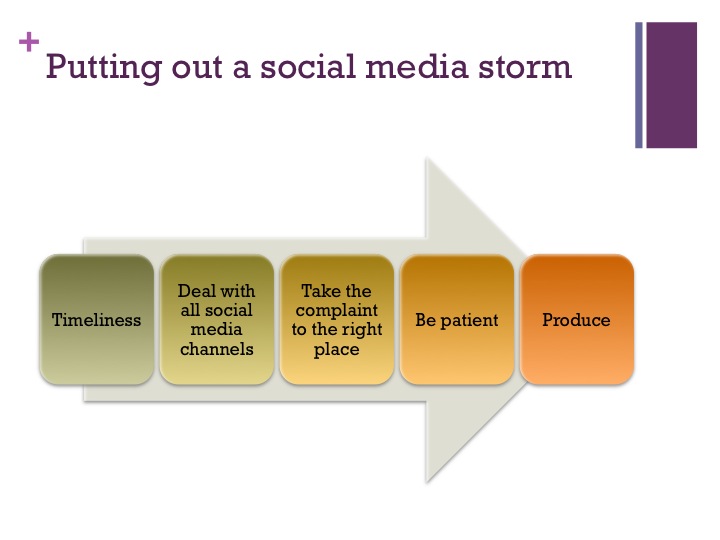
The aforementioned post, “5 steps to diffuse an angry customer on social media,” lays out five keys to dealing with customers who are posting negatively on social media:

Slide1

  1. Timeliness. It is critical to respond quickly to the issue. The longer you wait the more the disgruntled customer’s side of the story will be visible unopposed and the more upset they will probably become. If you deal with it quickly, the issue is much less likely to spread.
  2. Deal with all social media channels. If you respond to the disgruntled customer on one social media channel, make sure you address any posts on other social media. For example, if they post on Facebook and you respond there, also respond to any of their tweets or if they mention you in their blog.
  3. Take the complaint to the right place. Make sure the appropriate department or office deals with the concern. When I had a problem with the Extended Stay and posted about the, rather than the local property responding it would have been more powerful if the corporate headquarters addressed my issues.
  4. Be patient. It is easy to get worked up by an angry customer, especially if you feel their issue is not as bad as they claim, but put your emotion aside and be tolerant with your customer. They may continue to rant and rather than being drawn into a negative loop, continue to be positive until you have won them over.
  5. Produce. It is always the results that matter and when dealing with an angry customer, these results are even more important. Make sure you deliver what you promise the customer to resolve the situation.

When you have unhappy customers expressing their discontent on social media, rather than ignoring it and hoping it goes away follow the above five steps and you are most likely to see positive results.

Key takeaways

  1. Customers who are unhappy with your company or product can cause serious damage on social media as their complaints may be seen by thousands or even millions.
  2. Rather than hoping the customer goes away, you should proactively address the irate customer.
  3. By responding to their negative posts quickly, dealing with their outbursts on every social media channel they are suing, taking the complaint to the right part of your business, being patient with the user and delivering a solution you are most likely to defuse the situation.
54.154043 -4.485921
Like Loading...
Unknown's avatarAuthor Lloyd MelnickPosted on May 7, 2015January 4, 2016Categories General Social Games Business, General Tech BusinessTags customer service, social mediaLeave a comment on How to calm irate customers on social media

Reducing surprises with your project and game development

Last week I wrote about improving your project management, today I want to address a related issue, how to minimize surprises during product development. Most experienced leaders in the tech and game space (and probably any product development) have experienced many projects that fail to meet their goals for time, cost or performance. Rather than accepting these failures as part of the development process, an article in the MIT Sloan Management Review, Reducing Unwelcome Surprises in Project Management by Tyson Browning and Ranga Ramasesh, shows how to reduce these undesirable blows.

Browning and Ramasesh discuss projects often miss schedule and projections because of unknown unknowns, problems people do not even know they do not know (rather than issues you are concerned about from the beginning). What the authors point out is that they are not really unknown unknowns but issues that nobody has bothered to find out. Many of these unknown unknowns can be converted to known unkowns (and thus planned around) through a process of “direct recognition.”

Six project domains

There are six project domains where a project uncertainty resides and where recognition of the uncertainty should occur. “Projects operate as systems. Project and performance result not only from individual project elements but also from how the elements work together.” All projects have five key subsystems that when coupled with the project’s context contain both known and unknown unknowns.

  1. Result subsystem. The desired result of most projects is a product, service, feature or other deliverable. Results have multiple components, all of which must work together to deliver success. Problems in one area can bleed into other areas.
  2. Process subsystem. The labor required to execute and manage a project is another system, made up of activities, tasks and decisions tied to the flow of information, work product and deliverables. Efficient and effective processes depend not only on the specific activity but also on the relationships among the activities. Bad inputs can undermine an otherwise value-adding activity.
  3. Organization subsystem. A third type of system incorporates the people, teams, departments and functions working on a project. This is the system that often breaks down due to poor communication.
  4. Tools subsystem. Team members need tools, facilities and equipment to manage activities and exchange information. Many tools, however, are unable to transfer information due to various incompatibilities and organizational decisions.
  5. Goals subsystem. Almost every project has goals for time, cost and performance/quality. These three areas, however, compete with each other. For example, improving performance by adding features often adds costs.
  6. Context. Every project (hopefully) exists within a larger context. A project may be part of a larger portfolio or a feature for a game. It may also have multiple stakeholders with competing visions and metrics for success.

The first step in reducing unknown unknowns is to consider these six subsystems and their relationships.

The factors driving uncertainty

There are multiple elements of a project’s subsystems and context that make impact the likelihood of surprises. If you review your project looking for unknown unknowns you are more likely to convert them to known unknowns (and thus account for them in your schedule/budget). There are six factors that drive uncertainty and help you identify unknown unknowns.

The first of is complexity. A complex system contains many interacting elements that increase the variety of its possible behaviors and results. A project with more tasks, people or requirements is going to be more complex than a project with fewer. When a project’s elements have a greater variety of tasks, complexity also increases. The higher complexity, the greater the chance of experiencing unknown unknowns.

The second element driving uncertainty is complicatedness. Complicatedness is more subjective than complexity. It is often increased if the product is unprecedented or its structure is unintuitive. The more complicated the project, the more difficult it is for the participants to understand and anticipate.

The third factor impacting uncertainty is dynamism. A project’s volatility adds to its complexity. A project’s external dynamics are particularly likely to affect its goals, for example if regulation changes. Changes in goals then add to the complexity and complicatedness and increase the chances of unknown unknowns.

The fourth factor impacting uncertainty is equivocality. Project work requires sharing a great deal of information. If the information is not crisp and specific, then the people who receive it will be equivocal and will not be empowered to make firm decisions.

Mindlessness is the fifth factor driving uncertainty. These are the perceptive barriers that interfere with the recognition of unknown unknowns. They good be too much reliance on intuition or anchoring on past experience and traditions rather than looking objectively at the situation.

The final factor impacting uncertainty is project pathologies. Project pathologies are structural or behavioral conditions in and around project in their entirety (rather than individuals who exhibit mindlessness) that allow unknown unknowns to remain hidden. Project pathologies include mismatches among the project subsystems and context, unclear expectations among stakeholders and dysfunctional cultures.

Reducing unknown unknowns

Slide1

By addressing the factors that drive uncertainty and understanding projects’ subsystems, Browning and Ramasesh suggest several ways to reduce the chance of unpleasant surprises

  • Decompose the project. Modeling a project’s subsystems builds understanding that exposes unknown unknowns. Decomposition should begin with the natural structure of the overall purpose of the project, identifying the sub-problems relating to key areas and complimenting it with experience and experimentation.
  • Analyze scenarios. Scenario planning includes building several different future outlooks. It tries to understand and build uncertainty into the reasoning. Rather than being predictions, scenarios are coherent and credible futures built on dynamic events and conditions.
  • Use checklists. Organized learning from past projects can inform planning. They can take the form of checklists or prompt lists, though should not be used as a substitute for thinking.
  • Scrutinize plans. Project plans are an estimate for how success will occur, including resources needed and results. All participants and stakeholders should scrutinize closely these estimates. This scrutiny can be as project reviews, audits or even external evaluations.
  • Use long interviews. Thorough interviews with project stakeholders, subject matter experts and other project participants are effective at uncovering waiting problems and issues.
  • Pick up weak signals. Weak signals often come in subtle forms, such as unexplained behaviors, confusing outcomes or a realization that no one in the organization has a complete understanding of the project.
  • Mine data. When vast amounts of data, analyzing this data can pull out implicit, previously unknown information. By reviewing data from multiple projects, data mining could help you identify precursors of potential problems.
  • Communicate frequently and effectively. Regularly and systematically reviewing decision-making and communication processes, including the assumptions that are factored into the processes, and seeking to reduce information disparities, can help to anticipate and uncover unknown unknowns.
  • Balance local autonomy and central control. Using decentralization of control to grant autonomy to the local nodes of a multi-nodal project aids recognition of unknown unknowns. Although decentralization helps project managers compensate for their knowledge gaps, it creates challenges for governance. Local nodes are less willing to report problems. You must balance central authority with local control to ensure unknown unknowns are both discovered and reported.
  • Incentivize discovery. One of the best ways to identify unknown unknowns is timely and honest communication of missteps, anomalies and missing competencies. Offering incentives for candor can show people there are advantages to owning up to errors or mistakes in time for management to take action.
  • Cultivate an alert culture. If project participants and stakeholders understand how unknown unknowns can derail projects, they will strive to illuminate rather than hide potential problems. You can make the culture more alert by emphasizing systems thinking, stress the limits of what can be known about a project a priori, seek to build a wide range of experiential expertise, develop the characteristics of a high-reliability organization and learn from surprising outcomes.

Avoid the unpleasant surprises

With the techniques above, you and your project managers can uncover and recognize knowable unknown unknowns. By providing guidance on where and why these unknown unknowns exist in projects and how to recognize their clues, you can reduce the number and magnitude of unwelcome surprises.

Key takeaways

  1. Unpleasant surprises in product management – particularly software development – occur when issues arise that nobody thought of, referred to as unknown unknowns.
  2. To anticipate unknown unknowns, you need to understand the underlying system for the projects and the key factors (complexity, complicatedness, dynamism, equivocality, mindlessness and project pathologies) that drive the uncertainty.
  3. You can then reduce the number and magnitude of unpleasant surprises by moving many to known unknowns by decomposing the project, analyzing scenarios, using checklists, scrutinized planning and strong communication (among other techniques).
Like Loading...
Unknown's avatarAuthor Lloyd MelnickPosted on May 5, 2015May 3, 2015Categories General Social Games Business, General Tech BusinessTags collaboration, communication, Game development, project management, software development, surprises, uncertainty, unknown unknowns3 Comments on Reducing surprises with your project and game development

How to increase traffic through content marketing

I came across a great blog post on how Fractl, a digital marketing agency, used content marketing to increase its referral traffic by over 6,000 percent. In the blog post, Fractl discusses several lessons that they learned, which helped them achieve this success. These lessons apply to almost any business and can help game and tech companies grow.

Don’t limit large scale campaigns with narrow-scope ideas

A mistake commonly made is creating a narrow focus for your campaign, implicitly limiting the reach. Content marketing, however, can be used in every stage of the customer journey. You also need to realize that one campaign will not impact every metric that you track but you need a diverse strategy to reach customers in different stages of their journey and thus impact more metrics.

In the blog post, there are four stages of the customer buying cycle. The best content marketing strategies focus on developing a long-term strategy that target all fours stage of the customer journey:

  • Viral campaigns. A campaign tangentially related to the brand that achieves a deep emotional reaction and thus encourages hockey stick levels of sharing and traffic.
  • Conversion-driven campaigns. These are targeted to a specific audience that is ready or almost ready to monetize.
  • Awareness campaigns. These are designed to increase exposure to the brand and attract and engage consumers who are at the top of the sales funnel.
  • On-site content. he multipurpose content is designed to build the brand and engage with the target market.

The key takeaway is that you should build your content roadmap so it touches potential users and existing customers at all parts of the customer journey. If you create a campaign focused on one niche goal, you are missing the broader opportunity.

Heavy research earns more press than knowledge curation

Fractl initially built campaigns that cast a wide net but they learned that sites that would republish their materials were primarily looking for exclusive research. They found data curation had moderate engagement while heavy research based campaigns have the highest engagement and syndication because they bring something new. This is relevant for even consumer facing games, if for example you bring new research into how people compete in casino games, it is more likely to be spread widely.

Quantitative research is stronger than qualitative

In Fractl’s research, sites and other potential influencers wanted to see more data-driven articles, infographics, and mixed-media pieces, followed closely by data visualizations, images, videos, and interactive maps. They were less enthusiastic about Press releases, interactive projects, quizzes, flipbooks, widgets, and badges. While articles might do well with qualitative results, most of the other top-ranked content formats require a type of data visualization that is most valuable when it features quantifiable results.

Gated assets create a value-add and incentivize people to give you their information

Fractl learned that there was limited value to being mentioned on other websites. Creating a white paper, eBook, list, or any other gated asset that adds value to your original research creates an incentive for people to go back to your website and continue engaging with your brand. By gating the asset, you enable your team to capture the contact’s information and further nurture them in your sales funnel.

A related suggestion is for you to save at least a quarter of your findings and then feature it in your gated asset. Make it explicit in your content marketing that there is more information for people to learn about if they click through or go to your homepage.

Learning which publishers drive the most qualified lead flow is critical to your success

It is important not focus your promotion around sites you like or you find prestigious, but to identify objectively the sites that will generate the most leads or reactivations. Fractl suggests creating audience personas to understand the optimal channels. “Audience personas are a characterization of your businesses ideal customer. Creating these personas forces you to consider what your customers value, what they hope to achieve, what they fear, and much more. By putting yourself in the shoes of your prospects, you can begin to get a sense for where they get their news and which blogs they might read—allowing you to improve your pitch targeting for brand awareness and conversions.”

Key takeaways

  1. Content marketing can be a strong user acquisition and reactivation channel but it takes good planning.
  2. The key is to build your content marketing strategy around the full customer experience, not just narrowly targeting acquisition or conversion.
  3. If you create gated content, it can help capture leads and drive customers to your site.

Fractl

Like Loading...
Unknown's avatarAuthor Lloyd MelnickPosted on April 30, 2015April 26, 2015Categories General Social Games Business, General Tech Business, GrowthTags Acquisition, Content marketing, conversions, fractl, Growth, marketing strategyLeave a comment on How to increase traffic through content marketing

More effective project management

One of the biggest challenges in the game space, and the overall tech space, is project management. Many companies do not even expect to hit the dates they have set. This situation creates planning issues, cash flow problems and prompts investors to lose confidence. An article in the MIT Sloan Management Review, “What Successful Project Managers Do,” studied 150 successful projects and determined four key initiatives by project managers tied to success.

The article first shows three different types of events that can impact schedule. These events can be classified according to their level of predictability as follows:

  • Events that were anticipated but whose impacts were much stronger than expected
  • Events that could not have been predicted
  • Events that could have been predicted but were not

All three types of events can become problems that need to be addressed by a project manager.
Slide1

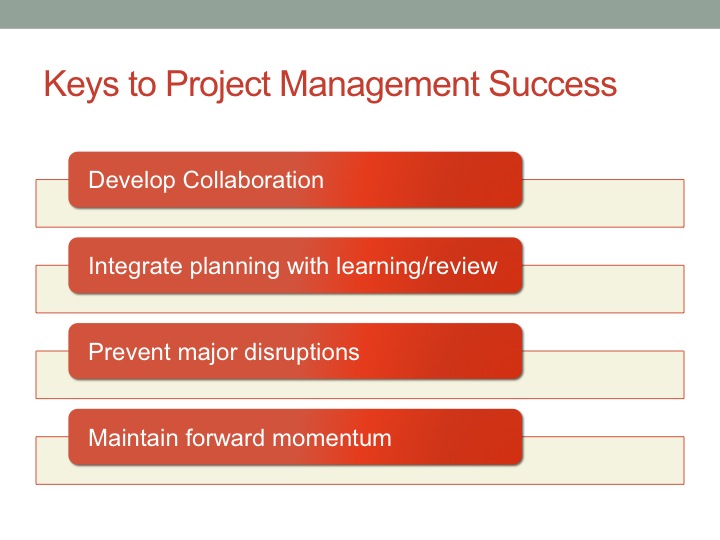
Develop collaboration

Since project progress depends on the contribution of individuals who represent different disciplines (e.g., art, design, programming) and are affiliated with diverse parties, collaboration is crucial for the early detection of problems as well as the quick development and smooth implementation of solutions.

As the authors point out, “most projects are characterized by an inherent incompatibility: The various parties to the project are loosely coupled, whereas the tasks themselves are tightly coupled. When unexpected events affect one task, many other interdependent tasks are quickly affected. Yet the direct responsibility for these tasks is distributed among various loosely coupled parties, who are unable to coordinate their actions and provide a timely response. Project success, therefore, requires both interdependence and trust among the various parties.”

If one or several of the people involved in the project believes that project planning and contractual documents provide sufficient protection from unexpected problems, developing collaboration among all the parties may require creative and bold practices. Thus, it is important to select the right people for the project and develop mutual interdependence and trust.

Integrate planning and review with learning

Project managers faced with unexpected events employ a “rolling wave” approach to planning. Recognizing that firm commitments cannot be made on the basis of volatile information, they create plans in waves as the project unfolds and information becomes more reliable. With their teams, they develop detailed short-term plans with firm commitments while also preparing tentative long-term plans with fewer details. To ensure that project milestones and objectives are met, these long-term plans include backup systems or surplus human resources.

One key difference between the traditional planning approach, in which both short- and long-term plans are prepared in great detail, and the rolling wave approach becomes evident when implementation deviates from the plan. In the traditional planning approach, the project team attempts to answer the question: Why didn’t our performance yesterday conform to the original plan? In the rolling wave approach, project managers also attempt to answer the question: What can we learn from the performance data to improve the next cycle of planning? In particular, they attempt to learn from their mistakes—to prevent an unexpected event from recurring. The successful project manager develops stable short-term plans and flexible long term plans while conducting learning-based project reviews.

Prevent Major Disruptions

Successful project managers never stop expecting surprises, even though they may effect major remedial changes only a few times during a project. They are constantly anticipating disruptions and maintaining the flexibility to respond proactively. The key is to anticipate and cope proactively with a few major problems.

Maintain Forward Momentum

When unexpected events affect one task, many other interdependent tasks may also be quickly impacted. Thus, solving problems as soon as they emerge is vital for maintaining work progress. Also in many situations, corrective action is possible only during a brief window.

In working to maintain a forward momentum, the manager seeks to avoid stalemates. A good project manager resolves problems by hands-on engagement, frequent face-to-face communication and moving about frequently.

What you should do as a leader

Although every project manager tries to minimize the frequency and negative impact of unexpected events, in today’s dynamic environment such events will still occur. Acknowledging the emergence of a problem is a necessary first step, allowing the project manager to respond quickly and effectively. Some organizations assume that almost all problems can be prevented if the project manager is competent enough—resulting in project managers who are hesitant to admit that they are facing an emerging problem.

By assuming the four roles discussed in this article, the successful project managers we studied are both intention- and event-driven and embrace all three orientations. Developing collaboration requires them to be people-oriented. Integrating planning and review with learning requires them to be information-oriented. Preventing major disruptions requires them to be action-oriented. Finally, maintaining forward momentum, which is pursued throughout a project, requires them to adopt all three orientations. Senior managers must ensure that all three orientations are considered when selecting project managers and developing project management methodologies.

Key takeaways

  1. Good project managers are critical for getting projects done on schedule.
  2. Effective project managers develop collaboration between different disciplines on their team, integrate planning with review and learning, focus on preventing major disruptions and maintain forward momentum.
  3. An effective leader will let their project managers respond quickly and effectively rather than create a culture of fear so problems are hidden.
Like Loading...
Unknown's avatarAuthor Lloyd MelnickPosted on April 28, 2015January 4, 2016Categories General Social Games Business, General Tech BusinessTags collaboration, disruptions, project management, scheduling2 Comments on More effective project management

It’s about the customer journey, not the touchpoints

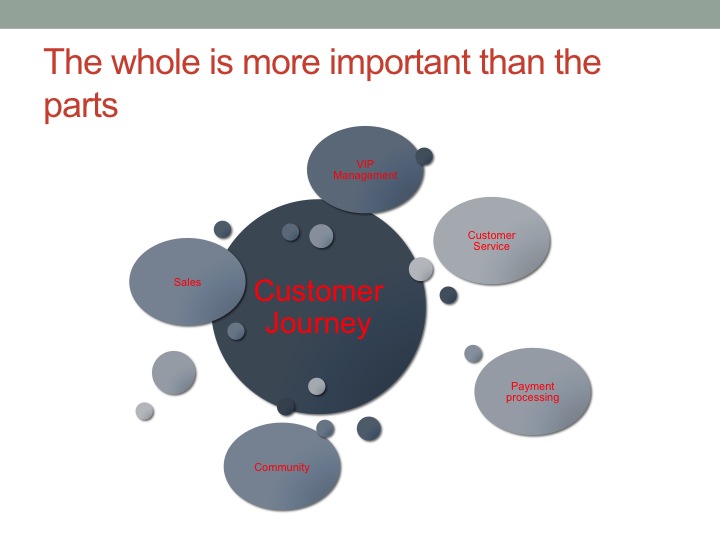
There was a great article in the Harvard Business Review, “The Truth About Customer Experience,” that shows more importantly than focusing on providing the customer with good discrete interactions you should focus on the entire journey. Interestingly, even if you have great metrics at each touch point (e.g., people are satisfied with onboarding, customer services call are resolved positively), overall customer satisfaction may be negative because of the holistic customer journey.

Slide1

The article uses the example of new customer onboarding for a pay TV provider to show how the journey can be negative even when each touchpoint gets positive feedback. As the article describes, “Take new-customer onboarding, a journey that typically spans about three months and involves six or so phone calls, a home visit from a technician, and numerous web and mail exchanges. Each interaction with this provider had a high likelihood of going well. But in key customer segments, average satisfaction fell almost 40% over the course of the journey. It wasn’t the touchpoints that needed to be improved—it was the onboarding process as a whole. Most service encounters were positive in a narrow sense—employees resolved the issues at hand—but the underlying problems were avoidable, the fundamental causes went unaddressed, and the cumulative effect on the customer was decidedly negative.”

The root of the problem is that many customer focused functions (sales, CS, community management) are siloed in different organizations that have individual and insular cultures. These groups shape how the company interacts with consumers but although they may aim to optimize their contributions they lose focus of the customers desires.

The article describes four ways that companies can overcome this problem, effectively embedding the customer journey into your operational process. It is not about removing the functions but building an internal system that looks at customers holistically. Continue reading “It’s about the customer journey, not the touchpoints”

54.154039 -4.485890
Like Loading...
Unknown's avatarAuthor Lloyd MelnickPosted on April 21, 2015January 4, 2016Categories General Social Games Business, General Tech BusinessTags customer journey, Customer satisfaction, customer serviceLeave a comment on It’s about the customer journey, not the touchpoints

The importance of competitive intelligence

In most businesses, the need to know what your competitors are doing is a given. In the social gaming space, however, competitive intelligence (CI) is either an afterthought or not even considered critical. That thinking at best leads to a sub-optimal product and at worst facilitates losing your market to another product.

Why Competitive Intelligence is important

Good competitive intelligence is invaluable to all companies, including those in the mobile and casino gaming spaces.

  1. CI shows you the minimum quality level acceptable for your game. In the mobile space, most users will try multiple applications and then settle on one, a winner take all environment, though in casino they may play two or three. Thus, your potential customers are also playing your competitors’ products and deciding which one to invest their time in the future. If your game is clearly inferior, weaker graphics, slower tech, etc., you have lost.
  2. Your competitors are not stupid and you should learn from them. Internally, they are looking at the same opportunities and problems you are trying to tackle. By understanding features and initiatives they are taking to improve, they can inspire you on ways to manage the situation. Not that you want to copy everything they are doing, but understand how they are approach problems and if you have a different approach make sure your solution is better before deploying it.
  3. You can learn from their mistakes. It is great to make mistakes because it means you are trying unique initiatives; it is not great to repeat mistakes as that has no value. What is even better is if somebody else makes the mistake to learn from them without having the cost.
  4. You ensure you are value competitive. A car company would not never release a new model without understanding how its price and features compare with other cars. It would base the price on the competitive feature set, including branding, and then price their car so it is a reasonable option for consumers. Very few people will purchase an auto when they can get a comparable one for half the price.In the game space, companies mistakenly believe users are price inelastic. Many players, particularly those likely to monetize, understand what they are spending money for and how much they will get for it. The value is often in play time (e.g., I will spend $20 in a bingo app to play an extra hour). If the player feels your game is much more expensive than comparable games, they are less likely to spend in your app and will shift their spending to competitors (and you will see lower revenue from higher prices).

Continue reading “The importance of competitive intelligence”

54.154041 -4.485911
Like Loading...
Unknown's avatarAuthor Lloyd MelnickPosted on April 16, 2015May 1, 2021Categories Analytics, General Social Games Business, Lloyd's favorite postsTags business intelligence, competition, competitive intelligence3 Comments on The importance of competitive intelligence

Keeping the edge you built with analytics

Now that virtually every game company, and every tech company, understands and uses analytics in its operations, simply having strong analytics is no longer a competitive advantage. If everyone is doing the same thing, it becomes the cost of doing business. In the early days of social gaming, Zynga, Playdom and the other leaders built a huge advantage because they had great (at the time) analytics system and used the information to adjust their games based on player demands. Now, even the most traditional game companies (yes, I mean EA) are using analytics to optimize live games and third party providers allow even start-ups access to advanced analytics.

Slide1

Sustaining competitive advantage

A recent article in the MIT Sloan Management Review, “Sustaining an Analytics Advantage” by Peter Bell, shows ways companies can still use analytics to build competitive advantage even when analytics are prevalent. While some of the suggestions are not relevant to game or tech companies, there are some that are invaluable: Continue reading “Keeping the edge you built with analytics”

Like Loading...
Unknown's avatarAuthor Lloyd MelnickPosted on April 14, 2015January 4, 2016Categories Analytics, General Social Games BusinessTags analytics, big data, competitive advantageLeave a comment on Keeping the edge you built with analytics

My new adventure

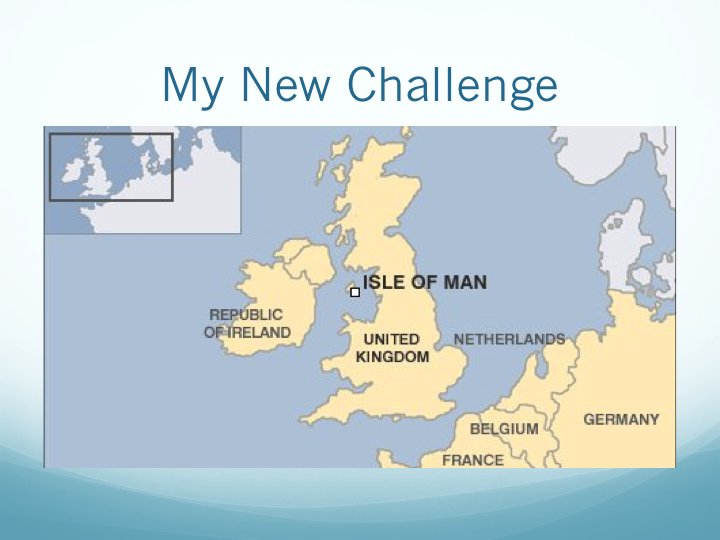
I wanted to share with my friends and colleagues the most recent phase of my professional career. Last month I left Zynga and moved to Isle of Man to become Director of Social Gaming at Amaya’s Rational Group (PokerStars and Full Tilt Poker). At Rational, I will be leading and building the team responsible for replicating PokerStars’ success in the real money gaming world into social gaming. In addition to poker, where nobody can question Rational’s expertise, we see great opportunities in social casino, slots and social sportsbet (and, of course, some blue oceans).

Slide1

The opportunity was irresistible because of Rational’s focus on the player. It has grown to be the leading real-money gaming poker product (Rational was sold to Amaya last year for $4.9 billion) because of a laser focus on making their players’ happy. From my first interview, it was clear they were not interested in the short-term tricks that boost revenue but drive a wedge between the player and the company (all too prevalent in most social gaming companies) what is often referred to as bad profits, and instead creates value by creating the best player experience.

This customer-centric philosophy has not yet been tried in the social space and I find it incredibly compelling. I am excited about what my team and I will be doing soon and will surely share my experiences on this blog with my colleagues.

54.154041
-4.485971
Like Loading...
Unknown's avatarAuthor Lloyd MelnickPosted on April 13, 2015January 4, 2016Categories General Social Games BusinessTags Amaya, Lloyd Melnick, PokerStars, Rational, slots, social casino, zynga3 Comments on My new adventure

Don’t treat employees like you do your fantasy league

One of the things that bothers me to no end is when managers treat employees the same way they treat their fantasy team. When you have a fantasy football or baseball (or soccer) team, you trade players, you move them around on your roster, you release players and sign free agents, etc. You may have to deal with a salary cap or other roster limitations.

Slide1

Although many people, myself included, take it very seriously, it is not the real world. You are not actually putting Jay Cutler on the field or releasing Tom Brady (as some fantasy league owners did early last year). Your moves have absolutely no impact on their success in real life.

Fantasy leagues are fun and a great social experience but they do not represent management training. What leads to fantasy league success, regularly changing your roster to leverage match-ups and hot new players, is not the way to build your team or company. Unfortunately, I have seen many cases where managers and companies treat their employees as if they are in a fantasy league. Interestingly, some of the best leaders I have worked with have fallen into this trap.

Playing “Fantasy League Company”

I sometimes see managers trading employees. One manager may need someone with a particular skill set, another manager may need to cut their head count and they agree to “trade” the first employee for a lower-cost employee.

Sometimes managers play fantasy league within their own organization. They will move people into different positions because it improves their chances to “win.” It will not be based on the employee’s performance or career path but there is a short-term opportunity to solve an issue by taking a person from one role to a potentially completely unrelated role.

Another problem arises when a company closes a division or unit. While planning the closure, management often decides where members of the team will end up. Although it is great that the team members are not losing their jobs, they are often moved to positions inconsistent with their existing position, working on products they do not believe in or forced to work with people they do not want to work with. Continue reading “Don’t treat employees like you do your fantasy league”

Like Loading...
Unknown's avatarAuthor Lloyd MelnickPosted on March 24, 2015April 24, 2021Categories General Social Games Business, General Tech Business, Lloyd's favorite postsTags fantasy league, leadership, management, personnelLeave a comment on Don’t treat employees like you do your fantasy league

The power of the podcast

podcastOne channel largely neglected in social media marketing conversations is the growing importance of podcasts. While not as sexy as SnapChat or Secret, this relatively old channel is becoming a critical component of effective social media marketing. Podcasts were originally built for the iPod (hence the name) but are now listened to not only via iTunes but also multiple IOS and Android apps and even via the good old Internet.

Why podcasts now?

Looking at the numbers, the growth of consumer interests in podcasts is clear. A Washington Post story reported that podcast subscriptions on iTunes reached 1 billion. An Edison Research report shows that over 39 million people listen to a podcast last monthly and that 20 percent of podcast users consumer six or more podcasts weekly.

The accessibility of podcasts has led to their growth. As the Washington Post writes, “despite some early enthusiasm, podcasts faded in popularity in the early 2000s, partly because of the many steps required to download them and play them in a vehicle. The introduction of the iPhone in 2007 changed that, making podcasts as convenient to access as a Netflix show. It’s easier to play them in cars, too, as automakers build wireless media functions into more and more models. And faster WiFi and mobile data speeds have made podcasts a snap to stream.”

Podcasting increase retention

There are multiple benefits for integrating podcasting into your social media marketing mix. First, they increase engagement. Rather than a few seconds to share a message with your customer or player, you have minutes or more to share your narrative. Rather than a superficial message, you can go in-depth on the value your product has to the user, how to get the most out of your product, the background of how it was made, etc. These messages can have a strong impact on users, if they get more value out of the features they are more likely to keep using it. Continue reading “The power of the podcast”

Like Loading...
Unknown's avatarAuthor Lloyd MelnickPosted on March 19, 2015April 6, 2015Categories General Social Games Business, General Tech Business, Growth, LTV, Social Games MarketingTags lifetime value, LTV, podcast, Social media marketingLeave a comment on The power of the podcast

Posts pagination

Previous page Page 1 … Page 19 Page 20 Page 21 … Page 46 Next page

Get my book on LTV

The definitive book on customer lifetime value, Understanding the Predictable, is now available in both print and Kindle formats on Amazon.

Understanding the Predictable delves into the world of Customer Lifetime Value (LTV), a metric that shows how much each customer is worth to your business. By understanding this metric, you can predict how changes to your product will impact the value of each customer. You will also learn how to apply this simple yet powerful method of predictive analytics to optimize your marketing and user acquisition.

For more information, click here

Follow The Business of Social Games and Casino on WordPress.com

Enter your email address to follow this blog and receive notifications of new posts by email.

Join 791 other subscribers

Most Recent Posts

  • Join me at PDMA Inspire for my talk on new product prioritization
  • Why keep studying?
  • The next three years of this blog
  • Interview with the CEO of Murka on the biggest growth opportunity in gaming, Barak David

Lloyd Melnick

This is Lloyd Melnick’s personal blog.  All views and opinions expressed on this website are mine alone and do not represent those of people, institutions or organizations that I may or may not be associated with in professional or personal capacity.

I am a serial builder of businesses (senior leadership on three exits worth over $700 million), successful in big (Disney, Stars Group/PokerStars, Zynga) and small companies (Merscom, Spooky Cool Labs) with over 20 years experience in the gaming and casino space.  Currently, I am the GM of VGW’s Chumba Casino and on the Board of Directors of Murka Games and Luckbox.

Topic Areas

  • Analytics (114)
  • Bayes' Theorem (8)
  • behavioral economics (8)
  • blue ocean strategy (14)
  • Crowdfunding (4)
  • DBA (2)
  • General Social Games Business (459)
  • General Tech Business (195)
  • Growth (88)
  • International Issues with Social Games (50)
  • Lloyd's favorite posts (101)
  • LTV (54)
  • Machine Learning (10)
  • Metaverse (1)
  • Mobile Platforms (37)
  • Prioritization (1)
  • Social Casino (52)
  • Social Games Marketing (105)
  • thinking fast and slow (5)
  • Uncategorized (33)

Social

  • View CasualGame’s profile on Facebook
  • View @lloydmelnick’s profile on Twitter
  • View lloydmelnick’s profile on LinkedIn

RSS

RSS Feed RSS - Posts

RSS Feed RSS - Comments

Categories

  • Analytics (114)
  • Bayes' Theorem (8)
  • behavioral economics (8)
  • blue ocean strategy (14)
  • Crowdfunding (4)
  • DBA (2)
  • General Social Games Business (459)
  • General Tech Business (195)
  • Growth (88)
  • International Issues with Social Games (50)
  • Lloyd's favorite posts (101)
  • LTV (54)
  • Machine Learning (10)
  • Metaverse (1)
  • Mobile Platforms (37)
  • Prioritization (1)
  • Social Casino (52)
  • Social Games Marketing (105)
  • thinking fast and slow (5)
  • Uncategorized (33)

Archives

  • September 2023
  • December 2021
  • July 2021
  • March 2021
  • February 2021
  • January 2021
  • December 2020
  • November 2020
  • October 2020
  • September 2020
  • August 2020
  • July 2020
  • June 2020
  • May 2020
  • April 2020
  • March 2020
  • February 2020
  • January 2020
  • November 2019
  • October 2019
  • September 2019
  • June 2019
  • May 2019
  • April 2019
  • March 2019
  • February 2019
  • January 2019
  • December 2018
  • June 2018
  • May 2018
  • April 2018
  • March 2018
  • February 2018
  • January 2018
  • December 2017
  • June 2017
  • May 2017
  • April 2017
  • March 2017
  • February 2017
  • January 2017
  • December 2016
  • November 2016
  • October 2016
  • September 2016
  • June 2016
  • May 2016
  • April 2016
  • March 2016
  • February 2016
  • January 2016
  • December 2015
  • November 2015
  • October 2015
  • September 2015
  • July 2015
  • June 2015
  • May 2015
  • April 2015
  • March 2015
  • February 2015
  • January 2015
  • December 2014
  • November 2014
  • October 2014
  • September 2014
  • August 2014
  • July 2014
  • June 2014
  • May 2014
  • April 2014
  • March 2014
  • February 2014
  • January 2014
  • December 2013
  • November 2013
  • October 2013
  • September 2013
  • August 2013
  • July 2013
  • June 2013
  • May 2013
  • April 2013
  • March 2013
  • February 2013
  • January 2013
  • December 2012
  • November 2012
  • October 2012
  • September 2012
  • August 2012
  • July 2012
  • June 2012
  • May 2012
  • April 2012
  • March 2012
  • February 2012
  • January 2012
  • December 2011
  • November 2011
  • October 2011
  • September 2011
  • August 2011
  • July 2011
  • June 2011
  • May 2011
  • December 2010
January 2026
S M T W T F S
 123
45678910
11121314151617
18192021222324
25262728293031
« Sep    

by Lloyd Melnick

All posts by Lloyd Melnick unless specified otherwise
Google+

Enter your email address to subscribe to this blog and receive notifications of new posts by email.

Join 791 other subscribers
Follow Lloyd Melnick on Quora

RSS HBR Blog

  • What Actually Works to Change Someone’s Mind
  • Our Favorite Management Tips of 2025
  • How to Manage—and Motivate—Gen Z
  • The Most-Watched HBR Videos of 2025
  • The HBR Charts that Help Explain 2025
  • The Most Popular HBR Podcast Episodes of 2025
  • How the Best Leaders Develop and Spend “Innovation Capital”
  • The 10 Most Popular HBR Articles of 2025
  • How Work Changed in 2025, According to HBR Readers
  • What Leaders Can Learn from a Formula 1 Turnaround

RSS Techcrunch

  • An error has occurred; the feed is probably down. Try again later.

RSS MIT Sloan Management Review Blog

  • Calm: The Underrated Capability Every Leader Needs Now
  • The Top Five MIT SMR Videos of 2025
  • Three Steps Toward Fairer Talent Management
  • From Crisis to Coopetition: What Leaders Can Learn From Anesthesiologists
  • AI Coding Tools: The Productivity Trap Most Companies Miss
  • How Procter & Gamble Uses AI to Unlock New Insights From Data
  • Rewire Organizational Knowledge With GenAI
  • Hungry for Learning: Wendy’s Will Croushorn
  • Beat Burnout: 10 Essential MIT SMR Reads
  • How Leaders Stay True to Themselves and Their Stakeholders
The Business of Social Games and Casino Website Powered by WordPress.com.
  • Subscribe Subscribed
    • The Business of Social Games and Casino
    • Join 726 other subscribers
    • Already have a WordPress.com account? Log in now.
    • The Business of Social Games and Casino
    • Subscribe Subscribed
    • Sign up
    • Log in
    • Report this content
    • View site in Reader
    • Manage subscriptions
    • Collapse this bar
 

Loading Comments...
 

    %d