Lifetime Value Part 11: How to calculate LTV

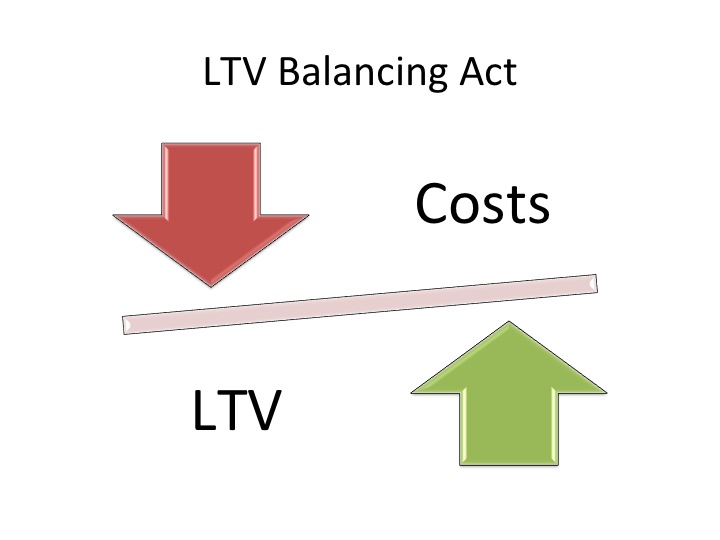
Last year, I published a series of posts on the importance of knowing your users’ or players’ lifetime value, the key components and how to impact them and techniques to increase the accuracy of your customer lifetime value (LTV) predictions. I intentionally did not publish a formula for calculating LTV—while it is always a factor of retention, monetization and virality—as it is different by product and there are many alternative ways to get to an accurate customer lifetime value. Prompted by an infographic that I came across (see below) I did want to go into some details of the mechanics of calculating LTV.

The first step is to obtain your key variable metrics as averages across all users. The ones I prefer are ARPDAU (average revenue per daily active user), day 1 retention (how many people who use or install your website, app or game come back the next day), day 30 retention and k-score (how many free/organic users does a user bring in). Continue reading “Lifetime Value Part 11: How to calculate LTV”

What is machine learning and why it is crucially important

A few weeks ago, I posed a question on Quora about the differences between machine learning and predictive analytics. I was surprised at the number of people who started following the question and actually liked it (although it sounded rhetorical, I was hoping to understand machine learning better). A recent article in Fast Company about The New York Times, of all companies, did a great job of explaining the fundamental value of machine learning.

My interest in machine learning was ignited recently as it has become the hot buzzword in the Bay Area; some have argued if you add machine learning to your PowerPoint you can add a zero to the end your company’s valuation. While that claim is obviously an exaggeration, investors are among the savviest businessmen, so their interest in machine learning shows it is a crucial emerging space.

The article discusses Chris Wiggins, a biologist The New York Times just hired as its Chief Data Scientist. Wiggins’ mandate is to build and lead the Times’ machine learning team. In Fast Company’s interview with Wiggins, it became clear exactly what machine learning is, how it is different than predictive analytics and why it is important.

What is machine learning

According to Wiggins, “Machine learning sits at the intersection of data engineering and mathematical modeling. The thing that makes it different from statistics traditionally, is far more focus on building algorithms.”

University of Utah image for machine learning

Also, while statistics is traditionally focused on explaining data, machine learning is geared to building predictive models. When Netflix or Amazon make product recommendations to you, they are using machine learning to predict what you would be interesting in experiencing. Continue reading “What is machine learning and why it is crucially important”

Speaking at MIT on data quality and how it affects LTV

I am very proud to announce I will be speaking at MIT’s CDOIQ (Chief Data Officer and Information Quality) Symposium in July about how data affects your LTV projections, and ways to improve the quality of your metrics. It’s going to be a great conference and I would love to meet up with anyone who will be there.
MIT Logo

How to hire for analytic positions

Given the importance of analytics to social and mobile game companies (just see all my posts about LTV, performance marketing, virality, monetization, etc.), having the best business intelligence (BI) team is of central importance. Finding that talent, however, is not easy. I have been very lucky to work with some of the best BI talent throughout my career; they have made me look much smarter than I am. Not everyone will be as lucky as I have been. A recent article in the MIT Sloan Management Review provides great advice on predicting the performance of potential analysts.

Data Ninja

The article points out that the ideal analyst does not exist; the job description is looking for a “unicorn.” You should not be hiring for a laundry list of skills (e.g., “I need someone with R, SWRVE and Mixpanel expertise”) because the game industry is evolving so quickly most of those skills will soon be outdated. Instead, you should look for the curiosity to keep learning, rather than the skills themselves. Continue reading “How to hire for analytic positions”

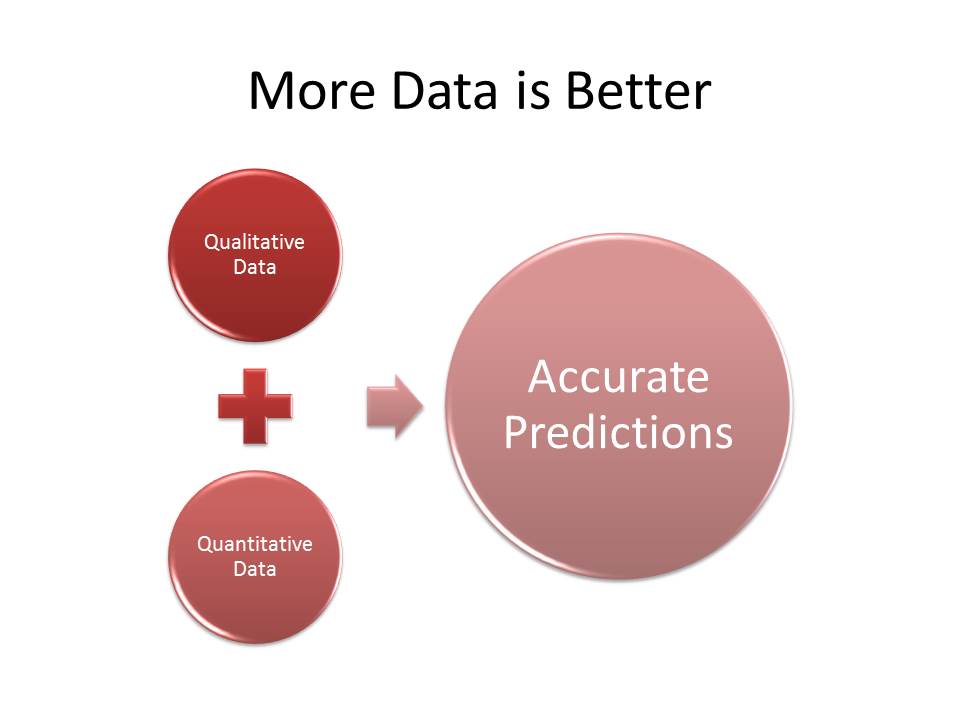
Lifetime Value presentation to Yetizen

Below is a presentation that I gave yesterday on lifetime value (LTV) to the portfolio companies of YetiZen. It covers the importance of LTV, key variables (monetization, virality and retention) and how to affect them, importance outside gaming, cohort analysis and the predictive nature of LTV. Other than the final section on uncertainty, which echoes my blog post on Tuesday, the presentation is largely consistent with the one posted earlier that I gave at Groundwork Labs a few months ago. Here is the one from last night: