A recent article in the Harvard Business Review on Advertising Analytics 2.0 shows how advanced analytic tools and concepts can improve the return from your growth efforts. The article, written by Wes Nichols of MarketShare, shows how ad channels increasingly interact with each other and you can be much more effective by understanding these interactions. What you do in performance marketing, search ads, web, YouTube, TV and PR are not independent of each other. For example, a TV advertisement may increase Google searches that are then directed to your web game by purchasing ad words.
Advanced analytics allow you to understand these interdependencies and allocate accordingly. For example, one company found 85 percent of its budget went to TV ads and six percent to YouTube ads but the YouTube ads were nearly twice as effective at driving search. They then changed their allocation of ad dollars. This adjustment increased sales nine percent without incurring any additional advertising expense.
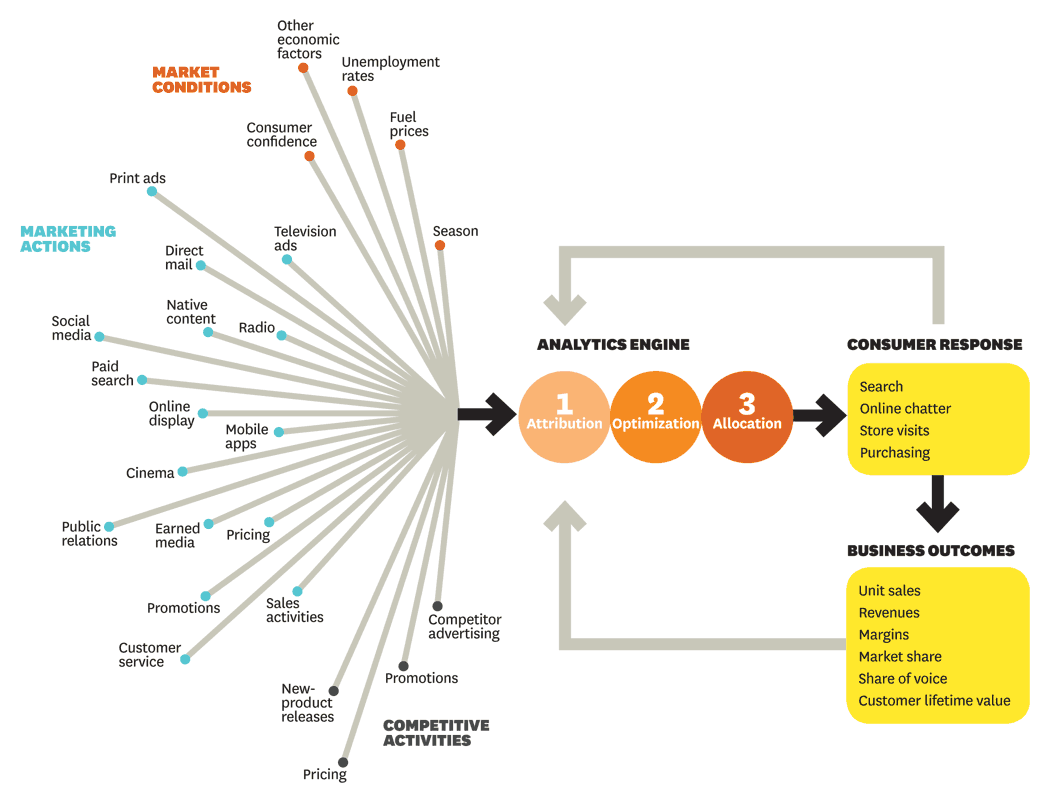 One of the keys to using analytics more effectively is understanding what data to collect. Many in the game industry think that tracking clicks on cost-per-click (CPC) campaigns, adding some consumer surveys, focus groups and last-click attribution is enough to optimize their marketing. It is not. Continue reading “Using analytics to optimize all of your advertising spend”



 The big buzz phrase in the Bay Area the last year or so has been “growth hacking,” and the ideas behind it can help significantly game companies. The underlying principle in the phrase is that modern start-ups should be focused on using the new tools available via technology to grow rapidly their user base rather than relying on older, sometimes outdated, marketing techniques. Growth—unlike marketing—usually encompasses multiple aspects of an organization, with the growth team not only bringing in users but also working with the product team to optimize the product for growth. It stresses the importance of product to growth and how the two should work together rather than having marketing set aside in a corner. The phrase itself was coined by



 The Business of Social Games and Casino